





 Specialized LubricationWave Soldering Chain OilAnalysis and Selection Recommendations

Wave soldering is a critical high-temperature soldering process in electronic assembly. In modern production lines with stringent performance and cleanliness requirements, selecting the appropriate high-temperature chain oil is essential not only for the long-term stable operation of the equipment but also for ensuring product quality.
PART.01
1. Wave Soldering Chain Path
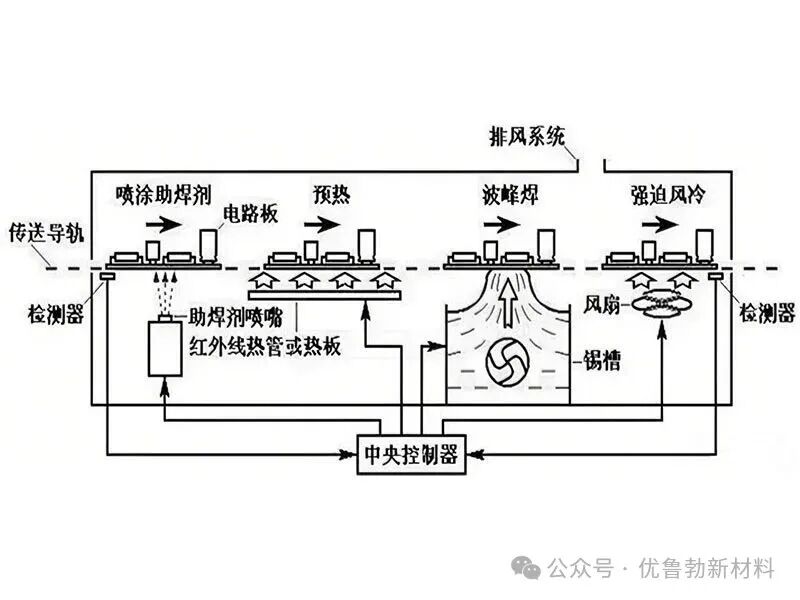
Wave soldering is the process used to solder through-hole components onto PCB boards. During this process, the fixture carrying the PCB board is driven by a precision chain, moving uniformly through the flux spray area, preheating area, wave soldering area, and cooling area. The chain must pass through the following zones:
→ Entering the preheating zone: 25°C, the chain is at room temperature and is sprayed with flux.
→ Preheating zone: 100-150°C, the temperature rises rapidly.
→ Soldering zone: The solder pot temperature is between 245~280°C (depending on the board thickness), the chain passes over the molten solder pot, with an actual temperature around 200~280°C.
→ Cooling zone: entrance 120~150°C, exit: 60~80°C.
PART.02
2. Challenges in Lubricating Wave Soldering Chains
-
Large temperature differences in the chain: The chain moves from the preheating zone to the soldering zone to the cooling zone, with a temperature difference of up to 180°C across different sections of the same chain. This can lead to significant changes in the viscosity of the lubricant, uneven oil distribution, resulting in insufficient lubrication at the hot end and excessive lubrication at the cold end.
-
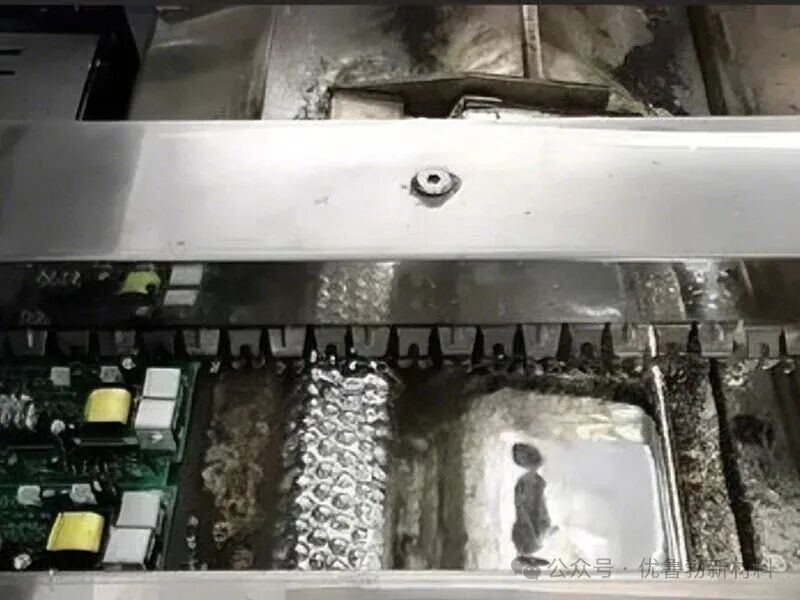
Oil mist contamination: The chain is continuously heated in the soldering zone (220~280°C). If low-quality chain oil is used, it will evaporate significantly, forming oil mist that contaminates the PCB and reduces yield.
-
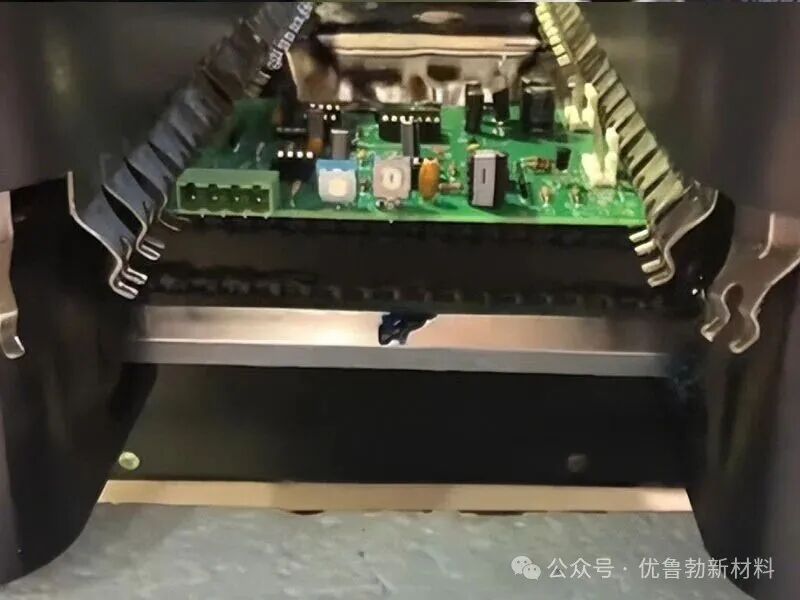
Carbon buildup and coking: This is the most critical and common pain point. Ordinary lubricants will rapidly decompose and oxidize at temperatures above 250°C, forming hard black carbon deposits. These carbon deposits can jam the chain, clog the chain’s sliding rails and guides, leading to poor chain operation, shaking, jamming, or even breaking.
PART.03
3. Performance Requirements for Wave Soldering Chain Oil
Therefore, based on the unique working conditions and pain points of wave soldering chains, the selected chain oil must possess the following characteristics:
1. Extreme high-temperature stability: Under long-term working temperatures of 220℃~280℃, it should produce almost no carbon deposits or residues. The actual long-term temperature resistance of the chain oil must be above 220℃, which is the most important performance indicator.
2. Extremely low volatility: Odorless and tasteless, with minimal evaporation loss at high temperatures, ensuring long-lasting lubrication and reducing refilling frequency and oil consumption. Preferably use true PAO (polyalphaolefin) or POE (ester) synthetic base oils, and avoid mineral oils/hydrogenated cracked oils.
3. Excellent cleanliness: Capable of dissolving or softening small amounts of old flux residues, keeping the chain clean rather than forming sludge with contaminants.
4. Strong adhesion: Even at high temperatures and low viscosity, it should firmly adhere to the chain surface without dripping. It should not fling oil during continuous high-speed operation (20-80cm/min) and should not flow or drip at high temperatures.
5. Good penetration: Able to penetrate into the smallest friction pairs, such as chain pins, rollers, and sleeves.
6. Corrosion resistance: Able to form an effective protective film against flux.
PART.04
4. Solutions for Wave Soldering Chain Oil
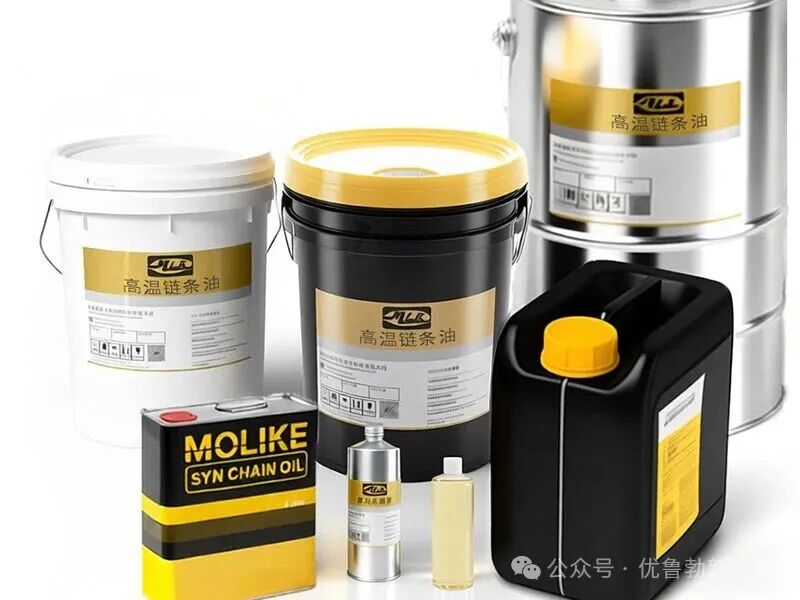
· Using fully synthetic ester oil solutions: A high-end performance choice, costly but with outstanding high-temperature resistance and lubrication adhesion, biodegradable, environmentally friendly, suitable for high-end lubrication in harsh scenarios. Recommended oils include HELLER equipment manufacturer oil 593555, and Yumo Lubricant SYN-320.
· Using PAO + ester modified solutions: The best choice for performance and cost, with excellent performance and wide application, well-known in the industry. Recommended oils include Norway’s Bel-Ray BIO-30, Yumo Lubricant ST-220, and Spain’s Eagle BESLUX series.
Note: If there is no clear direction, prioritize consulting professional lubricant manufacturers based on the equipment manufacturer’s recommendations or the actual temperature curve of the production line to match the chain oil, and regularly monitor the chain’s condition and PCB cleanliness.
END
Follow us