Introduction


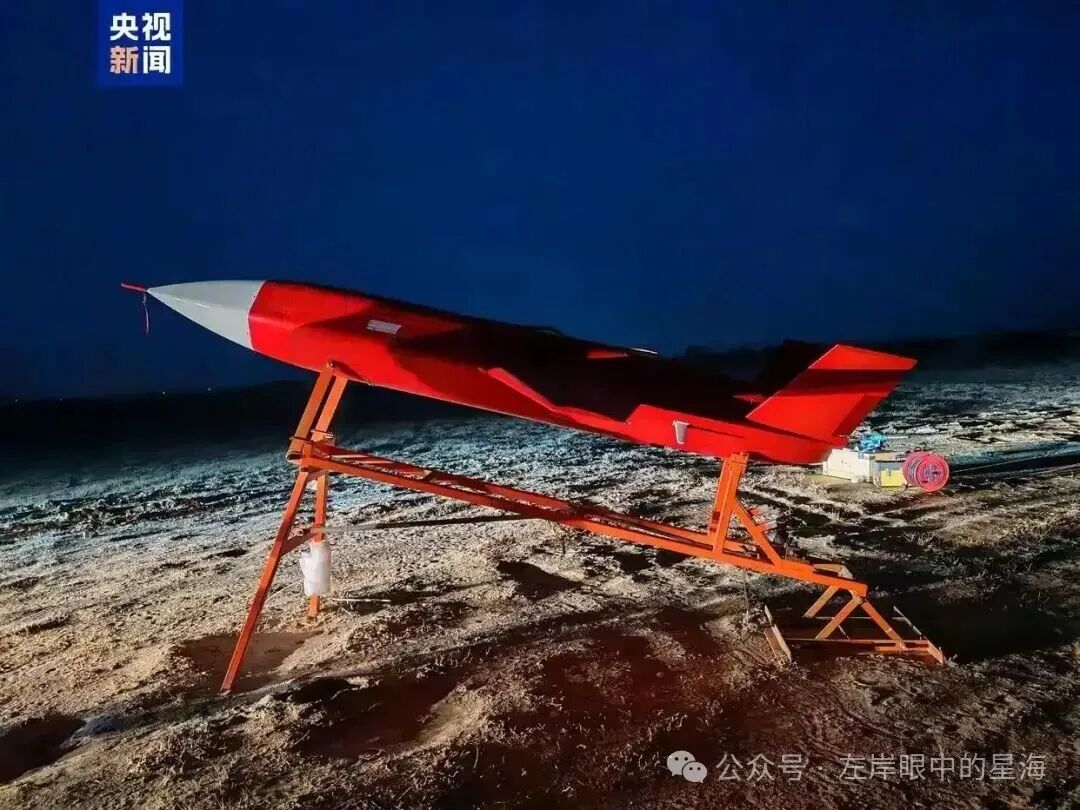
On November 13, 2025, the China Aviation Engine Group announced that its self-developed 3D printed ultra-simple lightweight micro turbojet engine successfully completed its first single-engine flight test. The engine flew for 30 minutes after being mounted on a target aircraft, reaching an altitude of 6000 meters and a speed of 0.75 Mach (approximately 919 kilometers per hour), operating normally and stably throughout the flight.
This success marks China as one of the few countries in the world to master the engineering application technology of 3D printed aircraft engines. This engine is the first 160 kg thrust class 3D printed ultra-simple lightweight micro turbojet engine in the country to complete flight verification, providing a new power solution for platforms such as cruise missiles, drones, and target aircraft.
 01 Technical Breakthrough: From Concept to Flight

The single-engine flight test is a milestone event in China’s 3D printed aircraft engine field. This is another significant achievement following the first hanging flight verification of the engine completed in July this year.
Test data shows that the engine performed excellently under the harsh conditions of 6000 meters altitude and 0.75 Mach speed. In the low-oxygen environment, the engine materials faced the dual challenges of low temperature and low pressure, and the 3D printed components successfully withstood these challenges.
Mi Dong, director of the chief engineer’s office at the China Aviation Engine Research Institute, stated: “In the first five minutes after the ignition command was issued, no one in the control room dared to breathe loudly.” The team redesigned the nozzle structure and adjusted the ignition timing to ensure the reliability of high-altitude ignition, addressing the technical challenge of increased fuel atomization particles caused by low pressure.
Compared to traditional engine manufacturing, this 3D printed engine employs multidisciplinary topology optimization design technology, significantly reducing the number of parts and greatly lightening the engine’s weight. Over three-quarters of the weight of all rotor components and the entire engine are made using 3D printing.
 02 Four Core Advantages of 3D Printing Technology

Why can 3D printing technology disrupt the traditional aircraft engine manufacturing industry? By analyzing this successfully flying engine, four core advantages can be summarized.
Cost Efficiency: Saving Parts, Costs, and Time
Traditional engine manufacturing requires a large number of molds and fixtures, costing up to millions of yuan, with significant material waste. 3D printing skips the mold stage entirely, converting digital models into physical parts, greatly improving material utilization.
This turbojet engine uses integrated forming technology to print multiple components that would need to be assembled in traditional engines all at once, reducing the number of parts by approximately 81%. Official data from China Aviation Engine shows that the R&D cycle has been shortened by more than 50% with the use of additive manufacturing technology.
Extreme Lightweight
For aircraft, weight reduction directly relates to range and payload capacity. This engine achieves lightweight design through topology optimization, printing biomimetic structural parts such as lattice supports and hollow trusses, ensuring strength while achieving weight reduction.
Data shows that 3D printing has reduced the weight of this engine by more than 15%. The weight reduction allows drones to carry more fuel or warheads, significantly enhancing combat performance.
Rapid R&D Iteration
Traditional engine design modifications require reopening molds and adjusting production lines, a process that can take up to six months. In contrast, 3D printing only requires modifying the digital model to quickly print new parts for testing.
This flexibility halves the R&D cycle, enabling engineers to quickly validate innovative ideas and accelerate the technology iteration process.
Increased Design Flexibility
3D printing technology liberates designers’ creativity, making complex internal structures possible. The combustion chamber of this engine integrates millimeter-scale honeycomb cooling channels, which cannot be achieved with traditional processing techniques.
This design freedom allows engineers to prioritize performance optimization rather than conforming to manufacturing processes, resulting in a more efficient engine.
 03 Innovations Behind Materials and Processes

The success of this 3D printed engine is inseparable from significant breakthroughs in materials science and manufacturing processes.
Breakthroughs in High-Temperature Alloy Materials
The engine’s stable operation in the low-oxygen environment at 6000 meters relies on specially formulated high-temperature alloy powders. This material can withstand the nearly thousand-degree Celsius temperatures in the combustion chamber while resisting the tearing risks from high-speed rotation.
Unlike traditional forging processes that require repeated heat treatment, laser selective melting technology achieves the required grain uniformity in a single print, reducing the engine’s weight by 30% while doubling its lifespan.
Precision Manufacturing Processes
The precision control of laser selective melting (SLM) technology reaches the micron level. When printing turbine blades with a thickness of only 0.2 millimeters, the laser beam must repeatedly melt thousands of layers of metal powder with a positioning error of 50 microns.
Chinese engineers innovatively adopted gradient heat treatment processes, controlling the dimensional deformation of key components within 0.05%, a figure far below the standards of traditional machining.
 04 Application Prospects: Dual Drive of Military and Civilian Use

The success of this 3D printed engine brings new possibilities to multiple fields.
Breakthroughs in Military Applications
This engine can provide new power solutions for platforms such as cruise missiles, drones, and target aircraft. Its lightweight and high-performance characteristics can effectively enhance the range, payload, or endurance of these systems.
Notably, 3D printing technology allows for modifications to the combustion chamber configuration within 48 hours, quickly adapting to different mission requirements. This rapid customization capability holds significant value in future battlefield environments.
Potential in Civilian Applications
In civilian applications, small aircraft engines have a broad market in civilian drones, light sport aircraft, and general aviation. 3D printing reduces manufacturing costs, making civilian equipment more affordable.
Future civilian drones may fly farther and carry larger loads, playing a greater role in areas such as express delivery, emergency rescue, and surveying exploration.
 05 China’s 3D Printing Engine Technology in an International Perspective

Globally, competition in 3D printed aircraft engine technology is becoming increasingly fierce. Major aviation companies like GE in the United States are also actively exploring the application of 3D printing technology in aircraft engines.
China has adopted a two-step testing strategy of “hanging flight – single engine” to achieve a technological leap. The hanging flight verification completed in July this year laid the foundation for this single-engine test, and this gradual technological iteration path effectively controls R&D risks.
In comparison to international counterparts, the American J402 turbojet engine rotor requires 16 parts, and the French TRI60 series has about 20 main components, while China’s 3D printed engine significantly reduces the number of parts due to its highly integrated design.
In the materials field, the Oak Ridge National Laboratory (ORNL) in the United States has also developed a “super aluminum alloy” DuAlumin – 3D for 3D printing, which maintains stable performance in high-temperature environments. This indicates that the global development of high-temperature materials for 3D printing is in a rapid growth phase.


Conclusion


The success of this 3D printed engine is not just a breakthrough in technology. Mi Dong, director of the chief engineer’s office at the China Aviation Engine Research Institute, stated: “Next, we will focus on two things: first, continue to conduct more challenging flight tests to verify adaptability in extreme environments; second, optimize mass production processes to quickly transition from technical success to product success.”
With the triple advantages of design freedom, manufacturing cycle, and maintenance costs, China’s aviation power industry is writing a development path different from that of European and American giants. 3D printing technology is expected to fundamentally change the R&D logic of aviation power, shifting from “can it be made” to “can it perform better”.
