👨🎓 Personal Homepage
💥💥💞💞 Welcome to this blog ❤️❤️💥💥
🏆 Blogger’s Advantage: 🌞🌞🌞 The blog content aims to be logically clear and coherent for the convenience of readers.
⛳️ Motto: A journey of a hundred miles begins with a single step.
💥1 Overview
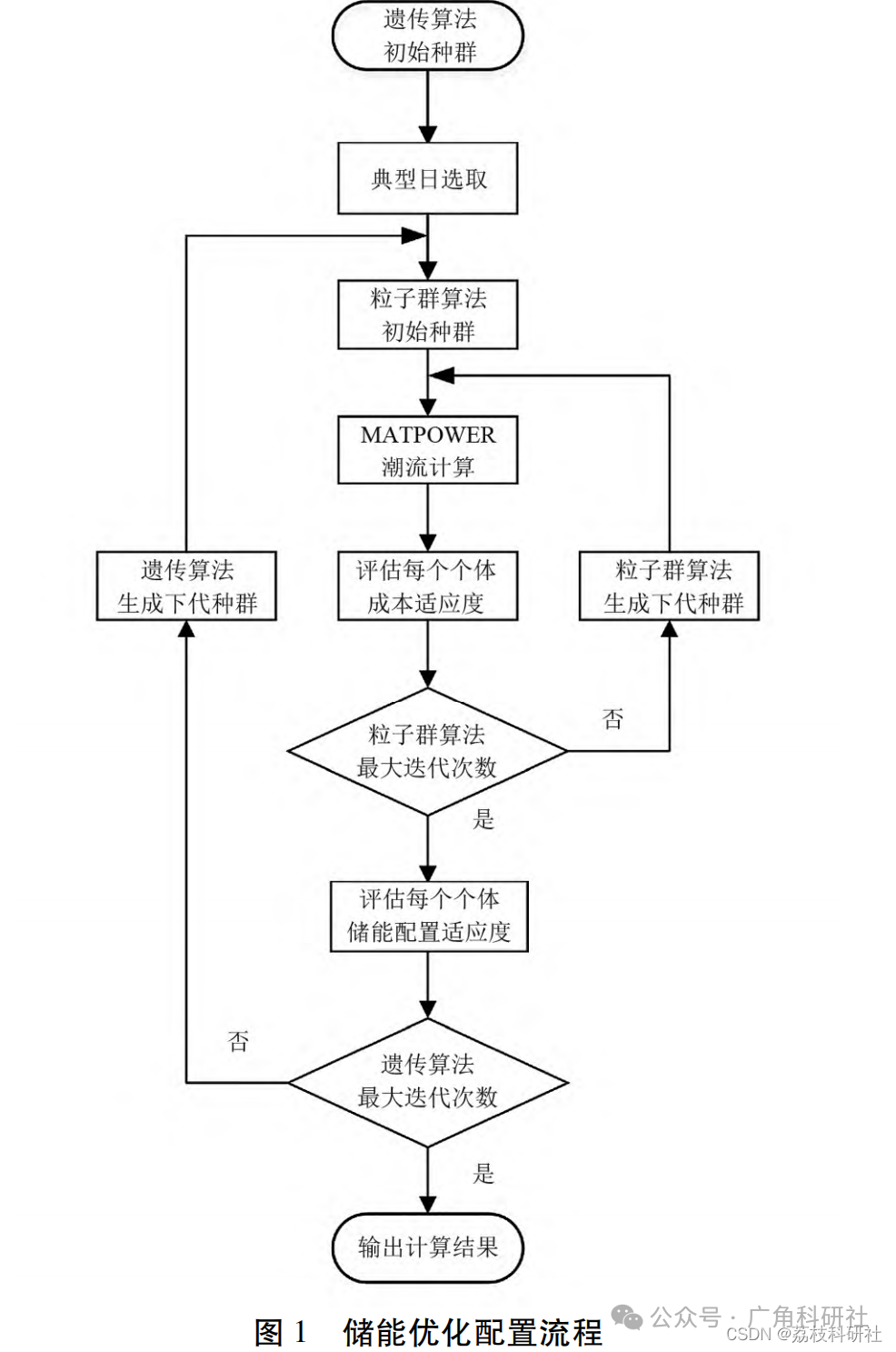
Abstract: The randomness and intermittency of photovoltaic power generation lead to low resource utilization. Energy storage, with its flexible control and rapid response characteristics, is one of the effective means to solve photovoltaic grid connection issues and improve consumption. Currently, the high investment cost is a key constraint on the promotion of energy storage applications. This paper studies the optimization configuration method of energy storage in distributed photovoltaic systems from a cost perspective. First, a bi-level optimization model is established with the investment and operational costs of the distributed energy storage system as the objective, while considering constraints such as the location of energy storage access, configuration capacity, state of charge, and grid operation status. Then, the optimization model solving method is introduced, where the outer layer uses a genetic algorithm to optimize the location, power, and capacity of energy storage, and the inner layer employs a particle swarm algorithm combined with the MATPOWER power flow calculation tool to optimize the daily operation strategy of energy storage. Finally, the feasibility and effectiveness of the optimization configuration method are verified using the IEEE 9-node system in Matlab software.
Keywords:
Distributed Photovoltaics; Distributed Energy Storage; Optimization Configuration; Genetic Algorithm; Particle Swarm Algorithm;
As the crisis of fossil energy and environmental pollution becomes increasingly severe, building a clean, low-carbon, safe, and efficient energy system is an inevitable trend for future development. Solar energy, as a clean and renewable resource, is currently widely used in distributed photovoltaic power generation systems [1]. The randomness and intermittency of photovoltaic power generation lead to significant fluctuations in output power, posing serious challenges to the safe and stable operation of the grid. At the same time, as the peak-to-valley difference in demand-side load increases, the issue of power supply during peak load times becomes more pronounced. Simply increasing the backup capacity of generators is not only expensive but also results in low equipment resource utilization. Energy storage, with its rapid power control and flexible energy throughput characteristics, is one of the effective means to solve photovoltaic grid connection and consumption issues [2]. Currently, the investment cost of energy storage is a key constraint on its promotion and application, making the study of energy storage optimization configuration significant for improving photovoltaic consumption, grid stability, and system economic benefits.
Currently, many scholars at home and abroad have conducted extensive research on this topic. The main methods for optimizing energy storage configuration include the differential compensation method, fluctuation smoothing analysis method, and economic evaluation method. 1) Differential Compensation Method: Literature [3] introduces the use of the minimum daily output of the photovoltaic power generation system and the difference in output during extreme weather conditions (such as rain and snow) as the configuration capacity for energy storage in photovoltaic-storage systems; Literature [4] calculates the expected output power of wind farms based on wind speed probability density to determine the average power level of wind farms, using the difference between actual output power and this average power to determine the compensation capacity of energy storage, achieving constant power output from wind farms, although requiring relatively larger energy storage capacity. 2) Fluctuation Smoothing Analysis Method: Literature [5] introduces an energy management method for a hybrid energy storage system of supercapacitors and batteries based on smoothing control; Literature [6] proposes an optimization method for the capacity of energy storage systems to control the power output of microgrid interconnections; Literature [7] determines the power capacity required for BESS to compensate specific frequency bands, but the selection of compensation frequency bands is limited to between 0.01 and 1 Hz, which lacks adaptability and does not provide a method for determining energy storage system capacity. 3) Economic Evaluation Method: Literature [8] discusses the economic benefits of energy storage configuration on the photovoltaic generation side by reducing disconnection assessments, power limitation assessments, and operational rate assessments of power control substations; Literature [9] takes grid-connected distributed photovoltaic energy storage systems as the research object, aiming to minimize the system’s operational electricity costs after energy storage configuration; Literature [10-11] establishes a system revenue objective function for energy storage systems utilizing time-of-use electricity pricing arbitrage, participating in ancillary services, and replacing backup power sources, maximizing system revenue after energy storage configuration.

Research on the Bi-level Optimization Configuration Method for Distributed Photovoltaic Energy Storage Systems
1. Core Concepts and Applicability of Bi-level Optimization Method
Definition and Characteristics Bi-level optimization (Bilevel Optimization, BO) was proposed by Stackelberg in 1934, consisting of an upper layer (leader) and a lower layer (follower), characterized by hierarchy, independence, and conflict. The core idea is that the decision variables of the upper layer influence the objective function of the lower layer, while the optimal solution of the lower layer reacts back to the upper layer’s decisions. For example, in energy systems, the upper layer may plan the capacity and location of energy storage, while the lower layer optimizes the operational strategy to minimize costs.
Mathematical Modeling and Solving Methods
Transformation Method: For complex nonlinear problems, the KKT conditions are often used to convert the bi-level model into a single-layer optimization problem. For instance, in combined heat and power systems, the KKT conditions can transform the bi-level model into a single-layer linear programming problem, significantly improving solving efficiency.
Algorithm Selection: Discrete variables in the upper layer (such as energy storage site selection) are suitable for genetic algorithms or particle swarm algorithms, while continuous optimization problems in the lower layer can use solvers like CPLEX.
2. Optimization Objectives and Challenges of Distributed Photovoltaic Energy Storage Systems
System Composition and Core Objectives The system consists of photovoltaic components, inverters, energy storage devices (such as lithium-ion batteries), and monitoring systems. The optimization objectives include:
Economics: Minimize investment and operational costs (e.g., annual total cost of 42.25 million yuan/year case);
Stability: Smoothing voltage fluctuations and reducing grid losses (e.g., reducing charging and discharging costs through energy storage peak-valley arbitrage);
Environmental Protection: Improve the consumption rate of renewable energy and reduce carbon emissions (e.g., multi-energy complementary model of wind, solar, water, and thermal energy).
Limitations of Existing Methods
Single-layer models: Difficult to coordinate multiple objectives (such as economics and reliability), and the dimensional explosion problem is prominent;
Static configuration: Ignores dynamic factors (such as the impact of environmental temperature on gas turbine efficiency);
Algorithm Convergence: Traditional heuristic algorithms are prone to local optima (e.g., the gray wolf algorithm converges slowly in later stages).
3. Construction and Solving of the Bi-level Optimization Model
Model Framework Design
Upper Layer Model: Taking energy storage capacity, site selection, and power as variables, the objective function includes purchasing electricity costs, network losses, and investment costs. For example, in the IEEE 33-node system, a particle swarm algorithm is used to optimize energy storage configuration.
Lower Layer Model: Aiming to minimize operational costs, combined with power flow calculations (such as MATPOWER tools) or mixed-integer programming (MILP) to determine optimal scheduling strategies.
Typical Algorithm Implementation
Genetic-Particle Swarm Hybrid Algorithm: The outer layer genetic algorithm encodes energy storage parameters, while the inner layer particle swarm optimizes operational costs, achieving global optimality through iterative feedback.
Improved Gray Wolf Optimization (IGWO): Introduces Cauchy mutation operators to solve the local optimum problem of traditional algorithms, reducing overall costs by 15.6%.
Bi-level Decomposition Method: Decouples planning and operational solutions, such as in regional integrated energy systems, where the upper layer optimizes equipment configuration and the lower layer calculates reliability and operational costs.
4. Practical Application Cases and Effect Analysis
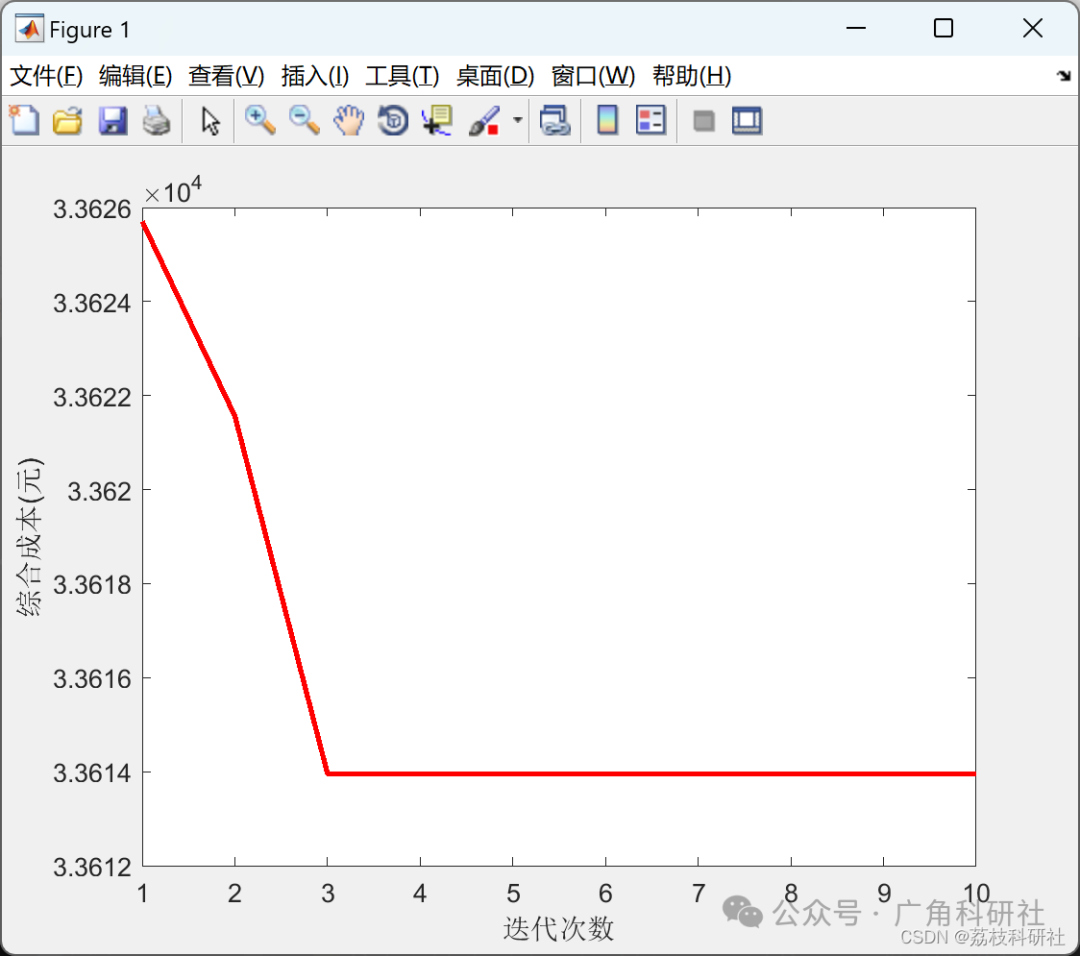
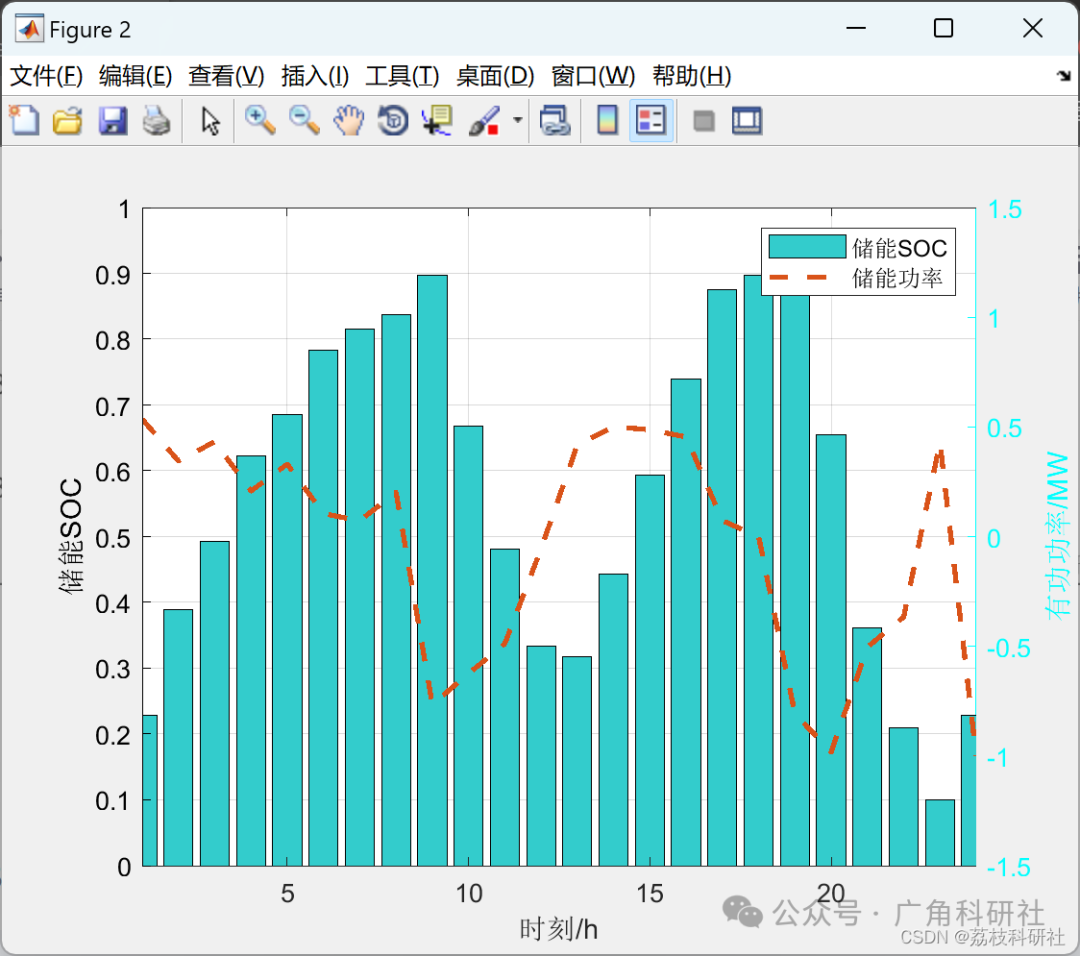
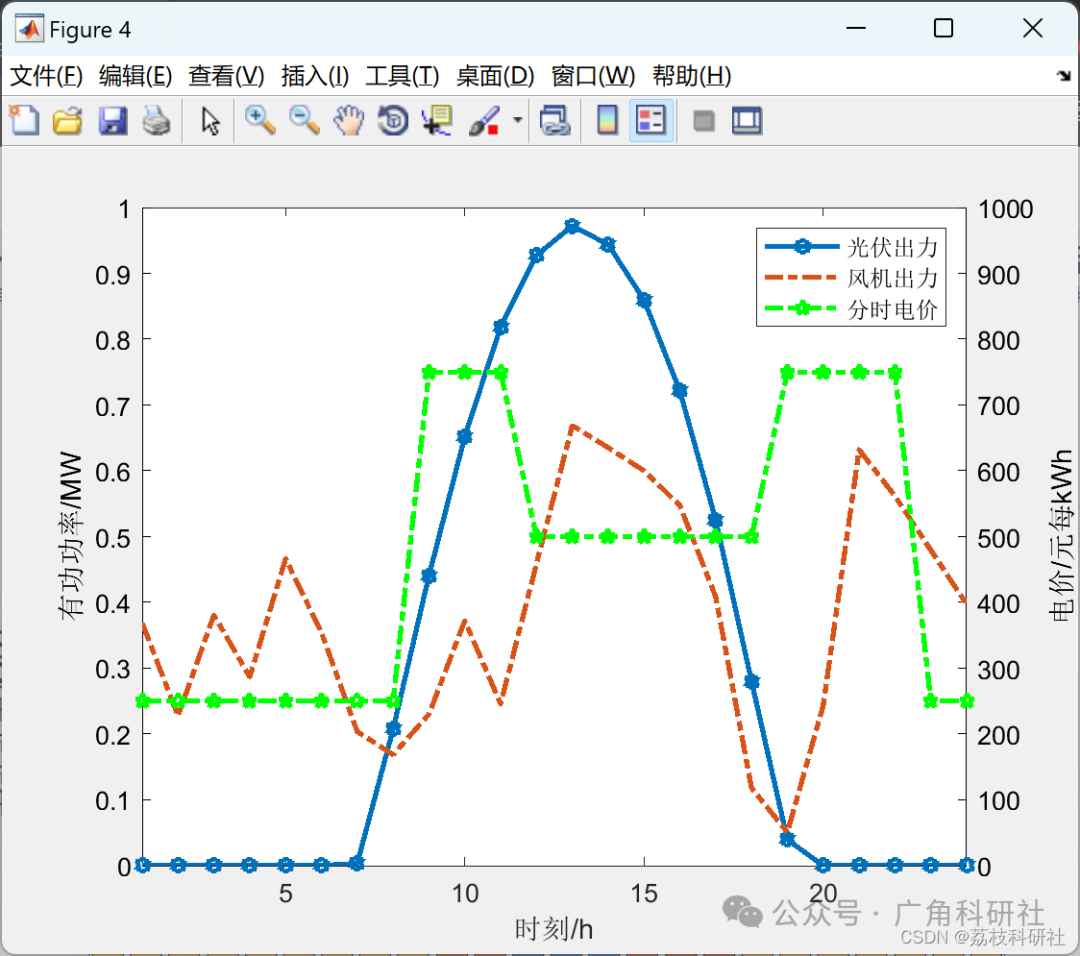
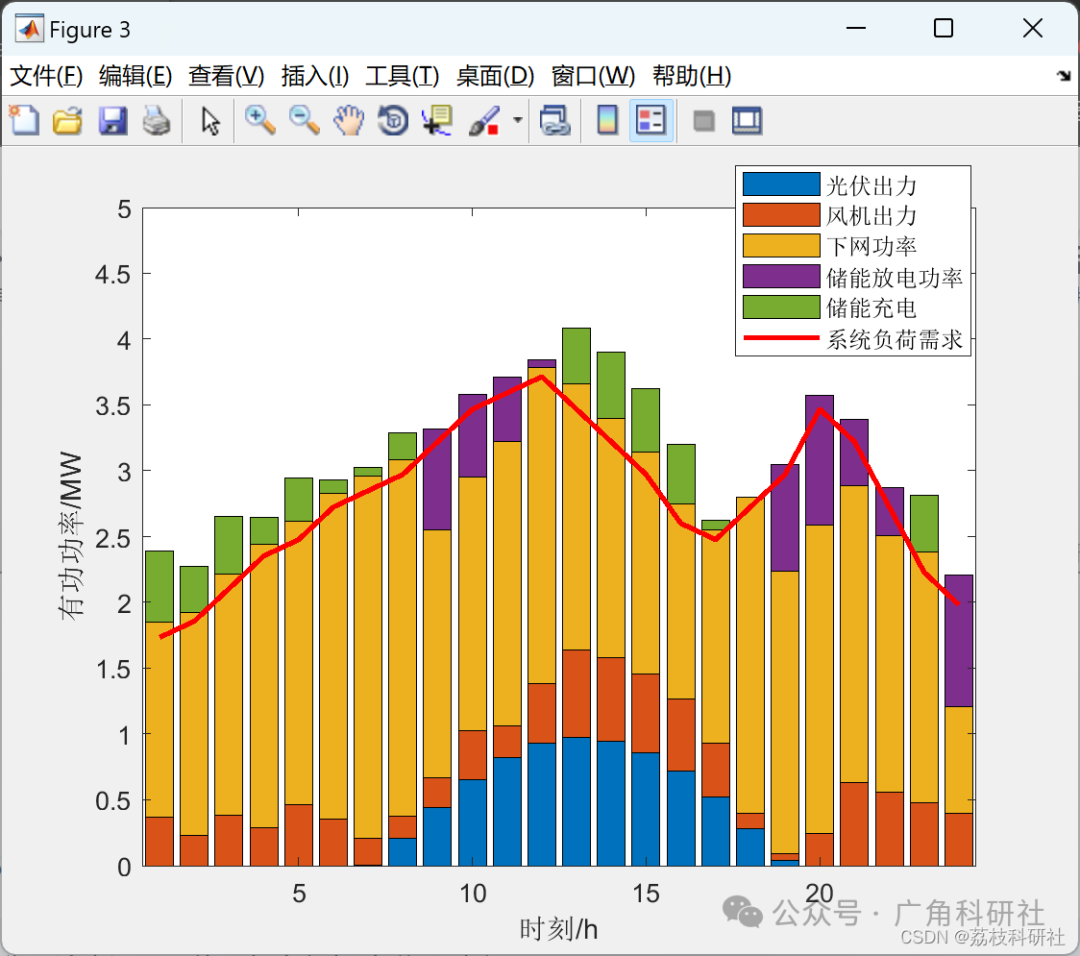
Case 1: Optimization Configuration of the IEEE 9-node System After adopting the bi-level model, nodes 4 and 9 are configured with 4 MW/4 MWh energy storage, reducing annual costs to 42.25 million yuan. Energy storage achieves arbitrage by charging during low electricity price periods (00:00-08:00) and discharging during high electricity price periods (08:00-11:00), while also reducing grid losses and reactive power costs.
Case 2: Multi-energy Complementary System of Wind, Solar, and Water The upper layer optimizes capacity configuration, while the lower layer schedules thermal power units, reducing net load fluctuations by 28.7% and improving the consumption rate of clean energy. The model solving time is shortened by 30% through KKT condition transformation.
Case 3: Hybrid Energy Storage Configuration of Microgrid Based on the IGWO algorithm, overall costs are reduced by 18.8%, and the frequency of battery charging and discharging is decreased, extending battery life by 15%.
5. Future Research Directions
Multi-time Scale Optimization: Combining daily scheduling with medium- and long-term planning to address temporal fluctuations in sunlight and load.
Uncertainty Modeling: Introducing robust optimization or stochastic programming to handle forecasting errors in wind and solar output.
Multi-energy Coupling: Extending to integrated electric-thermal-hydrogen systems to enhance energy utilization efficiency (e.g., electric-thermal hybrid energy storage model).
Intelligent Algorithm Integration: Combining deep learning predictions with reinforcement learning for dynamic decision-making to enhance real-time response capabilities.
6. Conclusion
Bi-level optimization effectively addresses the complex issues of multiple objectives and constraints in distributed photovoltaic energy storage systems through a hierarchical decision-making mechanism. Typical cases demonstrate that it significantly outperforms traditional single-layer models in terms of economics, stability, and environmental protection. Future research should further integrate dynamic environments and intelligent algorithms to promote the system’s development towards efficiency and adaptability.
📚2 Operational Results




🎉3 References
Some theoretical sources are from the internet; please contact for removal if there is any infringement.
[1] Peng Wei, Zheng Lianqing, Zheng Tianwen. Optimization Configuration Method for Distributed Photovoltaic Energy Storage Systems [J]. Sichuan Electric Power Technology, 2022, 45(01): 45-49+94. DOI:10.16527/j.issn.1003-6954.20220110.
🌈4 Matlab Code, Data, Article Download