ScienceShare | Scientific Sharing
Real-time Freshness Monitoring of Fruits and Vegetables Integrating 3D-Printed Alginate-Based Colorimetric Sensors with Deep Convolutional Neural Networks
Introduction
On July 26, 2025, Professor Zhang Min’s team from Jiangnan University published a research paper titled “Real-time freshness monitoring of fruits and vegetables integrating 3D-printed alginate-based colorimetric sensors with deep convolutional neural networks” in the international top journal Chemical Engineering Journal (Q1, IF = 13.2). Doctoral student Tang Tiantian from Jiangnan University is the first author, and Professor Zhang Min from the School of Food Science is the corresponding author.
With the increasing demand for food safety and preservation, intelligent packaging technology has shown significant value in food storage and distribution, especially in real-time monitoring of food freshness, extending shelf life, reducing waste, and enhancing supply chain transparency. However, traditional smart label manufacturing methods generally face issues such as complex design processes, limited material types, insufficient functional integration, and difficulty adapting to diverse food environments, which restrict their promotion and application in fruit and vegetable monitoring. In contrast, 3D printing technology offers advantages such as high precision construction, controllable structures, multi-material integration, rapid customization, and environmental friendliness, breaking through the limitations of traditional processing methods and providing an ideal platform for the personalized design and functional integration of smart labels, particularly suitable for developing sensor systems with complex shapes and multi-layer structures.
This study constructed a sodium alginate-polyvinyl alcohol hydrogel sensor array doped with 12 types of pH-sensitive colorimetric indicators based on 3D printing technology, and designed various filling densities to cope with different spoilage environments. This sensor system can respond sensitively to acidic and alkaline volatile compounds and has been successfully applied to the dynamic monitoring of freshness in strawberries, mulberries, raspberries, and other fruits and vegetables during storage. Furthermore, by integrating deep convolutional neural network models such as GhostNet, MobileNetV2, ShuffleNet, and Xception, automatic recognition of sensor images and precise classification of fruit and vegetable freshness states were achieved. This research not only expands the application boundaries of 3D-printed colorimetric sensors in the fruit and vegetable field but also provides new pathways and ideas for the intelligent, visual, and AI-integrated packaging of food.
Research Highlights
-
Developed an innovative 3D-printed sodium alginate gel colorimetric sensor array.
-
Utilized sensor arrays with 100% + 60% filling densities, balancing permeability and color reaction intensity.
-
Combined with DCNN models, this sensor array can monitor the pH of microbial volatile metabolites.
-
Combined with DCNN models, this sensor array achieved real-time freshness monitoring during the storage of fruits and vegetables.
Research Conclusions
-
Constructed a multi-indicator colorimetric sensor array system based on 3D printing, featuring structural tunability and responsive sensitivity. Using sodium alginate (SA), polyvinyl alcohol (PVA), and glycerol as the matrix, 12 types of pH-sensitive indicators were doped, successfully printing colorimetric sensor arrays with different layers and filling densities. Among them, the structure with a filling density of 100% + 60% achieved the best balance between gas permeability and color response intensity, suitable for subsequent freshness monitoring of fruits and vegetables.
-
Achieved accurate identification of microbial metabolic stages using deep convolutional neural networks. By responding to the volatile acidic and alkaline gases during microbial metabolism, the sensor array, combined with the DCNN model, enabled image recognition of microbial growth stages. The MobileNetV2 model achieved an accuracy rate of 81.41% for Escherichia coli, while the ShuffleNet and Xception models achieved accuracy rates of 98.74% for Bacillus cereus.
-
Realized real-time visual monitoring of freshness changes in various fruits and vegetables during storage. The sensor array exhibited significant color responses to the freshness changes of strawberries, raspberries, shepherd’s purse, and soybean sprouts within the first 48 hours; while the color difference of the E label for mulberries reached 118.85 during the late spoilage stage, which is 6.77 times that of the control group. Additionally, on days 2, 4, and 6, the color difference of the H sensor label increased from 87.92 to 202.88, indicating a gradually forming strongly acidic environment within the packaging.
-
Deep learning models significantly improved the accuracy of freshness classification for fruits and vegetables. The trained MobileNetV2 model achieved freshness classification accuracy rates of 97.95%, 99.49%, 95.90%, 97.44%, and 93.85% for the storage processes of five types of fruits and vegetables (strawberries, mulberries, raspberries, shepherd’s purse, and soybean sprouts), validating the practicality and reliability of this method in the quality control of fruit and vegetable preservation.
Visual Appreciation
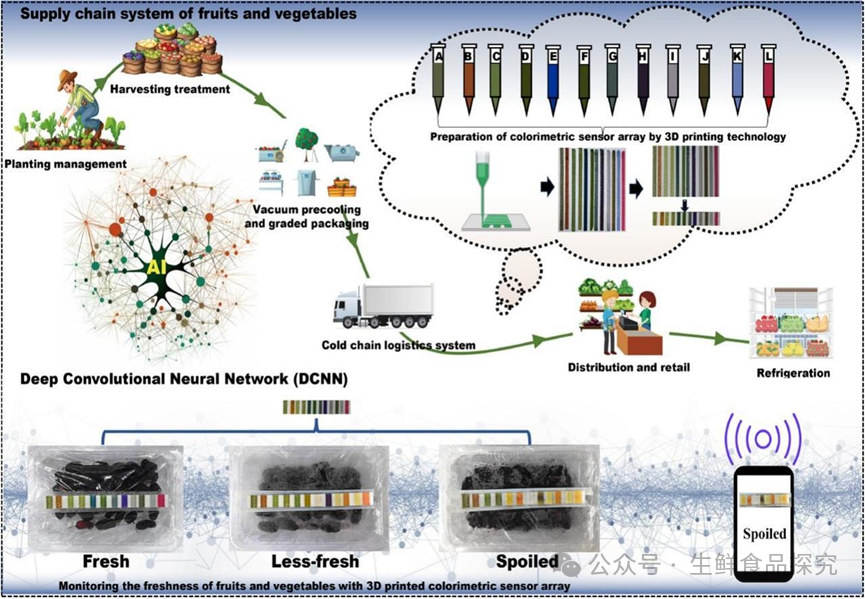
Graphical Abstract
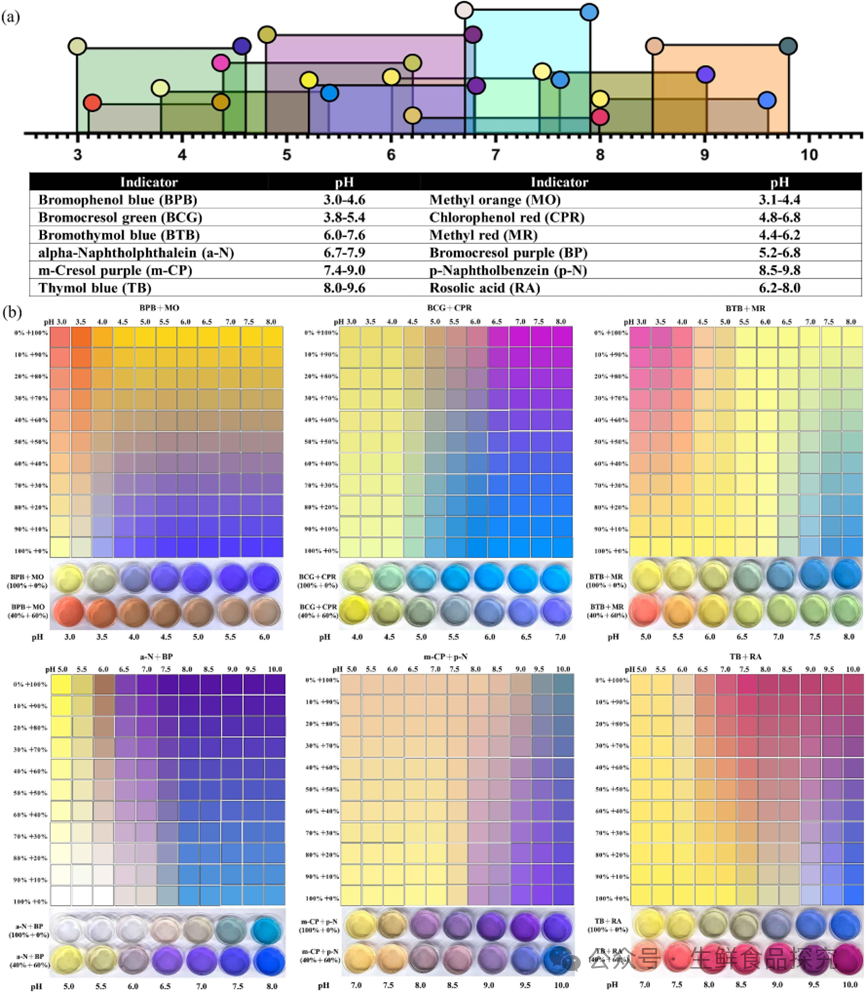
Figure 1. pH response range of 12 indicators (a) and color matrix formed by six combinations – BPB + MO, BCG + CPR, BTB + MR, a-N + BP, m-CP + p-N, TB + RA – mixed in different proportions (b)
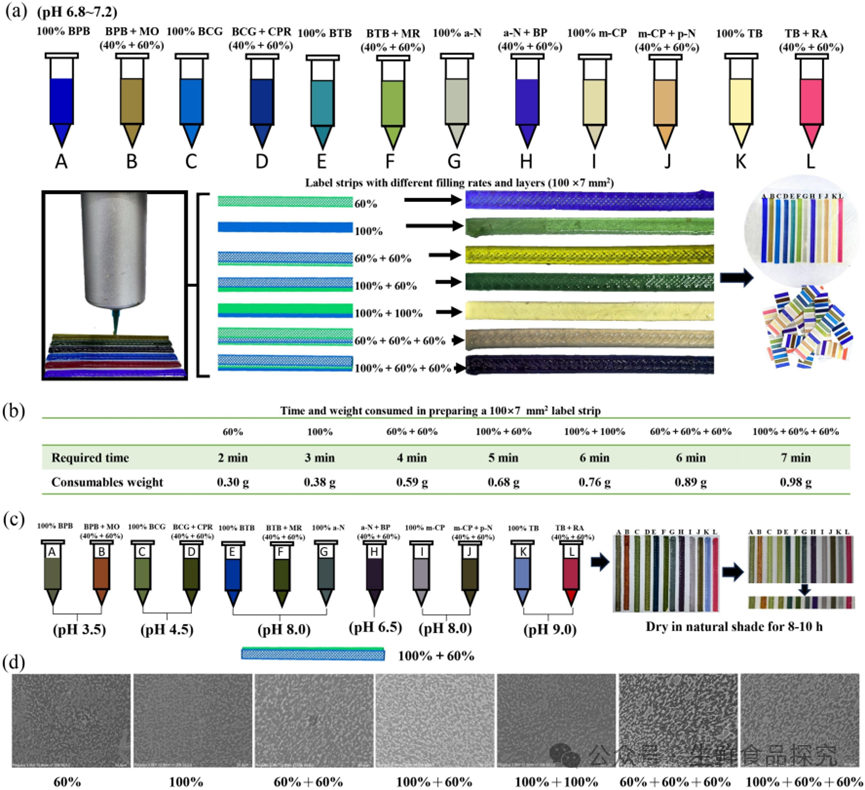
Figure 2. Preparation process of the 3D-printed colorimetric sensor (a), material weight and printing time required for making labels with different filling densities (b), 3D-printed colorimetric sensor after pH adjustment (c), and SEM images of labels with different filling rates (d)
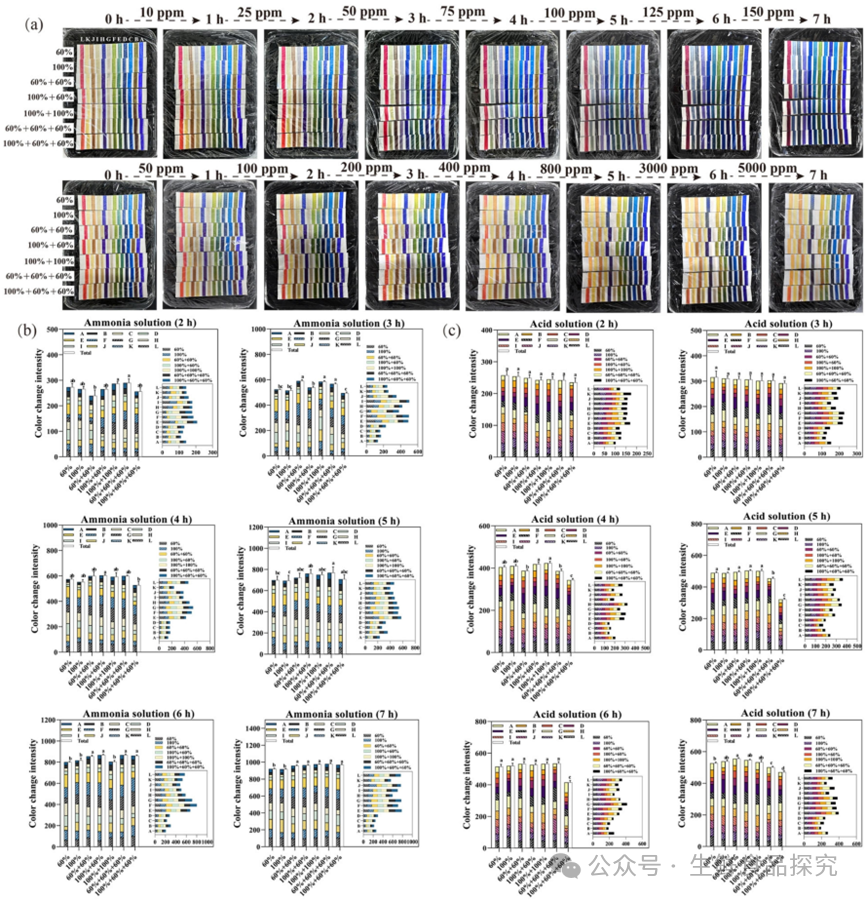
Figure 3. Color response of colorimetric sensors with different filling densities to ammonia solution and acid solution (a), and color change intensity of sensors responding to ammonia solution (b) and acid solution (c)
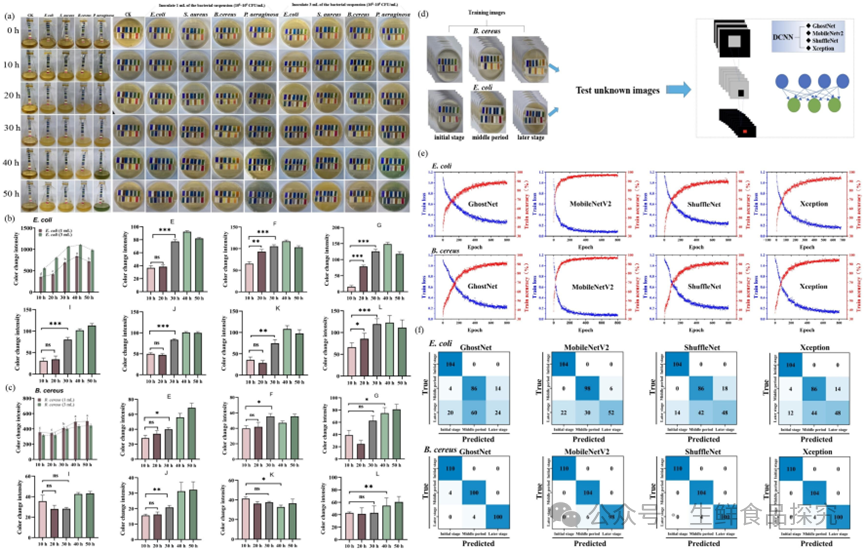
Figure 4. Response of colorimetric sensors to microbial volatile metabolites (a), color changes of seven sensors (E, F, G, I, J, K, and L) to volatile metabolites of Escherichia coli (b) and Bacillus cereus (c), flowchart of microbial volatile metabolite detection based on deep learning (d), training accuracy of the DCNN model for Escherichia coli and Bacillus cereus (e), and confusion matrix based on predictions from four DCNN models (f)
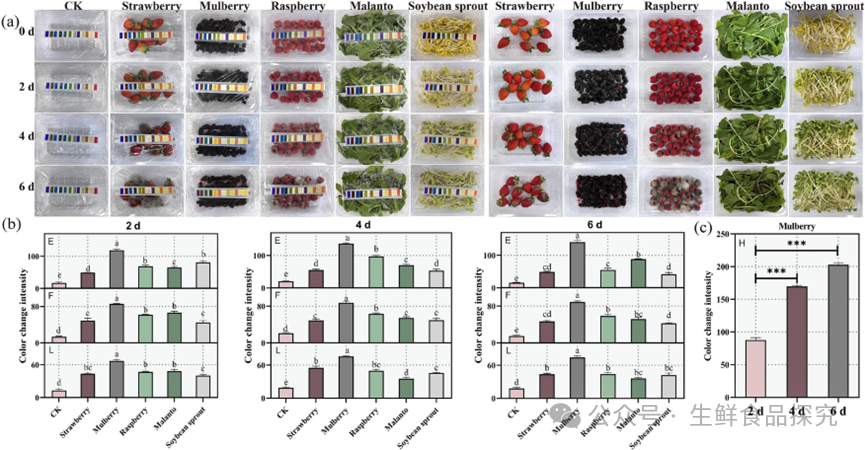
Figure 5. Application of colorimetric sensors in monitoring the freshness of fruits and vegetables under storage conditions at 25 °C (a), color changes of E, F, and L labels of different fruits and vegetables during storage (b), and color change intensity of the H label for mulberries during storage (c)
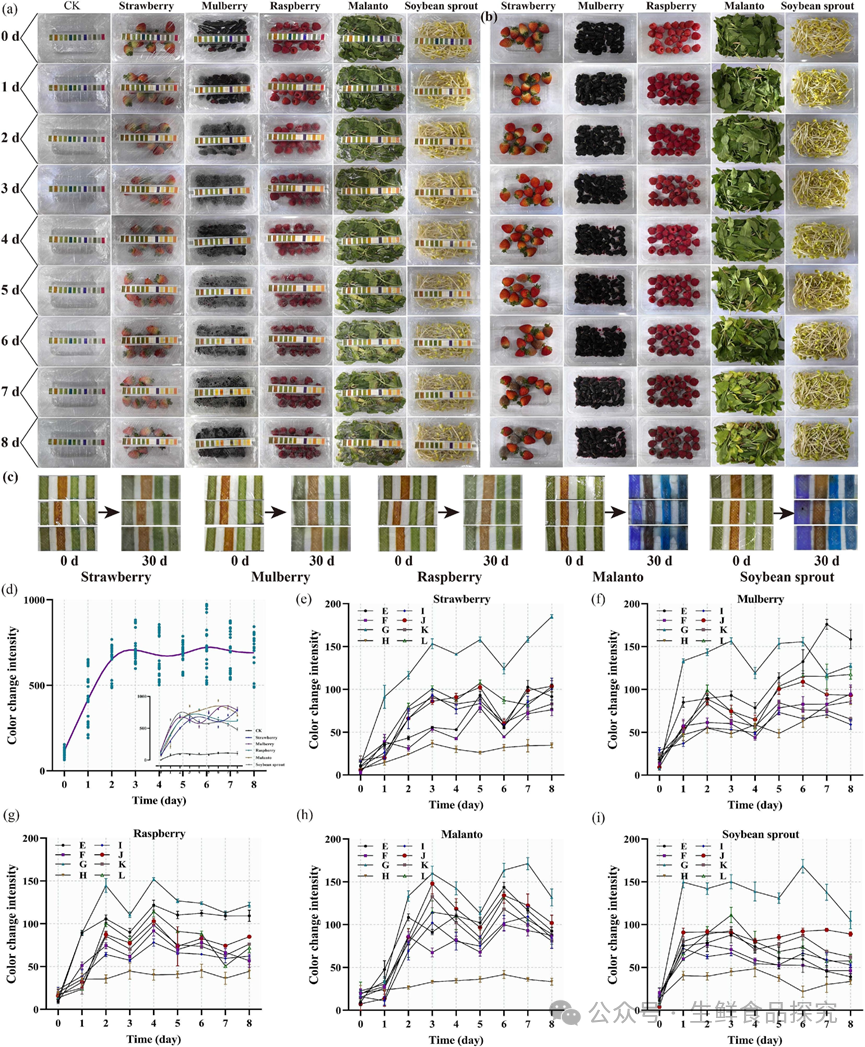
Figure 6. Application of colorimetric sensors in monitoring the freshness of fruits and vegetables under storage conditions at 4 °C (a), appearance quality changes of fruits and vegetables during storage (b), changes of labels A, B, C, and D after 30 days of storage (c), total color changes of colorimetric sensors E, F, G, H, I, J, K, and L during the storage of fruits and vegetables (d), and individual sensor color changes for strawberries (e), mulberries (f), raspberries (g), shepherd’s purse (h), and soybean sprouts (i).
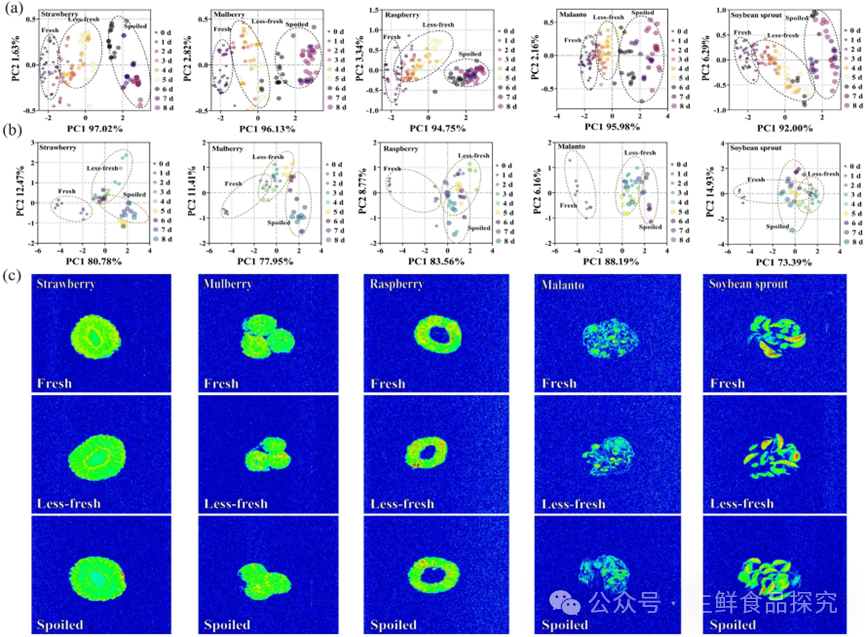
Figure 7. PCA analysis results based on sensory evaluation results (a), PCA analysis results of total color changes of colorimetric sensors (E, F, G, H, I, J, K, and L) (b), and MRI images of different fruits and vegetables at fresh, slightly fresh, and spoiled stages (c)
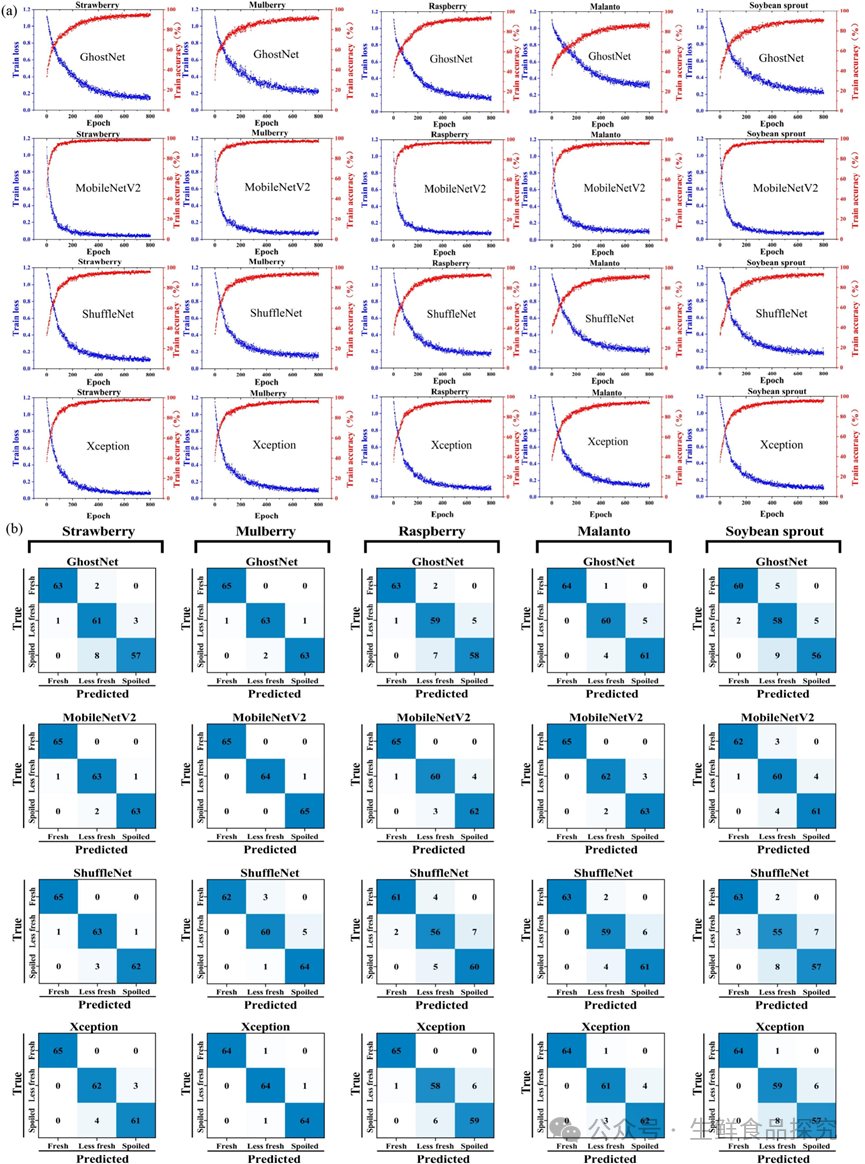
Figure 8. Training accuracy of the DCNN model for different fruits and vegetables (a) and corresponding confusion matrix (b)
Original Link
https://doi.org/10.1016/j.cej.2025.166387
This article is reproduced from the WeChat public account “Scientific Sharing”
— Previous Reviews —
Literature Summary of Professor Zhang Min’s Team at Jiangnan University (Part 1)
Literature Summary of Professor Zhang Min’s Team at Jiangnan University (Part 2)
Literature Summary of Professor Zhang Min’s Team at Jiangnan University (Part 3)
— Copyright Statement —
1. The articles pushed by this public account are for academic exchange only, and “original” indicates original translation, which does not represent this platform’s claim to copyright.
2. All “reproduced” articles have been marked with sources, and copyright belongs to the original authors. If the authors do not wish to be reproduced or have any infringement, please contact us to modify or delete.



Dot  You Look Best