The Electronic Enthusiast Network reports (by Liang Haobin) that the Single-Photon Avalanche Diode (SPAD) is a special semiconductor optoelectronic device capable of single-photon detection. Its core function is to “capture a single photon and convert it into a detectable electrical signal,” essentially serving as a detector with sensitivity to light signals at the “limit level,” widely used for light signal detection and analysis in extremely low-light scenarios.If each SPAD is viewed as a pixel in a CMOS image sensor, then an array of multiple SPADs can also achieve imaging capabilities. For example, in LiDAR systems, SPAD arrays are sometimes used as receivers.The core mechanism of SPAD is to count the number of individual photons without directly distinguishing the wavelength (color) of the photons. This makes typical SPADs more suitable for low-light detection, Time-of-Flight (ToF) measurements, and other applications, rather than color imaging.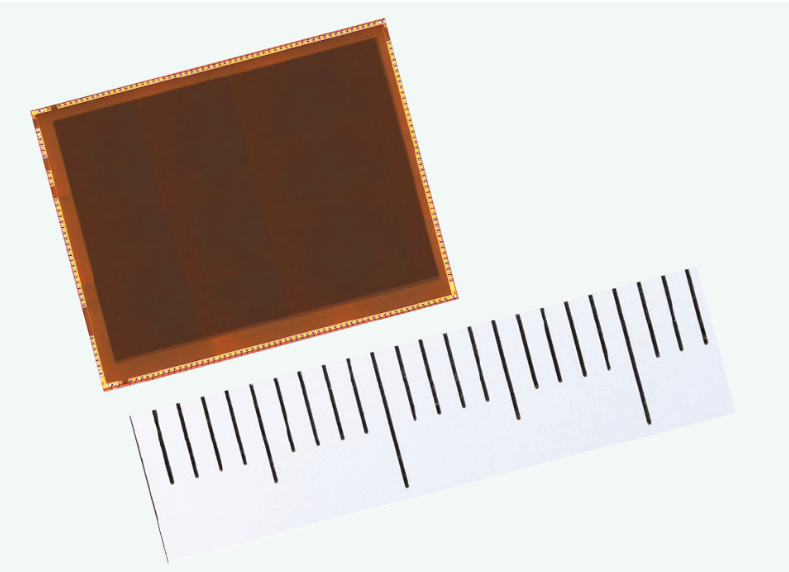 Image Source: CanonInterestingly, Canon previously launched a SPAD sensor capable of color imaging. According to Canon, this new type of sensor differs from traditional CMOS sensors; it utilizes the particle characteristics of light to achieve imaging by counting individual photons rather than accumulating light intensity. The main principle of this technology is: when a photon enters a pixel, it triggers an avalanche multiplication process, instantly amplifying the electronic signal, thus converting each photon into an electrical signal. This digital counting method avoids the common electrical noise interference found in traditional sensors, allowing for clear images even in low-light environments.The core structure of the SPAD sensor employs a unique pixel design that can reflect photons within the pixel, thereby extending the sensitive area to nearly 100% of the pixel area. This addresses the limitation of traditional SPAD sensors, where only specific electric field-sensitive areas can detect photons, while achieving a balance between pixel miniaturization and high sensitivity. The specific implementation process includes:Photon Detection: When a photon enters the pixel, it excites electron-hole pairs, triggering avalanche multiplication under a high electric field, rapidly generating a large number of electrons to form a detectable signal pulse.Quenching: Although not detailed in the text, it is implied in the management of the avalanche process, used to quickly reset the diode for continuous detection of subsequent photons, ensuring the sensor’s high-speed response.Time-of-Flight Measurement: The sensor processes information with an accuracy of 100 picoseconds (10^-10 seconds), capable of precisely measuring the arrival time of photons, supporting high-speed imaging and distance measurement applications, such as capturing the trajectory of light particles moving at approximately 300,000 kilometers per second.So how does it achieve color imaging? Canon states that this is accomplished by combining the photon counting mechanism in SPAD with filters, where each filtered pixel counts the number of photons of specific colors, and subsequently reconstructs a complete color image through signal processing algorithms (such as demosaicing). This overcomes the monochrome limitations of traditional SPADs, enabling it to handle color data.Ultimately, Canon has achieved the world’s highest 3-megapixel SPAD sensor for video capture, with a sensor size of 13.2mm × 9.9mm (one inch), a pixel pitch of 6.39 μm, and a photon capture capability per unit area that is 3-5 times that of traditional SPADs, supporting full HD (approximately 2.07 million pixels) and higher resolution color imaging. Under the same lighting conditions, its detection efficiency is equivalent to that of a CMOS sensor with a pixel area 10 times larger, capable of capturing color images in extremely dark environments.At the same time, its digital counting mechanism allows the sensor to handle extremely fast phenomena, suitable for slow-motion capture of high-speed motion.Compared to CMOS sensors, SPAD significantly reduces noise impact through digital photon counting, achieving higher performance in a smaller size. In low-light conditions, it can simulate the visual effects of bright environments, making it suitable for night vision, surveillance, and autonomous driving scenarios.This sensor has also been used in the remote monitoring camera MS-500, designed specifically for shooting in low-light environments, capable of clearly capturing distant targets and presenting them in full HD color.Recently, Lingming Photon also stated at a seminar that the full-color SPAD sensor will serve as the 3.5 generation solution for LiDAR, positioned between solid-state LiDAR and RGBD, targeting high frame rates (>500 FPS) and low-light RGB applications, as well as applications with less stringent requirements for strong light performance.From a technical perspective, the full-color SPAD sensor has certain market potential and will demonstrate significant advantages in specific demand scenarios. However, compared to traditional CIS and LiDAR, the likelihood of full-color SPAD sensors replacing them in the field of autonomous driving currently seems low.

Disclaimer: This article is originally from the Electronic Enthusiast Network, please indicate the source above when reprinting. For group communication, please add WeChat elecfans999, for submission and interview requests, please email [email protected].
More Hot Articles to Read
-
Chip Dominance Transforms into Infrastructure Giant: NVIDIA Binds OpenAI with $100 Billion, First Phase Deployment Next Year
-
Controversial! Was the Automotive Battery Ejection Technology Wrong from the Start?
-
HBM Catches Up! Domestic AI Chips Leap Forward
-
Huawei Supports! Liquid Cooling Server Market Explodes
-
Triple Lens + Neural Wristband! Meta AI Glasses “Family Pack” Opens the Era of “Mind Control”
Click to Follow and Star Us
Set us as a star to not miss any updates!