
Special examinations of the neck are crucial for the diagnosis and differential diagnosis of neck diseases. This article summarizes 15 common special neck examination tests, so be sure to save it!


1. Intervertebral Foramen Compression Test (also known as Spurling’s Test)
Have the patient sit with their head slightly tilted towards the affected side. The examiner stands behind the patient and applies downward pressure on the top of the patient’s head. If the affected limb experiences radiating pain, the test is positive.
The reason is that the side bending narrows the intervertebral foramen, and the pressure on the head further narrows the foramen, temporarily exacerbating the herniated disc, making the symptoms of nerve root compression more pronounced.
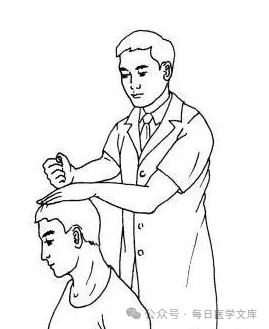
Figure 1: Spurling’s Test
2. Brachial Plexus Stretch Test (also known as Eaten’s Test)
During the examination, have the patient flex their neck forward. The examiner places one hand on the head on the affected side and the other hand grips the wrist of the affected limb, pulling in the opposite direction. If the patient feels pain or numbness in the affected limb, the test is positive, which is seen in cervical spondylosis (nerve root type). If the affected limb is forced to internally rotate during the pull, it is called the Eaten’s enhancement test.
The mechanism of this test is to stretch the nerve root and observe if there is reflexive pain in the affected upper limb.
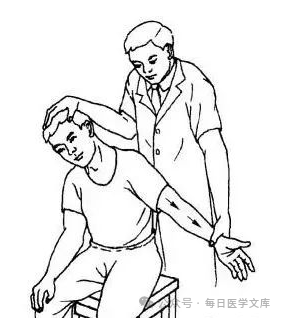
Figure 2: Eaten’s Test
3. Head Tapping Test
The patient sits while the doctor places one hand flat on the patient’s head, palm contacting the occiput, and uses a fist to tap the back of the hand resting on the top of the head. If the patient feels discomfort, pain in the neck, or pain, numbness in one or both upper limbs, the test is positive.
4. Jackson’s Pressure Test
When the patient’s head is in a neutral and extended position, the examiner applies pressure on the top of the head along the axis. If the affected limb experiences radiating pain and the symptoms worsen, it is termed a positive Jackson’s Pressure Test.
5. Shoulder Compression Test
The examiner applies pressure to the patient’s shoulder, and if it causes or exacerbates pain or numbness in the same side upper limb, it is positive, indicating brachial plexus nerve compression.
6. Straight Arm Raise Test
The patient sits or stands with their arm straight. The examiner stands behind the patient, supporting the affected shoulder with one hand and holding the wrist of the affected limb with the other hand, lifting it outward and upward to stretch the brachial plexus. If the affected limb experiences radiating pain, it is positive.
The degree of elevation when radiating pain occurs can be used to assess the severity of cervical nerve root or brachial plexus nerve damage. This test is similar to the Straight Leg Raise Test for the lower limbs.
7. Neck Traction Test (also known as Cervical Traction Test)
The examinee sits upright, and the examiner stands behind them, cradling their jaw with both hands and pressing their chest or abdomen against the occiput, gradually pulling the cervical spine upward. If symptoms like numbness or pain in the upper limbs decrease or if the neck feels more relaxed, it is positive.
A positive result indicates nerve root type cervical spondylosis. Patients of this type respond well to cervical traction treatment.
8. Turning to Look Test
Have the patient look over their shoulder or at something next to them. If the patient cannot or dares not turn their head or body to look, it indicates that there may be issues with the cervical vertebrae or cervical muscles, such as cervical tuberculosis, cervical spondylitis, or