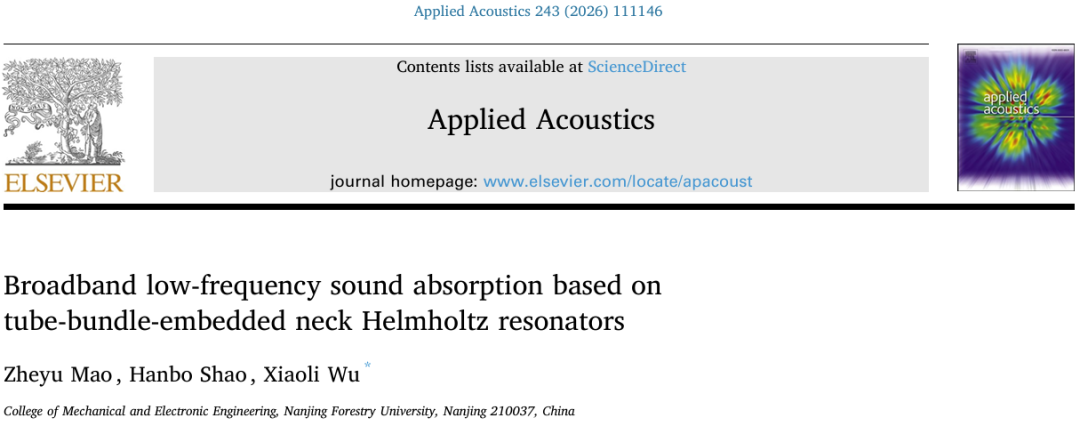

Proposed New Structure: Based on the traditional Helmholtz resonator (HR), the neck channel is divided into multiple parallel small tubes (bundles), without changing the original air volume. This structure enhances thermal viscous loss, improving low-frequency sound absorption performance.
Theoretical Modeling and Validation: A theoretical model was established and verified for accuracy through finite element simulation (FEM) and experimental testing. The results show that the TBNEHR achieves near-perfect sound absorption (α > 0.97) at 234 Hz, with a thickness of 1/29 wavelength, demonstrating sub-wavelength size advantages.
Sound Absorption Mechanism Analysis: Energy loss is mainly concentrated in the neck, and the bundled structure increases the friction area and thermal conduction effect. Compared to traditional HR, the proportion of energy dissipation in the neck of TBNEHR increased from 83.96% to 94.52%, with total energy dissipation increased by 53%.
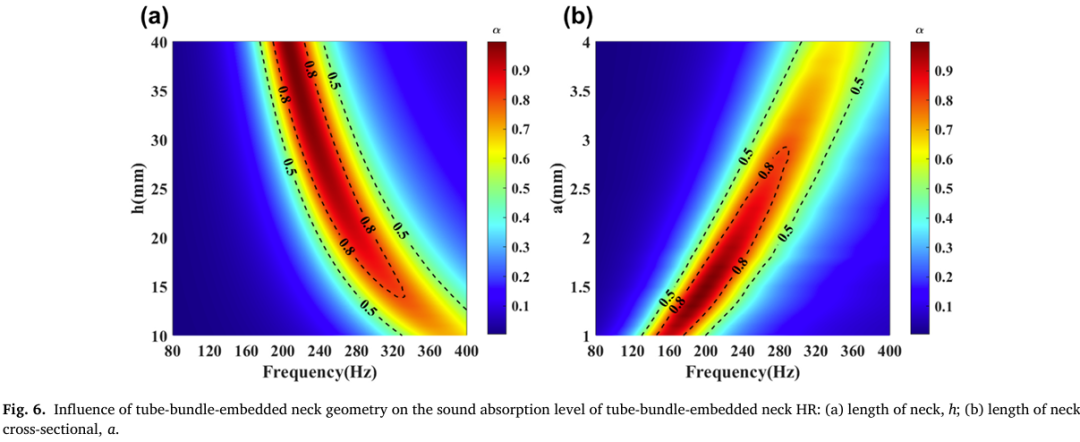
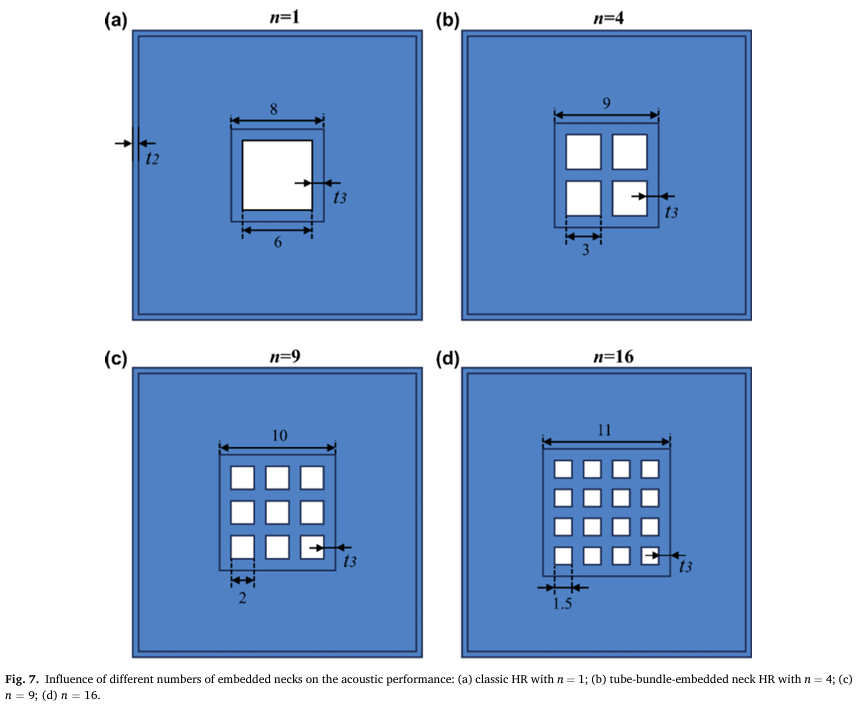
Analysis of Structural Parameter Effects: Increasing neck length: Resonance frequency decreases, sound absorption peak enhances. Increasing cross-sectional area: Resonance frequency increases, sound absorption coefficient decreases. Increasing the number of bundles: Enhances sound absorption performance, slightly lowers frequency, and widens bandwidth.
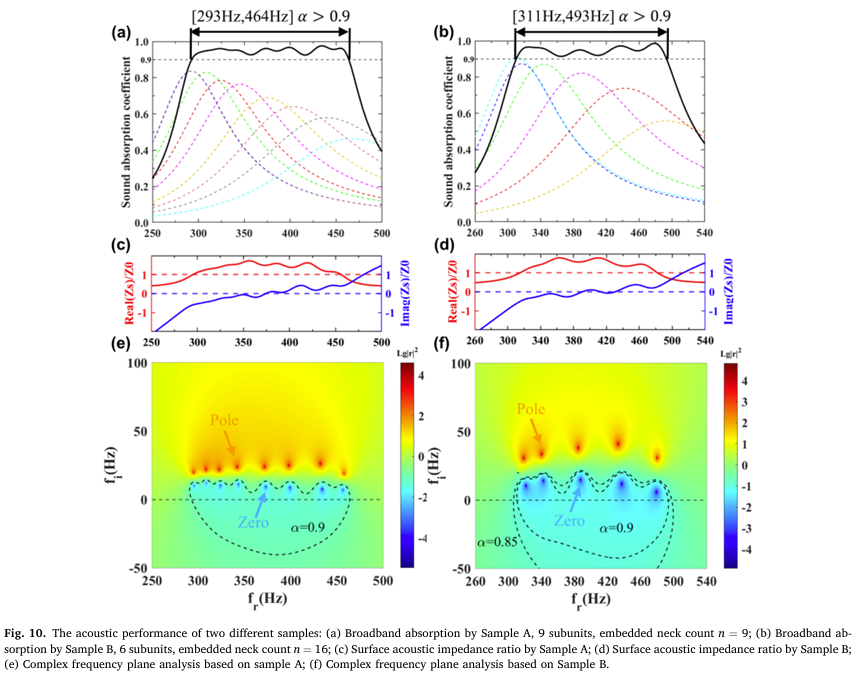
Broadband Sound Absorption Design: Multiple TBNEHR units are connected in parallel, designed through electroacoustic analogy method and optimization algorithm (fmincon). Achieved two frequency bands of quasi-perfect sound absorption (α > 0.9): 293–464 Hz (9 sub-units) and 311–493 Hz (6 sub-units).
Experimental Verification: Samples were made using 3D printing and tested in an impedance tube. The experimental results were highly consistent with theoretical and simulation results, verifying the superior performance of TBNEHR in low-frequency broadband sound absorption.

This paper proposes a bundled embedded neck Helmholtz resonator structure, which divides the neck of the classic Helmholtz resonator (HR) into multiple bundles, achieving low-frequency broadband sound absorption at sub-wavelength scales without changing the neck air volume. To this end, a theoretical model was established to evaluate the acoustic performance of this structure, and its accuracy was verified through finite element simulation (FEM) and experimental testing. The results indicate that the introduction of the bundled embedded neck helps achieve impedance matching between the metamaterial and air, satisfying the critical coupling condition for damping in the resonant system, thus enhancing the sound absorption peak of traditional HR from imperfect to perfect absorption while shifting the resonance frequency towards lower frequencies.
In-depth analysis of the sound absorption mechanism of the structure reveals that energy dissipation mainly occurs in the neck. Therefore, sound absorption performance can be optimized by adjusting the neck length, cross-sectional area, and the number of embedded necks. Finally, to verify the broadband sound absorption potential of this metamaterial, the study employed the electroacoustic analogy method to connect multiple sub-wavelength bundled embedded HR units in parallel, achieving quasi-perfect sound absorption in the frequency bands of 293–464 Hz and 311–493 Hz, with average sound absorption coefficients reaching 0.95 and 0.948, respectively. This research provides a new approach for the design of low-frequency broadband sound absorption metamaterials at sub-wavelength sizes.

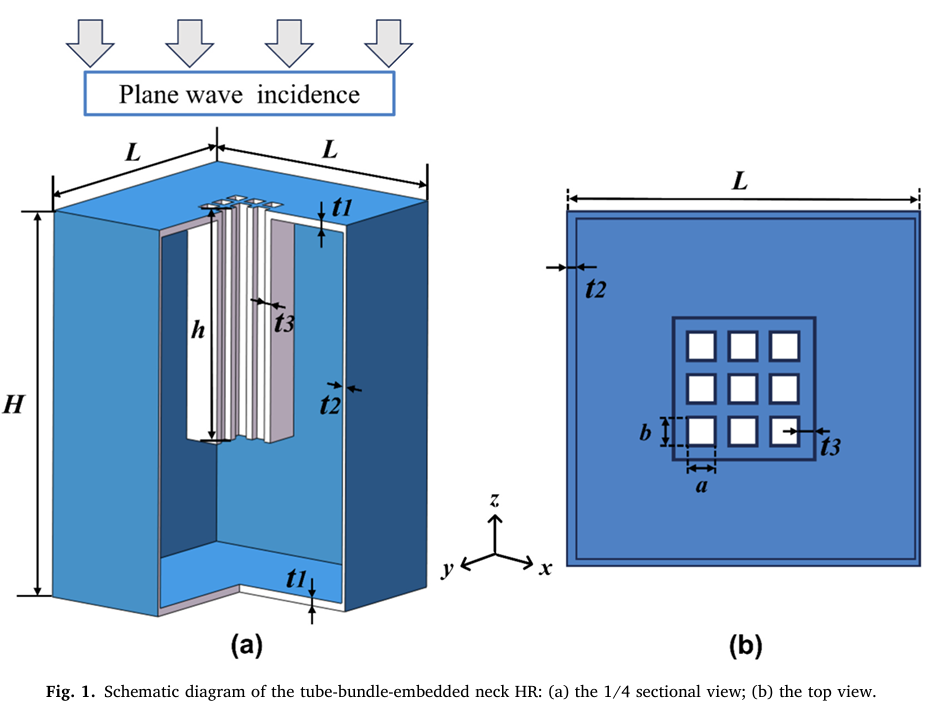
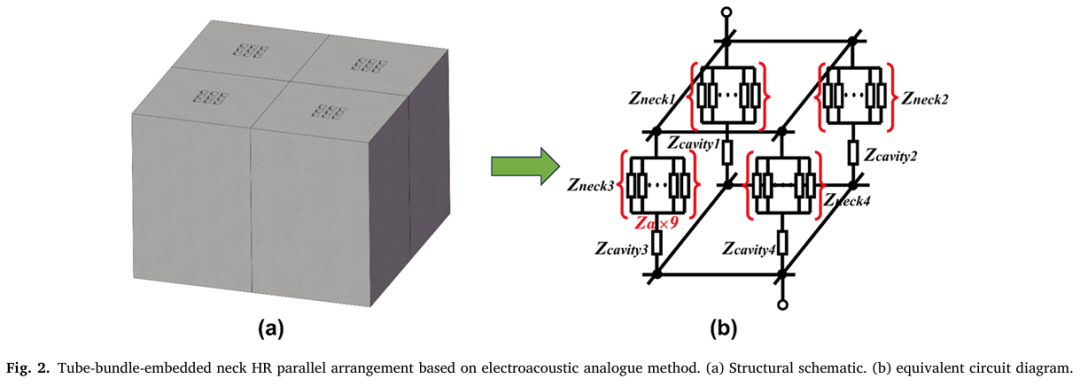
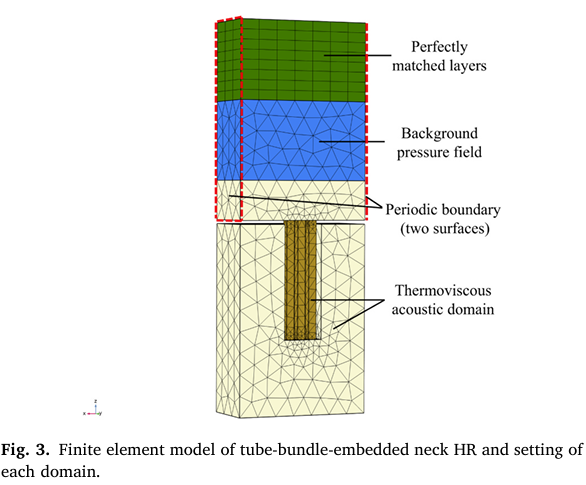
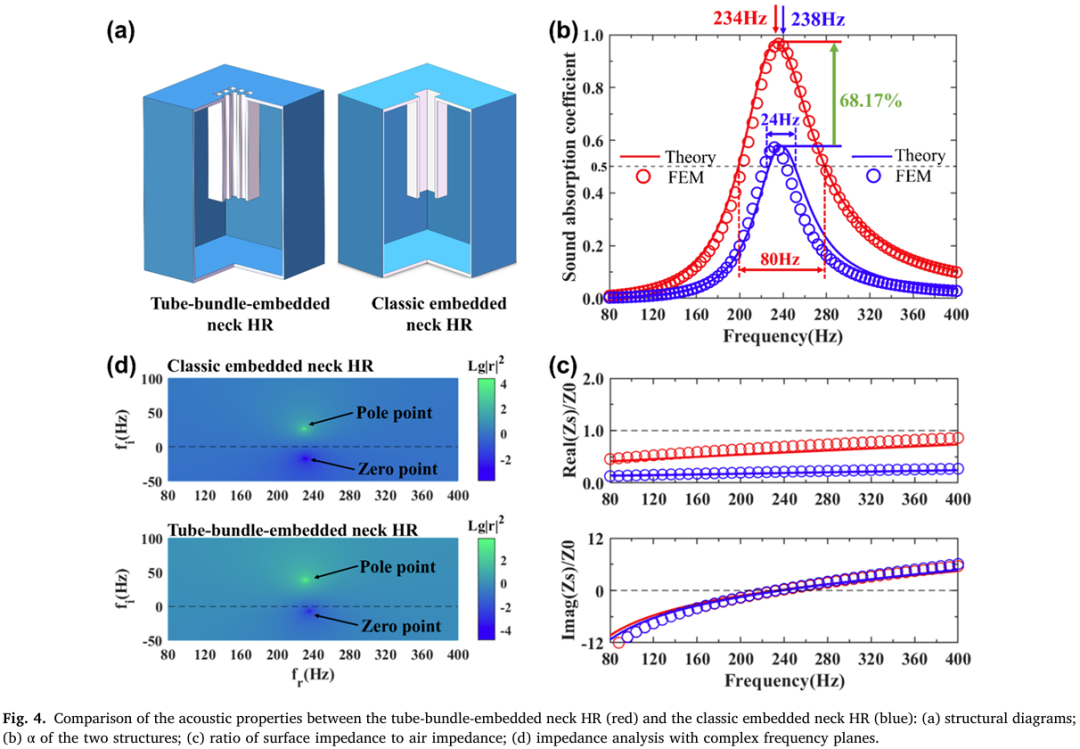
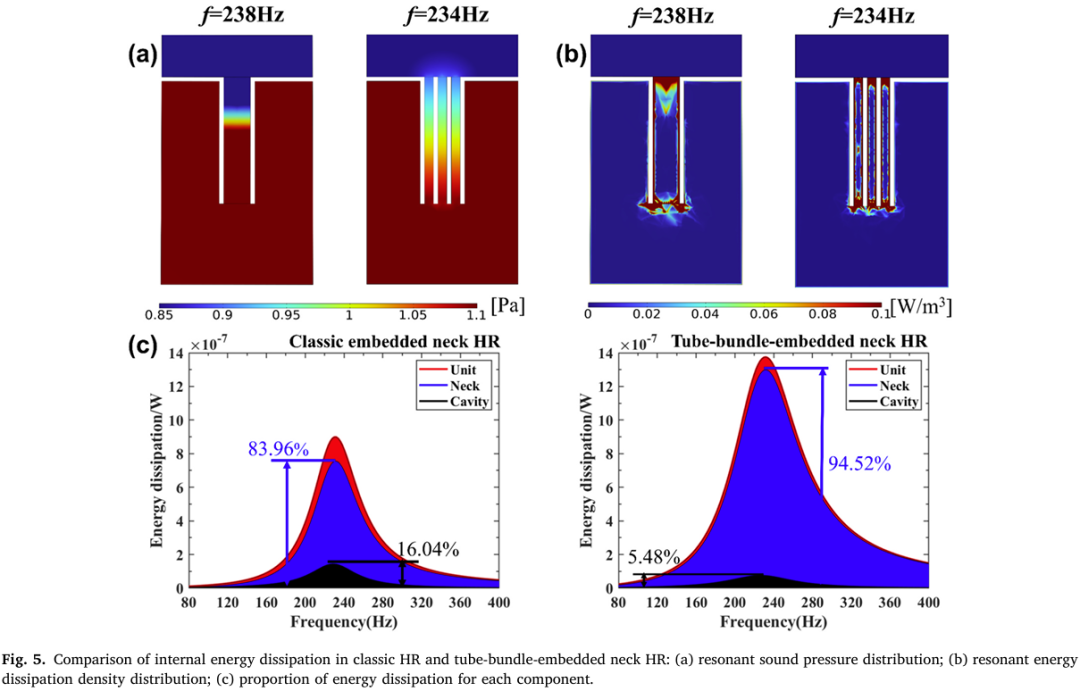
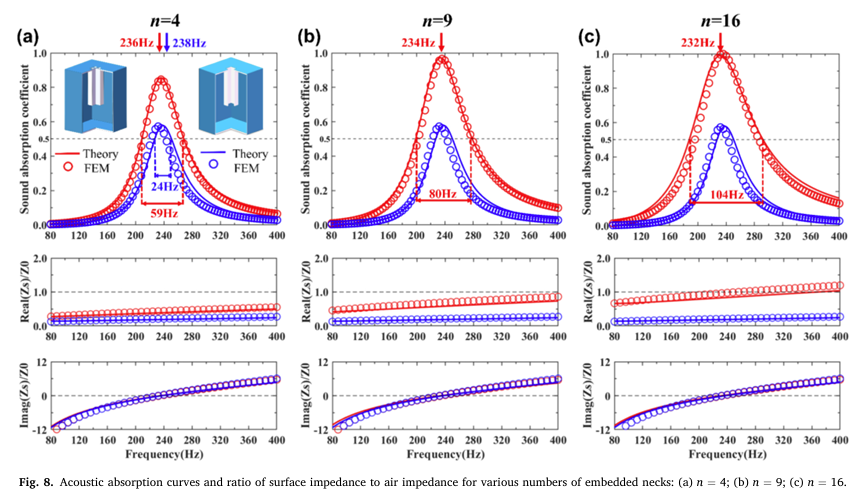
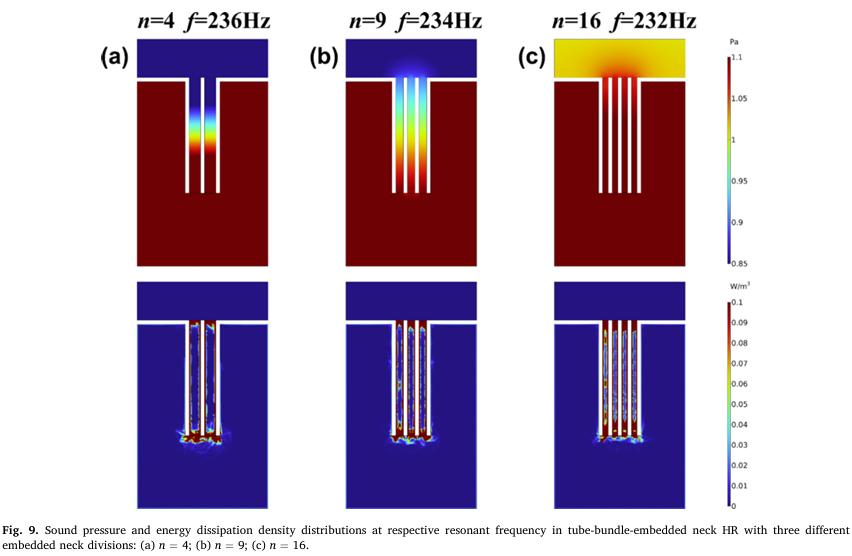

This study proposes a bundled embedded neck Helmholtz resonator (TBNEHR). By dividing a single neck into multiple bundles, it successfully enhances the traditional Helmholtz resonator from imperfect to quasi-perfect sound absorption. Through a combination of theoretical, finite element simulation, and experimental methods, the sound absorption performance of TBNEHR was systematically studied, with results highly consistent across all three methods. The bundled embedded neck effectively adjusted the system’s damping level to achieve optimal conditions.
Combining the structural characteristics of the embedded neck with the energy dissipation advantages of the bundled neck, the proposed TBNEHR achieves lower resonance frequencies while maintaining high sound absorption peak values, demonstrating superior sound absorption performance compared to traditional HR. During variations in neck length and cross-sectional area, TBNEHR still maintains high sound absorption peak values, exhibiting good sound absorption tunability. Additionally, by changing the number of embedded necks, the sound absorption peak values and half-sound absorption bandwidth can also be adjusted.
By connecting multiple sub-wavelength TBNEHR units with different resonance frequencies in parallel and using optimization algorithms for assisted design, continuous quasi-perfect sound absorption was achieved in the frequency bands of 293–464 Hz and 311–493 Hz. The proposed TBNEHR exhibits adjustable, low-frequency, broadband sound absorption characteristics at sub-wavelength sizes, demonstrating significant application potential in metamaterial design.

Submissions | Technical Guidance | Project Consultation | Startup Collaboration
Submission Email: [email protected]
[Disclaimer] Some images and text information in this article are sourced from the literature, and the copyright belongs to the original authors. All articles reprinted by this public account are for learning purposes only, and we maintain neutrality regarding the views and analyses expressed in the text. If you believe there are errors in the information sources or analytical viewpoints, or if there are issues related to copyright or privacy, please contact us promptly, and we will delete or modify the content immediately. Thank you for your attention!!!
DOI: 10.1016/j.apacoust.2025.111146
☟ To read the original literature, please click “Read the Original” at the end.