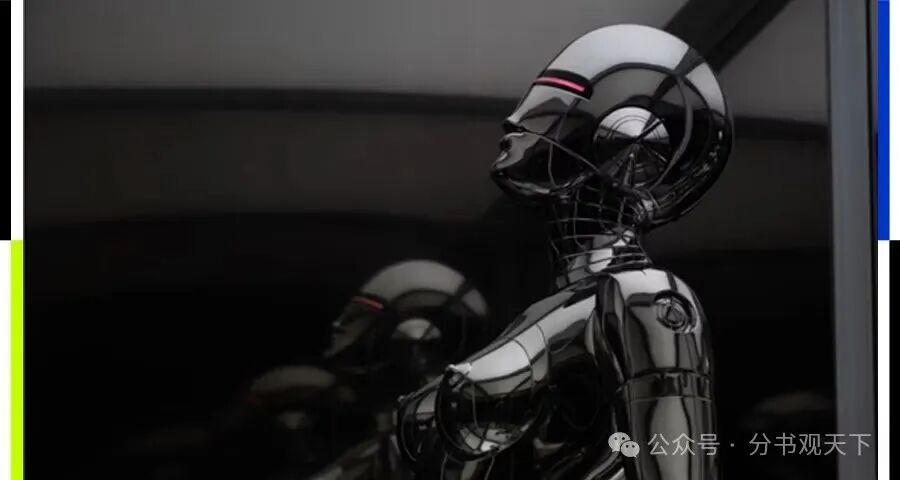
The first wave of bankruptcies in humanoid robotics has arrived, what signals does this release? Recently, a humanoid robotics startup called K-Scale Labs in Silicon Valley went bankrupt after burning through $50 million in funding. Over 100 pre-orders had to be refunded, and only a few of the 10 core employees remained. Meanwhile, a domestic startup known for its “Spring Festival Gala Robot” was reported to be in arrears on salaries, and Jinsha River Venture Capital announced a mass exit from humanoid robotics projects. Tesla’s Optimus also slashed its annual production target from 50,000 units to 2,000 units. Once hailed by capital as the “next generation iPhone” and a “trillion-dollar terminal” track, the alarm for bankruptcy has suddenly sounded. Behind this are three major challenges: technology, cost, and application scenarios. First, looking at technology, while robots can perform backflips and make coffee in the lab, they struggle to even hold a part steadily in a factory setting. High joint energy consumption, along with the impossible triangle of endurance, weight, and cost; perception accuracy has centimeter-level errors, leading to misalignment when grasping or inserting; the cost of algorithm data collection is high, requiring 12 to 18 months of retraining for each new scenario. Even more absurdly, some companies resort to remote operation deception, where robots making coffee at exhibitions might be controlled by programmers frantically typing behind the scenes. Regarding costs, Elon Musk once stated that humanoid robot costs should be reduced to $20,000, yet by 2025, the average material cost in the industry is still expected to be 400,000 RMB, double the target. Core components are constrained, with imported prices in the tens of thousands, and domestic alternatives lacking half the precision; non-standardized production requires 500,000 RMB to open a set of custom molds, with long assembly times and only a 60% yield rate; the supply chain is also a significant issue, with top-level demand just beginning to ramp up while the bottom consists of numerous small factories, lacking large-scale production capabilities of 100,000 units per year. Now looking at application scenarios, those currently purchasing robots are either universities conducting research or state-owned enterprises displaying them at the front desk, with no real customers willing to pay consistently. In industrial scenarios, 90% of standardized processes have already been covered by industrial robots, leaving humanoid robots to compete in niche areas like narrow space maintenance and outdoor rescue, with a particularly slow return on investment; in home scenarios, safety and privacy standards are lacking, willingness to pay is low, and functionalities are often trivial; the consumer market resembles a “pseudo-demand”—who would spend 150,000 RMB on a toy that can do backflips? From a capital perspective, in the first quarter of 2025, domestic funding in the embodied intelligence sector reached 6 billion RMB, but the head effect is particularly pronounced, with valuations of small and medium-sized companies halved, and Jinsha River Venture Capital directly exiting some projects. Capital is no longer blindly betting on concepts and is starting to look at cash flow. Companies that survive will either focus on upstream, selling core components and collecting patent fees; or target specific scenarios to become champions in narrow tracks; or partner with large automotive companies and major manufacturers. For investors, this wave of bankruptcies serves as a warning. Purely conceptual “PPT companies,” consumer-oriented “home robot stocks,” and “assembly factories” relying on imported components must tread carefully. For strategic positioning, attention can be directed towards upstream core components, industrial scenario integrators, or diversifying risks through ETFs. The industry generally believes that 2028 will be a critical juncture, where the cost of humanoid robots must be reduced to below 50,000 RMB, and solid-state battery energy density must exceed 400Wh/kg to potentially trigger an explosion in growth. Until then, investments remain high-risk. This wave of bankruptcies is actually the beginning of the industry’s “elimination of the false and retaining the true,” similar to the bursting of the internet bubble in 2000; only those who survive will become giants. We must also remain calm as investors, avoiding blind chasing of trends, and focus more on who is genuinely making money and solving real problems.