Recently, at a military-civilian integration exhibition, a subsidiary of China Electronics Technology Group Corporation showcased a fully forward-designed 35 million gate FPGA. Subsequently, a subsidiary of China Electronics announced the successful development of a 70 million gate FPGA. The technological breakthroughs achieved by China Electronics and China Electronics Technology Group in the FPGA field are very encouraging, especially following the rumored veto by Trump regarding the acquisition of the American FPGA design company Lattice by the private equity firm CanyonBridge, which has Chinese investment background.
Although these two FPGA products still lag significantly behind giants like Xilinx and Altera, they have already surpassed the level of existing domestic FPGA products in terms of scale, and can address some critical issues in specific fields.
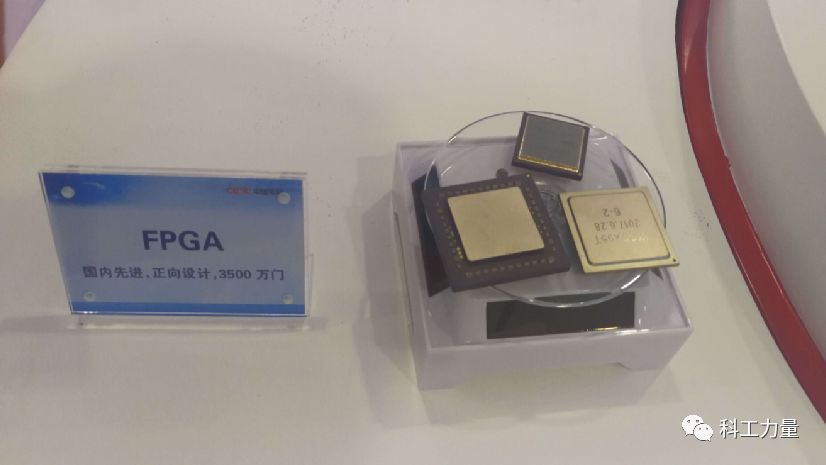
FPGA is a very important type of chip
FPGA stands for Field Programmable Gate Array, which is essentially a chip that can be programmed by the user to implement a specific hardware acceleration algorithm. Currently, this type of chip has three main application directions.
First, it is used in various military equipment. A large phased array radar has thousands of TR components, and several TR components form a small processing unit for signal analog-to-digital conversion and preprocessing, with each unit containing an FPGA for data processing. Infrared devices also require FPGA technology; for instance, the U.S. Defense Logistics Agency has previously purchased Xilinx’s FPGA for data processing in surveillance, reconnaissance, and fire control systems involving infrared sensors.
Second, it is used in communication equipment manufacturers. For example, various communication devices from Huawei and ZTE utilize FPGA for data processing in communication base stations, which are essentially small phased arrays. Existing communication devices are also heavily reliant on FPGA technology; for instance, during the recent sanctions against ZTE by the U.S., FPGA was included in the sanctions list, and most of the FPGA needed by Huawei and ZTE depended on imports from American companies like Xilinx and Altera. It can be said that if the U.S. restricts access to FPGA technology, China’s 5G communication network construction will inevitably be affected.
Third, chip design companies use FPGA for simulation. FPGA is often referred to as a “universal chip” because once the code is burned into it, it can be transformed into the required chip. This characteristic makes FPGA widely used in chip simulation. What does this mean? For example, if Loongson designs a CPU and wants to go for tape-out, if the tape-out fails, it could result in a loss of millions of dollars. In such cases, the code can be burned into an FPGA for testing, allowing issues to be identified and resolved, thereby reducing tape-out risks.
Some may wonder, since it is a “universal chip,” why not just buy an FPGA and burn the code into it instead of going for tape-out? This is mainly because FPGA is very expensive; for instance, high-end products purchased by domestic IC design companies from Xilinx can cost over 400,000 RMB each, while a typical Intel CPU (with exceptions like PHI) generally costs only a few thousand to tens of thousands of RMB. Additionally, the main frequency of an FPGA after code burning is also quite low, usually around 100MHz, whereas the latest Intel and AMD CPUs have frequencies around 4GHz. Therefore, FPGA is more often used for simulation to mitigate the risks associated with CPU tape-out.
Moreover, in the medical field, FPGA is used in ultrasound detectors, CT scanners, MRI machines, and other devices. With the rise of the Internet of Things, automotive electronics, robotics, and autonomous driving, FPGA may see even broader applications.
This technological breakthrough represents a significant leap forward
The entry barrier into the FPGA industry is very high. Over the past decade, more than 60 companies, including Intel, IBM, Motorola, Philips, Toshiba, and Samsung, have attempted to enter this field. Except for Intel, which successfully entered the market by acquiring Altera for $16.7 billion, the rest have faced failures. The former leader in the domestic market, Jingwei Yage, fell into operational difficulties after taking on the national high-tech project, leading to a significant loss of talent to other domestic FPGA companies.
The difficulty of FPGA technology primarily stems from the small market capacity, making it hard to recover the massive investments; the industry is highly concentrated, making it difficult for latecomers to compete with giants; Xilinx and Altera have established patent barriers that block the path for newcomers; and the unique nature of FPGA requires a focus on high-end products, making it impossible to adopt a strategy of initially capturing the low-end market at lower prices and gradually moving up to the mid-to-high-end market.
As a result, the global FPGA market is essentially monopolized by four companies: two large and two small. Domestic FPGA manufacturers are mostly in a challenging development phase, with very low market shares. Zhu Changhua, chairman of Chongguang Guoxin, stated at a press conference: “The global FPGA chip market is approximately $5 billion, with China accounting for about $1.5 billion. Due to the high technical and capital barriers in the industry, American manufacturers hold a monopoly position. In the $1.5 billion market in China, domestic FPGA products only account for about 2%.“
In addition to the low market share, there is also a significant gap in technical levels between domestic manufacturers and foreign giants. Although there are hundreds of domestic FPGA manufacturers competing, they are mostly concentrated in the mid-to-low-end market, with most products around 10 million gates, and only a few reaching 20 million gates. While some have been developed independently, most are products of reverse engineering or commercial acquisitions, such as Jingwei Yage relying on the U.S. company CSwitch to develop its proprietary Tile architecture.
The recent 35 million gate FPGA from China Electronics Technology Group and the 70 million gate FPGA from China Electronics represent a very encouraging technological breakthrough. Although specific parameters are yet to be disclosed, in terms of scale, they have already left many domestic commercial companies far behind and can meet the needs of many fields, solving critical issues. For instance, an active phased array radar on a new fighter jet has adopted an FPGA designed by a domestic unit.
Therefore, the technological breakthroughs achieved by China Electronics and China Electronics Technology Group are of great significance, addressing specific bottleneck issues. After all, chips costing tens of thousands or hundreds of thousands of RMB are not like Intel’s CPUs, which have a large civilian stockpile, and there are significant differences between military and civilian products. In the event of an emergency, the depletion of existing stockpiles would severely impact the replenishment of high-precision weapons and information equipment.
Although in many aspects, the domestic FPGA has already solved the critical issues. However, in the commercial field, the FPGA from state-owned units still finds it difficult to replace products from Xilinx and Altera. After all, in terms of performance, there is still a significant gap between domestic units and Xilinx and Altera’s FPGA products. Industry insiders have clearly stated that domestic FPGA technology is still not up to par, and currently, they can only use American FPGA products.
Conclusion
China has long hoped to acquire technology from abroad. However, the failures of overseas acquisitions or joint ventures by Unisoc have proven that this path is not feasible. Consequently, Unisoc ultimately chose to recruit talent from Taiwan, South Korea, and Japan, opting for an independent research and development route. In the case of FPGA, practice has also shown that the path of technology introduction is not viable.
Even though Canyon Bridge had already negotiated with Lattice, it still faced scrutiny from the U.S. Committee on Foreign Investment. Although Lattice was very willing to be acquired by Canyon Bridge and repeatedly applied for clearance, Lattice’s pleas encountered Trump, who used presidential privileges to completely extinguish the hope of the acquisition.
The achievements of China Electronics and China Electronics Technology Group in the FPGA field fully demonstrate that the path of independent research and development is entirely feasible. Some experts and leaders have suggested that “the failure of technology introduction led to the choice of independent research and development,” and that “treating independent technology as a bargaining chip for joint ventures, only to abandon it once a joint venture is established” is a mindset and approach worth reflecting upon.