Plug and Play China’s 2025 (19th) Startup Week and Global Entrepreneurship Week China (GEW) opened in Shanghai. This year’s conference focuses on the implementation models of artificial intelligence in real business scenarios and sustainable commercialization paths. Senior experts from research institutions, government and enterprise executives, startups, and investment institutions shared in-depth insights on large model engineering, scenario-based computing power, and industry intelligence trends.
The co-founder of Plug and Play AI showcased the team’s self-developed RM-01 portable AI supercomputer and provided an in-depth analysis of the development space and necessity for edge computing in the latter half of large models.
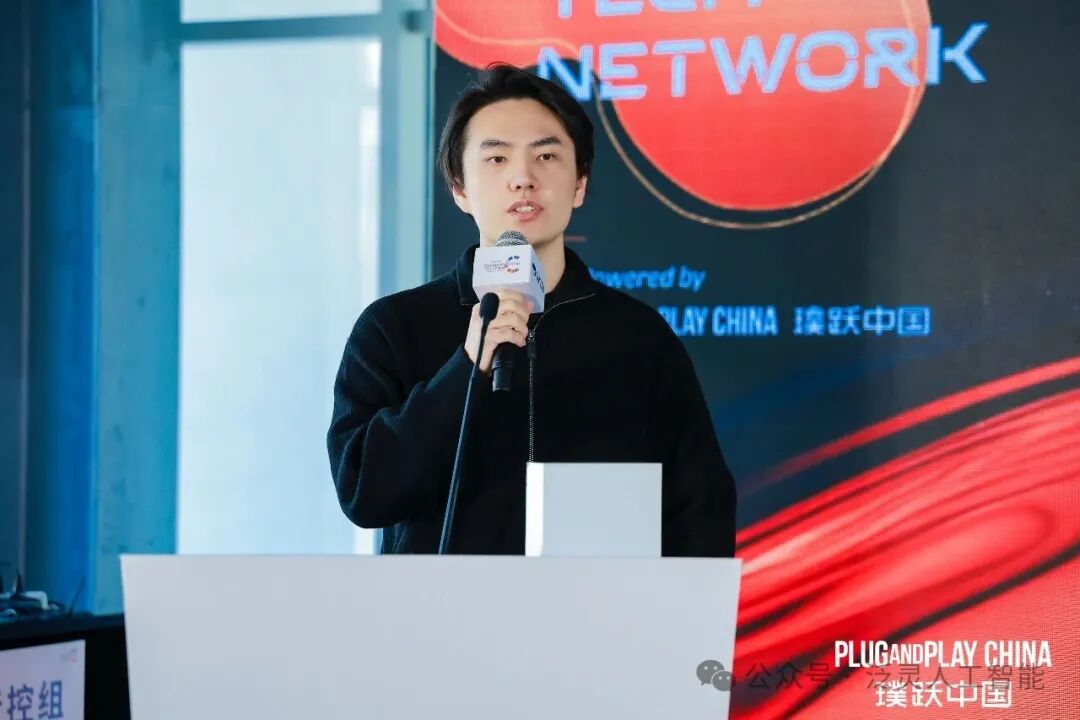
Core demands from real scenarios indicate that many industries lack the conditions for server rooms in their daily operations while needing to adhere to strict requirements of keeping core data within the domain (i.e., unable to bear the high costs and potential data risks of cloud-based AI inference). However, there is still an urgent need for strong computing power to support large model inference and high-performance AI computing. These demands are prevalent in medical institutions, manufacturing plants, highway networks, government and enterprise departments, research laboratories, and chain enterprises, representing the most overlooked yet critical constraints when AI is truly implemented.
The technical value of RM-01 lies in breaking the hardware “impossible triangle” of size, power consumption, and computing power. It does not simply pursue a stacking of computing power but addresses three long-considered incompatible factors from an engineering perspective: compact size, low power consumption, and high computing power. RM-01 can be directly deployed on a desk, laboratory bench, or equipment room; it can operate stably in a regular office environment without the need for a server room or industrial-grade power supply, while maintaining extremely low noise levels. By utilizing a self-developed motherboard paired with a self-developed Linghu inference engine, it achieves powerful model inference performance that traditional edge devices cannot provide, significantly reducing the total cost of ownership (TCO) for enterprise AI solutions.
Experts and investors have commented that as the demand for data privatization and locally controllable computing power continues to grow, devices that break the limitations of size, power consumption, and computing power will become a new type of infrastructure for AI implementation. Several investment institutions have highly recognized RM-01’s product capabilities in “portable strong computing power” and “rapid delivery of AI applications.”