
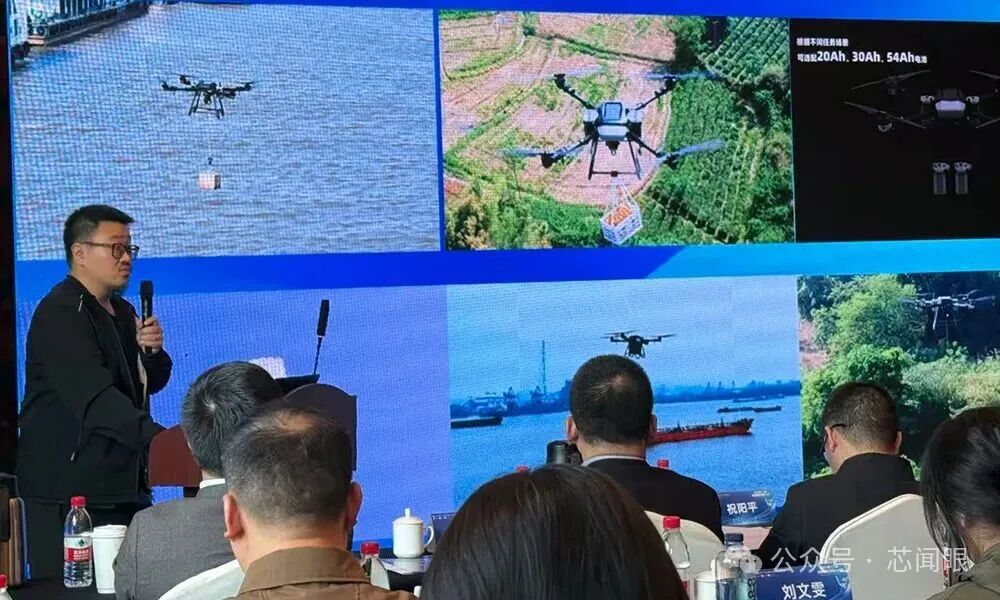
Recently, at the 18th China Intelligent Robot Conference’s sub-forum on “Embodied Intelligence Industry Practice and Corporate Innovation”, Zhang Yu, Chairman of Tuogong (Nanjing) Robotics Co., Ltd., delivered a keynote speech titled “From Flight Control to Complete Machine: Tuogong’s Technological Breakthrough and Industrial Innovation”.
In his speech, Zhang Yu introduced the brief history of Tuogong’s drone company since its establishment, as well as the main application scenarios and future technological development focuses of Tuogong drones.
He stated that drones can be seen as a form of robots. Currently, drones are gradually becoming more automated and intelligent. However, regardless of how drones develop in the future, in his understanding, robots, embodied intelligent robots, and drones should all be considered as production tools.Tuogong drones have been widely used as production tools in fields such as plant protection, logistics, and heavy load transportation.
►►►
Robots are Production Tools
At the beginning of his speech, Zhang Yu presented an important viewpoint: “Robots are production tools”.
He pointed out that the term “robot” originates from the English word “robot”, with its root “robota” meaning labor. However, the Chinese translation as “机器人” (robot) can lead to a misunderstanding that robots must have a human form.
In Zhang Yu’s view, the design and development of robots and drones do not need to mimic human forms but should be designed according to application needs to adapt to different scenarios. Because drones are essentially production tools.
In Tuogong’s goals, Zhang Yu emphasized the hope to make drones smarter, more efficient, and cheaper, capable of covering more application scenarios and adapting to more industry needs, becoming truly useful and convenient production tools.
►►►
The Technology of Drones is Gradual
During the speech, Zhang Yu briefly reviewed the development history of drone technology and introduced the evolution of drones from Level 1 to Level 4.
He explained that ten years ago, drones relied more on manual operation, with pilots manually controlling flight paths to perform tasks such as photography and pesticide spraying. At this stage, drones were more like “remote-controlled airplanes”, with low levels of intelligence and automation.
As technology progressed, drones gradually incorporated sensors, autopilot algorithms, and moved towards Level 3 and Level 4 intelligent flight.
Zhang Yu further envisioned the application scenarios for future Level 4 drones—imagine a drone “air taxi” picking up and dropping off passengers from Zijin Mountain Villa to Nanjing South Station, with the entire process requiring no human intervention, completely autonomously planning routes, takeoffs, and flight tasks.
Nevertheless, Zhang Yu also clearly pointed out that the realization of Level 4 drones is still a gradual process, expected to require a long time for technological accumulation and market application. This process will be accompanied by continuous optimization and improvement of flight control systems, intelligent perception technologies, and autonomous flight algorithms.
►►►
Agricultural Applications of Tuogong Drones
According to reports, Tuogong initially focused on the research and development of drone flight control systems and quickly became one of the largest third-party flight control suppliers in China.
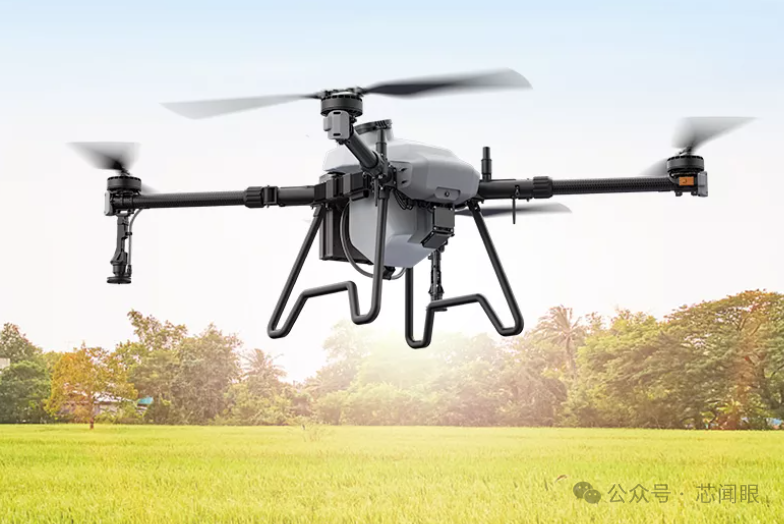
With the accumulation of technology, Tuogong gradually expanded its business scope, entering the field of complete machine research and development, launching its own brand of “Fengpeng” series agricultural drones.
Zhang Yu pointed out that today’s agricultural drones are very close to Level 3 and Level 4 automated operations. Their flight paths and obstacle avoidance recognition are fully autonomous, capable of completing tasks such as pesticide spraying and watering without human intervention.
In addition, Tuogong’s drones are not only used in large fields but are also widely applied in “hard-to-reach scenarios” in agriculture—such as mountainous areas and tea garden slopes where ground equipment is difficult to access.
Zhang Yu elaborated that previously, these areas relied entirely on manual labor—such as spraying pesticides in high temperatures, which is not only labor-intensive but also prone to pesticide harm and inhalation. Drones can effectively solve these “pain points of operation in harsh environments”. From an intelligence perspective, current agricultural drones are generally equipped with perception and decision-making systems, with intelligent mapping becoming standard: once a map is created, it can be used long-term, accurately performing tasks regardless of terrain undulations or complex conditions.
Tuogong drones also play a role in the transportation of agricultural products. In mountainous areas such as Fujian, Yunnan, Guizhou, and Sichuan, drones have been used to transport agricultural products like durians, coconuts, and tea leaves, capable of transporting several tons of goods in a day, reducing the labor intensity for farmers and greatly improving work efficiency.
►►►
New Explorations of Tuogong Drones in Logistics and Load Transportation
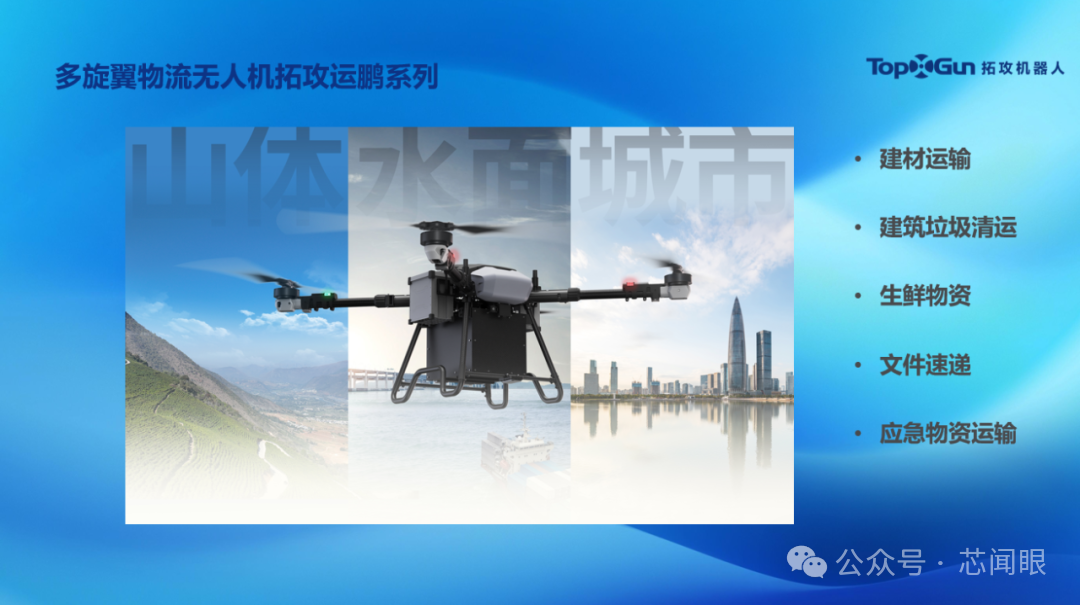
Zhang Yu revealed that, in addition to agricultural applications, Tuogong drones are also exploring new scenarios in logistics and load transportation.
One is the supply of living materials for crew members. In the past, crew members on the Yangtze River route had to wait until the ship docked for refueling to receive supplies. Now, crew members on the Yangtze section can order McDonald’s or buy rice and salted duck, and Tuogong drones can deliver them from the shore to the ship, greatly improving the crew’s quality of life.
The second is low-altitude load transportation. Tuogong drones are supplying various materials to hotels in the Huangshan scenic area, replacing the traditional work of porters. Drones can carry 80-100 kilograms and complete 5 kilometers of mountain transportation in 5-10 minutes, achieving work efficiency 100 times that of porters.
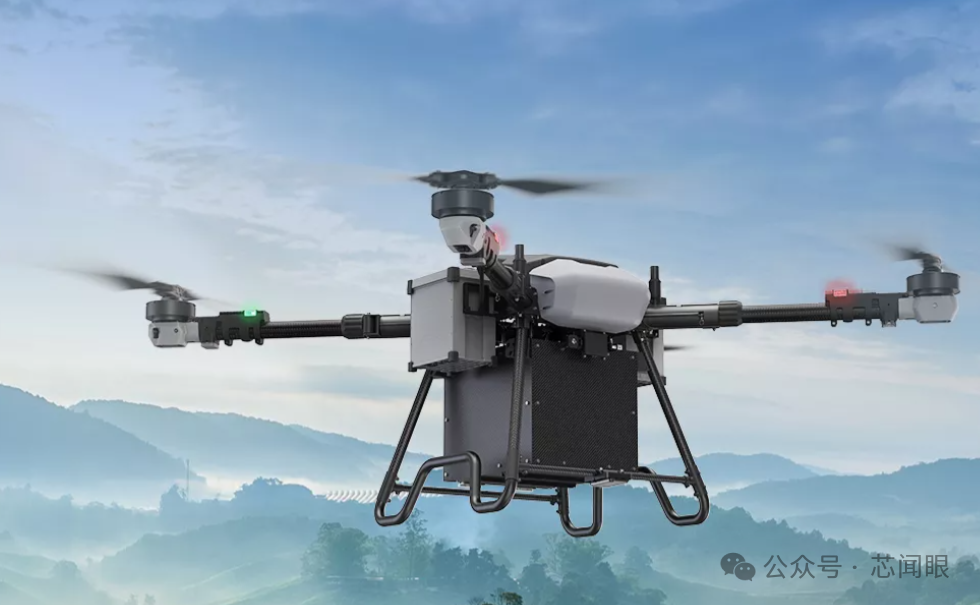
In this regard, Zhang Yu emphasized that this is not about machines taking away the jobs of porters, as older porters are gradually retiring from the industry, and this physically demanding work is not something young people are willing to take over.Drones can also help remove garbage from Huangshan, contributing to ecological protection.
►►►
Tuogong Drones’ Non-Standard Products
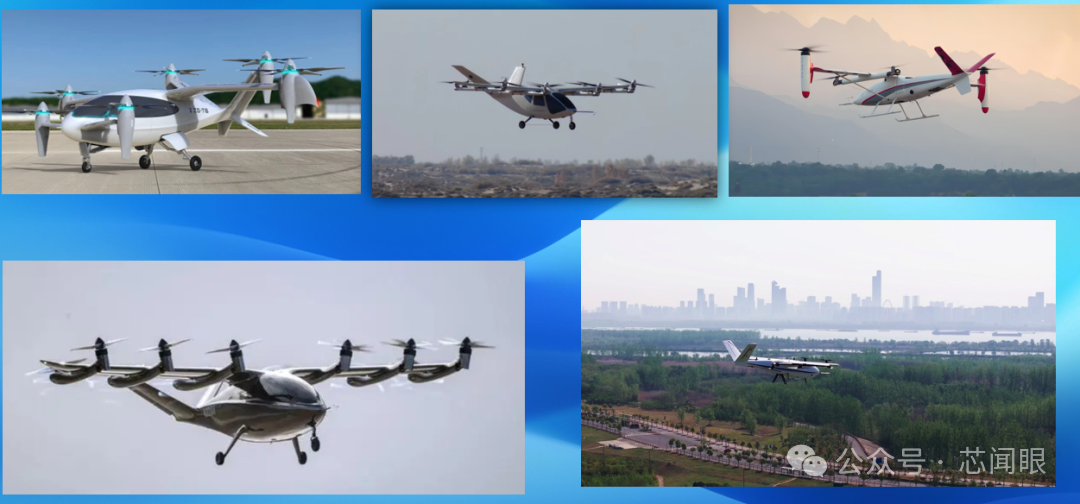
Zhang Yu introduced that Tuogong not only develops and produces standard products but also actively develops non-standard customized products, especially in the fields of medium and large drones and eVTOL (electric vertical takeoff and landing aircraft) innovative products.
It is understood that due to the technical background of Tuogong’s founding team, the company has accumulated strong capabilities in flight control technology and began developing ton-level medium and large drones as early as 2018, with the first aircraft delivered to SF Express for branch logistics transportation.
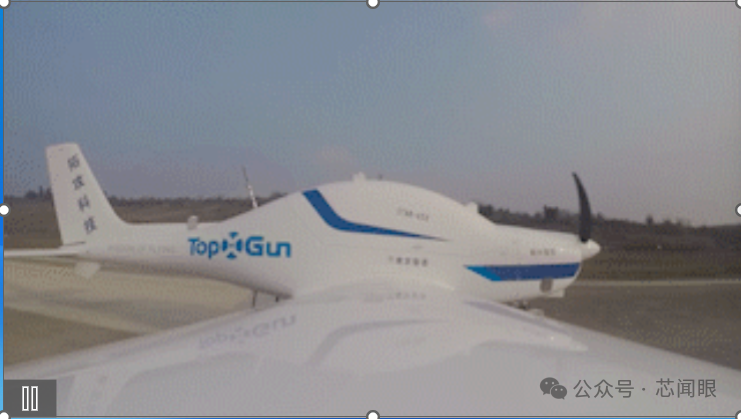
Since the founding team of Tuogong comes from the South China University of Technology’s flight control research institute, flight control technology is Tuogong’s core competitiveness, and they have been involved in the research and development of medium and large drones for a long time. The most representative project is the near-ton-level medium and large drone project initiated in 2018 and first flown in 2019. The first customer for this product was SF Express, which used it for branch logistics transportation.
Subsequently, Tuogong launched the STAR-1500, a large fixed-wing drone developed for the Northwest operational scenario. The main advantage of this aircraft is its ability to achieve short-distance takeoff, requiring only 200 meters for takeoff, and can operate on grass and unpaved surfaces, demonstrating good off-road performance to meet the logistics needs of the Northwest region.
Currently, in the hottest eVTOL (electric vertical takeoff and landing aircraft) sector, Zhang Yu stated that Tuogong’s delivered cases and model quantities are already industry-leading, covering prototype verification machines, scaled models, and full-size models, especially with mature experience in complex configurations such as tilt-rotor and semi-tilt-rotor.
With a technical background, Zhang Yu emphasized at the end of his speech that with the development of drone technology and its integration with embodied intelligence technology, Tuogong will further focus on the “brain” and “small brain” of drones, using big data and artificial intelligence to make unmanned aerial vehicles safer, smarter, and more economically serve various industries.
P.S. This article is based on a speech in a public setting and has not been reviewed by the speaker; the author is responsible for the content.
END
Written by:Chip News Eye Editorial Team
Images: Chip News Eye
 Scan to Follow Us
WeChat Search: Chip News Eye