 Click the blue text to follow us
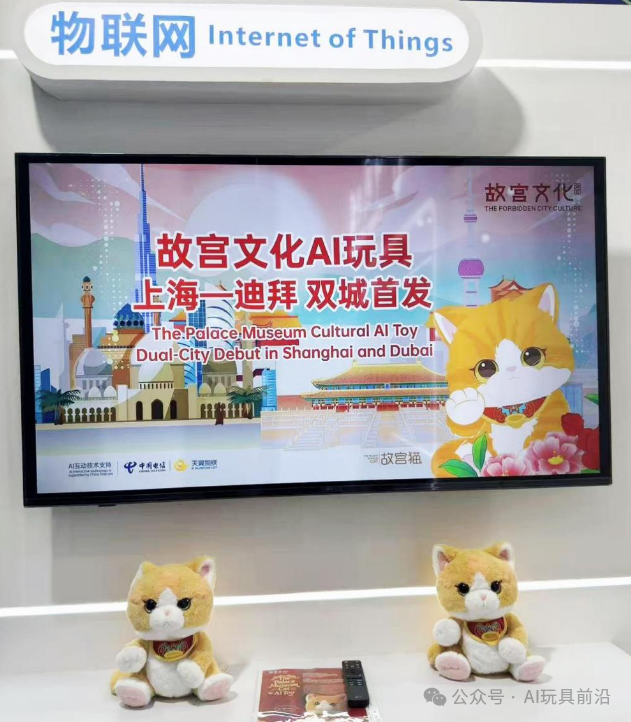
At the GITEX International Exhibition in Dubai, a “Palace Cat” embroidered with auspicious patterns narrated the story of the Hall of Supreme Harmony in fluent English, leaving foreign merchants in awe; in Nanjing’s intangible cultural heritage experience space, Generation Z created bamboo segment dolls using AI material kits, which could perform somersaults through sensors; at the Eurasian Forum, Labubu dolls infused with Dunhuang flying celestial elements became the “cultural messengers” that diplomats from 45 countries scrambled to acquire…
These scenes point to a new trend: AI toys are deeply integrating with the national trend of cultural creativity, bringing traditional culture into the present in a more vibrant manner.
When the interactive capabilities of artificial intelligence collide with the profound heritage of Chinese culture, national trend toys are no longer static ornaments but become cultural carriers that can speak, interact, and co-create. From IP empowerment to scene innovation, and user participation, three innovative paths are allowing ancient culture to rejuvenate in the intelligent era.
01AI Interaction: Bringing National Trend IP to Life and Making It Conversational
The core of national trend IP is cultural identity, but traditional cultural creativity often struggles to create a deep connection with the younger generation due to a lack of interactivity.The intervention of AI interaction technology injects “vitality” into the IP, allowing historical stories to “walk” out of books and display cases, achieving two-way communication.
The “Palace Cat Fu Dun AI Doll” jointly launched by the Palace Museum and China Telecom’s Tianyi IoT is a benchmark case in this direction.
As an intelligent product derived from the Palace Museum’s “Palace Cat” IP, it breaks the static limitations of traditional cultural creativity: after embedding the self-developed RISC-V architecture cloud core AI module from Tianyi IoT, this doll, embroidered with auspicious patterns like koi and bats, can not only switch freely between Chinese and English to explain the historical anecdotes of the “Zheng Da Guang Ming” plaque but can also perceive user states through emotion recognition technology—when a child is feeling down, it will narrate interesting legends about “Imperial Cats Protecting Treasures” in a soft voice; when tourists inquire about the tour route, it can accurately recommend lesser-known but precious cultural relic exhibition points.
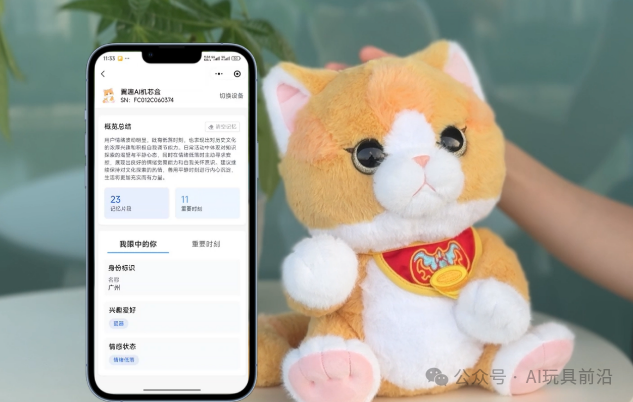
This integration of “AI + IP” allows national trend IP to upgrade from “symbol” to “partner.” Compared to ordinary Palace Museum cultural products, the cultural dissemination efficiency of the Fu Dun doll has increased threefold, and at the Shanghai CTE Toy Exhibition, its pre-sale volume far exceeded that of traditional cultural products.
China Telecom has also applied this technology to the AI mascot of the National Games, “Xi Yang Yang·Le Rong Rong,” and the educational “AI Bear Officer,” proving that AI interaction has universal applicability for empowering national trend IP, providing a replicable model for the digitalization of the cultural industry.
02Scene Innovation: Making Traditional Culture “Experiential” and “Participatory”
The dilemma of inheriting traditional culture often stems from the lack of experiential scenarios—young people find it hard to imagine the joy of ancient children playing with bamboo segment dolls, nor can they intuitively appreciate the beauty of the light and shadow of a revolving lantern. AI technology reconstructs these ancient entertainment methods in modern life, adding new fun.
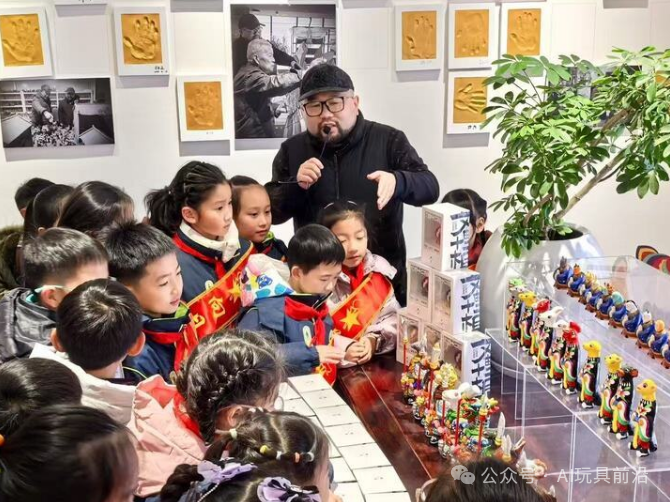
Nanjing entrepreneur Sha Anqiang has activated ancient crafts using the “AI + Scene” approach in his intangible cultural heritage toy experience space. His team extracted elements from intangible cultural heritage projects like the stone monkey from Fangcheng, Henan, and Huishan clay figurines to develop a series of intelligent material kits: traditional revolving lanterns have been shrunk to palm size, embedded with AI sensing modules, and can rotate the images of horse and rider on the screen without lighting candles, powered by USB; the beloved “Monkey Jia Guan” toy retains traditional fabric craftsmanship while adding voice control functionality, allowing children to say “face change” and the little monkey will automatically put on and take off the mask while playing the audio explanation by intangible cultural heritage inheritor Mr. Wei Yimin.
The scene innovation of Dunhuang IP is even more technologically advanced.
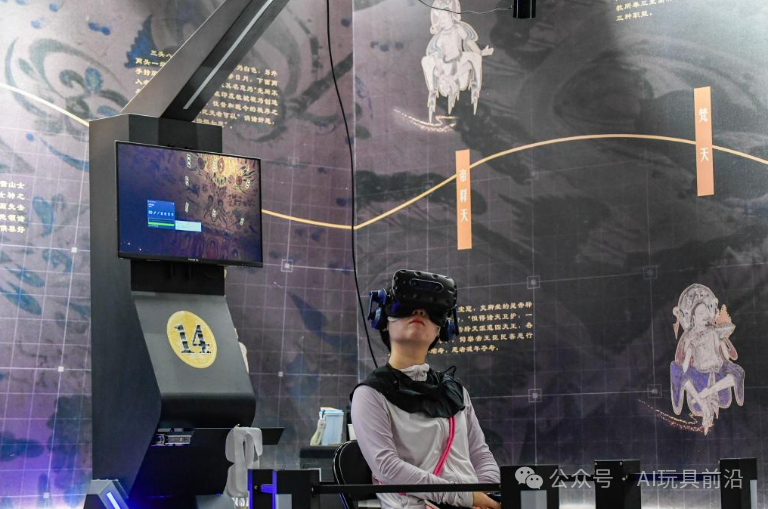
The “Seeking Dunhuang” series of AI toys, developed in collaboration with the Dunhuang Research Institute and related enterprises, allows users to “walk into” Cave 285 of the Mogao Caves through VR technology—when children use smart paintbrushes to paint on the dolls, the VR glasses will simultaneously present the process of restoring the mural colors, and they can interact with virtual “flying celestial” characters to learn about the names and playing methods of the instruments depicted in the murals.
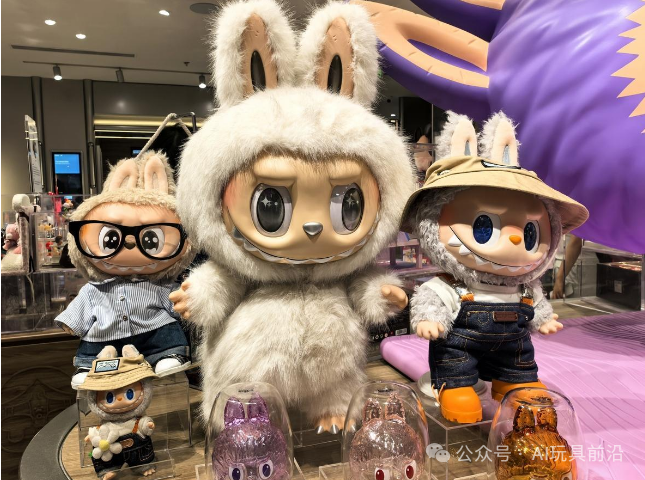
Meanwhile, the Labubu Dunhuang limited edition doll, which shone at the Eurasian Forum, projects a light and shadow map of the Eurasian continent as its 3D printed base rotates, and scanning the doll’s eyes with AR activates historical stories of the Silk Road, transforming cultural experiences from one-way observation to immersive participation.
 03User Co-Creation: Making National Trend Design “Grounded” and “Warm”
The core of national trend cultural creativity is to establish an emotional connection with contemporary consumers, and the best understanding of consumer needs comes from the users themselves.AI technology lowers the barriers to creation, allowing users to shift from “buyers” to “co-creators,” making national trend toys more aligned with market demands and enhancing the public foundation for cultural inheritance.
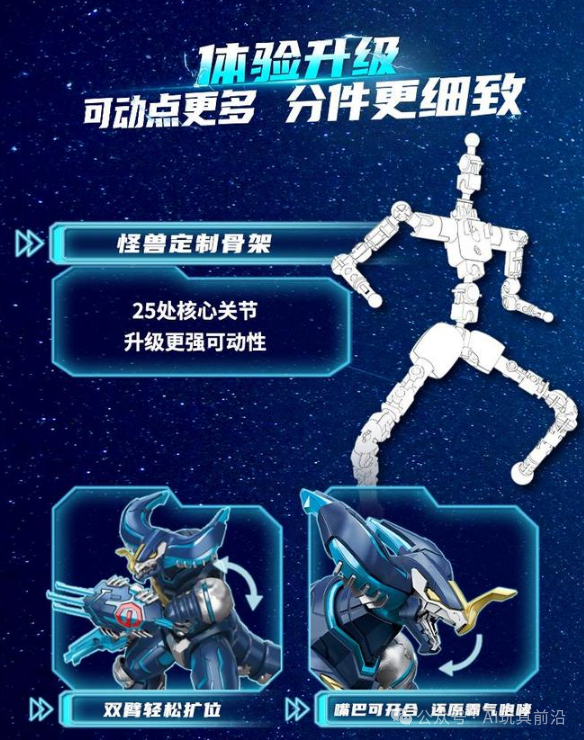
The “User Co-Creation Plan” of the domestic building block brand Qimiao Jimu vividly illustrates this innovative logic. The brand initiated a design voting for the Ultraman monster series on its member mini-program, inviting players to participate in decisions regarding model shapes, assembly difficulty, and other aspects. The “Virtual Gomora” assembly model, optimized based on user feedback, not only restored the classic image but also incorporated national trend elements—designing cloud pattern buckles at the monster joints, allowing 25 core joints to move flexibly, and supporting interaction with Ultraman dolls for armor changes. This co-creation model sparked heated discussions as soon as the product was unveiled, with pre-sale orders exceeding 100,000 pieces.
The development process of the Palace Cat Fu Dun doll also incorporated user thinking. During the product testing phase, the R&D team invited students from several primary and secondary schools in Beijing to participate in the experience, adjusting the voice speed and storytelling methods based on children’s suggestions, and adding an interactive segment called “Palace Museum Q&A.” Some students suggested they wanted to know about the daily life of the Palace Cat, so the team specifically recorded audio of Palace Museum staff feeding the Palace Cats, making the doll’s responses more lively. This “user participation in design” model allows national trend toys to escape the awkwardness of “self-talk” and truly enter the lives of young people.
04With Technology as Wings, Let Culture Fly Further and More Steadily
Data shows that the global AI toy market is expected to reach $12 billion by 2025, while the market demand for national trend cultural creativity is growing at a rate of 30% per year.
When these two trends converge, the innovative value of AI toys and national trend cultural creativity becomes increasingly clear: technology makes cultural inheritance more efficient, and culture gives technological products more soul.
The Palace Cat Fu Dun has become a cultural calling card at international exhibitions, proving that AI technology can make Chinese stories understood by the world; Nanjing’s intangible cultural heritage toys have encouraged the post-90s and post-00s generations to actively learn bamboo weaving skills, demonstrating that experiential scenarios can activate the cultural enthusiasm of the younger generation; the co-creation model of Qimiao Jimu tells us that cultural inheritance is not the preserve of a few, but a collective participation of the masses.
From the cats within the palace walls to the flying celestial beings of Dunhuang, and the bamboo segment dolls of the folk, these cultural symbols carrying national memories are rejuvenating under the empowerment of AI technology.
The innovation of AI toys and national trend cultural creativity essentially translates traditional culture into modern technological language, allowing millennia of cultural heritage to continue to thrive in the intelligent era.
As more brands join this exploration of “technology + culture,” we have reason to believe that future national trend toys will not only be companions in children’s hands but also cultural bridges that transcend time and space, allowing excellent traditional Chinese culture to truly “live in the present and reach the world.”
Follow me
To gain more insights into AI toy information
 Reposting is a motivation, sharing is a virtue