Click the blue text to follow us ~
Aggregate is dedicated to publishing fundamental and applied research in the field of aggregation science, covering significant advancements and innovative results in materials chemistry, physics, biology, and applied engineering.
Aggregate has a broad scope for submissions, with research results related to single molecules or ionic layers being within the journal’s scope, including (but not limited to): organic aggregates, inorganic functional materials, organic/inorganic hybrid systems, polymeric materials, nanoparticles, low-dimensional materials, metal-organic frameworks, supramolecular assemblies, stimuli-responsive systems, clean energy, optoelectronic devices, photovoltaic cells, luminescent materials, chemical sensors, biological probes, medical imaging, disease diagnosis and treatment, drug delivery, and many other cutting-edge fields.
Aggregate encourages breaking down disciplinary barriers to achieve paradigm shifts in research, exploring more complex systems and processes at higher structural levels.
Article Information
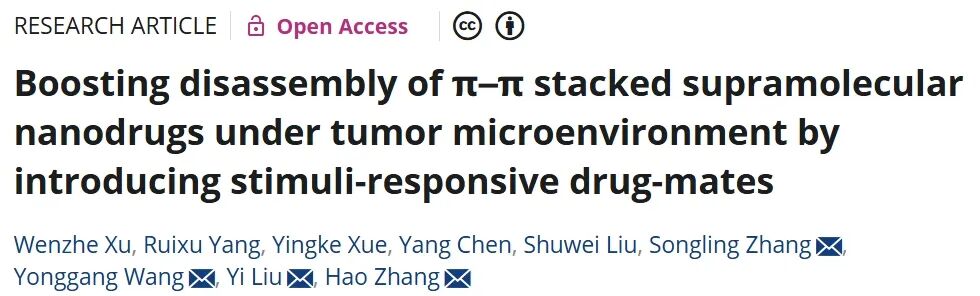
Corresponding Authors: Zhang Hao, Liu Yi, Wang Yonggang, Zhang Songling (Jilin University)
Authors: Xu Wenzhe, Yang Ruixu, Xue Yingke, Chen Yang, Liu Shuwei, Zhang Songling*, Wang Yonggang*, Liu Yi*, Zhang Hao*
Keywords:
disassembly
drug release
naphthoquinones
stimuli-responsive drug-mates
supramolecular nanodrugs
π–π stacking
Original Link:
https://doi.org/10.1002/agt2.648
Long press to recognize the QR code to enter the article webpage
Click “Read the original text” at the end of the article to view the full text

Article Summary
Due to the presence of aromatic rings or other planar conjugated structures in most small molecule drugs, π–π stacking has been widely used to construct anticancer supramolecular nanodrugs. The co-assembled supramolecular nanodrugs formed by small molecule drugs and drug-mates through π–π stacking have further promoted the development of combination, synergistic, and cascade therapeutic strategies. However, previous work has mainly focused on expanding the therapeutic functions of drugs and drug-mates, neglecting the prerequisite for drug release in the tumor microenvironment (TME)—the disruption of π–π stacking in supramolecular nanodrugs and subsequent structural disassembly.
This paper constructs a disassembly model for naphthoquinone-based supramolecular nanodrugs based on π–π stacking and elucidates the influence of co-assembled drug-mates on the disassembly behavior. Experimental observations and theoretical simulations reveal that the key factor determining the disassembly of supramolecular nanodrugs is the disassembly activation energy (ΔEdis) between adjacent π–π stacked molecules. For self-assembled naphthoquinone supramolecular nanodrugs, the strong π–π stacking between molecules and the weak TME responsiveness of the molecular structure together lead to a high ΔEdis, thus inhibiting their disassembly in the TME. Notably, ΔEdis is the sum of activation energies for a series of TME-related specific stimuli. Therefore, by co-assembling with drug partners responsive to pH, glutathione (GSH), or reactive oxygen species (ROS), ΔEdis can be effectively reduced, thereby promoting the disassembly of supramolecular nanodrugs in the TME and accelerating drug release. Thanks to the introduction of TME-responsive drug-mates, the co-assembled naphthoquinone-based supramolecular nanodrugs exhibit good selectivity and therapeutic effects both in vitro and in vivo. This work not only provides a strategy for manipulating the disassembly behavior of π–π stacked supramolecular nanodrugs but also emphasizes the important role of co-assembled drug-mates in enhancing therapeutic efficacy and regulating drug release (Figure 1).
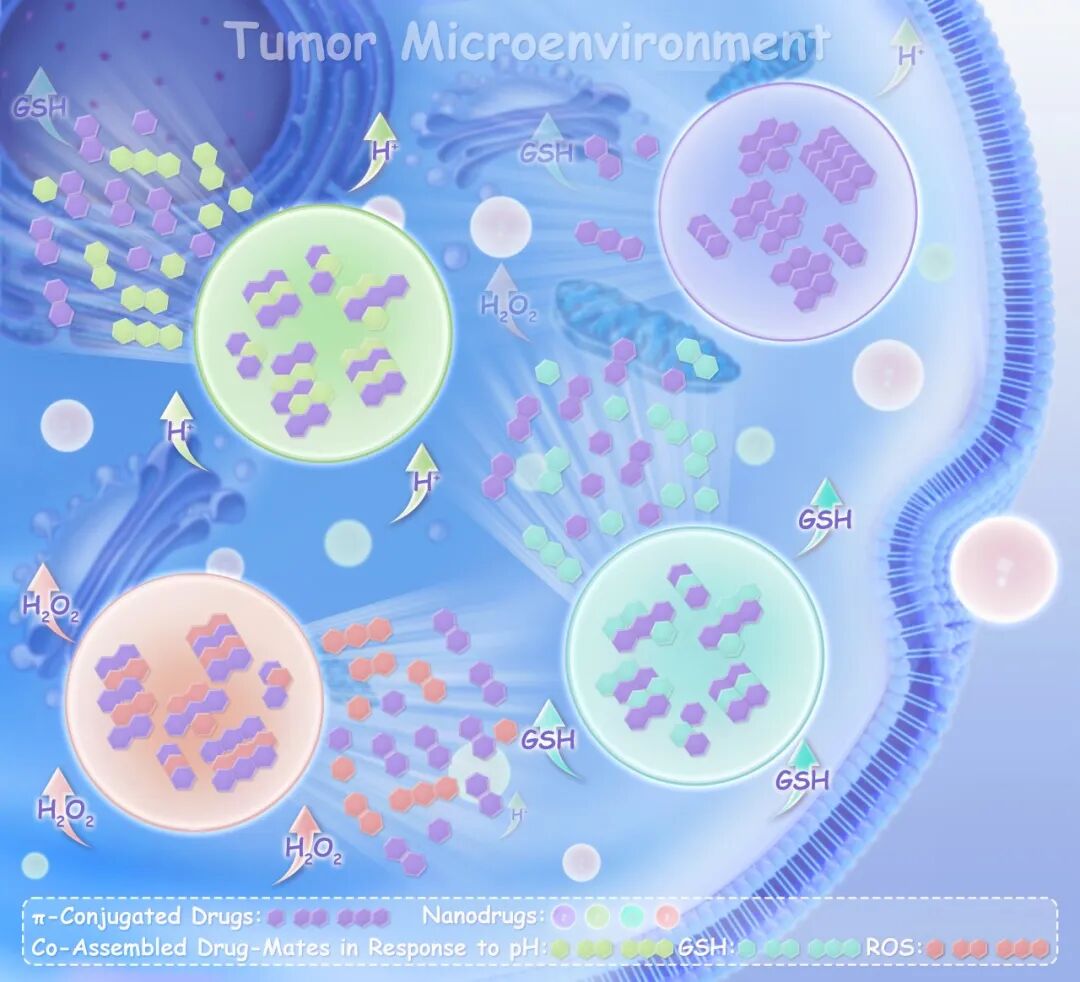
Figure 1. Schematic diagram of the disassembly of self-assembled and co-assembled supramolecular nanodrugs based on oroxylin A in the TME
The above research paper titled “Boosting disassembly of π–π stacked supramolecular nanodrugs under tumor microenvironment by introducing stimuli-responsive drug-mates” was published in the Aggregate journal, with the first author being Dr. Xu Wenzhe from Jilin University, and the corresponding authors being Professor Zhang Hao, Professor Liu Yi, Associate Professor Wang Yonggang, and Professor Zhang Songling from Jilin University.
(Aggregate 2024, e648. https://doi.org/10.1002/agt2.648)
Corresponding Authors
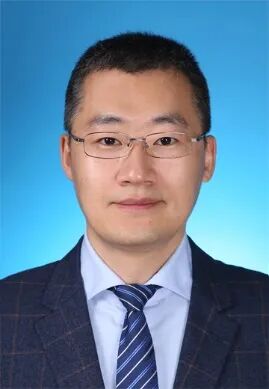
Zhang Hao, Professor at the School of Chemistry, Jilin University. Recipient of the National Outstanding Youth Science Fund, National “Ten Thousand Talents Program” Leading Talent in Scientific Innovation, and Young Scholar of the Ministry of Education’s “Changjiang Scholars Program”. Engaged in research on biomaterials and supramolecular materials. Over 130 papers published as first or corresponding author in journals such as J. Am. Chem. Soc., Angew. Chem. Int. Ed., Adv. Mater., Nat. Commun., with more than 20 authorized invention patents. Has led projects funded by the National Natural Science Foundation and the National Key R&D Program.
Past
Research
Highlights
1. Professor Shuai Xintao’s team at the Third Affiliated Hospital of Sun Yat-sen University: “Twin” nanodrugs synchronously aggregate in tumors and enhance ultrasound imaging and achieve high-permeability drug delivery in situ.
2. Professor Zhou Ruhong’s team at Zhejiang University: A pH-responsive doxorubicin prodrug encapsulated in a hydrazine-based nanodrug delivery system to enhance anticancer efficacy.
3. Associate Professor Wang Weiping’s team at the University of Hong Kong: Self-assembled nanodrugs based on chlorin e6 (Ce6) for tumor combination therapy.
4. Assistant Professor Wang Weiping’s team at the University of Hong Kong: Nanodrugs without carriers that inhibit tumor stem cell properties to enhance photodynamic therapy.
▼
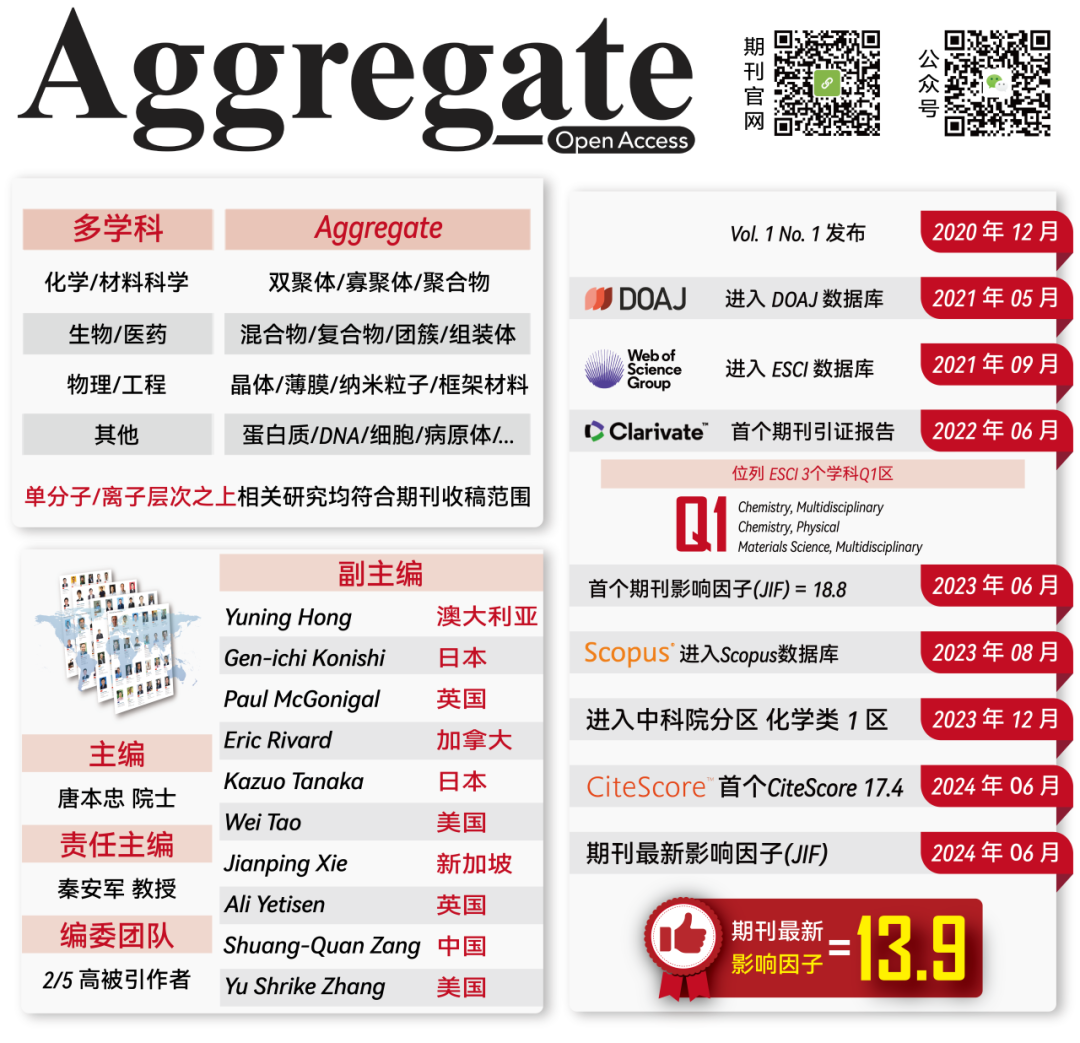
Aggregate is committed to reporting and publishing cutting-edge science in the field of aggregation, particularly significant advancements in functional materials, chemistry, physics, biotechnology, life sciences, and applied engineering, providing a new platform for the academic community to exchange ideas and opinions, share new discoveries and breakthroughs in aggregation research, and discuss the challenges and opportunities in aggregation research.
Aggregate has a wide scope for submissions, including but not limited to organic aggregates, inorganic functional materials, organic/inorganic hybrid systems, polymeric materials, nanoparticles, low-dimensional materials, metal-organic frameworks, supramolecular assemblies, stimuli-responsive systems, clean energy, optoelectronic devices, photovoltaic cells, luminescent materials, chemical sensors, biological probes, medical imaging, disease diagnosis and treatment, drug delivery, and many other cutting-edge fields.
Aggregate has an editorial team composed of outstanding experts from around the world across different research fields, who will work together to ensure the quality of the journal’s publications, providing fair peer review and rapid publication services for authors from various research fields.
Aggregate is an open-access journal, allowing readers to freely access all published articles. We welcome submissions to Aggregate!
We invite you to click the “Read the original text” button at the bottom left to view the article!