|
Title |
J Eur Ceram Soc: High-Performance Energy Storage of Tungsten Bronze-Based Ferroelectric Ceramics Under Low Electric Fields |
|
Research Background |
Dielectric capacitors are widely used in pulse power systems due to their high power density and rapid charge-discharge rates, but their relatively low recoverable energy density (Wrec) and efficiency (η) limit their development. Tungsten bronze structure (TTB) ferroelectrics have become a research focus due to their rich physical properties and tunability. However, reported high-performance TTB ceramics typically require operation under extremely high electric fields (~500 kV/cm), which not only increases the risk of device failure but also poses severe challenges to the insulation systems and miniaturization of electronic devices. In practical applications, microelectronics and consumer electronics usually operate at lower voltages, making it crucial to achieve excellent energy storage performance under low electric field conditions. |
|
Research Content |
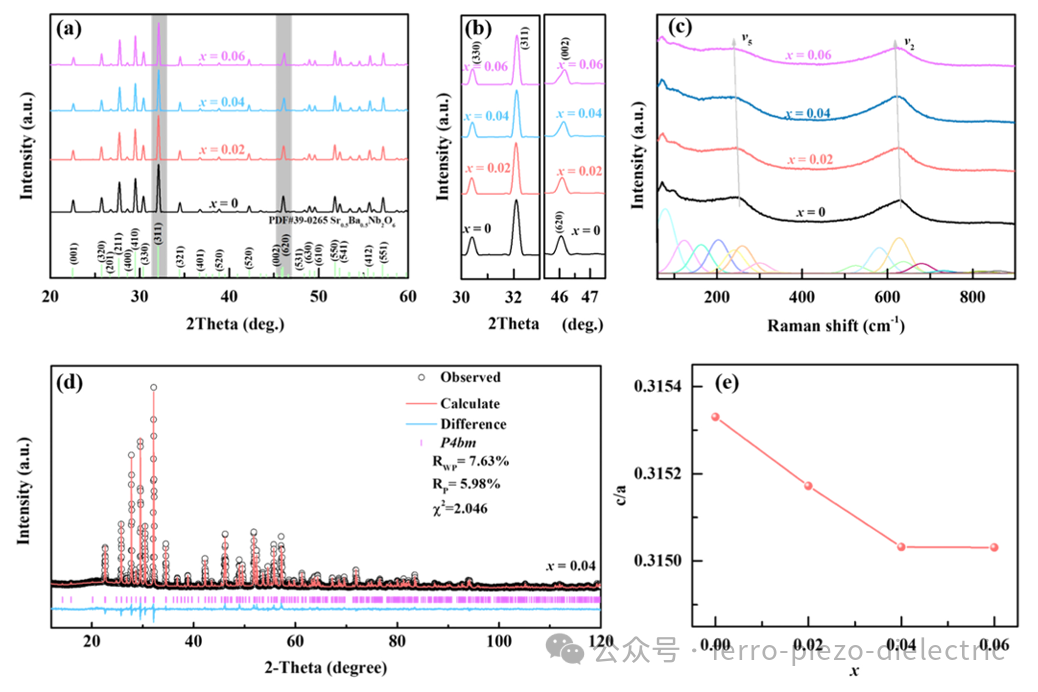
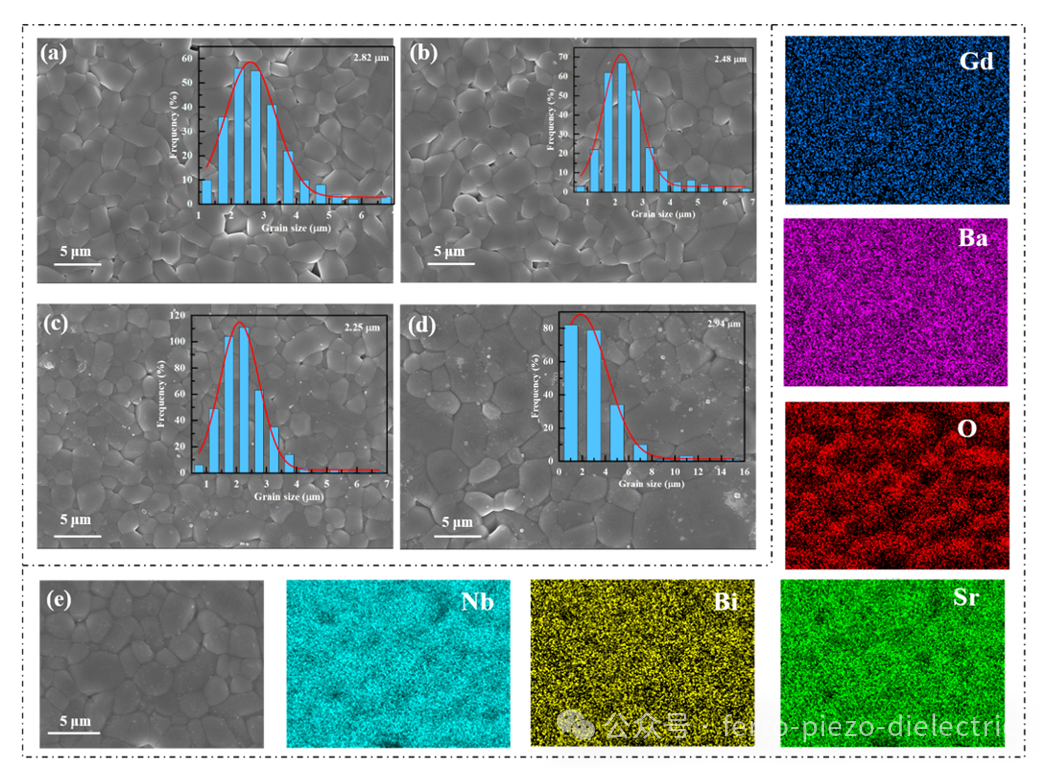
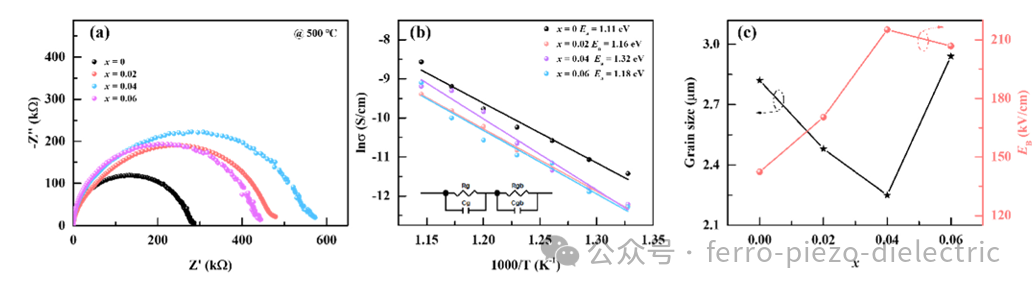
① TTB ceramics co-doped with Gd/Bi were successfully prepared using a solid-state reaction method, with XRD and Raman confirming the formation of a pure phase and lattice contraction. ② Bi3+ doping effectively refined the grain size (from 2.82 μm to 2.25 μm), increased density, and homogenized the microstructure.
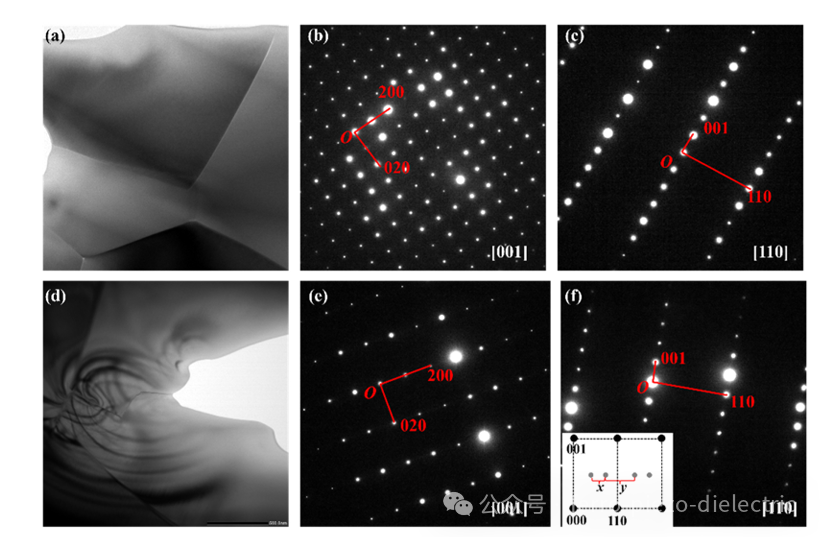
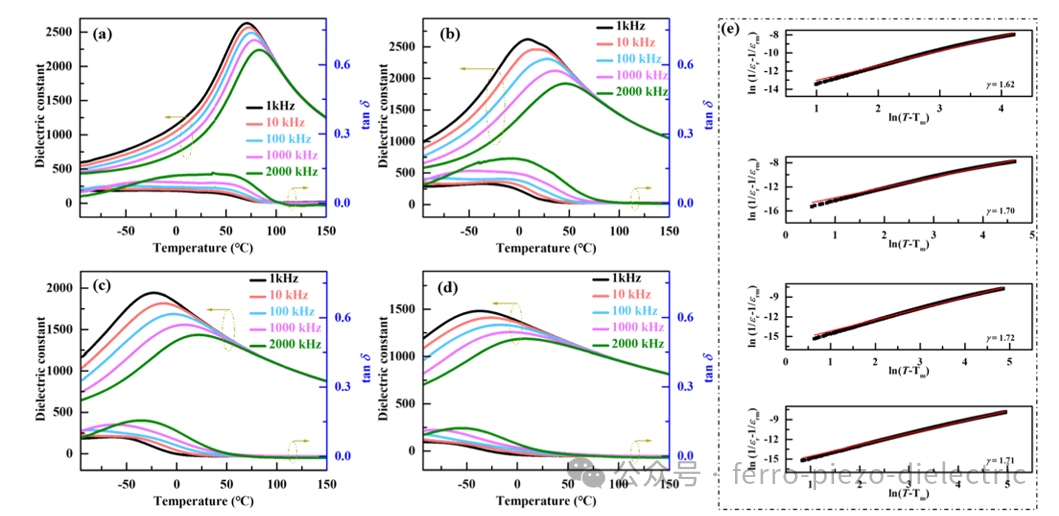
③ Dielectric and TEM analyses indicated that Bi doping induced lattice distortion and non-congruent modulation, enhancing the material’s relaxation characteristics (γ=1.72).
④ The conduction mechanism was analyzed through impedance spectroscopy, with the x=0.04 composition exhibiting the highest grain boundary activation energy (1.32 eV), explaining its high breakdown field strength.
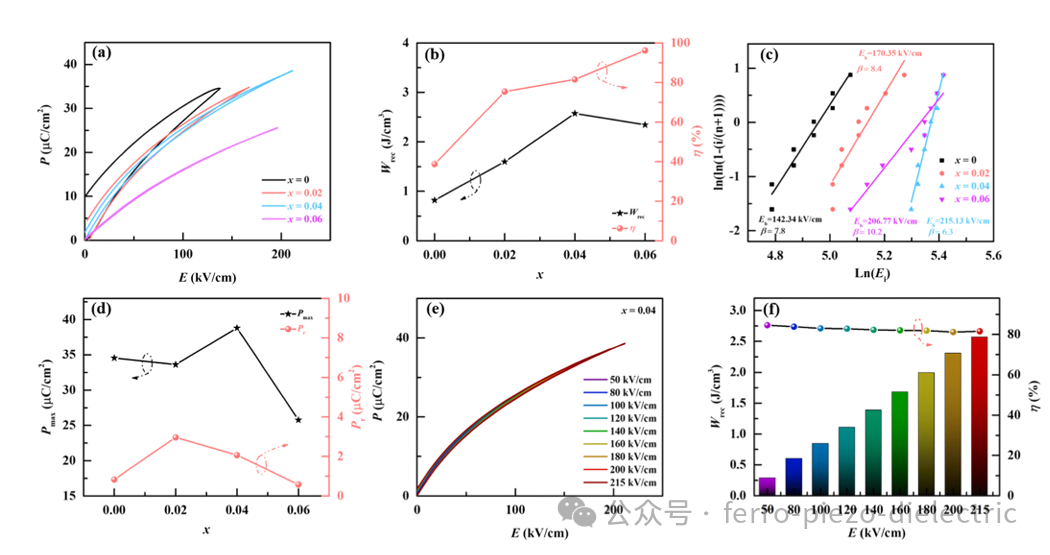
⑤ Under a low electric field of 215 kV/cm, the optimal composition (x=0.04) achieved a high Wrec of 2.57 J/cm³ and an η of 81.54%.
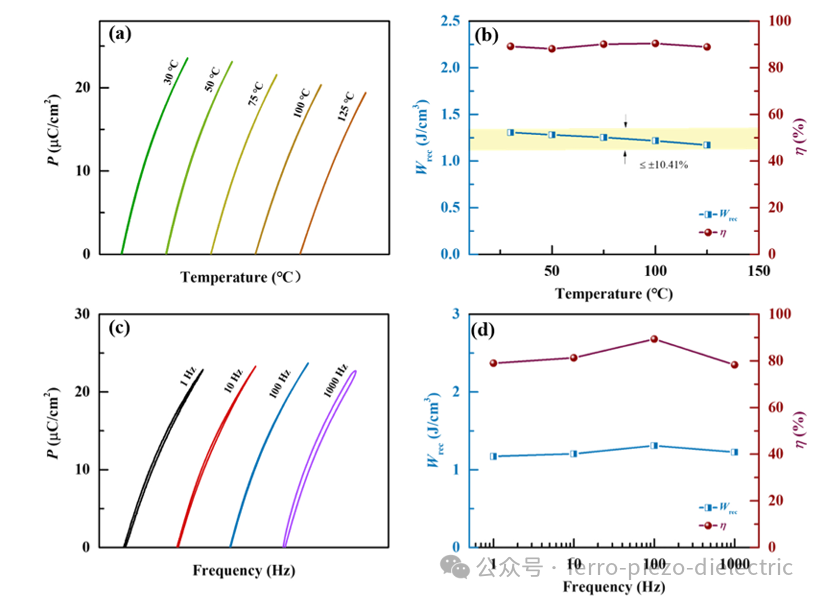
⑥ The material’s energy storage stability was systematically evaluated over a wide temperature range (25-150 °C) and frequency range (1-1000 Hz), with fluctuations remaining below 10.4%.
|
|
Innovations |
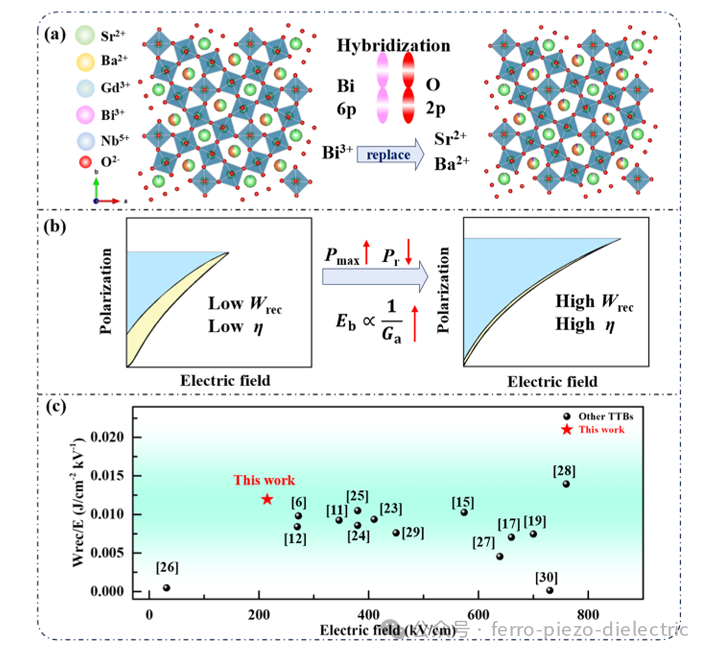
① A Gd/Bi co-doping strategy was proposed, effectively suppressing the concentration of oxygen vacancies and optimizing polarization characteristics through defect chemistry equations. ② Utilizing the lone pair electron effect of Bi3+, A-site polarization was enhanced, achieving high Pmax and low Pr, significantly improving energy storage efficiency.
③ Leading energy storage performance was achieved (Wrec/E=0.012 J cm⁻² kV⁻¹) under an electric field (215 kV/cm) significantly lower than that of similar works.
④ The intrinsic correlation mechanism between the microstructural evolution induced by Bi doping, enhanced relaxation behavior, and increased breakdown field strength was deeply revealed.
|
|
Paper Summary |
This study successfully developed a novel lead-free relaxor ferroelectric ceramic Gd0.03Ba0.47Sr0.425Bi0.04NbO6. The material achieved breakthrough energy storage performance under low electric fields (215 kV/cm): a recoverable energy density Wrec of up to 2.57 J/cm³ and an energy storage efficiency η of 81.54%. Its energy storage coefficient (Wrec/E=0.012 J cm⁻² kV⁻¹) significantly outperforms most reported lead-free TTB ceramics. The performance enhancement is attributed to Bi3+ doping, which suppresses oxygen vacancies, induces lattice distortion to enhance relaxation characteristics (γ=1.72), refines grain size (2.25 μm), achieves uniform electric field distribution, and obtains high grain boundary activation energy (1.32 eV). The material also exhibits excellent temperature and frequency stability. This work provides a feasible example for developing efficient dielectric capacitors suitable for low electric field operation, with great application potential in pulse power systems and miniaturized electronic devices. |
|
Original Article |
doi:10.1016/j.jeurceramsoc.2025.117786 |
Disclaimer: This article summarizes information based on publicly available data from relevant academic journals and is not original content. It is intended for academic exchange and does not represent the views of this public account.