3580 words 5Image, reading time approximately 10 minutes.
Thank you for liking, viewing, and sharing!
 Just as the Trump team thought they had the upper hand, before the fourth round of tariff talks between China and the U.S., the Chinese Ministry of Commerce immediately announced (on September 13) an “anti-dumping” investigation into U.S. analog chips.Additionally, the Ministry of Commerce is also conducting an “anti-discrimination” investigation regarding U.S. measures against Chinese integrated circuit chips.In total, there are two “double-reverse” measures: “anti-dumping” + “anti-discrimination” investigations. This time, the Chinese Ministry of Commerce has launched a rapid and fierce counterattack against the U.S.Does this indicate that China has gained considerable confidence in the chip manufacturing sector, allowing it to strike back at the U.S.? What impact will this have on negotiations between China and the U.S., as well as the strategic game between the two countries?
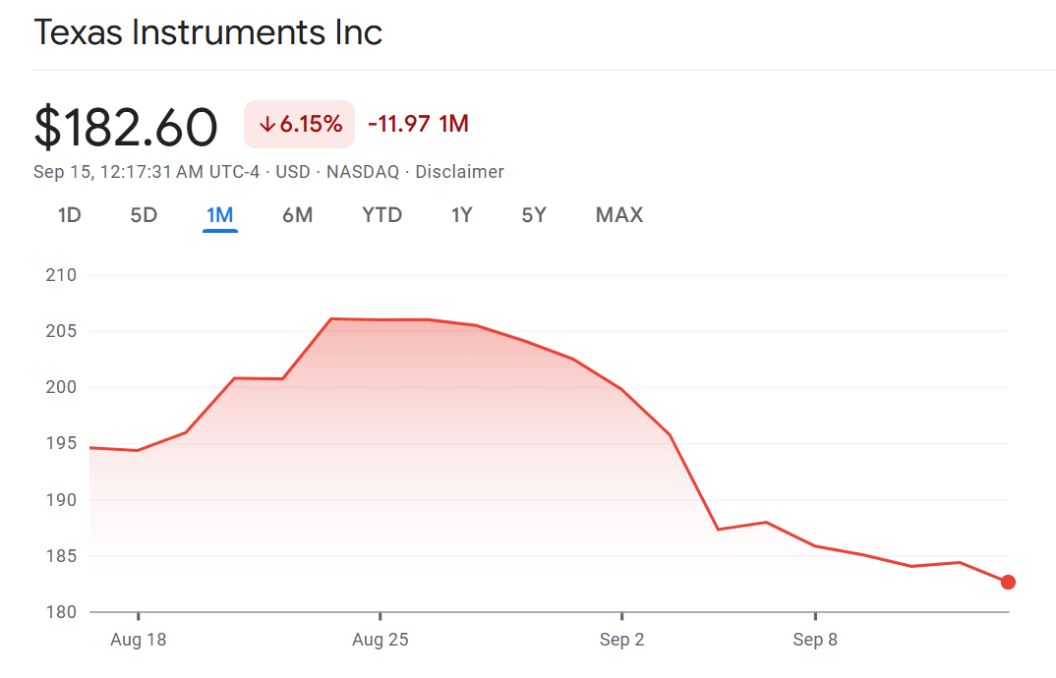
 1. The Widespread Application of Analog ChipsIn Taiwan, analog chips are referred to as “analog chips,” primarily concerning analog signals. This is just a difference in translation; Taiwan emphasizes digital signals, such as 0 and 1, while the mainland emphasizes simulation, highlighting the characteristics of continuously varying signals.First, let me mention that the U.S. analog chip giant is Texas Instruments (TI), with the stock symbol TXN. The following image shows the stock price trend of TXN over the past month.
 Don’t think that in the digital world of computers and smartphones, most chips used are for processing or storing digital signals, and thus consider analog chips to be insignificant.In fact, when digital processing and digital information connect with our real world, analog chips are needed for signal processing and conversion. Our natural world consists of analog signals, which need to be converted into digital signals.Or vice versa, converting digital signals into analog signals.A direct example is sound processing, such as in audio systems and radios.For instance, sound amplification, modulation, demodulation, and amplification.Understanding this, one should not dismiss the Chinese Ministry of Commerce’s anti-dumping investigation as a trivial matter, believing it will have little impact. Applications in sound (audio), communications, mobile phones, power management, sensor interfaces, 5G base stations, automotive, and medical industries will all require it.The well-known former chairman of TSMC, Morris Chang, came from Texas Instruments. Texas Instruments is a giant in analog signal processing, known by almost everyone in electrical engineering-related fields.2. Strategic Layout of China’s CounterattackAccording to data, in 2023, China imported approximately 658.1 billion analog chips, totaling about 307.5 billion yuan, accounting for about 13% – 15% of China’s total chip imports.It can be anticipated that China will start with analog chips, and the next step in the counterattack will certainly be digital chips.Why? Not to mention this is a method of “surrounding the city from the countryside,” but in terms of chip process technology, most analog chips apply “mature process” chip technology.
 In other words, in the face of the U.S. chip war, mature process chips are China’s major counterattack in the chip industry. This is a very important point.3. SMIC Seizing Market ShareRecent news indicates that SMIC has improved its 28nm yield to 98%. An increase in yield means a reduction in cost, and lower costs represent competitiveness, allowing SMIC to sell more chips, which will greatly benefit its profits.Indeed, in 2024, SMIC’s revenue increased by 27.7% year-on-year, reaching a historical high. However, net profit decreased by 45.4% year-on-year, a significant decline. Nevertheless, the overall gross margin remains at 18%, slightly down from 19.3% in 2023.What does this mean?This indicates that SMIC is expanding sales by lowering prices without significantly sacrificing gross margins. On the other hand, it continues to invest heavily in capital expenditures.
 In other words, the relevant Chinese industries aim to seize the market for mature process chips, which are 28nm or above in chip process technology.SMIC is focusing on the mature process field, seeking production scale and yield benefits before engaging in price competition. Then, it will expand its scale and compete further.Once successful, it will move towards more advanced 14nm or below chip process technologies, replicating the strategies used in mature process chips.Let the U.S. wait and see!4. Cooperation and Countermeasures from the Chinese Ministry of CommerceThus, the double-reverse measures from the Chinese Ministry of Commerce will naturally benefit China’s chip industry in its major counterattack in mature process chip technology.In fact, the Chinese Ministry of Commerce has good reasons. According to relevant data, from 2022 to 2024, the growth of U.S. analog chip exports to China is about 37.5%, while prices have dropped by 52%, a significant price decline.This indicates that the U.S. is also aware of China’s achievements in domestic analog chip production, hence the price-cutting competition.This is a typical tactic of Western countries: when you lack the technology, you sell at high prices. When you possess the technology, you engage in price dumping.
 Therefore, it is timely for China to conduct an anti-dumping investigation, supplemented by an anti-discrimination investigation.However, what the U.S. chip industry should genuinely worry about is that the Chinese chip industry is gradually taking root, forming a complete advanced process chip industry chain, moving from 14nm processes downwards, including memory chips, high-end process chips required for mobile phones, and AI chips with high computing power requirements.5. Why Not Immediately Counterattack the U.S.?In March 2018, Trump launched a trade war against China, imposing tariffs. In May 2020, Trump implemented a zero-technology chip blockade against Huawei, pushing the Sino-U.S. trade war and tech war to a climax.Then, in February 2022, the Ukraine conflict broke out, and the U.S. directed its encirclement of China towards Russia, attempting to use the strategy of “first defeating Shaolin, then destroying Wudang” to take down Russia first and then China.From March 2018 to February 2022, China hardly made any significant moves to counterattack the U.S. Therefore, some people felt astonished, confused, and even disappointed, believing it should not be this way.Don’t rush; China’s lack of timely counterattacks was because the time was not right. What does it mean that the time was not right? Naturally, it is because:1. China’s own strength had not yet accumulated enough, such as chip technology, and the international settlement of the renminbi was still insufficient.2. The government needed to unite more like-minded friends (countries). Don’t forget, the U.S. is not just a powerful empire; it has many allies.Thus, before China was adequately prepared, it could not act rashly. Otherwise, it would only invite more U.S. sanctions and blockades more quickly.In other words, the “international climate” at that time was not sufficient.6. The International Climate is Now SufficientSo, is the international climate sufficient now?In June 2022, we said that China would definitely counterattack in the “second half” of the year.At that time, the international climate was represented by Russia, which took up the banner against U.S. dollar hegemony due to the Ukraine conflict.Many people believed that Russia’s independent resistance against the U.S. and NATO was too difficult and needed help; China should lend a hand and not let Russia be too isolated.Indeed, in the second half of 2022, China signed a renminbi clearing memorandum with Pakistan. In the first half of 2023, China signed a renminbi clearing memorandum with Brazil.
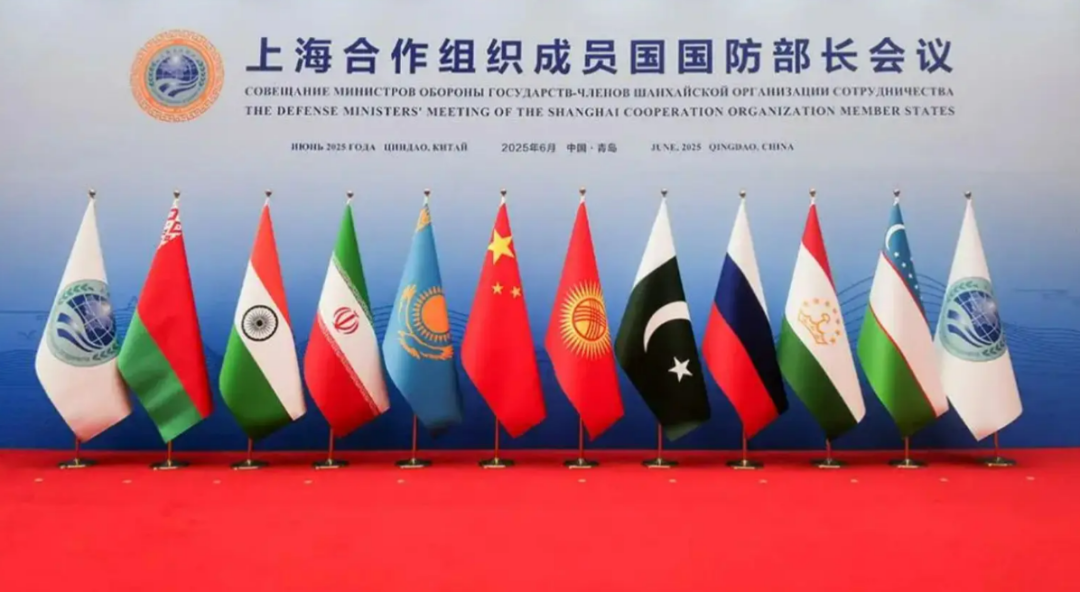 Then, in July 2023, the Shanghai Cooperation Organization expanded, and Iran officially became a member. A month later, the BRICS organization expanded, with Egypt, Argentina, Iran, and Ethiopia joining.This is a dual expansion of international politics and de-dollarization.Don’t forget that in February 2023, China released a document to the international community titled “The U.S. Hegemony, Bullying, and Its Harms,” which is equivalent to a denunciation of U.S. hegemony.China first released this “denunciation,” and then five months later, it conducted the SCO and BRICS expansions, seizing the timing perfectly.Also, don’t forget that in May 2023, China’s Cyberspace Administration announced that products from U.S. memory chip giant Micron did not pass cybersecurity reviews and posed “serious cybersecurity risks,” deciding to prohibit Chinese critical infrastructure operators from purchasing Micron products.This decision was the first shot in China’s counterattack against U.S. chips.The conclusion is that it is not that there is no counterattack; it is just that the time was not right. China was waiting for the appropriate moment.So, how is China’s strength now, and what is the international climate like?China’s current chip industry strength has just been explained. As for the international climate, it is even more sufficient. Isn’t Trump waging an equal tariff war with countries around the world?The current international climate is more favorable than ever! Thus, it is certainly time for China to counterattack.Moreover, over the past year, China has continuously showcased advanced military weapons, culminating in a grand display during the September 3rd military parade.
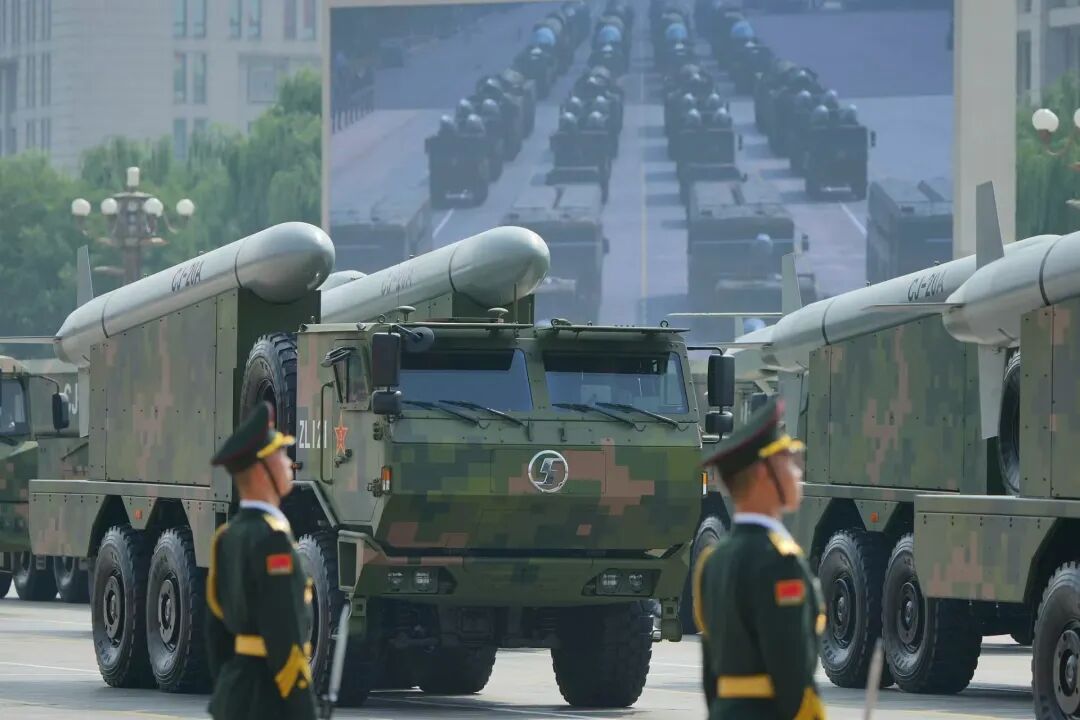 With the display of military weapons, how can there not be counterattacks in other areas, such as chips or finance?This is what we have been saying for three years, that China will definitely counterattack and will gradually tighten the spring and increase the intensity.Of course, Trump is not to be underestimated; on September 13, he published an open letter on his social platform Truth Social, calling for all NATO member countries to stop purchasing Russian oil and to impose tariffs of 50% to 100% on China to force Russia to end its military actions against Ukraine.Don’t be intimidated by Trump; if he really had the ability, he would directly “order” NATO allies to stop purchasing Russian oil and impose high tariffs on China. Why would he need to make such a “call” on social media?This is just another tactic of old Trump to “pressure” before negotiations.Is old Trump trying to win a Nobel Peace Prize, going crazy to the point of repeatedly violating agreements with China and threatening to impose tariffs on China?China and the U.S. have gone through three negotiations and two 90-day tariff suspension periods. Logically, during the tariff suspension period, unilateral tariff increases should not occur.However, for Trump, the agreement is merely a trivial matter. However, Trump is not technically violating the agreement this time, as he is only speaking out and not actually implementing it.Everyone needs to understand Trump’s style of operation.7. ConclusionOf course, China absolutely understands Trump’s style. The “anti-dumping” and “anti-discrimination” double-reverse measures are not just a gift from China to Trump before the negotiations in Madrid.However, China has always been straightforward; the double-reverse measures are certainly substantial.Whether they will ultimately be implemented, how they will be implemented, and to what extent will depend on the U.S. performance in Madrid.Also, even if the Chinese government ultimately withdraws the double-reverse investigations against the U.S., China’s counterattack against the U.S. will not cease.Why?As China’s chip strength increases and market competitiveness solidifies, the counterattacks against the U.S. will naturally continue.Because that is the natural “market force,” and both China and the U.S. will compete with market forces; what can the U.S. say?Today’s analysis and reasoning end here, thank you all for watching, and see you next time.Source: Yang Feng
 Thank you for reading, and welcome everyone to follow, give a “like”+ “view”, and “share” with more friends. Thank you!【Recommended Reading】
A Thorough Analysis of the Global Landscape!
Why did Chairman Mao choose Wang Zhen to oversee Xinjiang? Years later, we realize the great foresight of the great leader.
Zeng Guofan: All abilities are forced out, and success is achieved through perseverance.
Chairman Mao’s Accurate Predictions about Taiwan!
Qin Shi Huang gave China a powerful name, which has been used for over 2000 years without change and is still in use today.
Jin Yi Nan’s internal speech at Huawei: How are generals produced?
In 1968, Americans predicted the fate of humanity through an experiment. The complete record of the Xi’an Incident in Chiang Kai-shek’s diary.
Before Liu Bang’s death, Zhang Liang did not eat grains for three years and did not leave his house for five years, ensuring peace for his descendants for two thousand years.
Memories of Peng Dehuai and Lin Biao in Xiao Ke’s Memoirs.
Copyright statement: The images and text are sourced from the internet, and the content published by this account is for learning and exchange purposes only. The content in the article only represents the author’s views, and the copyright belongs to the original author or organization. If there are any copyright issues, please leave a message, and we will correct or delete it as soon as possible.。
 Note: Click the image above to open the course and schedule link for course details!