
Mitochondria, as the energy factories of cells, play a crucial role in decoding the mechanisms of numerous diseases through their dynamic changes in function and morphology. This issue of research showcases the deep empowerment of Multi-SIM super-resolution microscopy in the forefront of life sciences from the perspectives of applications and tools.
Soyasaponin Ba Improves Lipid Accumulation through Mitochondrial Remodeling
A New Mitochondrial Labeling Method: Multi-SIM Super-Resolution Microscopy Aids in the Development of New Mitochondrial Dyes!
Below, we present a detailed interpretation of these two studies.
Soyasaponin Ba Improves Lipid Accumulation through Mitochondrial Remodeling
Supporting New Research Discoveries
With the prevalence of high-fat diets and sedentary lifestyles, obesity and its related metabolic syndromes have become global health issues. Abnormal lipid accumulation in the liver can not only induce non-alcoholic fatty liver disease (NAFLD) but may also progress to hepatitis, liver fibrosis, and even liver cancer. Mitochondria, as the core organelles of cellular energy metabolism, are considered one of the key mechanisms for lipid accumulation due to their functional disorders, leading to increased ROS, decreased membrane potential, morphological abnormalities, and even cell apoptosis. Therefore, finding natural active components that can improve mitochondrial function and alleviate lipid accumulation holds significant research and application value.

In July 2025, a collaborative research paper titled “Soyasaponin Ba Alleviates Lipid Accumulation via Mitochondrial Remodeling: Multiomics Insights” was published in the Journal of Agricultural and Food Chemistry by Professor Luo Jincan’s research group from Guangzhou University of Business and Technology and Professor Xu Baojun’s team from the International Joint College of Beijing Normal University-Hong Kong Baptist University. This study systematically revealed for the first time that soyasaponin Ba can improve mitochondrial function and significantly reduce lipid accumulation, ROS levels, and cell apoptosis while enhancing ATP synthesis and membrane potential stability by activating the Akt/GSK3β/β-catenin signaling pathway through multi-omics joint analysis (network pharmacology, transcriptomics, spatial metabolomics) combined with various in vitro (HepG2, THLE-2 cells) and in vivo (C. elegans) models.
Contribution of Multi-SIM X in this Article
Using Multi-SIM X to explore whether soyasaponin Ba can improve FFA-induced mitochondrial morphological abnormalities
👉 Experimental Approach
It is known that soyasaponin Ba can alleviate free fatty acid (FFA)-induced reactive oxygen species (ROS) accumulation, ATP reduction, and mitochondrial membrane potential decline (all classic mitochondrial apoptosis phenotypes). Different treatments were applied to liver cancer cells, and super-resolution fluorescence imaging results of mitochondria were collected using Multi-SIM X.
👉 Result Analysis
After FFA treatment, the originally normal rod-shaped mitochondria underwent significant morphological changes, specifically becoming spherical, increasing in volume, elongating in length, expanding in structure, and losing their normal inner membrane morphology.
👉 The Alleviating Effects of Soyasaponin Ba and Atorvastatin
After treatment with soyasaponin Ba (in a concentration-dependent manner) or Atorvastatin, the FFA-induced mitochondrial morphological abnormalities were significantly alleviated.
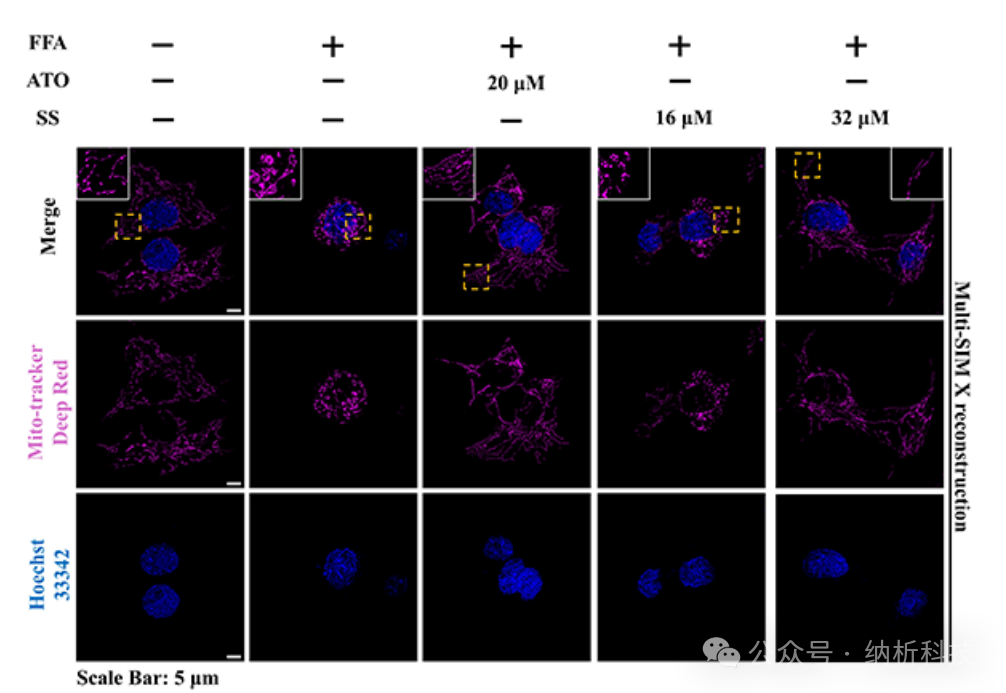
Figure Caption: Representative fluorescence images of Hoechst 33342 (blue) and Mito-Tracker Deep Red (pink) co-stained in HepG2 cells, scale bar 5 μm. FFA: free fatty acids; ATO: Atorvastatin; SS: Soyasaponin Ba. Different treatment groups: FFA-induced group; FFA-induced + Atorvastatin (positive control group); FFA-induced + different concentrations of soyasaponin Ba treatment groups.
Summary of Research Findings
This study not only reveals the potential of soyasaponin Ba as a dietary active component in improving lipid metabolism but also demonstrates the importance of multi-omics and super-resolution imaging technology (Multi-SIM X) in mechanism research. With its ultra-high resolution, live-cell compatibility, and multi-color simultaneous imaging advantages, Multi-SIM X has become a powerful tool in mitochondrial dynamics research, with broad application prospects in metabolic diseases, cancer, and neurodegenerative diseases.
This research provides a solid scientific basis for developing natural product-based lipid metabolism regulators and offers new ideas for the prevention and treatment strategies of related diseases.
Original link:
https://pubmed.ncbi.nlm.nih.gov/40788846/
Mitochondria play a very important role in life activities, but how can we achieve better labeling methods?
A New Mitochondrial Labeling Method: Multi-SIM Super-Resolution Microscopy Aids in the Development of New Mitochondrial Dyes!
Why choose Multi-SIM for this work?
01
|Simple Sample Preparation Process
STED/PALM requires high laser power and has high sample preparation requirements, making it impossible to quickly test after changing dye production conditions; SIM only requires 1/10–1/5 power to achieve lateral resolution below 100 nanometers, successfully resolving the fine structure of cristae and suitable for long-term imaging of live cells.
02
|High Timeliness
Multi-SIM equipment supports rapid testing after dyeing cells under different conditions, ensuring timeliness.
Stable Labeling Method + Suitable Imaging Equipment = High-Quality Fluorescence Microscopy Images
How to achieve a stable labeling method?


In August 2025, Professor Zhang Pengfei’s research group at the Shenzhen Institute of Advanced Technology published a research paper titled “Reasonable Design of Near-Infrared Boron Dipyrromethene with Cationic Pyridinium for Super-Resolution Imaging of Dynamic Voltages of Mitochondria in Living Cells” in ACS Sensors, focusing on why to “create another mitochondrial membrane potential probe,” the characteristics of the new probe, and the new biological discoveries aided by the new dye.
👉 Scientific Questions and Background
Traditionally, it is believed that the mitochondrial membrane potential ΔΨm is “uniformly” distributed within the mitochondria; however, increasing evidence suggests that there are nanoscale differences between cristae, yet there is a lack of direct observation tools. Existing voltage-sensitive fluorescent dyes (TMRE, Rh123, etc.) have poor photostability and quickly quench under the high-power lasers required for super-resolution imaging, making it impossible to achieve dynamic tracking over minutes to hours. Existing probes mostly emit in the 500–600 nm range, have high tissue autofluorescence, high phototoxicity, and lack specificity for the mitochondrial matrix.
👉 Research Innovations
oMePy-BDP Development History:Transforming “BODIPY” into a “Mitochondrial Nano-Voltmeter”
Specificity of Localization:Mitochondrial localization (Pearson coefficient > 0.93) almost completely co-localizes with MitoTracker DeepRed and is unaffected by respiratory chain inhibitors.
Photostability:After 15 minutes of laser exposure, only < 15% intensity loss, supporting continuous SIM imaging over minutes to hours.
Biocompatibility:Cell viability > 95% after 24 hours of incubation at 10 μM, suitable for live cells/living organisms.
Sensitivity:Can significantly distinguish changes of 15 mV, suitable for detecting single fusion/fission events.
Specific Biological Applications
This research provides a solid scientific basis for developing natural product-based lipid metabolism regulators and offers new ideas for the prevention and treatment strategies of related diseases.

01Dynamics of Mitochondrial Fusion and Fission
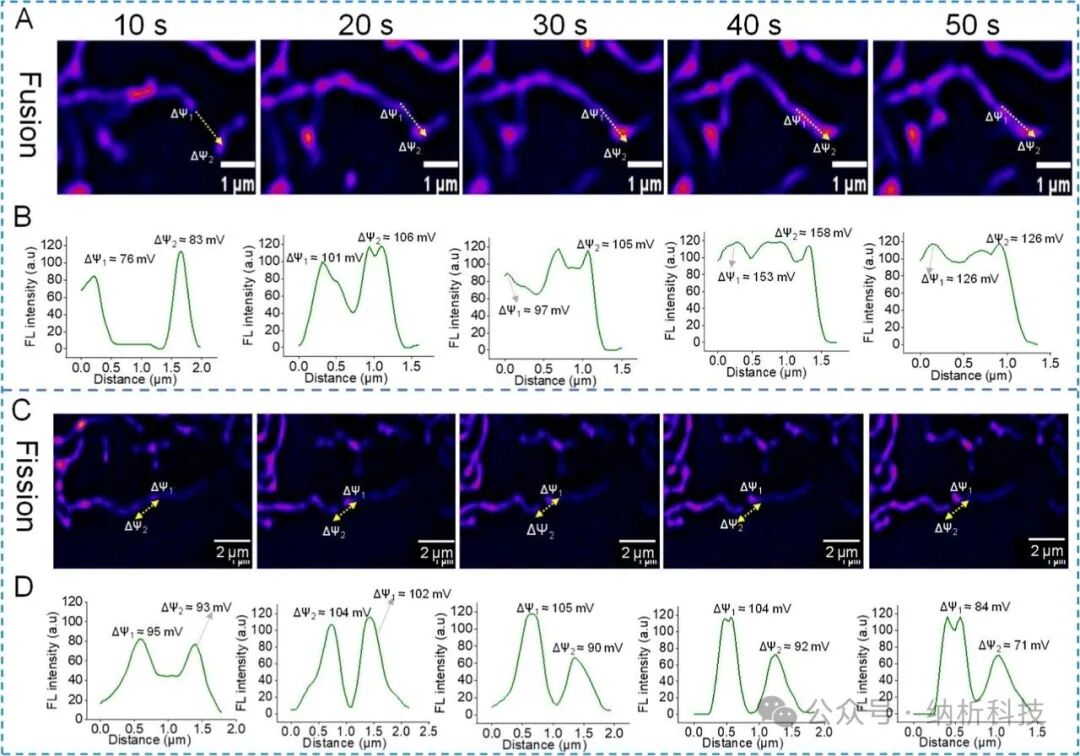
Real-time tracking of single mitochondria for 30 minutes revealed that within 3–5 seconds before fusion, ΔΨm increased by approximately 15 mV, then rapidly dropped, indicating that “voltage pre-activation” is a fusion initiation signal.

02Mitochondria-Lysosome Contact (MLC)
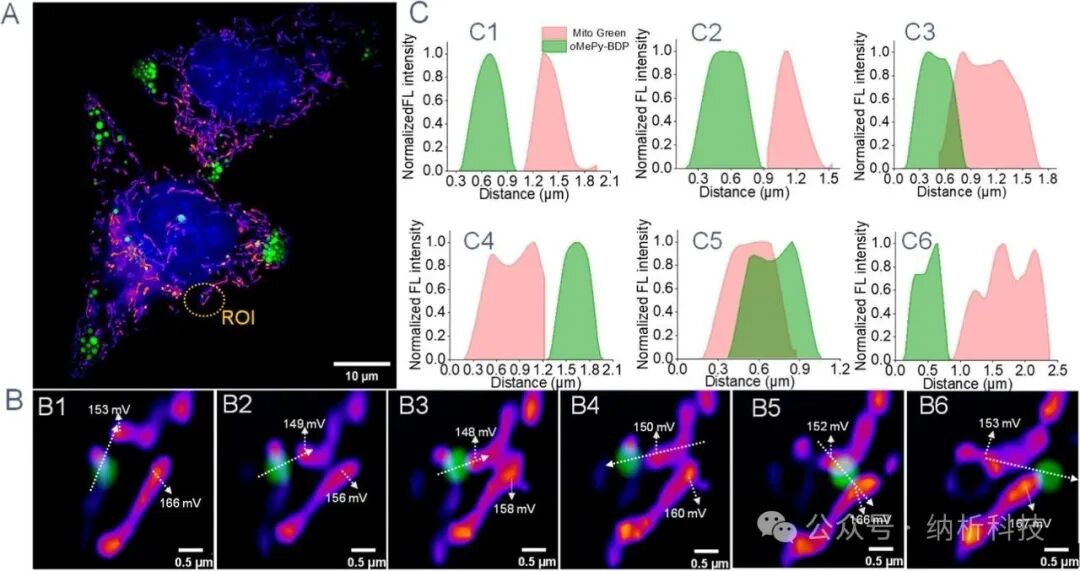
During the capture of MLC events, the local ΔΨm of mitochondria instantaneously dropped by 20–30 mV within 5–10 seconds, revealing the instantaneous effects of lysosomal calcium release or proton leakage on adjacent mitochondria.

03“Energy Hotspots” in Autophagy
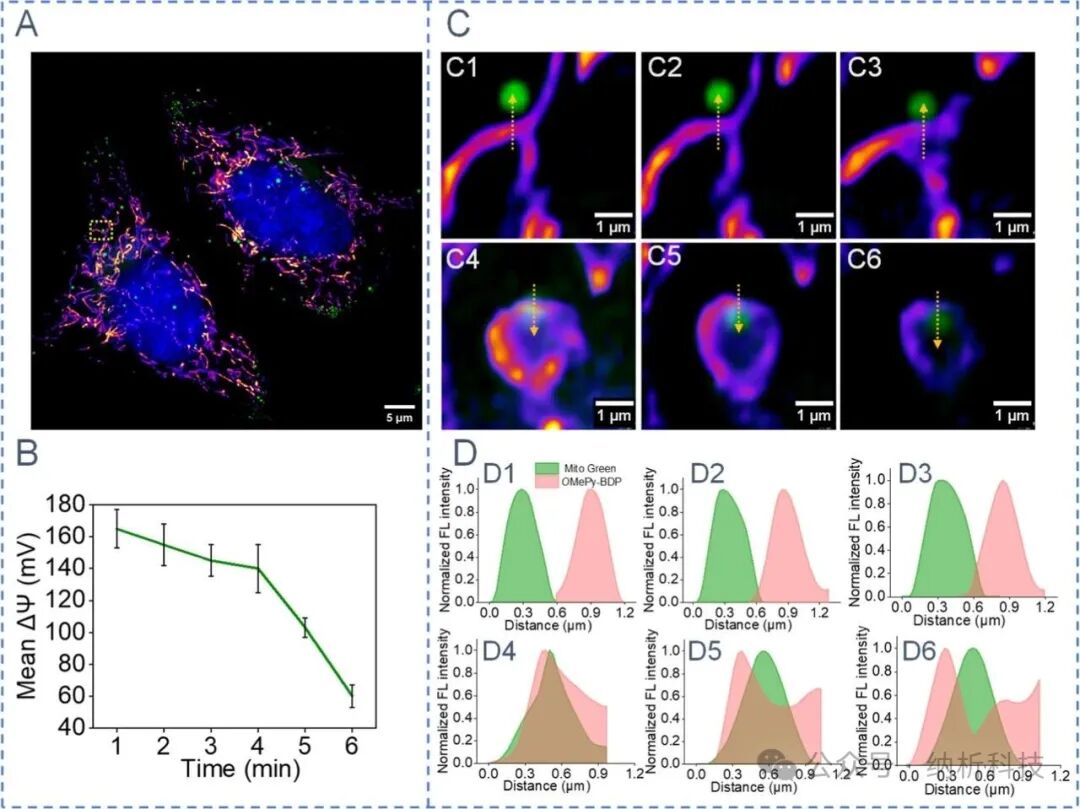
Super-resolution dynamic results of HeLa cells after CCCP treatment
Summary
This study created a mitochondrial voltage probe with high targeting, high photostability, high sensitivity, and low toxicity through rational molecular engineering of “near-infrared BODIPY + cationic pyridinium,” and for the first time revealed the nanoscale spatiotemporal heterogeneity of mitochondrial ΔΨm in living cells using gentle Multi-SIM imaging, providing a “visible voltage ruler” for energy metabolism research.
Original link:
https://pubs.acs.org/doi/10.1021/acssensors.5c01636



Nano Analysis Technology|Global Leader in Super-Resolution Microscopy Technology
Recommended Reading
Research Insights|Multi-SIM Supports Research Directions in Liquid-Liquid Phase Separation (Part 1)
For the First Time! Domestic AI Microscopy Image Processing and Analysis Software DeepInsight Delivered
When STED Meets SIM, Sino-German Scientists Discuss the New Future of Microscopy Technology — Nobel Laureate Stefan Hell Visits Tsinghua University