
Background Introduction
In recent years, wireless sensor networks (WSN) have received great attention in various fields such as environmental monitoring, healthcare, and industrial automation. However, a key issue faced by WSN is how to provide power to a large number of micro-sensors in a long-term, stable, and effective manner. Although battery power remains the primary method, battery life is short and requires regular replacement. This becomes particularly troublesome when sensors are distributed in enclosed areas (such as implanted sensors in the human body) or in remote and harsh environments. The triboelectric nanogenerator (TENG) is an emerging energy harvesting technology based on the triboelectric effect and electrostatic induction. A self-powered wireless sensing system based on TENG can effectively address the power supply issues in WSN. Recently, researchers proposed a TENG-based instantaneous self-powered wireless sensing system that directly injects the pulse signal energy generated by TENG into an LC oscillator to generate oscillation signals carrying sensing information, which are then wirelessly transmitted and received. However, this sensing system uses near-field coupling to transmit signals, and the sensing distance is usually within 2 meters, thus there is an urgent need to develop a long-distance instantaneous self-powered wireless sensing system based on TENG.
Results Introduction
The team led by Luo Jikui from Zhejiang University has successfully developed a self-powered long-distance wireless sensing platform. This platform consists of a transmitter and a receiver. The transmitter mainly includes a contact-separation mode TENG, a radio frequency oscillator based on surface acoustic wave devices (SAW), and a transmitting antenna. The TENG generates a series of pulse voltage signals under external pressure, which can directly power the SAW-based radio frequency oscillator to produce a high-frequency oscillation signal sequence carrying sensing information, and the sensing signal is wirelessly transmitted through the transmitting antenna. The receiver consists of a software-defined radio (SDR) device and a personal computer (PC). The Labview platform based on the PC performs fast Fourier transform (FFT) on the received signals to obtain sensing information. This sensing technology can effectively monitor physical or chemical quantities that affect the frequency and amplitude of the sensing signal, such as temperature, distance, vibration, strain, etc., and is particularly suitable for smart manufacturing and smart healthcare. Experimental results show that this sensing system can wirelessly monitor pressure, temperature, and vibration frequency within a sensing distance of 50 meters.
Illustrated Guide
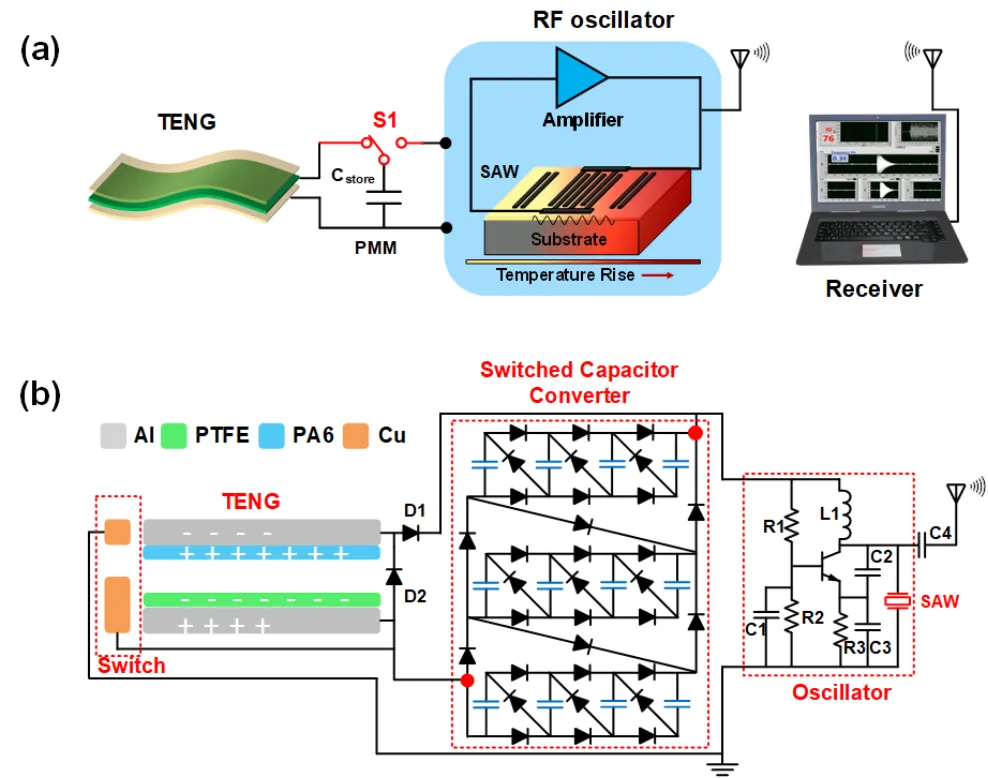
Figure 1. System structure diagram of the instantaneous self-powered wireless sensing system based on TENG
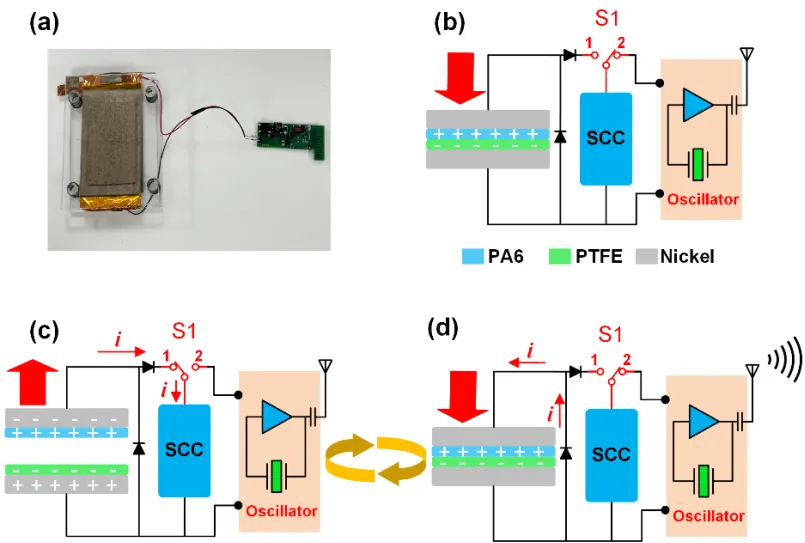
Figure 2. Principle and flowchart of sensing signal generation
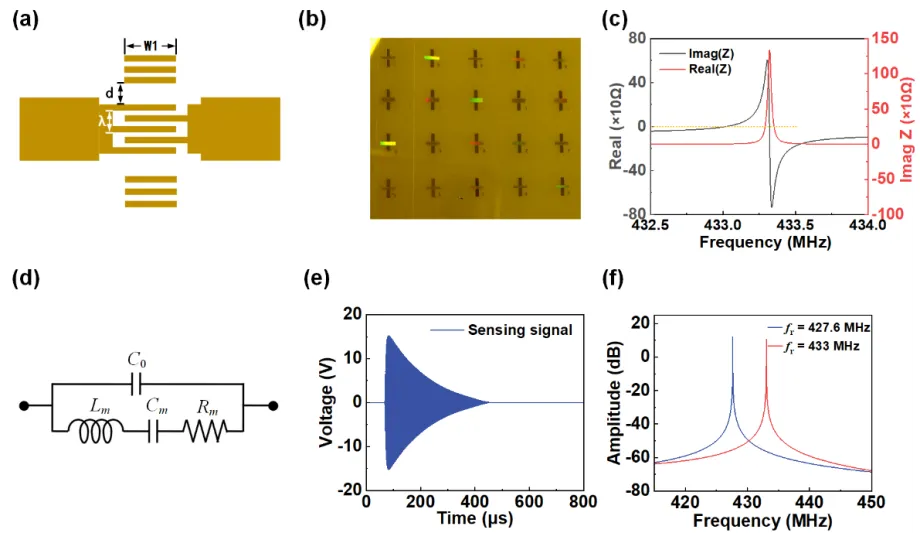
Figure 3. Sensing principle and simulation result diagram
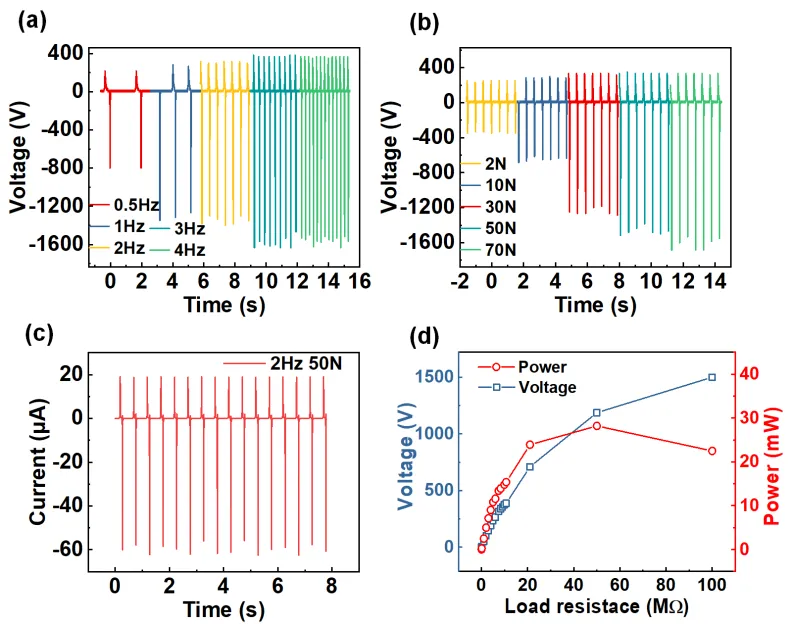
Figure 4. Output performance characterization of TENG
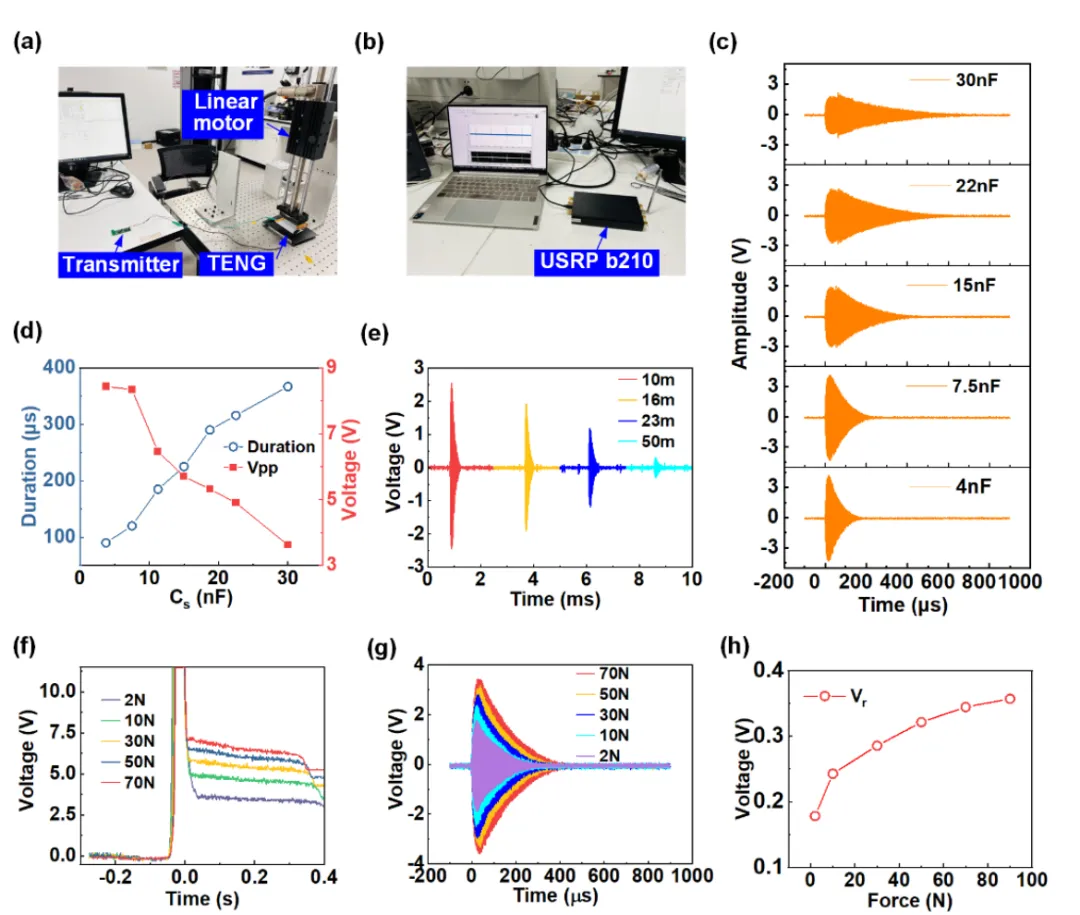
Figure 5. Analysis of the influence of contact force and Cs capacitance on the sensing system
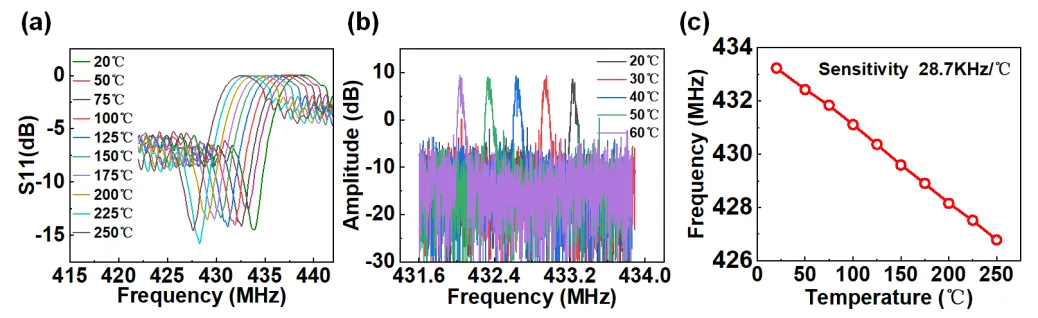
Figure 6. Experimental result diagram of the TENG-based instantaneous self-powered wireless temperature sensing system
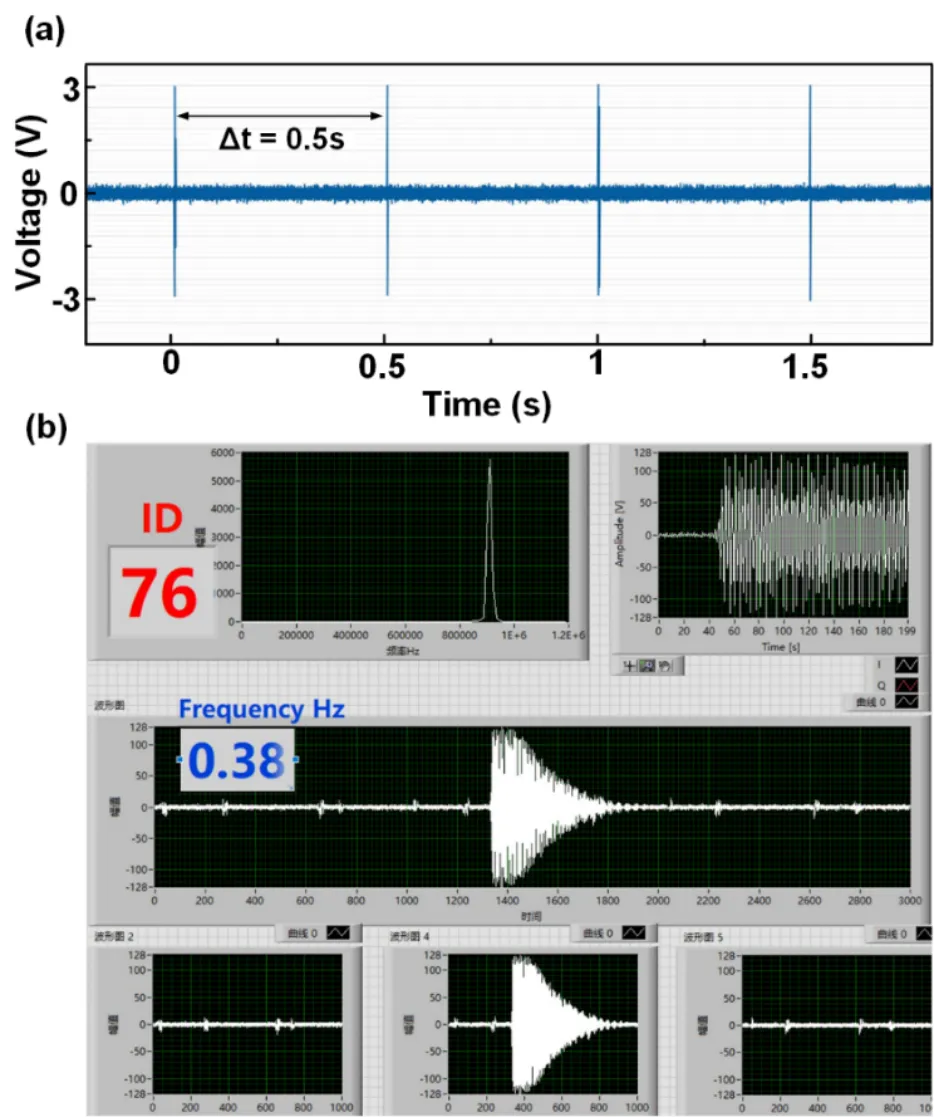
Figure 7. Experimental result diagram of the TENG-based instantaneous self-powered wireless vibration frequency monitoring system
Author Introduction
Luo Jikui, Professor, National-level Expert, former Professor at the University of Bolton, UK. Graduated from Harbin Institute of Technology with a bachelor’s degree, received a master’s degree from the University of Electro-Communications in Japan, and a doctorate from Hokkaido University in Japan. He later completed postdoctoral research at Cardiff University in the UK (1990-1995) and worked in the industry for 8 years in development research and management. After that, he served as a Senior Research Fellow in the Department of Engineering at Cambridge University, responsible for the construction and research of the MEMS team. Since 2007, he has been a professor at the Materials and Innovation Research Center at the University of Bolton, and in 2019, he joined the School of Microelectronics at Zhejiang University full-time. His main research areas include bio-MEMS, lab-on-a-chip, microfluidics, biosensors, flexible/wearable electronics, micro-energy harvesting, and self-powered wireless sensing. He has published a total of 282 papers in international high-impact journals and approximately 210 papers at international conferences, including 35 invited reports/keynote speeches. H-index 46, cited 7647 times.
Article Information
Zhang C, Zhang K, Lu J, et al. A triboelectric nanogenerator-based self-powered long-distance wireless sensing platform for industries and environment monitoring. Nano Research, 2024, https://doi.org/10.1007/s12274-024-6919-4.

Scan the QR code or click the “Read the original text” in the lower left corner to access the full text
Source: Nano Res.
For submissions, reprints, or collaborations, please contact WeChat:MatResFron001

Welcome to leave a message and share your views.Support the author, click the “like” in the lower right corner” and “looking”↓↓↓