Follow us for more information

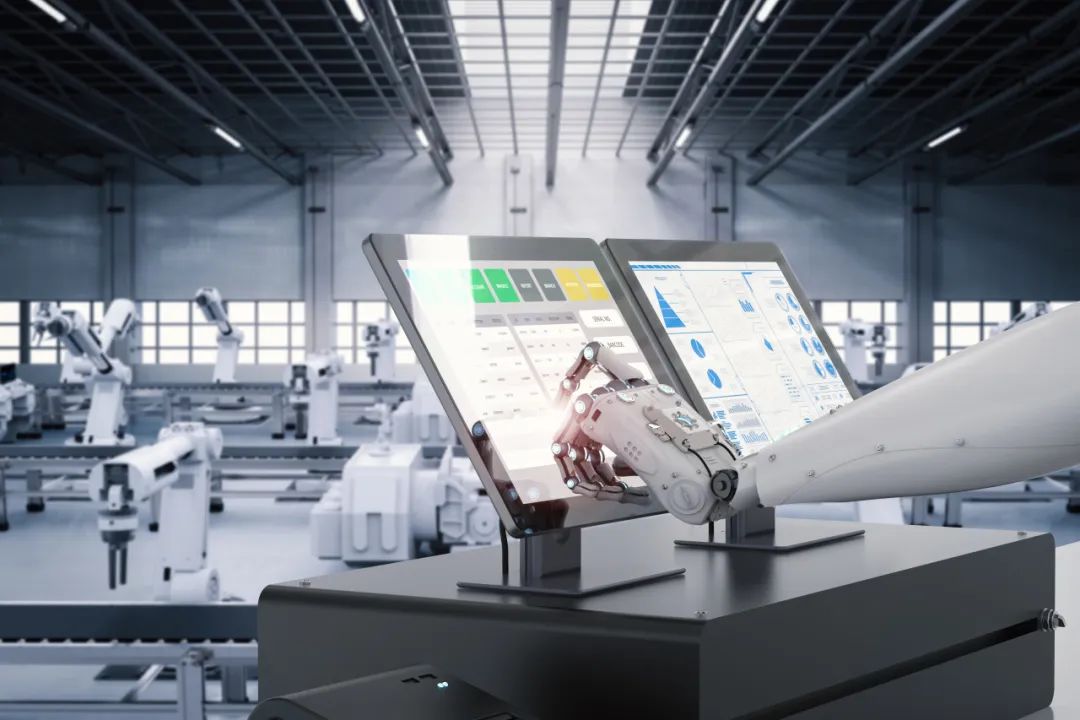
The Rise of Embodied Intelligence
“Embodied intelligence is not a new term that has emerged out of nowhere,” said Professor Song Jingzhou, director of the Robotics Engineering Research Center at the School of Intelligent Engineering and Automation, Beijing University of Posts and Telecommunications, and deputy director of the Ministry of Education’s Engineering Research Center for Space Robotics Technology. “Its first mention in the 2025 Chinese government work report marks its official leap from an academic concept to a technological buzzword at the national strategic level.”
Professor Song Jingzhou likens embodied intelligence to this: “Imagine we perfectly ‘install’ a powerful cognitive ‘brain’ of artificial intelligence, trained on massive amounts of data, into a robot with a physical body. This is not just simple assembly, but a deep integration. The result is that the robot is no longer a puppet passively executing pre-set instructions; it can actively perceive environmental information, make autonomous decisions during task execution, and even continuously learn and optimize skills in practice—just like humans grow through accumulated experience.” He particularly pointed out that a badminton-playing robot is an excellent example of embodied intelligence: it can capture the trajectory of a fast-flying shuttlecock in real-time, instantly calculate the landing point, spin, and speed, and autonomously decide whether to lightly tap it over the net or smash it violently. This ability to ‘adapt’ is the core distinction of embodied intelligence from traditional automation programs.
Why the Obsession with ‘Human-Likeness’?
Humanoid robots are undoubtedly the focus of recent attention. Why are they seen as the ‘representatives’ of embodied intelligence? Professor Song Jingzhou revealed the profound logic behind this: “The physical world we live in—from the living room and kitchen in our homes to the assembly lines and warehouses in factories, and even the streets and public facilities in cities—is essentially designed around the human body structure and behavior patterns. The height of door handles, the spacing of stairs, and the way tools are held all reflect ‘human-centered design.’” He explained that giving robots a human form is the most efficient ‘adaptive strategy.’ A humanoid robot with bipedal walking, dual-arm operation, and human-like perception systems can seamlessly integrate into these human-designed environments without the need to customize a specific robot form for each particular scenario (such as opening doors, climbing ladders, or using standard tools). “It acts like a ‘universal platform,’ greatly expanding the boundaries of application scenarios and reducing deployment costs.”
How Do Large Models Drive the Emergence of Embodied Intelligence?
The rapid advancement of embodied intelligence is inseparable from the powerful drive of big data and large AI models. Professor Song Jingzhou compared it to ‘high-energy fuel’: “Just as fuel is to a car engine, vast amounts of high-quality multimodal data (visual, auditory, tactile, motion, etc.) are essential for training the robot’s ‘brain,’ especially multimodal large models are indispensable nutrients.” He elaborated on how data endows robots with ‘generalization ability’ and ‘transfer learning’ intelligence.
“Take the simple task of ‘cracking a walnut’ as an example,” Professor Song Jingzhou said, “traditional robots require engineers to pre-program precisely: identify a specific hammer, calculate the grasping path and force. But if the environment changes slightly, such as replacing the hammer with a stone, it may fail. However, a robot with embodied intelligence is different. Its large model has ‘seen’ countless tools, materials, and their interactions during training. When faced with a task, it can better understand the goal, actively search for available tools in the environment, assess the efficiency and risks of each method, and choose the optimal solution. More importantly, when it encounters a hazelnut or a macadamia nut next time, it can transfer this core knowledge of ‘cracking’ to flexibly handle new objects. This is the ’emergence’ of intelligence driven by data.”
Ten Trends in Embodied Intelligence:
Fusion and Evolution Paint the Future Blueprint
Recently concluded, the 2025 World Robot Conference released the report ‘Ten Major Development Trends of Embodied Intelligent Robots,’ providing a clear technological evolution roadmap for the industry. Professor Song Jingzhou particularly emphasized the ‘fusion’ trend that excites him. “The technological route is shifting from discrete to deep integration,” he analyzed, “the past two mainstream approaches: hierarchical decision-making based on perception-planning-execution (more reliable but limited in flexibility), and data-driven, end-to-end learning (like VLA, more flexible but with poor interpretability and high data demands), are breaking down boundaries.” The third trend in the report, ‘Fusion of Model Predictive Control, Reinforcement Learning, and Life Sciences for Embodied Intelligent Control,’ is a concentrated embodiment of this fusion. Professor Song Jingzhou envisions: “Combining the laws of the physical world (model prediction), data-driven learning optimization (reinforcement learning), and even the intelligent mechanisms of biological systems (inspired by life sciences) is expected to give birth to more powerful, robust, and ‘human-like’ intelligent control systems, significantly enhancing robots’ performance in complex dynamic environments.”
The Generative Revolution:
AI Redefines ‘Body’ Design
The fourth trend in the report, ‘Generative AI-Driven Design of Embodied Intelligent Robots,’ points to another silent revolution—the disruption of hardware design paradigms.
“Traditional robot design heavily relies on engineers’ experience and intuition,” Professor Song Jingzhou said, “for example, designing a robot that can efficiently climb stairs. Engineers might choose a wheeled or quadrupedal scheme based on past experience. But is this optimal? Are there better configurations (like insect-like multi-legged or jumping designs)? It is often difficult to exhaustively explore and verify.” Generative AI has completely changed this process. “We can set goals in a high-precision physical simulation environment and let generative AI automatically explore the design space: generating hundreds or thousands of possible mechanical configurations (number of legs, joint arrangements, drive methods), material choices (lightweight high-strength composites? Flexible materials?), and even combinations of drive components (motors, hydraulics, pneumatics). AI will repeatedly execute tasks in a virtual environment with these ‘candidates,’ automatically evaluating performance and filtering optimizations through algorithms like reinforcement learning, ultimately identifying the most comprehensive optimal design scheme. This greatly accelerates the innovation process and may give birth to ‘optimal bodies’ that surpass human experience and imagination.”
The Ethical Foundation:
Establishing ‘Hearts’ for Machines to Ensure Steady Progress
As embodied intelligent robots, especially highly humanoid robots, increasingly approach reality, their safety and ethical issues have become unavoidable focal points. The tenth trend in the report, ‘Safety Assessment and Ethical Construction for Embodied Intelligent Robots,’ directly addresses this core issue.
“The higher the level of intelligence, the more significant the potential ethical challenges and safety risks cannot be ignored,” Professor Song Jingzhou pointed out seriously, “As robots’ forms, behaviors, and even decisions become more human-like, how can we ensure their actions align with human societal moral norms and legal boundaries? How to prevent malicious use? How to establish trust between humans and machines?” He highly agrees with Professor Zhu Songchun from Peking University on the concept of ‘establishing hearts for machines’: “This ‘heart’ is the ‘Value Alignment’ framework rooted in the core of machine intelligence. We need to internalize core human values (such as not harming humans, obeying legal instructions, protecting privacy, fairness, etc.) into the underlying logic of machine decision-making through carefully designed ‘value functions’ or constraints at the algorithmic level.” He further quoted the three laws of robotics established by Isaac Asimov and emphasized the ‘human-centered AI’ concept highlighted by Professor Fei-Fei Li from Stanford University, stressing that ethical design must come first. “This includes establishing strict behavior verification mechanisms, enhancing decision interpretability (to help people understand why machines make certain decisions), ensuring data privacy and security, and constructing internationally accepted safety assessment standards and ethical norms. Only on a solid ethical foundation can the development of embodied intelligence truly benefit humanity.”
Home Scenarios:
The Ultimate Testing Ground and Battleground
Despite the promising prospects, embodied intelligent robots still face significant challenges in truly entering ordinary households. Professor Song Jingzhou admitted that the home environment is the ‘ultimate testing ground’ for this technology.
“Factory environments are relatively structured, controllable, and have singular tasks, making robot deployment relatively easy. However, homes are entirely different,” he analyzed, “Every home is unique: layouts vary widely, items are placed randomly, human activities are unpredictable, and the tasks to be completed are diverse and trivial, which requires robots to possess unprecedented ‘dual-core’ capabilities.” On one hand, robots must have extremely strong environmental adaptability and task generalization. On the other hand, robots need to have more flexible and agile ‘bodies’ to move freely in complex, crowded, and dynamic home environments, which relies on breakthroughs in core underlying components. The dexterity of the body, the precision of operations, and the safety of interactions with humans and the environment all need significant enhancement.

Facing these challenges, Professor Song Jingzhou remains confident. “Looking back at the leapfrog progress of robotics technology over the past decade, we have reason to hold higher expectations for the next decade.” He predicts, “As the ‘brain’s’ generalization ability improves through more powerful and efficient multimodal fusion, and the ‘body’s’ agility advances with breakthroughs in materials, drives, and sensors, the vision of embodied intelligent robots entering thousands of households is expected to become a reality in the next decade.”
Source Reference:China Urban Economic DevelopmentEditor: Yang Gangyu