
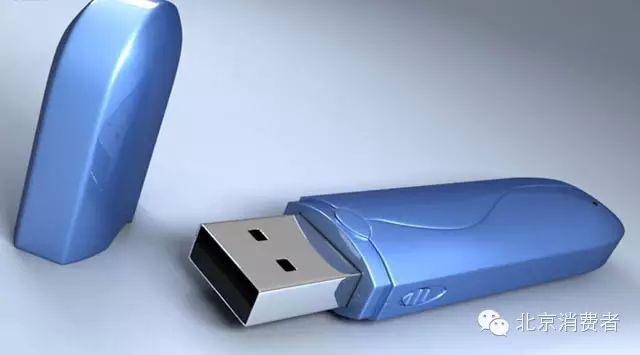
To guide consumers towards scientific and reasonable consumption and to disseminate knowledge about flash drive products, from August to October 2015, the China Consumers Association conducted a comparative test of flash drive products, with testing supported and coordinated by the National Electronic Computer Quality Supervision and Inspection Center.
Sample Information
The flash drive samples for this comparative test were purchased by staff of the China Consumers Association acting as ordinary consumers from the internet and home appliance stores in Beijing, totaling 70 models. Among them, there are 14 USB flash drives; 26 SD cards; 23 Micro SD cards (TF cards); and 7 CF cards. The samples involve 17 brands including Kingston, SanDisk, Toshiba, Lexar, Transcend, Samsung, PNY, RAVPower, Teclast, KDATA, Patriot, FeiMa, Damo, Lenovo, Tianshu, eekoo, and REMAX, with purchase prices ranging from a few dozen to over a thousand yuan.
Comparative Test Results
1. Basic Functionality Performs Normally
As a flash drive, the main functions are to copy, save, read, compress and decompress files, delete files, and format the product. The comparative test showed that all 70 samples could perform these basic functions normally without any abnormal situations.
2. Storage Capacity Matches the Label
Capacity is one of the important indicators of flash drives. The larger the capacity, the more files of the same size it can store. Currently, the industry standard nominal capacity is in GB (1GB=1000000000 bytes), which means if a product’s packaging indicates 8GB, its corresponding byte count is 8000000000 bytes. According to standard requirements, the actual usable capacity of the product should be greater than 90% of the nominal capacity.
The nominal capacities of the tested samples are 8GB (15 models), 16GB (14 models), 32GB (11 models), 64GB (23 models), and 128GB (7 models). The test results showed that the actual usable capacities of all 70 samples were above 90% of the nominal capacity. 29 samples had actual usable capacities greater than or equal to the nominal values.
Why is 100% not required? This is because it is generally difficult to guarantee that all storage units of flash memory chips are intact when they leave the factory; programs need to mark defective areas to prohibit their use, thus resulting in some loss of capacity. Additionally, some flash drives’ controller chip designs require reserving some good storage units as backups for potential future bad blocks or for caching.
3. Read and Write Speeds Need Clear Indication
Read speed refers to the speed of copying files from the flash drive to an external device. Write speed refers to the speed of copying files from an external device to the flash drive. The results of read and write speed tests are related to the background machine, operating system, etc. The read and write speeds of flash drives can significantly affect device usage. For example, if a storage card (a type of flash drive) used in a camera has a slow write speed, photos taken will temporarily be stored in the camera’s internal cache, meaning that after each photo is taken, the camera needs a relatively long time to transfer the data to the storage card, causing delays during shooting. Sometimes, if the storage card’s read and write speeds are too slow, continuous photos may not be stored due to limited camera cache space, resulting in a failure to capture images.
It is crucial to clearly and accurately label the read and write speeds of flash drives, along with the specifications of electronic products that can achieve these speeds and the testing conditions for the read and write speeds. Otherwise, it may inconvenience users and could be misleading. In this comparative test, only 18 of the 70 samples indicated both read and write speeds on their packaging or products; 28 samples did not indicate either speed. None of the 70 samples specified the product configurations corresponding to their speeds.
Since all samples that indicated read and write speeds did not mention the conditions under which their indicated speeds were tested on the packaging or instructions, the speed tests were conducted under the same USB3.0 interface of one computer. For memory card samples, they were first inserted into a USB3.0 card reader, which was then plugged into the USB3.0 interface of the test computer.
The test results showed that there was a certain deviation between the indicated speeds and the actual measured speeds, with some samples showing a significant deviation. For example, one sample indicated a read speed of 90MB/s, but the actual measured read speed was 23.629MB/s, only 26.2% of the indicated value; another sample indicated a read speed of 60MB/s, but the actual measured speed was 143.804MB/s, 239.7% of the indicated value.
Overall, there are certain issues with the labeling of read and write speeds for flash drive products, and manufacturers need to improve product labeling content. Additionally, it is hoped that relevant departments will timely revise product standards to require flash drive products to clearly label read and write speeds and specify corresponding testing conditions, which would be more beneficial for consumers when purchasing and using.
4. Samples Show Good Durability
The comparative test subjected the samples to 2000 insertion and removal tests, and the results showed that after testing, the mechanical structures of all 70 samples were undamaged, with USB interfaces remaining intact and functioning normally. The samples were also subjected to harsh storage conditions (temperatures from -30°C to 55°C) and operational conditions (temperatures from 10°C to 40°C, relative humidity from 35% to 80%), and all performed normally.
In addition, the comparative test simulated the working conditions of flash drives after being dropped without packaging during daily consumer use, and the results showed that all basic functions of the 70 tested samples were operational.
5. Good Electrostatic Discharge Resistance and Antistatic Performance
The tests for electrostatic discharge resistance and antistatic performance evaluate whether the product can still function normally after exposure to high-voltage electrostatic discharge. Poor electrostatic discharge resistance and antistatic performance in flash drives could lead to damage when plugging and unplugging them in the presence of static electricity. The test results showed that all 70 samples exhibited good electrostatic discharge resistance and antistatic performance.
Consumer Tips
1. Purchase Flash Drives Based on Need
The price of flash drive products mainly depends on their capacity and read/write speeds. If they are only used for general file transfers, there is no need to purchase high-speed products. For inexperienced consumers, it is recommended to choose well-known brands and products that have been on the market for a while, as these products have undergone market testing and their quality is relatively stable. If the flash drive is to be used in a camera and frequently employs burst shooting or records 4K videos, it is advisable to select faster products for better performance, but high-speed products are generally more expensive. It is important to confirm in advance whether your device supports or is compatible with high-speed products to avoid wasting money.
2. Considerations When Purchasing Flash Drives
First, closely examine product labels and descriptions. Pay special attention to storage capacity, read/write speeds, usage range, and precautions, and use the product as recommended.
Second, be wary of “shrinkage” flash drives. After purchase, open the package on-site and copy and open a file larger than half the labeled capacity of the flash drive to check, especially for audio and video files. Testing software can also be used to verify if it is a “shrinkage drive.”
Third, pay attention to the warranty period of the flash drive. By checking the warranty periods labeled on the comparative test samples, most are marked for five years, with some for three or ten years. Be cautious of manufacturers’ lifetime warranty promises.
With the development of information technology, mobile storage products are widely used in the information field. In particular, flash drives using flash memory as storage media are widely used in consumer electronics such as mobile phones, digital cameras, PDAs, players, laptops, and home computers due to their outstanding portability and reliability, with prices and capacities within the acceptable range for ordinary consumers.
Currently, the main types of flash drives on the market include USB flash drives, Compact Flash (CF cards), SanDisk (SD cards), Micro SD cards (TF cards), Smart Media (SM), Multi Media Card (MMC), and Memory Stick, among others (strictly speaking, Micro SD cards are a type of SD card, but due to their unique characteristics, they are classified separately here).
According to “Industrial and Commercial Administration” – Biweekly Salon
Press your finger down on the fingerprint below, scan the QR code in the image, and follow us to receive lifetime free consumer rights information.
Beijing Consumers (Subscription Number: bjxfz315) is the official WeChat publishing platform of the Beijing Consumers Association. Follow us for authoritative consumer information and practical consumption tips. If your consumer rights are violated, you can also contact us.