
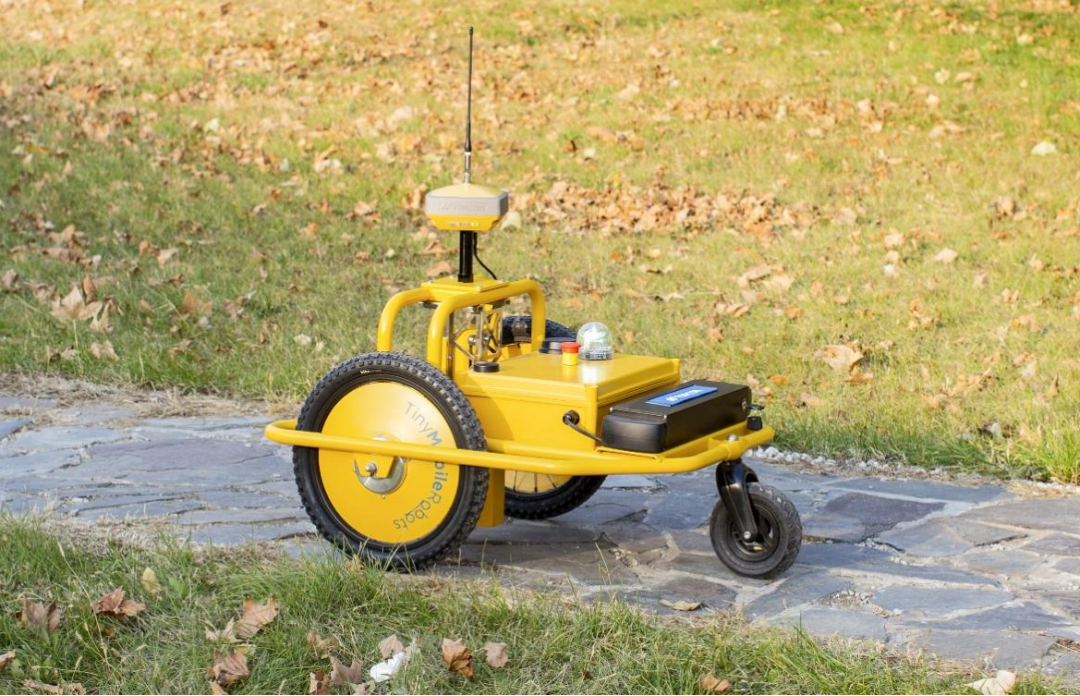
Topcon TinySurveyor Automatic Marking Robot
Currently, high-grade road markings in China mainly use thermoplastic paint, which has many advantages and is widely adopted in road markings. However, once formed, it is difficult to modify. Therefore, a water line is generally used as a reference line for calibration before the official marking.
The water line serves not only as a reference line for marking but also as a benchmark for cleaning and primer application processes. The laying out of the water line is the most crucial step in the thermoplastic marking water line construction method. This process is vital for pre-controlling the overall effect of the marking.
Topcon Automatic Marking Robot
Comparison with Traditional Methods

01. Traditional Construction
Step 1
Marking personnel mark points on the road surface at intervals of 10m-30m along the road, indicating the edge of the marking at the designed distance from the curb (or road centerline). For curves, the points need to be denser.
Step 2
Using a flexible rope, connect the various points to create a smooth curve or straight line (the points do not necessarily have to be on the line), which serves as the working line for setting the water line.
Step 3
Using a water-soluble, environmentally friendly interior wall paint, lay out the line to complete the calibration of the water line. Then, using the principle of parallel lines (lane width), complete the drawing of multiple water lines.
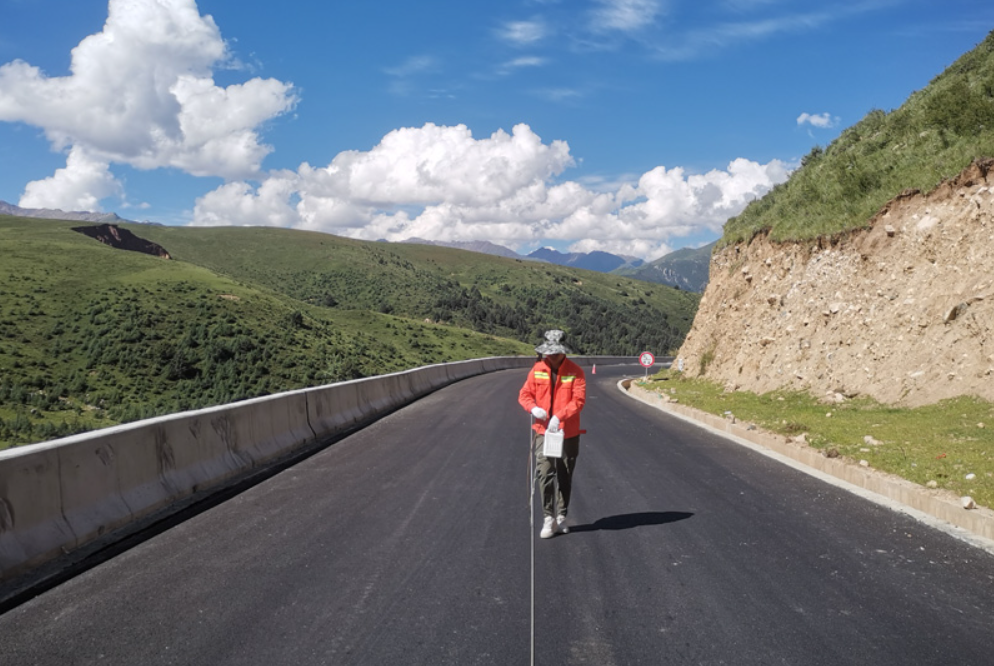
Traditional Rope Marking
Using traditional methods has the following disadvantages
-
Requires highly experienced technical personnel who are very familiar with marking design principles and can skillfully operate various measuring devices.
-
At least 3-4 personnel are needed on-site, as there are many places to mark, such as road edges, center lines, shoulders, and sidewalks, leading to simple, repetitive work with high labor intensity.
-
The industry faces severe challenges in talent reserves, with a significant lack of new blood.
-
After road maintenance, marking requires traffic control or even partial closure, which incurs high control costs and poses significant safety risks to on-site personnel.
-
Due to cumulative errors in manual marking, it is difficult to guarantee key technical indicators, resulting in poor quality of outcomes.
02. Robot Construction
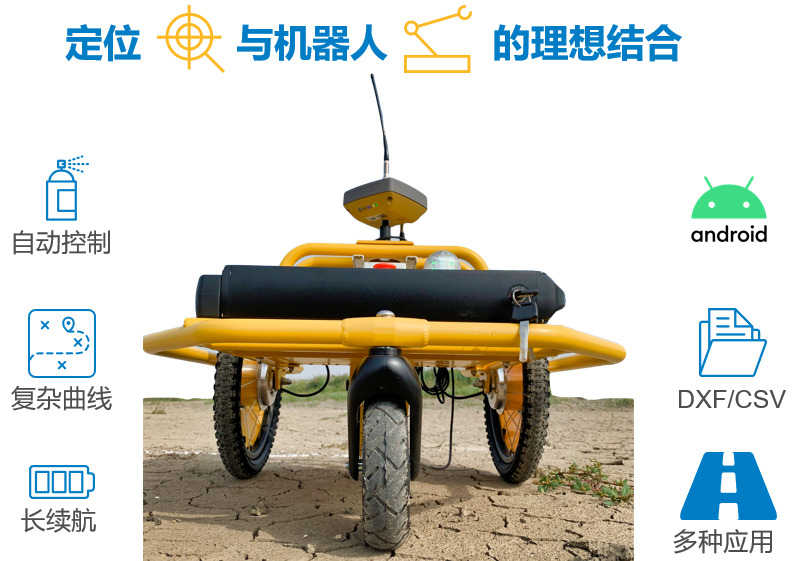
The Topcon TinySurveyor Automatic Marking Robot is an innovative product of epoch-making significance in the road marking industry. It is a new technological form based on mechanical control combined with GNSS or total station positioning, which, with its excellent performance, unique functions, and a completely new user experience, fundamentally changes users’ perceptions and demands for industry products.
Simply arrive at the road marking site with the BIM design drawings, send them to the TinySurveyor Automatic Marking Robot, and the robot will automatically drive and draw various complex straight lines, curves, text, dashed lines, and other precise line types on the road.
As the world’s fastest automatic marking robot, it offers a safer and more efficient way of working.
1. Depending on the usage scenario, it is divided into the following two models:
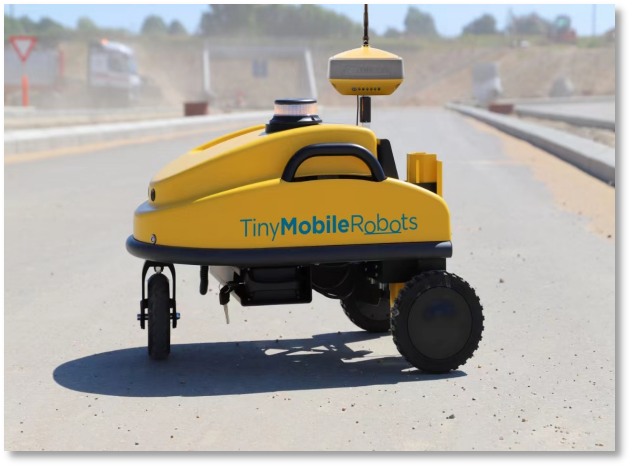
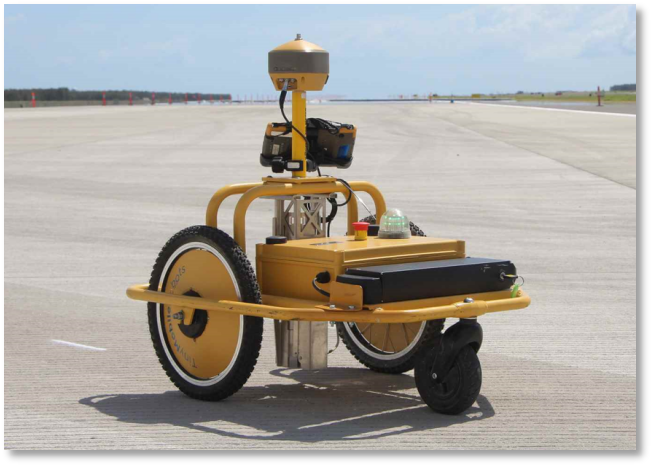
Plotter
“Road Type”
1. Designed for marking on roads or flat surfaces
2. Equipped with active obstacle avoidance features, providing more safety configurations
3. Offers more connectivity options
Terra
“Off-Road Type”
(All-Purpose)
1. Designed for marking work on complex surfaces
2. A multi-purpose robot for layout, staking, measurement, etc.
2. Specific Parameters
1) Typical accuracy: 1-2 cm.
2) Emergency stop: Both manual and automatic emergency stop options are available, allowing operators to stop work in any emergency situation.
3) TinySurveyor uses a simple design to enhance efficiency. The robot employs a three-wheel configuration, allowing for easy navigation around turns. Two large motor wheels provide reliable power, enabling it to travel freely on the maximum designed slope of the road.
4) The overall weight is only about 20 kg, making it easy to load this robot into a car trunk for transport from one location to another.
5) 8-hour battery: The TinySurveyor can complete a full day’s work on a single charge without needing a break.
6) Signal lights: When the robot is working, operators can see its instant communication.
7) Marking method: Use any spray paint can or marking pot to mark points and lines. A laser pointer can also be used for marking.
8) Data communication: Bluetooth functionality ensures that the TinySurveyor can respond within seconds.
9) Guidance positioning method: The robot can use a high-precision GNSS receiver or total station to receive real-time location information.
3. Advantages
Using the Topcon TinySurveyor Automatic Marking Robot for water line staking construction can ensure the lateral deviation of the marking, reduce the impact of rainy seasons on the marking schedule, lower the labor intensity of cleaning work, and reduce the number of construction personnel (one person can complete the water line calibration work), improving work efficiency and ensuring construction quality.

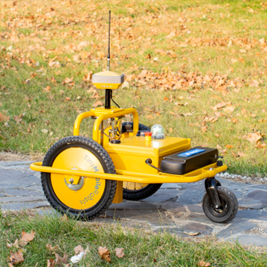
High Efficiency
1. Up to 10 times the efficiency of manual work
2. 4 km/h, with 8 hours of endurance
3. Reduced personnel, can work at night

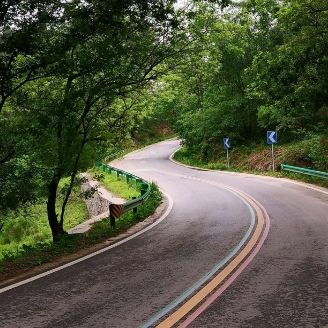
High Quality
1. 1-2 cm accuracy
2. Capable of drawing complex curves
3. Good repeatability
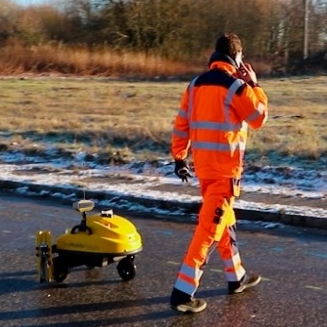
Safer
1. Personnel do not need to be in traffic
2. Work comfortably from inside the vehicle
3. Emergency stop button
4. Automatic obstacle avoidance (Plotter)
4. Application Cases
1) Tianjin Expressway
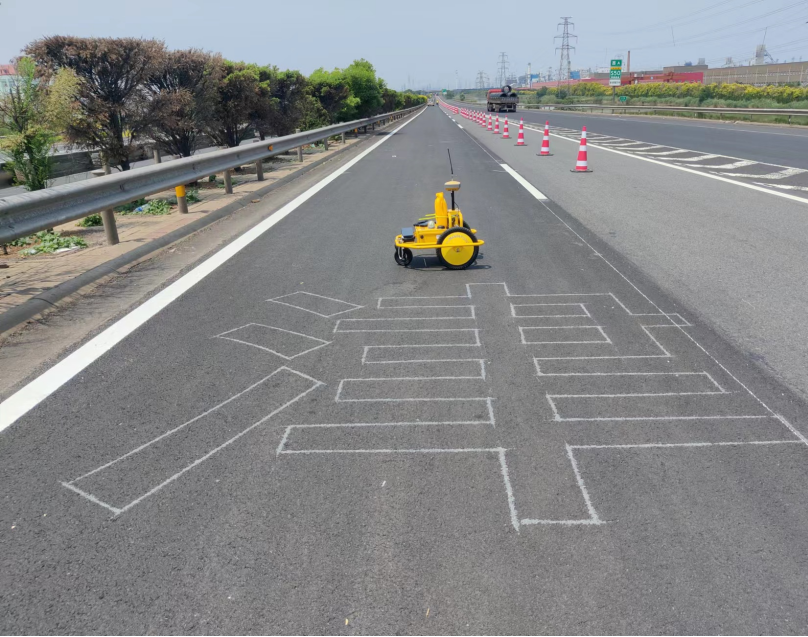
2) BMLM-1 Marking on Bianmen Expressway
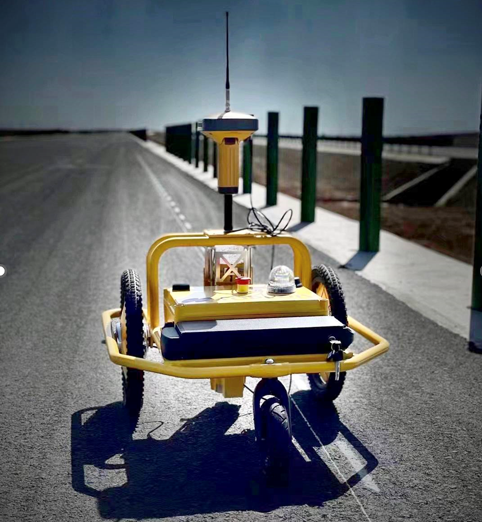
3) Xuxin Expressway
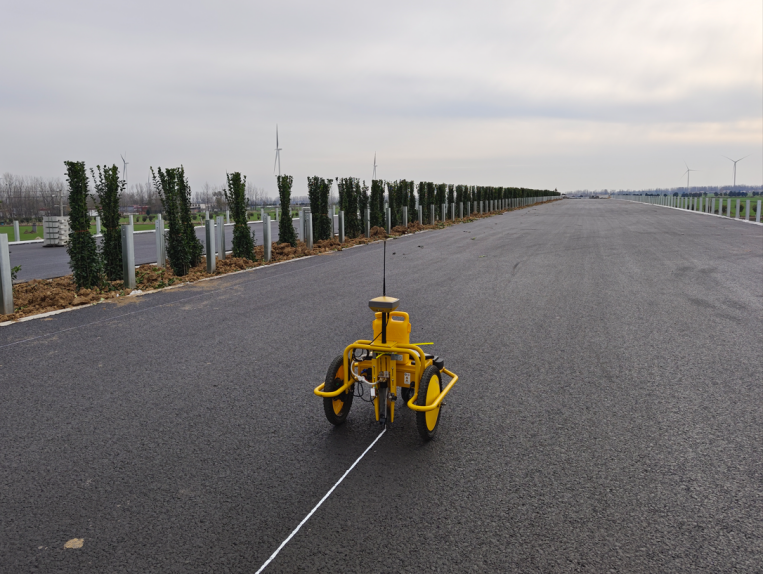
4) Beixian Expressway
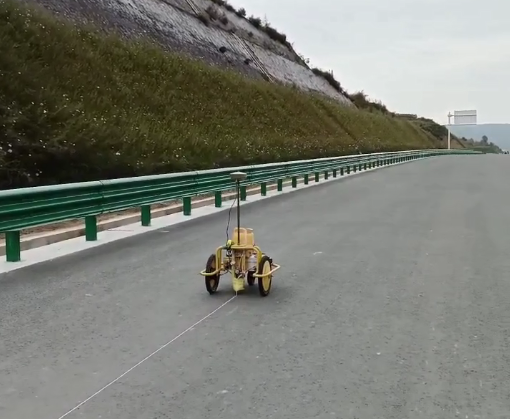
5) Gemang Expressway
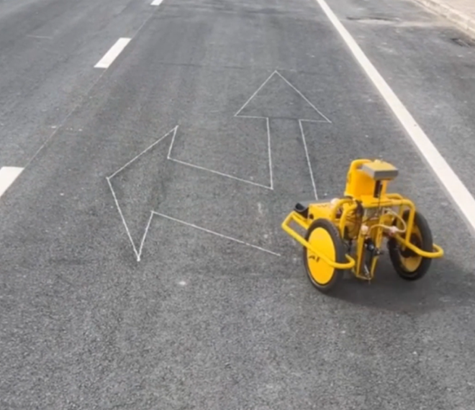
03. Conclusion
The road marking industry is an indispensable part of traffic construction, playing an important role in ensuring traffic safety, improving road usage efficiency, and beautifying urban environments. With economic development and increasing traffic flow, the road marking industry has a very broad prospect.
With continuous innovation and application of technology, road marking technology is also constantly improving. The emergence of automatic marking robots will bring more development opportunities to the road marking industry.
This system is an ideal combination of positioning and robotics, featuring high efficiency, high quality, and enhanced safety, applicable in highways, municipal road marking, and staking construction.
The road marking industry has a very broad prospect, but construction companies also need to continuously strengthen their innovation capabilities and improve construction quality and service levels to remain competitive in the fierce market.
 Source: Topcon Suojia