School of Automation Engineering
“Intelligent Robot Laboratory”
Summer Social Practice Team
Conducting Summer “Three Going to the Countryside”
Social Practice Activities (Part II)
Intelligent Robot Laboratory Youth League Branch
In order to deeply implement the study of Xi Jinping’s Thought on Socialism with Chinese Characteristics for a New Era, the spirit of the 20th National Congress of the Communist Party of China, and the Third Plenary Session of the 20th Central Committee, and in accordance with the requirements of the “Opinions of the Central Committee of the Communist Party of China and the State Council on Further Deepening Rural Reform and Promoting Comprehensive Rural Revitalization,” we aim to promote the collaborative tackling of agricultural science and technology forces, lead the gathering of advanced production factors through technological innovation, develop new quality productive forces in agriculture according to local conditions, and empower rural industrial revitalization with technology. The Youth League Branch of the Intelligent Robot Laboratory of the School of Automation Engineering actively responded to the national call and formed a practice team to carry out summer “Three Going to the Countryside” social practice activities.
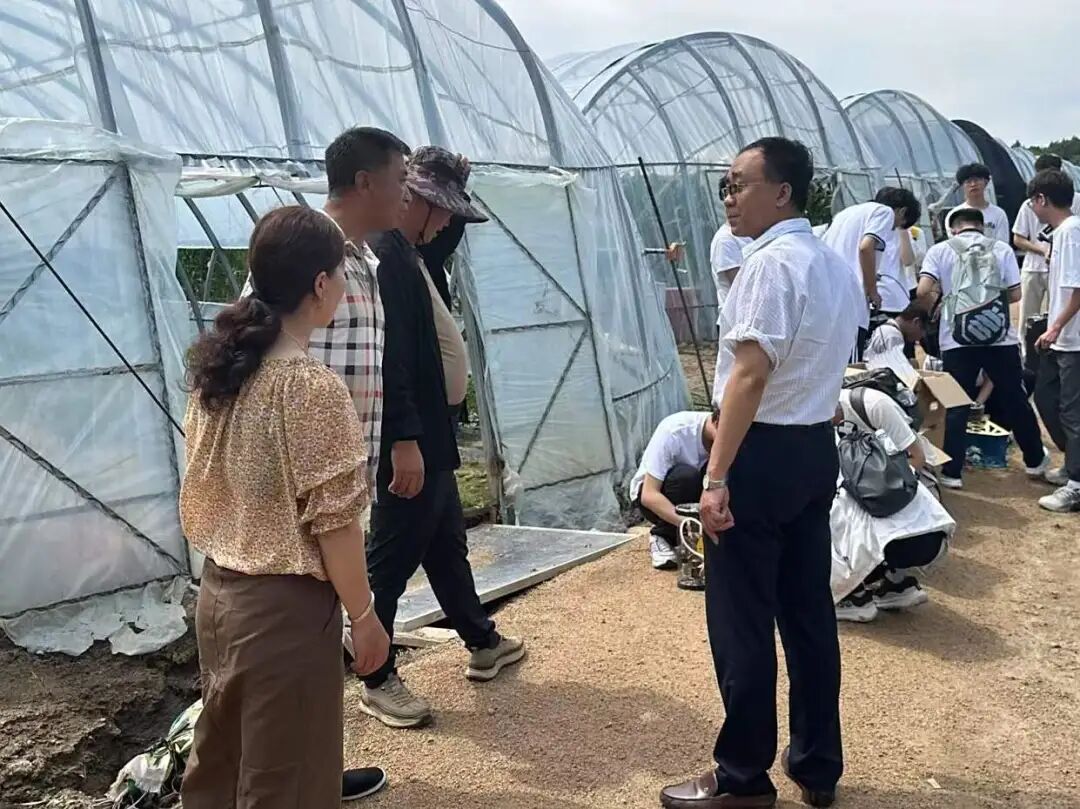
From July 14 to July 15, the summer social practice team of the School of Automation Engineering’s “Intelligent Robot Laboratory,” led by Teacher Zhang Ye, went to the Grape Industry Prosperity Demonstration Park in Minzhu Village, Yantongshan Town, Panshi City, to conduct intelligent research and assistance for crop planting.
Quadruped Robots Strengthen Agricultural Safety
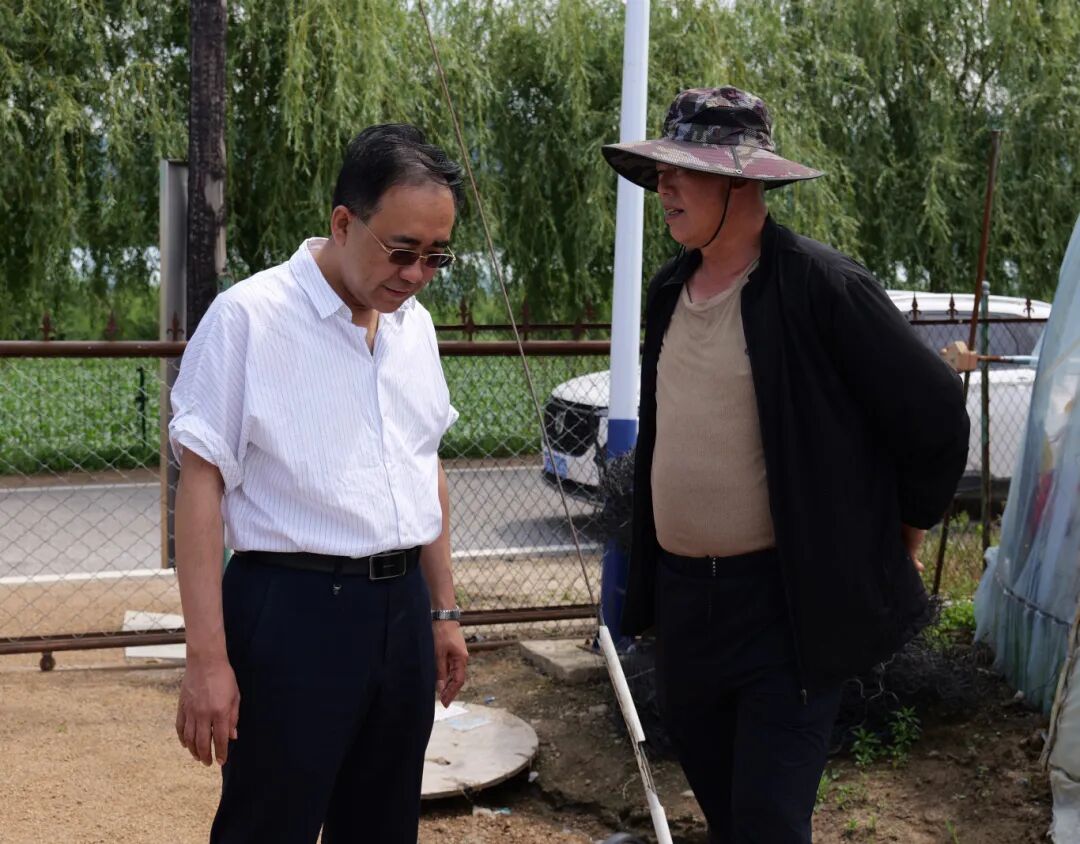
Upon entering the vineyard, Zhang Ye, the guiding teacher of the Intelligent Robot Laboratory, engaged in in-depth discussions with the village secretary of Minzhu Village about the current situation and prospects of rural industrial development. Both sides explored how to leverage intelligent robot technology to enhance agricultural production efficiency and seek new breakthroughs for the revitalization and development of Minzhu Village.
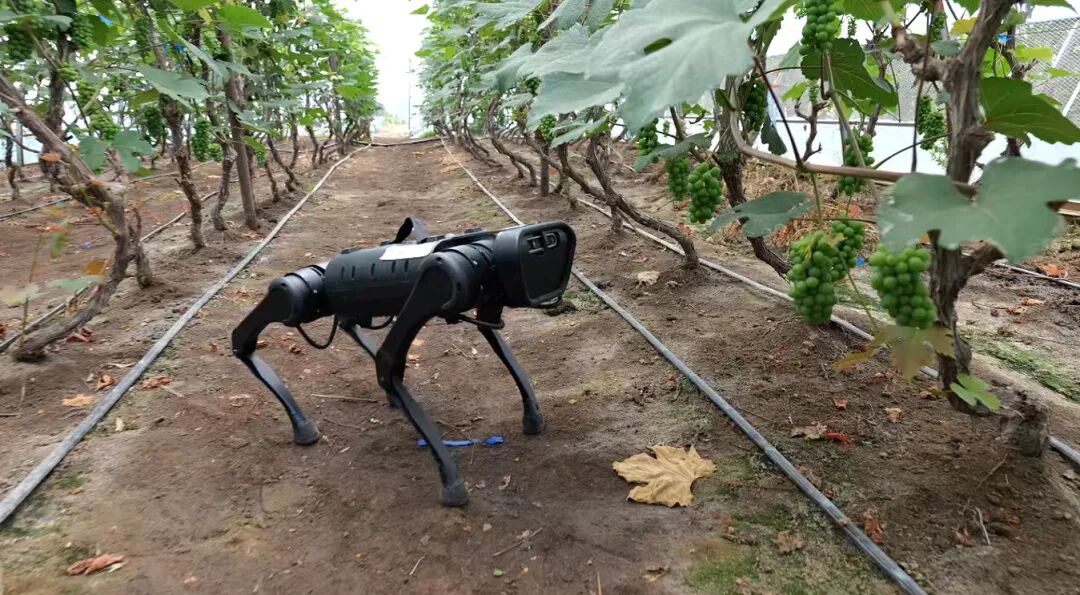
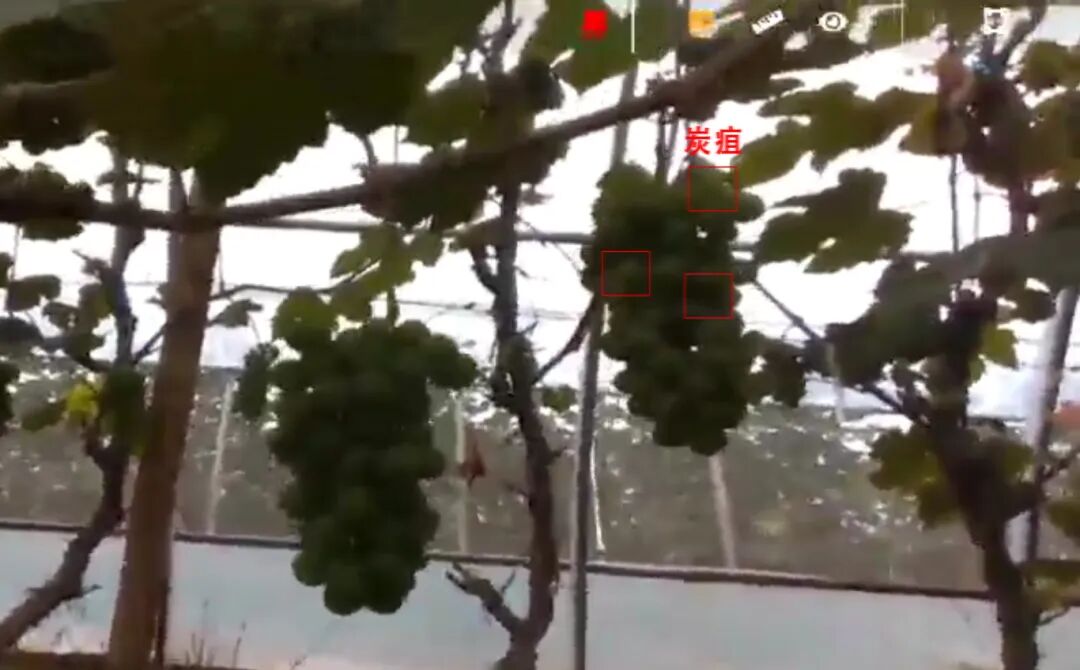
During the practice, the practice team relied on the technical accumulation of the Intelligent Robot Laboratory to quickly deploy and debug quadruped robots. The team optimized the adaptation based on a self-developed CNN algorithm, combined with the terrain of the vineyard and the growth characteristics of grapes, to collect hundreds of images of pest and disease samples in the field, repeatedly training and calibrating the system in a simulated environment, ultimately achieving accurate identification of more than a dozen common pests and diseases, from downy mildew spores to anthracnose pathogens, providing key support for early warning and scientific prevention and control of pests and diseases.
Intelligent Robots Safeguard Grape Production
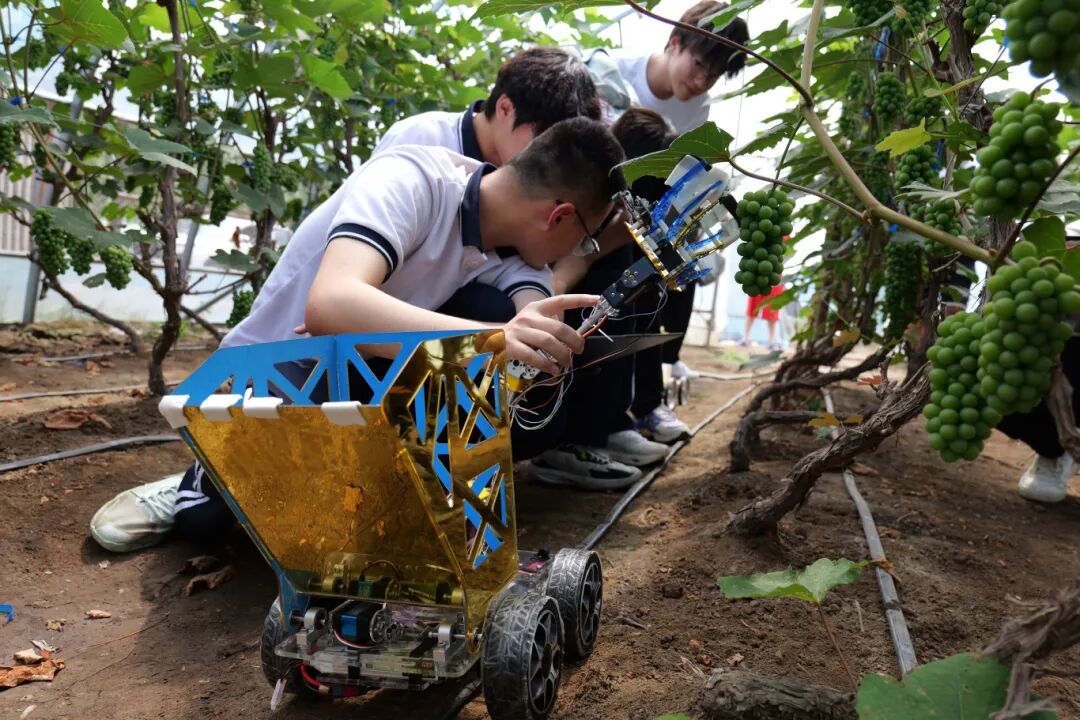
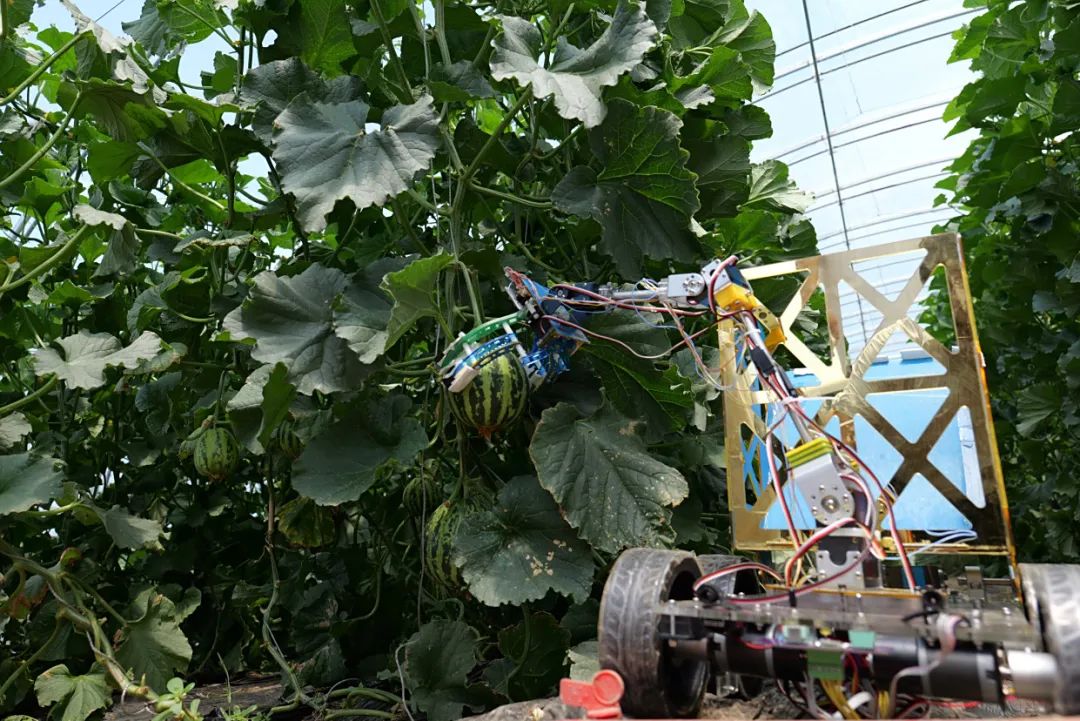
The practice team transformed the laboratory’s research results into productivity, with self-developed intelligent harvesting robots and intelligent irrigation robots injecting technological momentum into grape production.
The mechanical arm of the intelligent harvesting robot integrates mechanical principles and precision control technology, allowing for precise control of gripping force, ensuring the integrity and marketability of the fruit. Compared to traditional manual labor, its efficient and stable operation can significantly shorten the harvesting cycle and reduce labor and time costs.
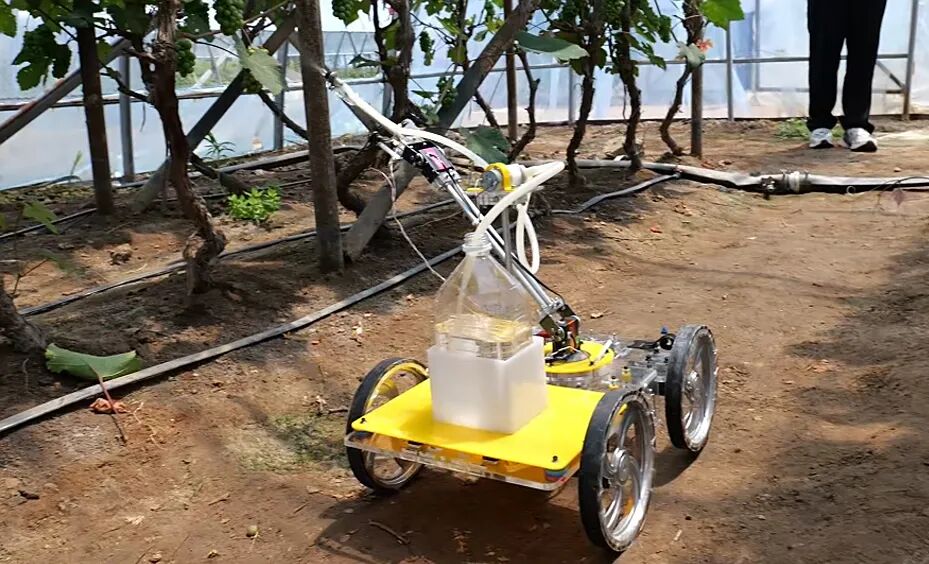
The intelligent sprinkler robot, on the other hand, tackles pest and disease prevention challenges through interdisciplinary research. The robot establishes predictive models based on a large amount of data collected from the laboratory, and its intelligent control system allows it to automatically plan inspection routes based on predictive results and real-time monitoring data, achieving precise prevention and control of pests and diseases. The two types of robots work together to promote the grape industry towards high efficiency and intelligence, enhancing market competitiveness.
 Reflections from Practice
While debugging the harvesting robot in the vineyard, I truly understood the gap between “laboratory data” and “field effectiveness.” The robot performed stably on flat ground, but frequently got stuck in the uneven terrain with weeds. After a whole day of field investigation and debugging, the equipment finally operated smoothly. This made me realize that enriching farmers with technology is not about bringing ready-made technology, but about making “grounded” innovations while being present in the fields.
—— Automation 232 Yang Dongyi
When teaching farmers to use the intelligent irrigation system, an uncle said, “In the past, I relied on experience to water, but now the machine understands crops better than I do.” This statement particularly touched me. The model we developed can automatically start and stop based on sensor data, but the uncles need simple and easy-to-understand operational guidance. This made me realize that technology transfer not only needs to break through research and development barriers but also needs to build a bridge from “machines to farmers,” which should be the direction our laboratory focuses on in the future.
—— Robot 231 Liu Haoran
Conclusion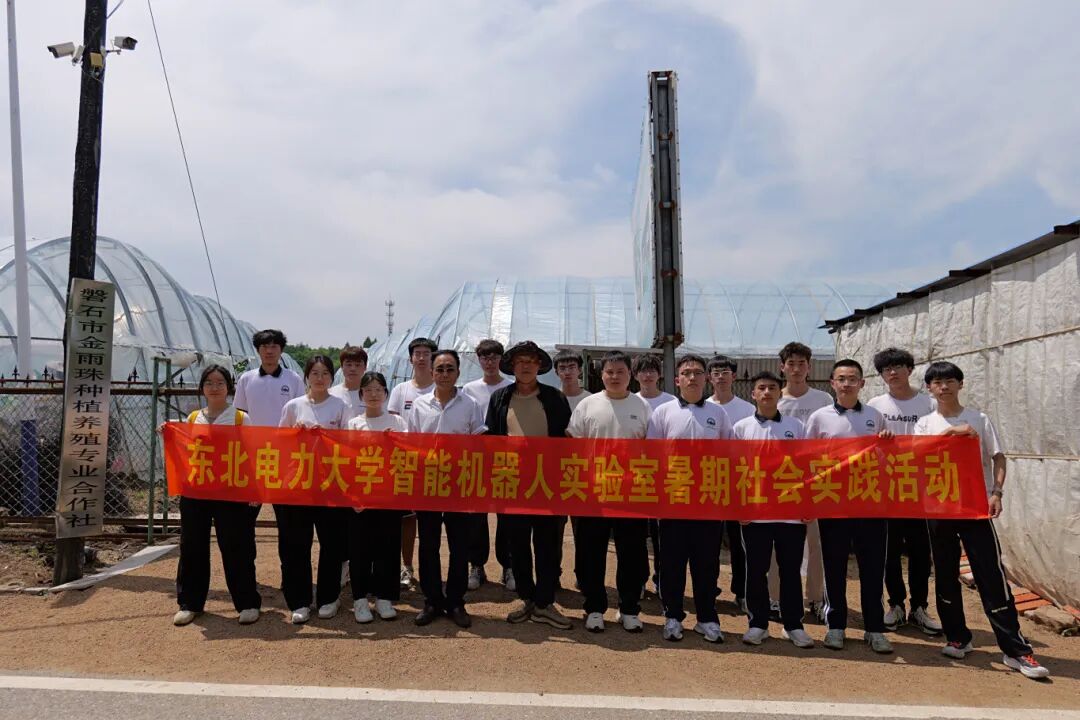
The summer practice team of the School of Automation Engineering, themed “Youth Building Dreams, Revitalizing Practice,” combines the advantages of the automation engineering discipline through a dual-drive approach of “technology exhibition + industrial empowerment,” transforming research results into practical actions for rural revitalization. In this grape industry prosperity demonstration park practice activity, the “Intelligent Robot Laboratory” summer practice team promoted smart agricultural equipment into the fields, transforming intelligent technology into practical assistance for farmers through the field operations of harvesting and irrigation robots, forming a replicable model for rural technology transformation.
In the future, the Youth League Branch of the Intelligent Robot Laboratory will continue to focus on the needs of agricultural scenarios, with “technology assisting farmers” as the core direction, deepening the adaptability research of robots in complex field environments, and improving the localization iteration of intelligent models, promoting rural revitalization through the dissemination of technological paradigms, achieving a virtuous cycle of “research – practice – application.”
END
Image and text source: Youth League Branch of the Intelligent Robot Laboratory
Initial review: Hu Bowen
Second review: Li Dan
Final review: Ma Chongsheng
