Today, the 12th edition of the Guangzhou Daily’s “Science and Technology Weekly” published a report titled “Research and Development in Hong Kong, Implementation in Guangzhou: Capacitive Sensor Incubation Has a Path,” where reporters engaged in dialogue with our research team to explore Guangzhou’s latest achievements in the field of sensors.
▽ Click the video to see the report by Guangzhou Daily reporters
From detecting temperature and humidity to identifying sound, pressure, and frequency… the sensors invented by scientists can convert various physical, chemical, or biological quantities from the external environment into data or signals that humans or computers can understand. Sensors are not only an important foundation for achieving intelligent manufacturing in industry but also a crucial part of maintaining life and health in medicine, serving as the “eyes, ears, mouth, and nose” for various forms of embodied intelligence.
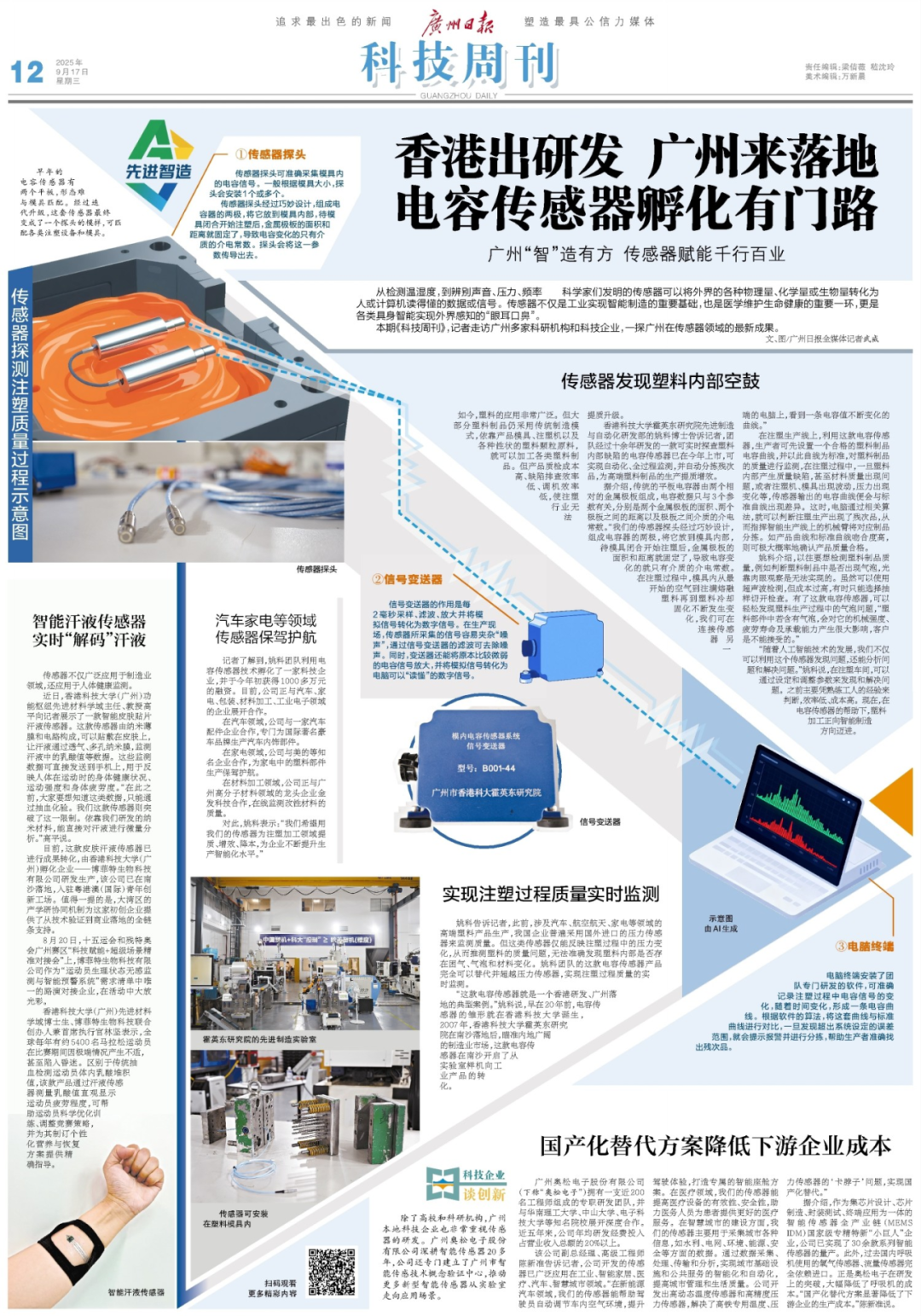
Sensors Detect Internal Voids in Plastics

Currently, plastics are widely used. However, most plastic products still rely on traditional manufacturing modes, using product molds, injection molding machines, and various types of plastic granules to process different plastic products. However, the high cost of product quality inspection, low defect detection efficiency, and low machine adjustment efficiency hinder the quality upgrading of the injection molding industry.
Dr. Yao Ke from the Advanced Manufacturing and Automation Research Department of the Ho Ying Tung Research Institute at the Hong Kong University of Science and Technology told reporters that a capacitive sensor developed by the team over more than a decade, capable of real-time detection of internal defects in plastics, was launched this year. It can achieve automation, full-process monitoring, and automatically sort out defective products, enhancing the quality and efficiency of high-end plastic product production.
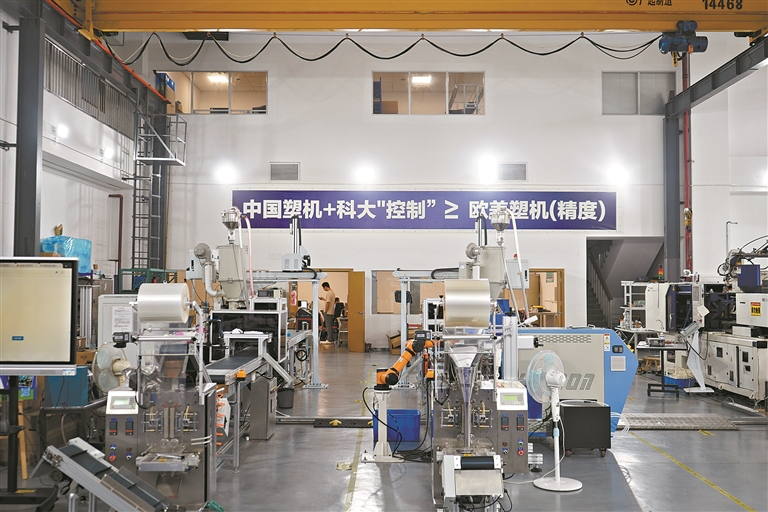
Advanced manufacturing laboratory at the Ho Ying Tung Research Institute
According to reports, traditional flat capacitors consist of two opposing metal plates, and the capacitance data is only related to three parameters: the area of the two metal plates, the distance between the two plates, and the dielectric constant of the medium between the plates. “Our sensor probe is cleverly designed to form the two poles of the capacitor, which is placed inside the mold. Once the mold is closed and injection molding begins, the area and distance of the metal plates are fixed, causing only the dielectric constant of the medium to change the capacitance. During the injection molding process, the mold undergoes continuous changes from air to molten plastic and then to cooled and solidified plastic. We can see a continuously changing capacitance value curve on the computer connected to the other end of the sensor.”
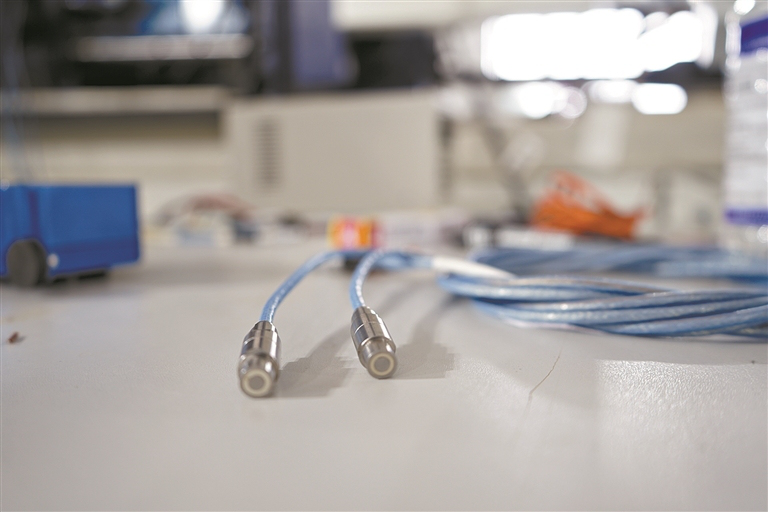
Sensor probe
On the injection molding production line, using this capacitive sensor, producers can first set a qualified capacitance curve for plastic products and use this curve as a standard to monitor the quality of plastic products. During the injection molding process, if any quality defects occur inside the plastic, or if there are issues with material quality, fluctuations in the injection molding machine, or changes in pressure, the capacitance curve output by the sensor will differ from the standard curve. At this point, the computer can determine that defective products have emerged in the injection molding production through relevant algorithms, directing the robotic arms on the intelligent production line to sort the corresponding products. If the product curve closely matches the standard curve, it can be highly likely confirmed that the product quality is qualified.
Dr. Yao explained that in the past, to detect the quality of plastic products, such as determining whether there were bubbles in the plastic, it was impossible to rely solely on visual inspection. Although ultrasonic testing could be used, it is too costly, and sometimes sampling and cutting for inspection was the only option. With this capacitive sensor, bubble issues in the plastic production process can be easily detected. “If plastic components contain bubbles, it will greatly affect their mechanical strength, fatigue life, and load-bearing capacity, which customers cannot accept.”
“With the development of artificial intelligence technology, we can not only use this sensor to detect problems but also analyze and solve them,” Dr. Yao said. In the injection molding workshop, parameters can be set and adjusted to discover and resolve issues. Previously, judgments were mainly based on the experience of skilled workers, which was inefficient and costly. Now, with the help of the capacitive sensor, plastic processing is moving towards intelligent manufacturing.
In earlier years, capacitive sensors had two flat plates, making it difficult to match with molds. After iterations and upgrades, this sensor has finally transformed into a probe shape, compatible with various injection molding equipment and molds.
01
Sensor Probe
The sensor probe can accurately collect capacitance signals within the mold. Generally, based on the size of the mold, one or more probes will be installed. The sensor probe is cleverly designed to form the two poles of the capacitor, placed inside the mold. Once the mold is closed and injection molding begins, the area and distance of the metal plates are fixed, causing only the dielectric constant of the medium to change the capacitance. The probe will transmit this parameter outside.
02
Signal Transmitter
The role of the signal transmitter is to sample, filter, amplify, and convert the analog signal into a digital signal every 2 milliseconds. In the production site, the signals collected by the sensor are easily mixed with “noise”; filtering through the signal transmitter can remove this noise. At the same time, the transmitter can amplify the originally weak capacitance signal and convert the analog signal into a digital signal that the computer can “understand.”
03
Computer Terminal
The computer terminal is equipped with software specifically developed by the team, which can accurately record the changes in capacitance signals during the injection molding process, forming a capacitance curve over time. Based on the software’s algorithms, this curve is compared with the standard curve, and once deviations beyond the system’s set error range are detected, an alarm will be triggered, and sorting will occur, helping producers accurately identify defective products.
Real-time Quality Monitoring of the Injection Molding Process

Dr. Yao told reporters that previously, in the production of high-end plastic products in fields such as automotive, aerospace, and home appliances, Chinese companies generally used imported pressure sensors to monitor quality. However, these sensors can only reflect pressure changes during the injection molding process, inferring potential quality issues in the plastic, and cannot accurately detect whether there are trapped air, bubbles, or material changes inside the plastic. The capacitive sensor product developed by Dr. Yao’s team can completely replace and surpass pressure sensors, achieving real-time monitoring of quality during the injection molding process.
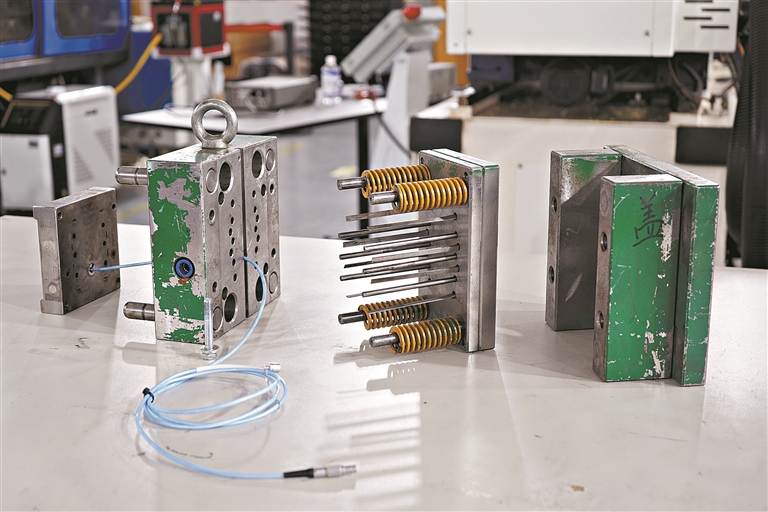
The sensor is installed inside the mold
“This capacitive sensor is a typical case of research and development in Hong Kong and implementation in Guangzhou,” Dr. Yao said. As early as 20 years ago, the prototype of the capacitive sensor was born at the Hong Kong University of Science and Technology. In 2007, after the Ho Ying Tung Research Institute was established in Nansha, it aimed at the vast manufacturing market in mainland China, and this capacitive sensor began its transformation from laboratory prototype to industrial product in Nansha.
Sensors Safeguarding Automotive and Home Appliance Fields

According to reports, Dr. Yao’s team has incubated a technology company using capacitive sensor technology and has secured over 10 million yuan in financing earlier this year. Currently, the company is collaborating with enterprises in the automotive, home appliance, packaging, materials processing, and industrial electronics fields.
In the automotive sector, the company is working with an automotive parts manufacturer to produce interior components for internationally renowned luxury car brands.
In the home appliance sector, the company collaborates with well-known enterprises like Midea to ensure the quality of plastic components in home appliances.
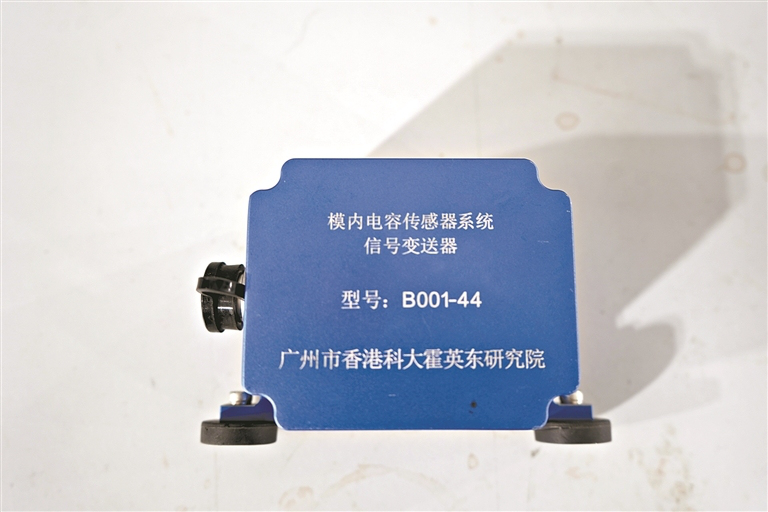
Signal Transmitter
In the materials processing sector, the company is collaborating with leading enterprises in polymer materials in Guangzhou, such as Jinfa Technology, to monitor the quality of modified materials online.
In this regard, Dr. Yao stated: “We hope to use our sensors to improve quality, increase efficiency, and reduce costs in the injection molding processing field, continuously enhancing the level of production intelligence for enterprises.”
20250917 Guangzhou Daily 12th Edition
Please scan the QR code or click “Read the original text”

-End-


Image and text: Guangzhou Daily, media report integration
Editor: Ah Ma Xiao K

If you find the content good, please give me a thumbs up 👍