Recently, the overall market has been performing well, particularly the printed circuit board sector, which has shown significant strength. The strength of printed circuit boards is primarily driven by Nvidia continuously reaching historical highs, which has raised expectations for the PCB industry. With increasing demand, the continuous rise of the PCB sector is logically supported.
Many investors want to participate in the PCB market, but when faced with high-priced stocks within the sector, such as Shenghong Technology and Huadian Co., they hesitate. Consequently, they turn to buying some low-priced semiconductor stocks, thinking that since both belong to the chip category, if one rises, the other can at least benefit. However, the market feedback indicates that strong PCBs remain strong, while semiconductors are weak when they should be.
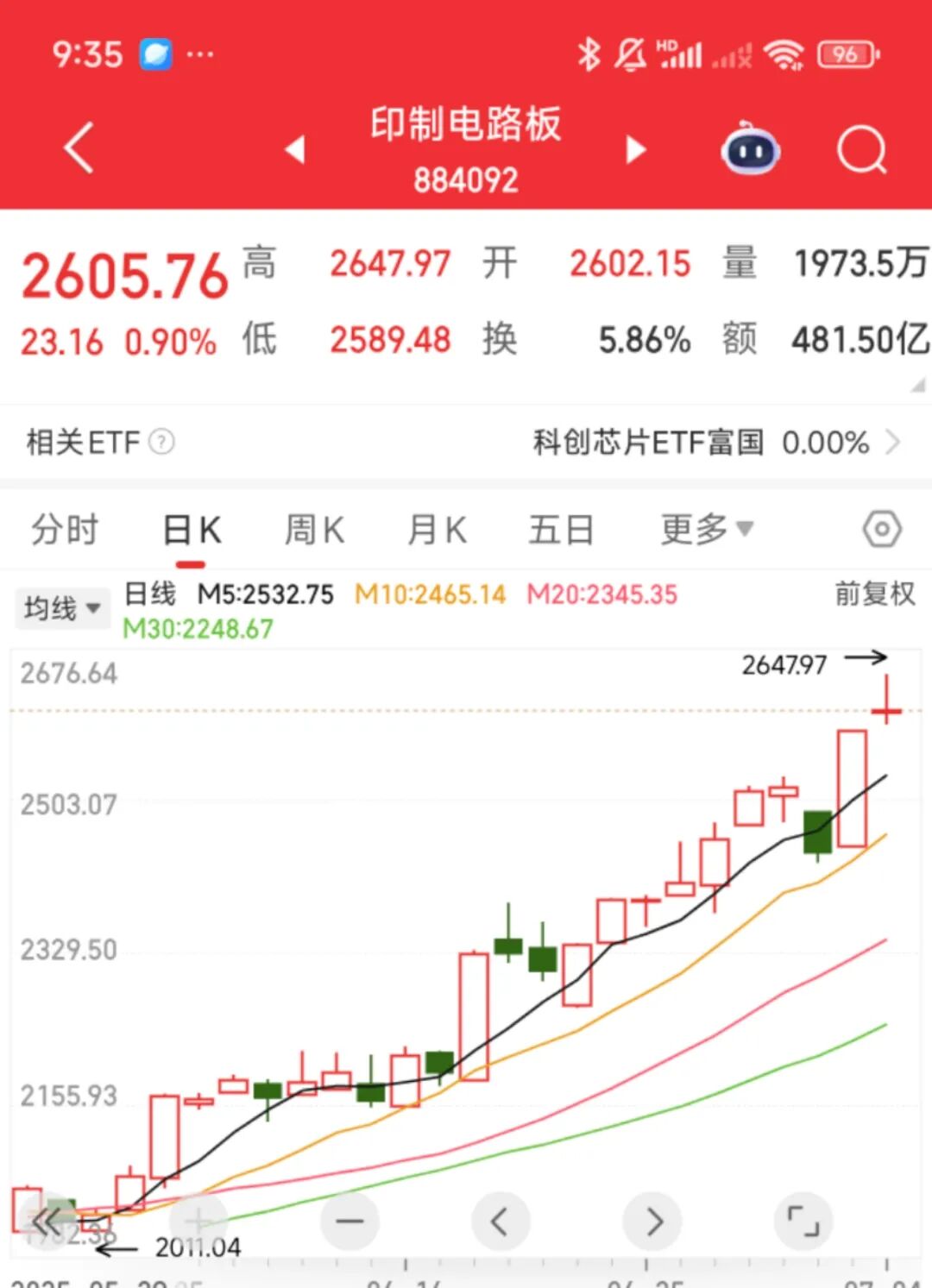
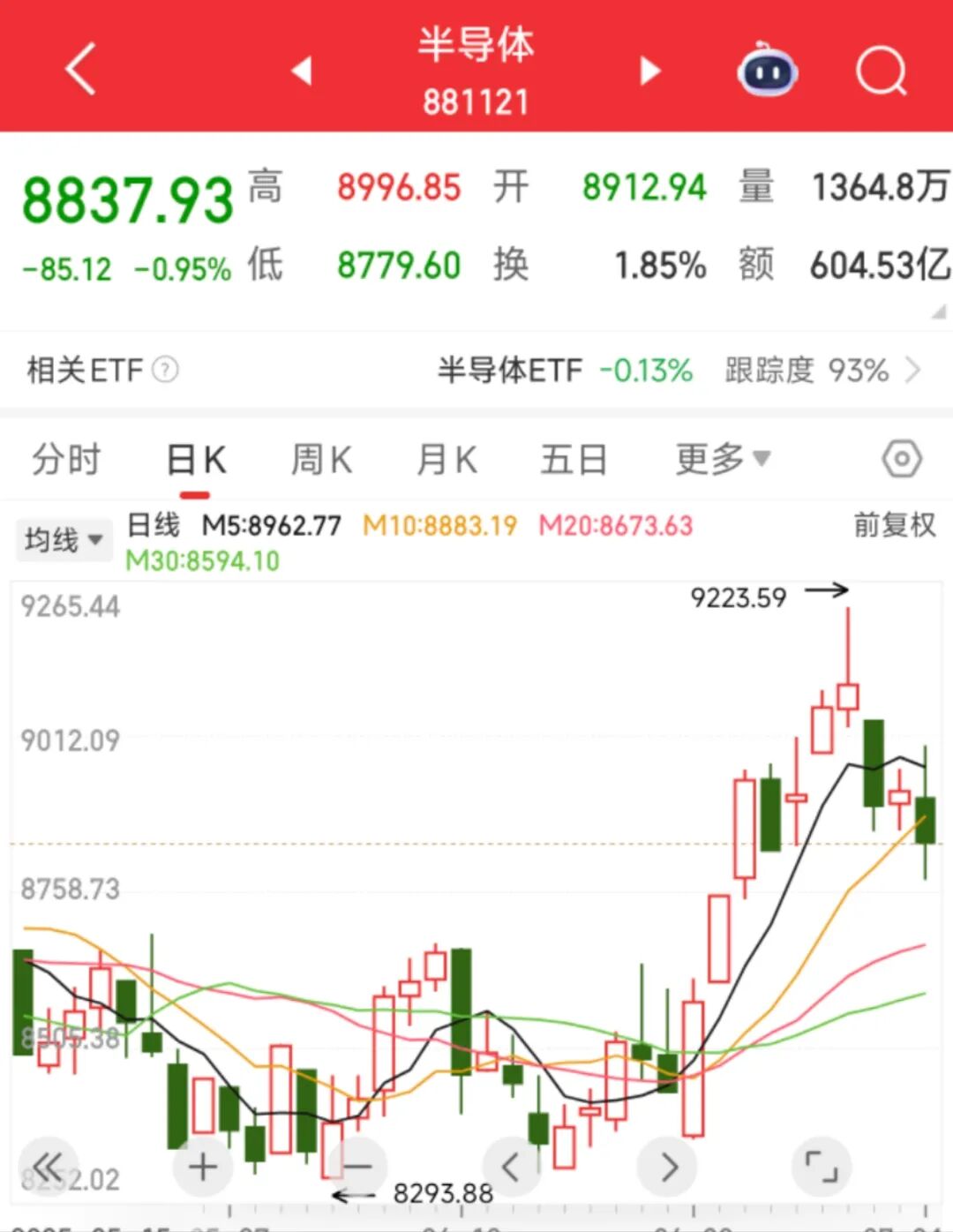 Both are chip-related products, but why is there such a disparity between these two sectors? Today, we will explain this in simpler terms due to the complexity and high barriers of technology manufacturing terminology. The current high prosperity of printed circuit boards is driven by the increasing demand from Nvidia. Nvidia’s chips are AI chips, while most of the semiconductor industry still primarily consists of conventional chips. The difference lies in the distinction between AI chips and conventional chips. AI chips utilize a GPU architecture, whereas conventional chips use a CPU architecture. At this point, many investors may still be confused, so to put it simply, computers essentially compete in performance through chips. Traditional chips calculate in a sequential manner, akin to a bookkeeper handling a large account. Therefore, as traditional chip performance improves, it becomes increasingly difficult over time. However, AI chips, which are based on GPU architecture, can utilize 100 bookkeepers simultaneously, and these 100 bookkeepers can specialize in different tasks! After all, accounting can range from simple to complex. For complex accounts, experienced bookkeepers are used to minimize errors, while simpler accounts can be handled by newer bookkeepers who are energetic and efficient. This leads to a qualitative leap in accounting efficiency. Returning to the difference between printed circuit boards and semiconductors, printed circuit boards provide a platform, and Nvidia uses its design route to arrange 100 bookkeepers, which corresponds to the AI chip route. Semiconductors (traditional chips) operate one bookkeeper at a time. In essence, Nvidia excels due to its GPU architecture technology, which creates high demand for printed circuit boards (essentially just a board), and there are many companies in the A-share market. However, an important point is that in the tech industry, the winner takes all. The increase in market share for AI chips inevitably squeezes the survival space for traditional chips. Therefore, Nvidia’s stock price continues to rise because it opens up new market increments while consuming the production capacity of traditional chips. After all, in the tech era, performance is king. Moreover, many semiconductor companies still have PCB business, so the semiconductor industry is not as dire, but over time, the market share of traditional chips is continuously decreasing. The PCB industry, as part of Nvidia’s supply chain, can profit significantly under Nvidia’s leadership. So, why has Cambricon been able to keep rising? Essentially, it is because it produces AI chips, and the valuable aspect of this industry is the technology architecture. Traditional chips have been suppressed due to market constraints, leading to a lack of excess profits. Therefore, the strong rise of printed circuit boards and the sluggishness of the semiconductor industry are fundamentally due to the former separating from the latter and capturing its profits. It is a competitive relationship, and using a low-position rebound logic to invest in semiconductors is certainly a mistake.