In the field of microelectronics manufacturing, the cleanliness of PCB cleanrooms directly determines product yield. As the core system maintaining the workshop environment, the air circulation system is responsible for filtering particulate matter, controlling temperature and humidity, and balancing pressure differentials. However, traditional designs often face challenges such as high energy consumption, airflow dead zones, and high maintenance costs. This article will explore how to optimize the air circulation system from three dimensions: system architecture, technological upgrades, and intelligent control, achieving breakthroughs in both purification efficiency and operational costs.
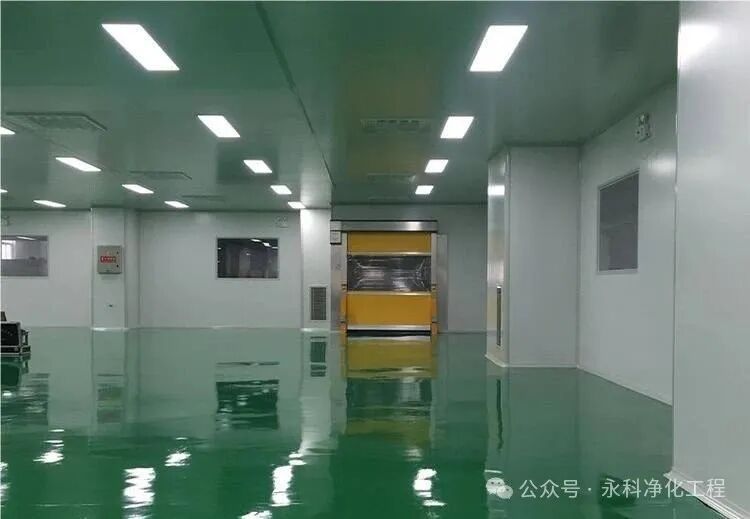
1. Core Pain Points of Traditional Air Circulation Systems
1.Uneven Airflow Organization
Improper selection of unidirectional (laminar) and turbulent flow designs can lead to the retention of particulates in the working area, especially creating “clean blind spots” in densely equipped areas. For example, a PCB manufacturer once experienced a 30% exceedance in 0.5μm particulate concentration due to unreasonable layout of return air outlets.
2.Low Energy Efficiency Ratio
While the series design of pre-filters, medium-efficiency filters, and HEPA filters ensures filtration accuracy, the airflow resistance significantly increases over time. Measured data shows that after one year of operation without optimization, fan energy consumption can rise by 25%-40%.
3.Lack of Intelligent Control
Traditional systems rely on fixed airflow adjustments and cannot dynamically respond to changes in workshop load. For instance, during low-capacity night shifts, the system still operates at full load, resulting in energy waste.
4.High Maintenance Costs
Short filter replacement cycles and the difficulty of cleaning air ducts lead to annual maintenance costs accounting for 15%-20% of the total operating costs of the cleanroom.
2. Four Technical Paths for Optimizing Air Circulation Systems
1. Airflow Organization Reconstruction: Precision Design Driven by CFD Simulation
Application of Computational Fluid Dynamics (CFD):By simulating airflow distribution in the workshop through 3D modeling, dead zones can be identified and the positions of supply and return air outlets optimized. A semiconductor company that adopted this solution saw a 60% improvement in the uniformity of particulate concentration in the working area.
Innovation in Mixed Flow Patterns:Utilizing vertical unidirectional flow in critical process areas and non-unidirectional flow in auxiliary areas balances cleanliness and energy consumption.
2. Energy Efficiency Upgrade: Comprehensive Optimization from Hardware to Algorithms
Variable Frequency Fans + Dynamic Pressure Differential Control:Adjusting fan speed based on real-time particulate monitoring data, combined with FFU (Fan Filter Unit) zone control, achieves over 30% energy reduction.
Low-Resistance Filter Technology:Using nanofiber materials instead of traditional fiberglass maintains HEPA filtration efficiency while reducing initial pressure drop by 40%.
Integration of Heat Recovery Devices:Adding plate heat exchangers to the exhaust system recovers waste heat for preheating fresh air in winter, achieving energy savings of 18%-25%.
3. Intelligent Monitoring: Deep Integration of IoT and AI
Multi-Parameter Sensor Networks:Deploying sensors for temperature, humidity, pressure differentials, and particulate concentrations (0.1μm/0.5μm) enables real-time environmental data collection and anomaly alerts.
Digital Twin Platforms:Creating virtual models of the workshop environment to predict filter lifespan through machine learning optimizes maintenance plans and reduces unplanned downtime.
Adaptive Adjustment Algorithms:Training AI models based on historical data to dynamically adjust airflow and temperature/humidity set points, reducing response times to seconds.
4. Modular Maintenance: From “Passive Repair” to “Predictive Maintenance”
Quick-Release Filter Design:Using a snap-fit structure instead of traditional bolt fastening reduces replacement time from 2 hours to 15 minutes.
Visual Cleaning of Air Ducts:Adding transparent observation windows in key duct sections, combined with endoscopic inspection, reduces the frequency of system-wide cleaning downtime.
Optimization of Spare Parts Inventory:Predicting the lifespan of consumable parts through equipment operation data establishes an intelligent inventory management system, reducing spare parts costs by 20%.
3. Implementation Case of the Optimization Plan: Performance Leap of a PCB Manufacturer
A PCB enterprise with an annual capacity of 5 million square meters originally used a traditional air circulation system, facing the following issues:
Significant fluctuations in particulate concentration in the class 100 area (±15%)
Annual energy consumption costs exceeding 8 million yuan
Filter replacement cycles of only 6 months
Optimization Measures:
1. Redesigning the layout of supply and return air outlets, optimizing airflow paths using CFD simulation;
2. Replacing with variable frequency fans and low-resistance HEPA filters, integrating heat recovery devices;
3. Deploying an IoT monitoring platform for real-time visualization of environmental parameters.
Implementation Results:
Stability of particulate concentration in the class 100 area improved to ±5%;
Annual energy consumption costs reduced by 3.2 million yuan (a 40% decrease);
Filter lifespan extended to 12 months, and maintenance costs decreased by 55%.
Conclusion from Fujian Yongke
With the penetration of 5G and AIoT technologies, air circulation systems are evolving from “passive purification” to “active intelligence.” Through data-driven optimization design, energy-efficient technological upgrades, and full lifecycle operation management, enterprises can not only significantly enhance product competitiveness but also build a green manufacturing system that meets ESG standards. For cleanroom engineering companies, mastering the core optimization technologies of air circulation systems has become a key competitive advantage in seizing the high-end electronic manufacturing market.