Click the blue text to follow us
High-speed rail vehicles have become one of the preferred modes of transportation for people due to their high speed, comfort, and convenience. Among the many technical systems in high-speed rail vehicles, the motor system is the core power source, and the speed sensor is a key component for monitoring the motor’s operating status. By accurately measuring the motor’s speed, the speed sensor can provide real-time data to the control system of the high-speed rail vehicle, enabling precise control of the vehicle’s operating status and ensuring the safe and stable operation of the high-speed rail.
Working Principle of Speed Sensors
A speed sensor is a device that converts mechanical speed signals into electrical signals. Common types of speed sensors include photoelectric speed sensors, electromagnetic speed sensors, and Hall effect speed sensors. In high-speed rail vehicles, Hall effect speed sensors are widely used. The Hall effect refers to the phenomenon where a potential difference is generated across a conductor or semiconductor placed in a magnetic field when current flows through it, perpendicular to the direction of the current and the magnetic field. This potential difference is called Hall voltage, and its magnitude is related to the current, magnetic field strength, and the Hall coefficient of the material.
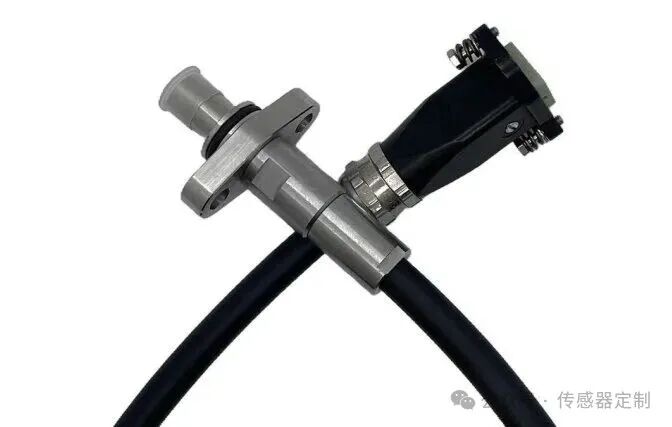
Source: Speed Sensor
Applications of Speed Sensors in High-Speed Rail Vehicles
1. Monitoring Motor Speed
The traction motor of high-speed rail vehicles is a key component for achieving high-speed operation. The speed sensor is installed on the shaft of the traction motor to monitor the motor’s speed in real-time. By measuring the speed, the control system can determine whether the motor is operating normally. For example, if the motor speed increases abnormally, it may be due to a sudden decrease in load or an internal fault in the motor; conversely, a decrease in speed may indicate excessive load or insufficient power supply. By promptly detecting these anomalies, the control system can take appropriate measures, such as adjusting motor power, cutting off power, or issuing a fault alarm, thereby preventing motor damage and operational accidents.
2. Train Speed Calculation
During the operation of high-speed rail vehicles, the train’s speed is calculated based on the motor speed. Due to the transmission ratio between the train wheels and the motor shaft, by measuring the motor’s speed and combining it with the transmission ratio, the actual running speed of the train can be accurately calculated. This speed measurement method based on speed sensors has high precision and reliability, providing accurate speed information for the train’s automatic driving system, ensuring that the train operates according to the predetermined speed curve, achieving precise acceleration, deceleration, and stopping control.
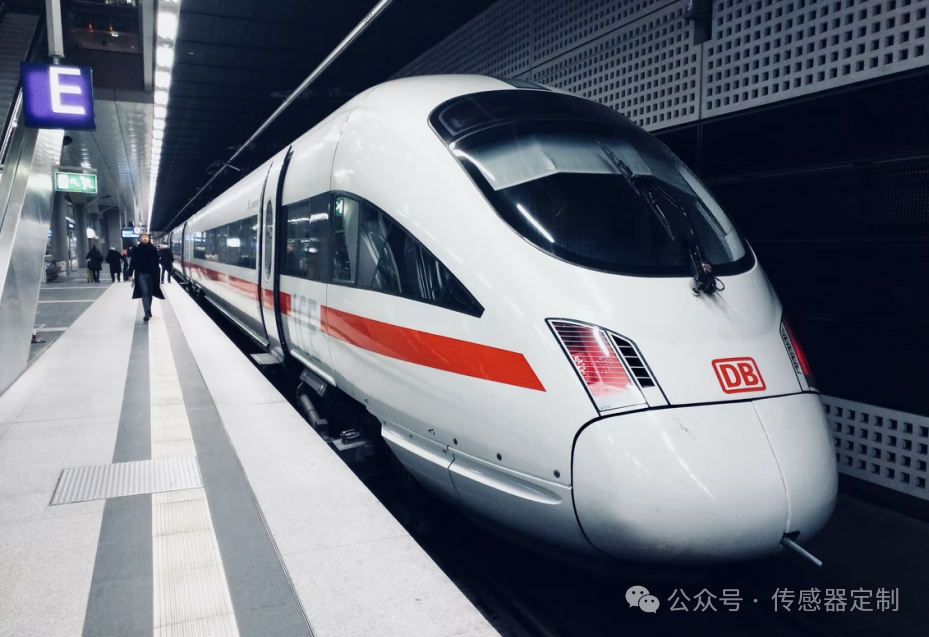
3. Feedback Loop in Vehicle Control Systems
The speed signal provided by the speed sensor is crucial feedback information for the control system of high-speed rail vehicles. In the processes of traction control, braking control, and regenerative braking, the control system needs to adjust the motor’s power output and braking torque based on the speed signal. For instance, during train startup, the control system gradually increases the motor’s power output based on the speed information feedback from the speed sensor, allowing the train to accelerate smoothly; during braking, the braking torque is controlled according to the speed signal to ensure that the train can decelerate and stop safely and smoothly. The feedback role of the speed sensor is vital for achieving precise control and efficient operation of high-speed rail vehicles.
Importance of Speed Sensors for High-Speed Rail Operation
1. Ensuring Operational Safety
Accurate measurement of motor speed is a fundamental basis for ensuring the operational safety of high-speed rail vehicles. Through real-time monitoring of the motor speed by the speed sensor, abnormal conditions during motor operation, such as overspeed or stall, can be detected promptly. Once these anomalies are identified, the control system can quickly take measures, such as emergency braking or cutting off power, to prevent motor damage and train operation accidents. Additionally, during the braking process, the accurate speed information provided by the speed sensor ensures precise control of the braking system, preventing dangerous situations such as skidding or excessive braking distance, thereby safeguarding passenger safety and the operational safety of the train.
2. Improving Operational Efficiency
The speed sensor also plays an important role in enhancing the operational efficiency of high-speed rail vehicles. By accurately measuring and controlling the motor speed, optimal distribution of traction power for the train can be achieved. During train operation, based on different operating conditions, such as startup, acceleration, constant speed, and deceleration, the control system can precisely adjust the motor’s power output according to the speed information feedback from the speed sensor, ensuring that the motor operates at its best working state, thereby improving energy utilization efficiency and reducing energy consumption. At the same time, the speed sensor provides accurate speed information for the train’s automatic driving system, allowing the train to operate according to the predetermined speed curve, reducing unnecessary acceleration and deceleration operations, further enhancing the train’s operational efficiency and shortening travel time.
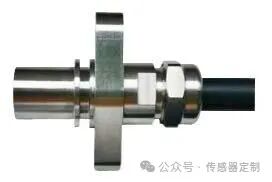
Source: Speed Sensor
3. Enhancing Passenger Comfort
The smooth operation of high-speed rail vehicles is crucial for enhancing passenger comfort. The speed sensor plays a key role in controlling the smooth operation of the train. During train operation, by accurately measuring the motor speed and combining it with information from other sensors, the control system can precisely control the train’s acceleration and deceleration, avoiding excessive shocks and vibrations during startup, acceleration, and deceleration. Furthermore, when the train passes through curved tracks, the speed information provided by the speed sensor can help the control system adjust the motor’s power output, allowing the train to pass through curves smoothly and reducing passenger discomfort. Therefore, the speed sensor is of great significance for enhancing the comfort of high-speed rail vehicles.
Speed sensors play an indispensable role in high-speed rail vehicles. By accurately measuring the motor’s speed, they provide important data support for the control system of high-speed rail vehicles, ensuring operational safety, improving operational efficiency, and enhancing passenger comfort.
Some images are sourced from the internet; if there is any infringement, please contact us for removal!
END
Previous Reviews
Exhibition Invitation | Source Magnetic invites you to the 10th Shanghai International Sensor Technology and Application Exhibition
The Application and Advantages of Eddy Current Displacement Sensors in Turbines
The Importance of Vibration Sensors in Turbines
The Application of IADS Tilt Sensors in Material Handling
The Application of Tilt Sensors in Underground Engineering Equipment