In the era of high-speed digital connectivity, optical communication networks form the cornerstone of the global information society. From transoceanic submarine cables to high-speed interconnections in data centers, and the upcoming 5G/6G and metaverse applications, all these rely on the stable, reliable, and high-performance operation of optical communication devices. Among the many technologies ensuring the performance of these devices, temperature sensors play a crucial role, acting as silent guardians that ensure the precise transmission of optical signals.
1. Why is Temperature So Critical for Optical Communication?
The core of optical communication lies in the precise control of “light.” Temperature is one of the most significant environmental factors affecting the performance of optical devices.
Laser Wavelength Drift: The output wavelength of the semiconductor laser (LD), the core device for emitting optical signals, is highly sensitive to temperature. Changes in temperature can alter the bandgap width and refractive index of its active region, leading to wavelength drift. In dense wavelength division multiplexing (DWDM) systems, where channel spacing is minimal (e.g., 0.8 nm or 0.4 nm), even slight wavelength drift can cause crosstalk between channels or complete signal loss.
Modulator Performance Deviation: The half-wave voltage (Vπ) and chirp parameters of electro-optic modulators made from materials like lithium niobate (LiNbO₃) also vary with temperature, affecting modulation efficiency and signal quality.
Optical Amplifier Gain Fluctuation: The gain characteristics of erbium-doped fiber amplifiers (EDFA) and Raman amplifiers are closely related to temperature. Temperature changes can alter the gain spectrum shape, causing uneven power distribution across channels and affecting the system’s optical signal-to-noise ratio (OSNR).
Long-Term Reliability: Excessive temperatures can significantly accelerate the aging process of optical devices and electronic components, reducing their lifespan and mean time between failures (MTBF), thereby increasing operational costs.
Therefore, real-time and precise temperature monitoring and control of critical optical devices is essential for ensuring the stability of performance indicators (such as central wavelength, output power, and extinction ratio) in optical communication systems.
2. Core Application Scenarios of Temperature Sensors
Temperature sensors are deeply integrated into various parts of optical communication systems, achieving comprehensive thermal management from local to system-wide levels.
-
1. Temperature Control of Laser Modules (TOSA/Transmitter Optical Sub-Assembly)
This is the most classic application of temperature sensors. Inside the laser emission component, a thermoelectric cooler (TEC) and a high-precision negative temperature coefficient (NTC) thermistor are integrated.
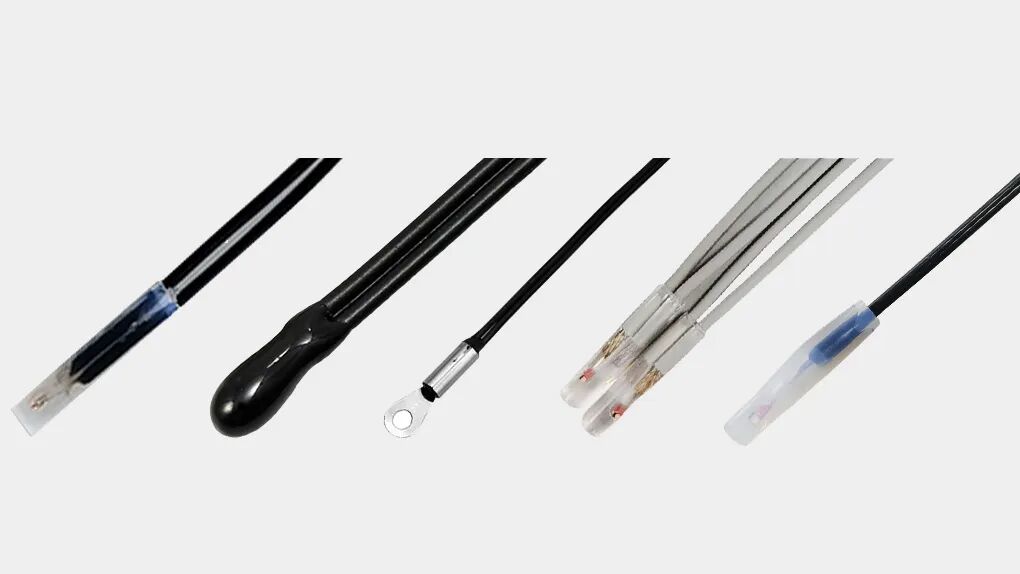
Working Principle: The NTC thermistor is closely attached to the laser chip to monitor its temperature in real-time and relay the changes in resistance value to a dedicated TEC driver chip. The driver chip dynamically adjusts the direction and magnitude of the current flowing through the TEC based on the difference between the set temperature value and the actual measured value, actively cooling or heating the laser to stabilize its temperature at a precise set point (usually ±0.1°C or even higher precision).
Goal: Ensure stable output wavelength and constant power from the laser.
-
2. Performance Compensation of Optical Receiver Modules (ROSA/Receiver Optical Sub-Assembly)
Although the sensitivity of the receiving end to temperature is lower than that of the transmitting end, the gain and sensitivity of avalanche photodiodes (APD) are still affected by temperature. By integrating temperature sensors, the system can read the current temperature and dynamically adjust the bias voltage of the APD to compensate for performance fluctuations caused by temperature changes, maintaining stable receiving sensitivity.
-
3. Board-Level and System-Level Thermal Management
In optical modules, optical line cards (OLP), or large optical transmission devices, multiple heat sources (such as lasers, driver chips, DSP chips) are clustered together.
Overheat Protection: Temperature sensors are placed near critical heat-generating components to monitor the overall board temperature. When the temperature exceeds a safe threshold, the system can trigger alarms or automatically reduce frequency/shut down to prevent hardware damage due to overheating.
Intelligent Fan Speed Control: In enclosures, base stations, and other devices, multiple temperature sensors are distributed at different locations to form a temperature field monitoring system. The main control system intelligently adjusts the cooling fan speed based on the readings from these sensors, ensuring effective heat dissipation while achieving energy savings and noise reduction.
-
4. Temperature Sensitivity Compensation of Passive Devices
Some precision passive devices, such as arrayed waveguide gratings (AWG) and optical circulators, also experience slow changes in their optical characteristics with temperature. In high-reliability scenarios, temperature sensors monitor their environmental temperature, and software algorithms are used to fine-tune system parameters for compensation.
3. Technical Challenges and Selection Requirements
-
In optical communication applications, temperature sensors have specific requirements:
High Precision and Stability: Typically requires a measurement accuracy of ±0.1°C or even higher, with minimal long-term drift.
Fast Response Time: Must quickly capture temperature changes in devices like lasers so that the TEC system can respond in a timely manner.
Miniaturization and Integration: As the size of optical modules continues to shrink (e.g., QSFP-DD, OSFP), sensor chips must be small and easy to integrate into compact spaces like TOSA.
Low Power Consumption: Especially in pluggable optical modules, power budgets are extremely tight, requiring sensors to have as low power consumption as possible.
High Reliability: Must operate stably within a temperature range of -40°C to +85°C or even wider, meeting telecom-grade equipment standards.
Currently, NTC thermistors are the mainstream choice for temperature control inside optical modules due to their high sensitivity, low cost, and miniaturization advantages. Digital temperature sensors (such as I2C/SPI interfaces) are more commonly used in board-level management, facilitating digital communication and system management with MCUs.
4. Future Trends
As optical communication technology advances towards higher speeds (800G/1.6T), smaller sizes, lower power consumption, and wider temperature ranges (industrial grade), temperature sensing and management technologies are also evolving:
Smarter Thermal Management Algorithms: Combining artificial intelligence (AI) and machine learning (ML) to achieve predictive thermal control, responding proactively to load changes rather than passively.
Integrated Sensing on Photonic Integrated Chips (PIC): Directly integrating miniature temperature sensors on InP or SiPh photonic chips for closer and faster sensing.
Multi-Parameter Fusion Sensing: Integrating temperature sensing with optical power monitoring, wavelength monitoring, and other functions to provide a more comprehensive diagnosis of system health status.
Conclusion
Although small, temperature sensors are indispensable basic components in optical communication systems. Through precise measurement and closed-loop control, they transform the fluctuating temperature variable into stable and reliable system performance, ensuring the high-speed and accurate transmission of information in optical fibers. Like a silent guardian, temperature sensors protect the smooth and stable operation of the global digital world within the confines of chips.
Company Introduction
Weilian Fengran Sensor Technology Co., Ltd. specializes inplatinum resistors/thermocouples/thermistors/DS18B20 temperature sensors and provides integrated temperature solutions, holding several invention and utility model patents. The company has over 10 years of industry experience and knowledge, focusing on high-quality products and excellent customer service, driven by research and development. Through in-depth communication with customers and understanding their actual needs, we design and develop high-quality products and provide reasonable solutions.
 Long press to scan the QR codeto view the company websitefor more information