
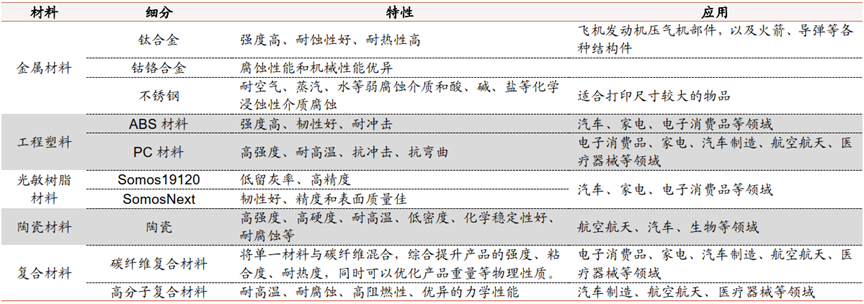
Additive Manufacturing Technology (AM) also known as3D Printing (3D Printing), is a technology based on digital 3D modeling, integrating computer-aided design, material processing, and material forming technology. It uses metal materials, non-metal materials, and medical biomaterials to manufacture complex-shaped parts quickly according to the principle of discrete layering and stacking.3D Printing Industry Chain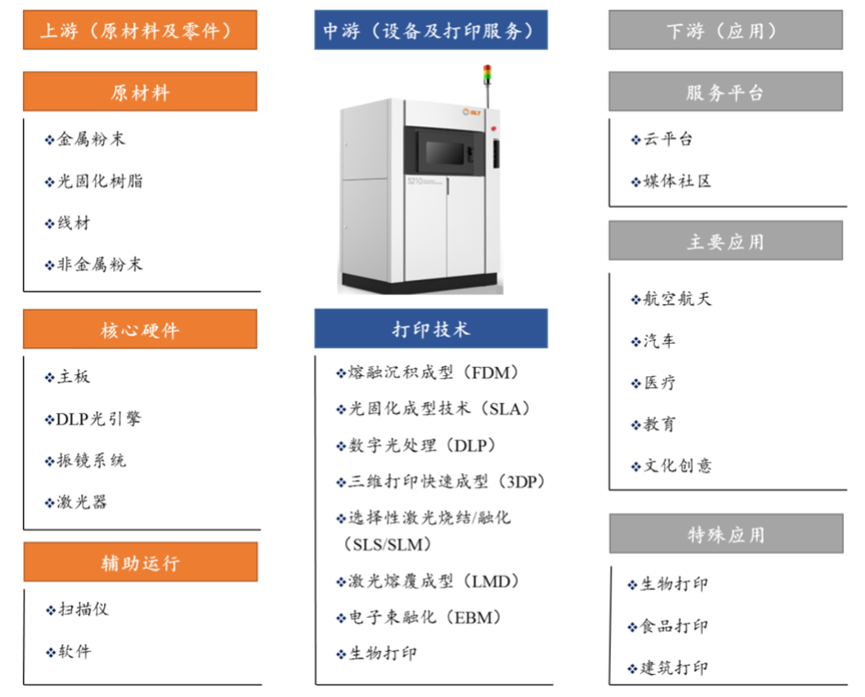 1) Upstream: Mainly includes 3D printing raw materials, core hardware, auxiliary operation suppliers, etc. In China, the proportion of 3D printing metal materials is 40%, mainly consisting of titanium alloys, aluminum alloys, and stainless steel. The preparation methods for 3D printing metal powders mainly include gas atomization (GA), plasma rotating electrode atomization (PREP), plasma melting wire atomization (PA), and plasma spheroidization (PS), with GA and PREP processes being relatively mature in commercialization.3D printing raw materials and application fields
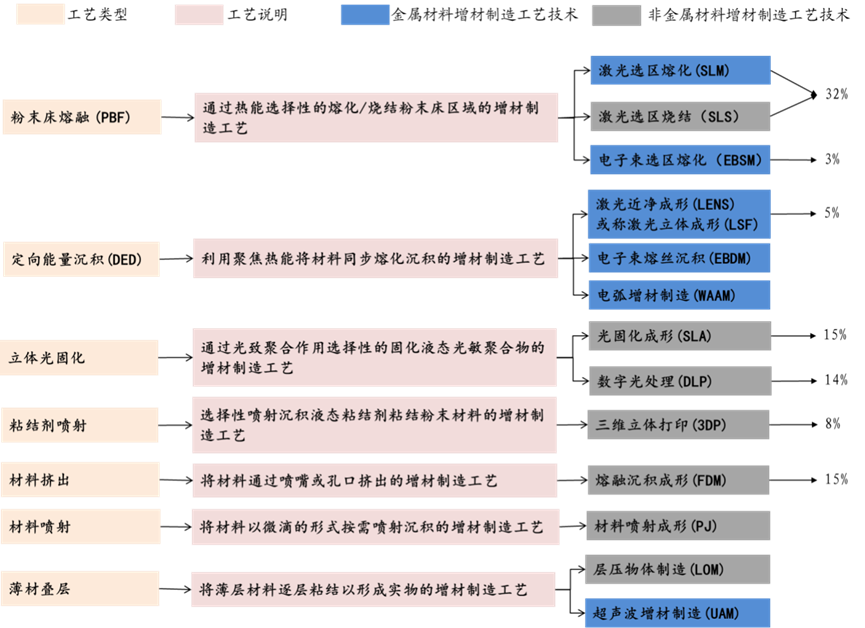
 2) Midstream: Mainly consists of 3D printing equipment and printing service providers, most equipment suppliers also provide printing services and raw material supply, occupying a dominant position in the entire industry chain.3D printing process principles can be divided into 7 categories: powder bed fusion (PBF), directed energy deposition (DED), stereolithography, binder jetting, material extrusion, material jetting, and sheet lamination. Depending on the material differences, they can be categorized into metal 3D printing and non-metal 3D printing. The main types of metal 3D printing technology are powder bed fusion and directed energy deposition, primarily using selective laser melting (SLM) and laser engineered net shaping (LENS).Mainstream 3D printing process types and technology names
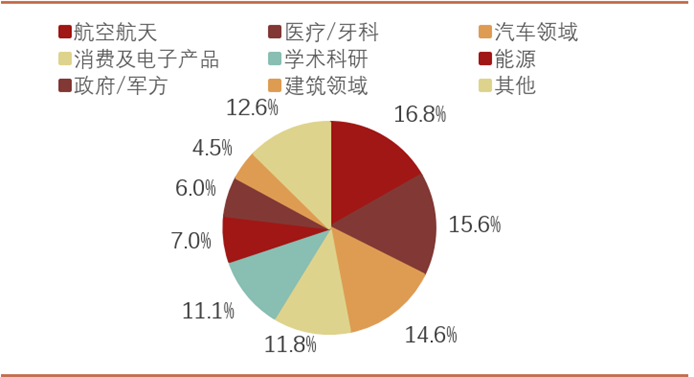
 3) Downstream: The application fields have covered aerospace, automotive industry, medical, and other sectors.It is estimated that by 2025, the global 3D printing market size will reach 29.8 billion USD, with a CAGR of 18.2%. The growth rate of the metal 3D printing market is expected to exceed that of the industry. 3D printing is currently widely used in aerospace, medical/dental, automotive, consumer and electronic products, academic research, energy, military, construction, and other fields. In recent years, the demand in the aerospace and medical sectors has grown rapidly. With leading consumer electronics companies like Honor and Apple adopting titanium alloy 3D printing technology, it is expected to open up the ceiling of demand in the consumer electronics industry.Metal 3D printing targets the mid-to-high end market, and future growth is expected to exceed the overall growth rate of the 3D printing market size. According to SmarTech Analysis, the global metal 3D printing industry market size is projected to increase from 3.3 billion USD in 2019 to 11.0 billion USD in 2024, with a CAGR of 27.2%.3D printing is currently widely used in aerospace, medical/dental, automotive, consumer and electronic products, academic research, energy, military, construction, and other fields. According to the Wohlers Report 2022, in 2021, the above fields accounted for 16.8%, 15.6%, 14.6%, 11.8%, 11.1%, 7.0%, 6.0%, 4.5%.In 2021, the global 3D printing industry downstream application field distribution
 3.1 Aerospace and Defense SectorAccording to Wohlers Associates data, in 2021, the application proportion of global 3D printing in the aerospace and defense industries was 16.8% and 6.0%, corresponding to market sizes of 2.56 billion USD and 910 million USD. From 2019 to 2021, the proportion of global aerospace 3D printing market size increased from 14.7% to 16.8%.Metal 3D printing in the aerospace industry
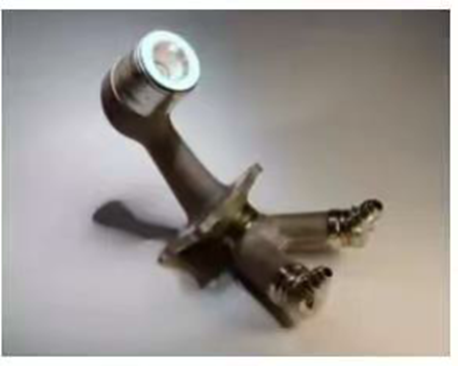
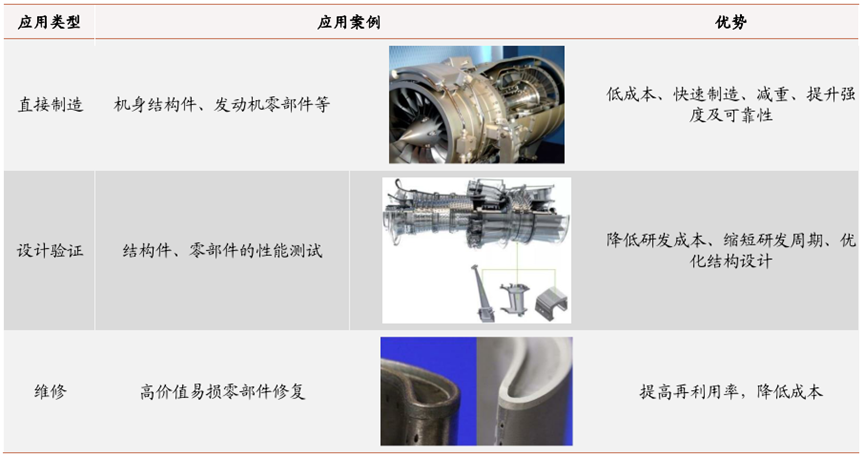 3D printing technology’s advantages in manufacturing and R&D of aerospace components mainly include: 1) Shortening the R&D cycle of new aerospace equipment and components; 2) Realizing complex structural designs; 3) Meeting lightweight requirements, reducing stress concentration, and increasing service life; 4) Improving the strength and durability of aerospace equipment components; 5) Increasing material utilization and reducing manufacturing costs; 6) Additive remanufacturing is a future blue ocean market for remanufacturing and repairing damaged components.3D printing C919 engine fuel nozzles
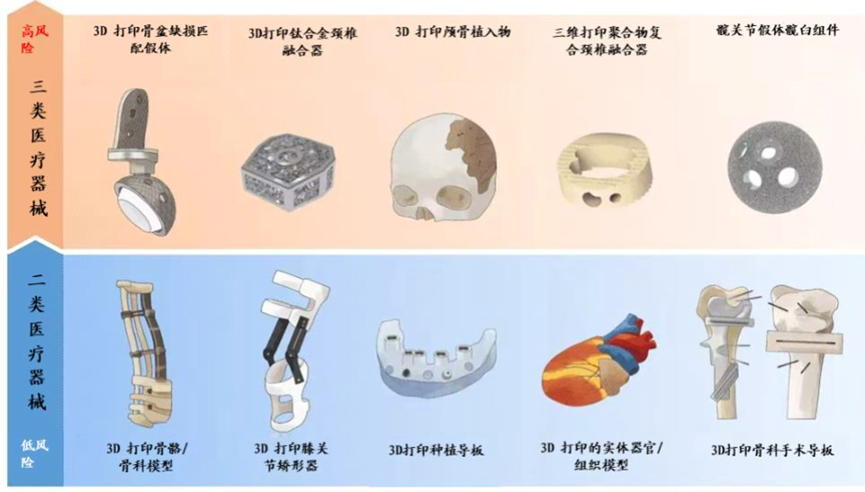
 3.2 Medical FieldAccording to Wohlers Associates data, from 2019 to 2021, the global market size of 3D printing in the medical field increased from 13.9% to 15.6%, with a market size of 2.38 billion USD in 2021.Based on material development and biological performance differences, 3D printing in the medical field is divided into two categories: non-biological 3D printing and biological 3D printing. Compared to biological 3D printing, non-biological 3D printing principles are relatively straightforward, and the required materials are also relatively easy to obtain, thus it has been widely applied in the medical field. Most products of non-biological 3D printing lack biocompatibility and fall under the category of medical devices, specifically applied in: ① manufacturing personalized prosthetics that can be used in orthopedics, dentistry, plastic surgery, etc.; ② complex structures and difficult-to-process medical device products, including implants and non-implants, such as porous hip joints and medical models simulating human organs.✓ Non-biological 3D printing refers to the use of non-biological materials and 3D printing technology to print non-biological prosthetics, with materials including plastics, resins, metals, and polymer composites, mainly applied in dentistry, orthopedics, medical devices, auxiliary devices (pre-surgical simulation), and medical education.✓ Biological 3D printing is based on active biomaterials, cell tissue engineering, MRI and CT technologies, and 3D reconstruction technology, aiming to print living organs.3D printing main types of medical devices
 3.3 Automotive FieldAccording to Wohlers Associates data, from 2019 to 2021, the global market size of 3D printing in the automotive field slightly decreased from 16.4% to 14.6%, with a market size of 2.23 billion USD in 2021.3D printing technology is applied throughout the entire lifecycle of automobiles, including R&D, production, and usage phases. Currently, the application of 3D printing technology in the automotive field mainly focuses on experimental models and functional prototypes during the R&D phase, with relatively few applications in production and usage phases. In the future, 3D printing technology will still be widely applied in prototype manufacturing in the automotive field. As 3D printing technology continues to develop, the awareness of car manufacturers regarding 3D printing increases, and the automotive industry itself evolves, the application of 3D printing technology in the automotive sector will expand into the production and usage phases, gradually increasing its application in final component production, automotive maintenance, and modifications.3.4 Consumer Electronics: Expected to Open Industry CeilingAccording to Wohlers Associates data, from 2019 to 2021, the global market size of 3D printing in the consumer electronics sector slightly decreased from 15.4% to 11.8%, with a market size of 1.80 billion USD in 2021.Currently, 3D printing in the consumer goods industry mainly focuses on product design and development phases. The consumer goods industry encompasses a wide range, including mobile phones, electronic products, computers, home appliances, tools, and toys. The consumer goods industry is characterized by short product lifecycles and rapid updates, requiring continuous development and investment. With the advantages of 3D printing, product development cycles can be shortened, significantly reducing design costs. Existing 3D printing technologies can realize the production of models with various complex designs, providing designers with more freedom and significantly enhancing product design levels.
Source: Micro-Nano Additive
Previous Recommendations
Conference Notice
Conference Notice | 10th International Lead-Zinc Conference (Pb-Zn2023)
Class Notice | Advanced Training Course on Technology Transfer and Transformation Capability Improvement in Lithium Battery New Energy Materials Field
Class Notice | 2023 Advanced Training Course on Carbon Materials and Carbon-Based Composites
Conference Notice | 3rd National Academic Conference on Circular Economy and Pollution Reduction (formerly “Academic Seminar on Solid Waste Recycling and Pollution Control”) Notification (First Round)
Looking forward to your submission! Notification for the 2023 (3rd) International Conference on Nonferrous Metal New Materials (ICNFM)
Hotel reservation is now online | Notification on the 16th China-Russia Bilateral New Materials and New Processes Seminar
Conference Notice | 15th National Molecular Beam Epitaxy Academic Conference Notification
Notification on the 2023 Annual Recommendations for China’s Nonferrous Metal Industry Science and Technology Awards
Call for Submissions
Support Plan | Notification on the 6th National Nonferrous Metal Excellent Youth Science and Technology Award Candidate Recommendation and Selection
Notification on the 2023 “Science is also an Idol” Short Video Collection Activity by the China Nonferrous Metals Society
Notification on the 3rd NFSOC Higher Education Teaching Achievement Program Recommendations
Notification on the Collection of Promotional Materials from Member Units and Individual Members by the China Nonferrous Metals Society
Notification on the Collection of Think Tank Achievements by the China Nonferrous Metals Society
Notification on the Development of Individual Members of the China Nonferrous Metals Society Notification on the Development of Unit Members of the China Nonferrous Metals Society
Notification on the Collection of Volunteers for the China Nonferrous Metals Society
Notification on the Collection of Scientific and Technological Achievements and Demand Information in the Nonferrous Metals Field
Scan to see Society Dynamics

Official WeChat Account of the Society

Official Website of the Society
Media Platform of the Society

Bilibili

Douyin

Today’s Headlines