3D Science Valley Insights
Bringing “Bird Feathers” into Factories: Using 3D Printing and a Self-Organization Two-Step Method, the first-ever “macro-designable, micro-adaptive” multi-scale wrinkles have been created on physical objects such as racing car wings and golf balls, significantly reducing drag and improving efficiency, with the potential to reshape the aerodynamic design paradigm for automobiles and sports equipment.”
Recently, Li TiantianPh.D. published the latest research findings in the journal Matter, proposing a strategy that integrates 3D printing and self-organization mechanisms to create “multi-scale wrinkled structures” that can enhance aerodynamic performance, reduce drag, and improve energy efficiency in practical applications such as racing car wings and golf balls. This strategy is inspired by the multi-scale flow control mechanisms of bird feathers, developing a construction path for multi-scale structures from macro design to micro adaptation, demonstrating broad application prospects in fields such as sports and transportation.
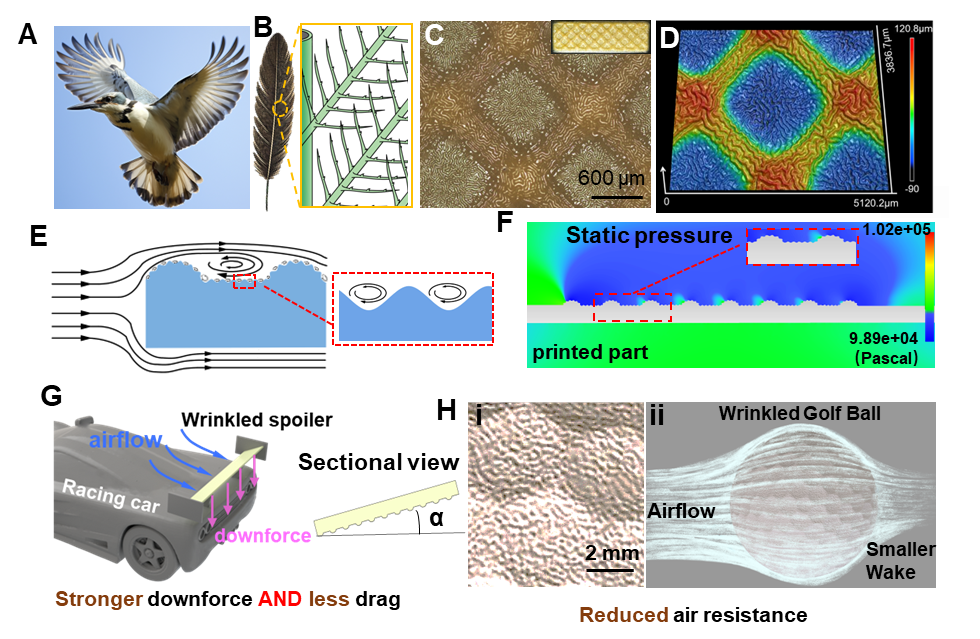
Figure 1: Strategy for airflow control using multi-scale wrinkled structures
In nature, structures such as bird feathers and shark skin achieve clever fluid control through complex multi-scale designs, exhibiting excellent drag reduction and stability capabilities. Despite being inspired by these natural “aerodynamic masters”, artificial materials face numerous challenges in achieving similar multi-scale flow control effects, including complex manufacturing, scale coupling difficulties, and high processing costs.
To address this challenge, Professor Luyi Sun from the University of Connecticut, in collaboration with Professor Jiang Xuesong from Shanghai Jiao Tong University and Professor Dianyun Zhang from Purdue University, proposed a “3D printing + self-organization” collaborative strategy for constructing multi-scale wrinkled structures. This structure can not only act as a source of airflow disturbance like feathers but also regulate vortex formation and pressure distribution at different scales, achieving extended flow paths, increased near-wall speeds, and weakened trailing vortices, thereby significantly enhancing aerodynamic performance.(Figure 1)
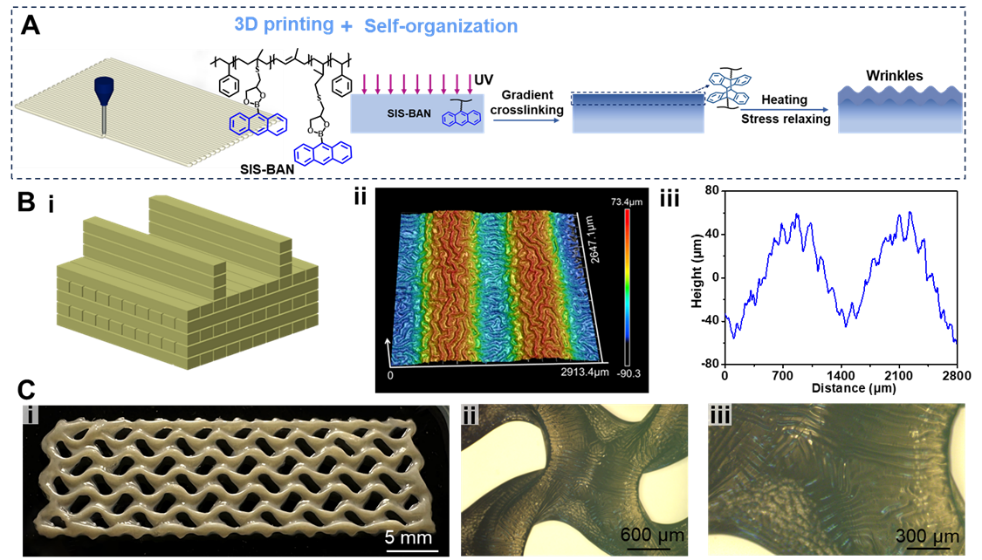
Figure 2: Construction of multi-scale wrinkled structures using 3D printing combined with self-organization strategies.
The research team used an anthracene-modified elastomer material as the substrate, constructing a macro framework structure through direct ink writing (DIW) 3D printing technology, and subsequently inducing the spontaneous formation of surface micro-wrinkles during UV light exposure and thermal treatment. This self-organization process is controlled by multiple factors such as interface boundary conditions, crosslinking gradients, and stress release, allowing for precise tunability of micro-wrinkle morphology.(Figure 2)
For example, by changing the nozzle diameter and arrangement, the researchers obtained different types of wrinkled structures ranging from disordered random to ordered arrangements; further, they combined these into a double-layer architecture to achieve large-scale vortices in the grid lines and micro-scale disturbance zones in the wrinkles, forming a “cooperative vortex structure” in the wrinkles.(Figure 3)
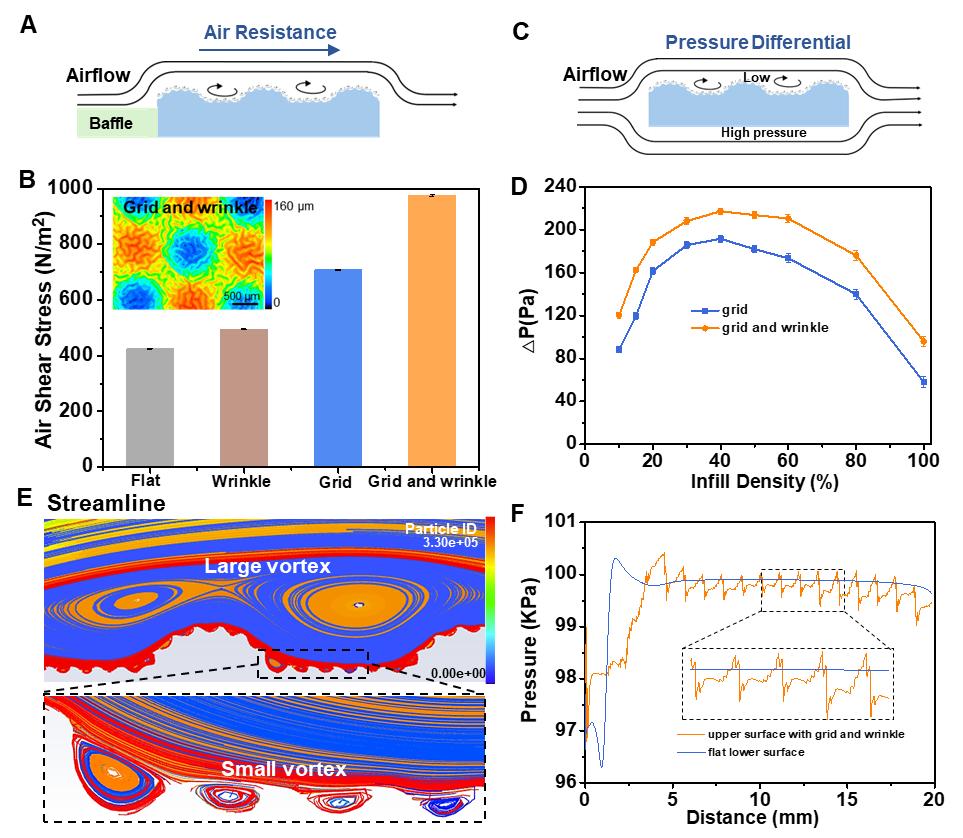
Figure 3: Aerodynamic performance of multi-scale wrinkled structures.
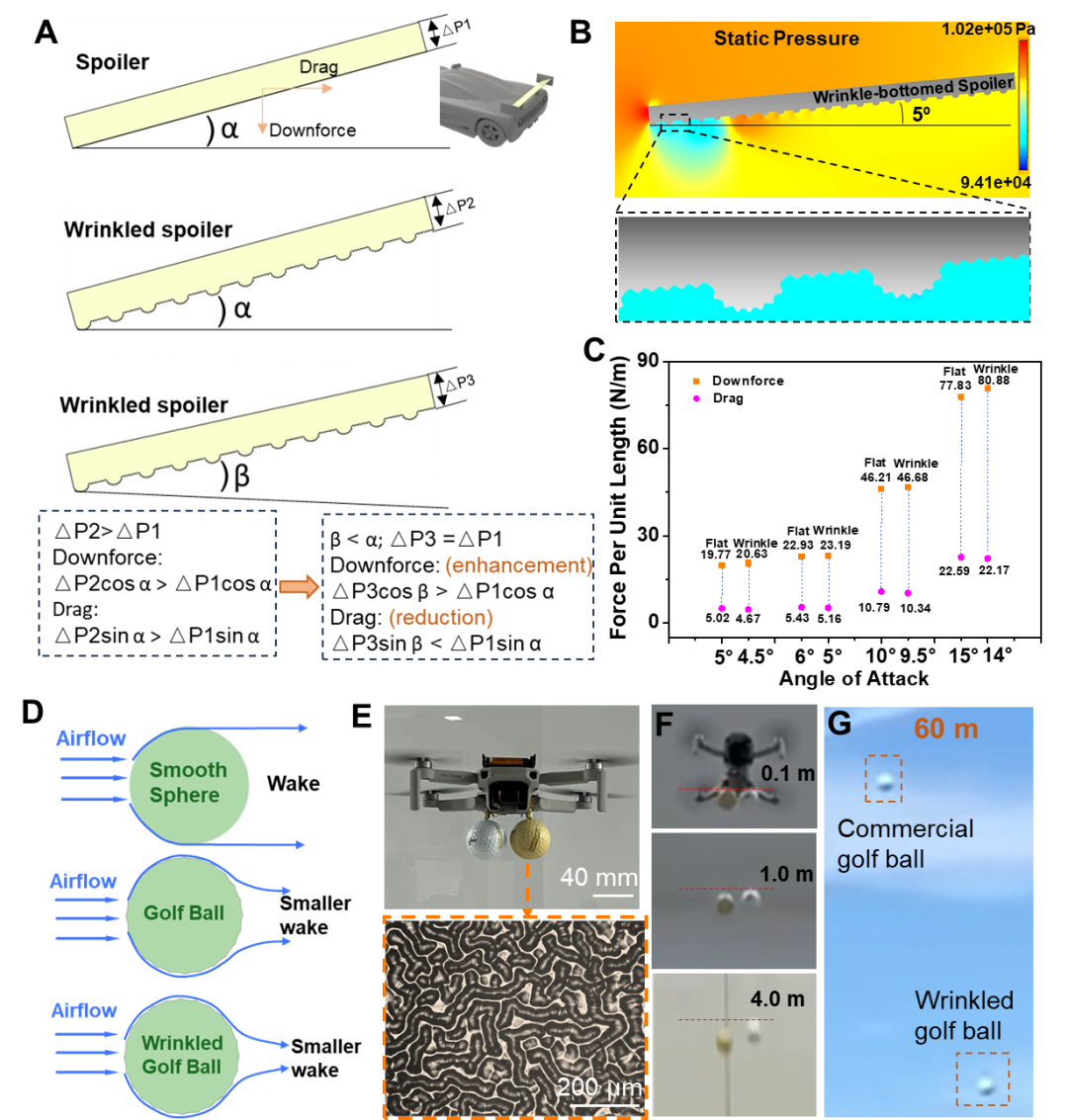
Figure 4: Aerodynamic optimization of racing cars and golf balls through multi-scale wrinkled structures.
Aerodynamic performance test results show that these biomimetic wrinkled structures can effectively enhance near-wall airflow speed, reduce surface pressure, and increase adhesion, thereby generating lift or downforce. Even more surprisingly, this technology has shown strong potential in practical applications. The researchers integrated this wrinkled structure into the lower surface of a racing car wing, achieving a “stronger downforce + lower drag” win-win aerodynamic performance by adjusting the angle of attack.(Figure 4)
In addition to racing cars, the research team also attempted to adhere the wrinkled film layer to the surface of golf balls, forming a composite multi-scale structure of “dimples + micro-wrinkles”. In free fall tests designed using drones to mimic Galileo’s Leaning Tower experiment, the golf balls with wrinkles landed earlier than commercial balls in tests from both 5 meters and 60 meters heights. In the 60-meter drop test, the wrinkled golf ball landed 0.89 meters earlier, demonstrating a significant drag reduction effect.(Figure 4)
Through simulation calculations, the researchers further confirmed that the wrinkled structure plays an important role in weakening trailing vortices, delaying flow separation, and stabilizing the flow field. Moreover, when used in conjunction with traditional dimple structures, it exhibits significant synergistic effects. Compared to traditional golf balls, adding a wrinkled structure can further reduce drag by 4.4%.
This research not only advances the intersection of multi-scale self-organizing structures and complex flow control at the fundamental science level but also provides a new design approach and technical support for aerodynamic structure optimization in the real world. Its low cost, high controllability, and broad adaptability make it particularly suitable for fields such as automotive spoilers and sports equipment.
In summary, the new strategy proposed by Li Tiantian et al. of “3D printing + self-organization” for constructing multi-scale wrinkled structures successfully breaks through the technical barriers of manufacturing biomimetic aerodynamic structures, achieving significant progress in the integration of macro and micro-scale structures, controllable regulation, and functional synergy. This strategy not only enhances aerodynamic performance but also demonstrates broad application potential in energy-efficient transportation and sports equipment across multiple fields.
Original link:
Tiantian Li et al. “Hierarchical wrinkled structures via 3D printing and self-organization for energy-efficient transport”
https://doi.org/10.1016/j.matt.2025.102345
Source
Materials Science and Technology l
Professor Luyi Sun’s Team from the University of Connecticut Matter: 3D Printing and Self-Organization for Multi-Scale Energy-Efficient Wrinkled Surfaces

Shanghai Jiao Tong University & Shanghai Ship Power Innovation Center l Simultaneous enhancement of corrosion resistance and mechanical properties of TiB2/AlCuMg composites through solution treatment in additive manufacturing
Shanghai Jiao Tong University Special Materials Institute l High-throughput screening method for laser additive manufacturing parameters/composition transition zones based on X-ray imaging technology
Professor Gu Jianfeng’s team from Shanghai Jiao Tong University collaborates with Professor Ma Qian from RMIT Australia to successfully break through the dual bottleneck of strength and processing scale in nanoporous metals

 ▌3D Science l Infinite PossibilitiesSubmissions丨[email protected]
www.3dsciencevalley.com