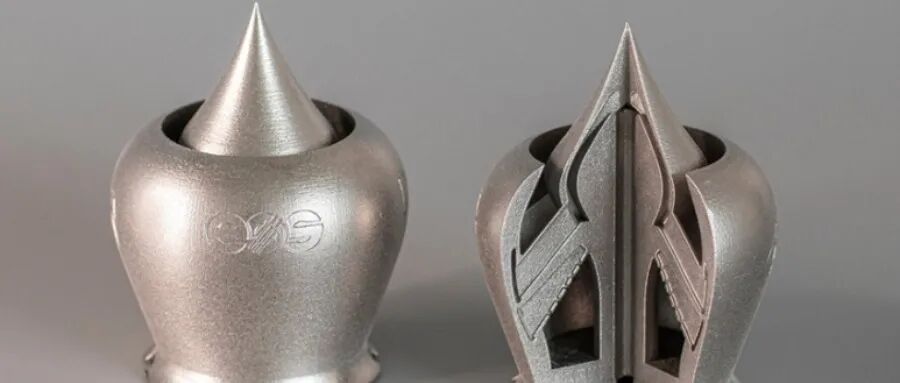
By achieving localized control of the grain structure, engineers can design components with superior performance. This research not only advances the development of materials engineering science but also creates opportunities for innovative component design in various fields such as aerospace, power generation, and space exploration.
[Qiming Additive Manufacturing] Nickel-based superalloys are renowned for their exceptional strength and resistance under extreme conditions, making them one of the most promising yet challenging materials in the field of additive manufacturing. However, their complexity poses significant challenges in controlling the internal microstructure during the printing process.Understanding and controlling this microstructure is crucial as it directly affects the mechanical properties, durability, and reliability of the manufactured components.
A research team at the IMDEA Materials Institute has recently developed a practical method for achieving precise microstructure control during the laser powder bed fusion (LPBF) process of nickel-based superalloys. This method provides a groundbreaking solution for obtaining an ideal microstructure by determining the overlap of the melt pool as an adjustable key geometric parameter.
01
The Key Role of Nickel-Based Superalloys in Industry
Nickel-based superalloys play a critical role in various high-performance industrial fields. Their high-temperature resistance and corrosion resistance make them key materials in industries such as aerospace and energy production. Components made from these alloys often need to withstand extremely harsh operating conditions, such as those found in gas turbines and jet engines, where material failure is unacceptable. Despite the many advantages of nickel-based superalloys, it is precisely these excellent properties that make their manufacturing extremely challenging, especially when attempting to achieve precise and uniform grain structures in components with complex geometries.
The laser powder bed fusion (LPBF) process, while highly versatile and precise, can cause severe thermal fluctuations, leading to complex and often unpredictable grain structures.If these microstructures cannot be reliably predicted and controlled, the performance of the final product will be affected. Traditional methods mostly rely on trial-and-error experiments, which are not only inefficient but also increase production costs. The industry has long awaited a method that combines predictive capability with scalability to control microstructural characteristics.
02
The Influence of Melt Pool Overlap Parameters on Microstructure Control
Led by María Teresa Pérez-Prado, the sustainable metallurgy research team focuses onIN939——a high-performance nickel-based superalloy commonly used in aerospace and energy sectors. It exhibits excellent high-temperature, oxidation, and creep resistance, making it suitable for applications that require long-term exposure to harsh environments. However,IN939 has a narrow processing window and is prone to cracking during solidification, making effective processing using laser powder bed fusion (LPBF) technology quite challenging without introducing structural defects.
The core innovation of this research lies in the detailed investigation of the melt pool overlap phenomenon—the degree of intersection between adjacent laser scanning paths in the laser powder bed fusion (LPBF) process. Researchers successfully influenced the internal grain size, shape, and orientation of the printed material by systematically adjusting this overlap parameter. When the overlap rate is below0.6, the material forms a fine equiaxed grain structure, which is more uniform and has better crack resistance; while a higher overlap rate promotes the growth of elongated grains with strong texture. This finding opens new avenues for localized microstructure control, allowing engineers to customize the internal properties of different regions of a single component.
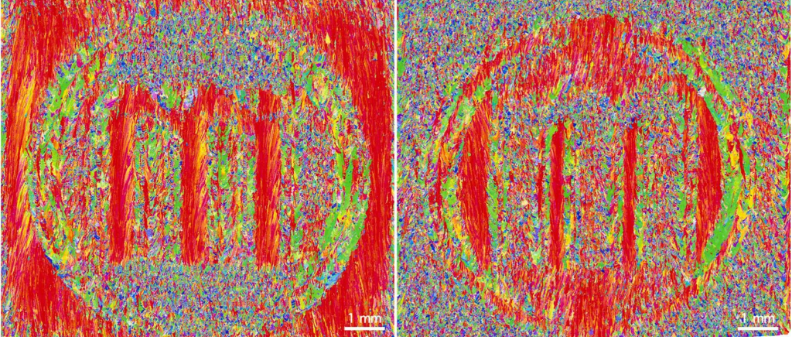
Large electronic backscatter diffraction (EBSD) orientation imaging map (IPF image shows an example of two-dimensional microstructure design. The design pattern presented is the logo of the sustainable metallurgy research team at IMDEA Materials Institute. Source: VoxelMatters
To strengthen the credibility of the research conclusions,the IMDEA team combined practical experiments with advanced modeling techniques. They re-derived the Rosenthal equation—traditionally used for heat conduction predictions, but the team modified it to better fit the dynamic process conditions of laser powder bed fusion (LPBF). Additionally, the team proposed a new interpretation of normalized volumetric energy density, which helps clarify the interaction mechanisms between energy input and materials during the processing. These models improve the accuracy of microstructure predictions and provide a more reliable framework for process parameter design.
This research has developed a predictive tool that enables manufacturers to define and adjust process parameters with unprecedented precision. Now, laser power, scanning speed, scanning spacing (inter-layer overlap distance), and scanning path length can be directly correlated with microstructural features. By precisely controlling these parameters, components can be manufactured that are optimized not only in shape and size but also in material properties tailored to the specific needs of different regions of the component.
03
From Laboratory to Scale
Unlike many academic solutions that remain at the laboratory stage,the method developed by IMDEA is fully applicable to industrial-scale production. This method seamlessly adapts to rapid scanning strategies, large layer thickness processes, and standard scanning paths (such as reciprocating scanning paths with inter-layer rotational offsets). This ensures that the process meets the capacity demands of large-scale manufacturing while maintaining product quality and structural integrity.
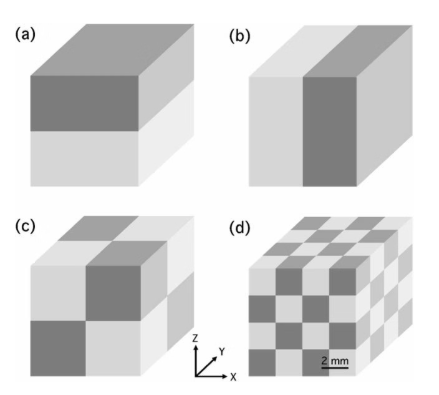
A cube sample of 8 × 8 × 8 mm³ printed using laser powder bed fusion technology. Different grayscale areas represent different combinations of scanning parameters. Source: VoxelMatters
Recommended Reading
3D Printing in the High-End Track: Why Nickel-Based Alloys Remain Essential in Aerospace?
Cobalt-Chromium Alloys + 3D Printing, Driving a New Upgrade in Treatment Paradigms
2025 Global Enterprise Rankings in Technical Ceramics Additive Manufacturing
Report | A Comprehensive Scan of the Top 15 Global 3D Printing Companies
How Five Leading Automotive Companies Use Additive Manufacturing
Report | Analysis of Market Heat for 3D Printing Brands
From Unicorn to Bankruptcy Protection: The Fall of 3D Printing Giant Desktop Metal
Content InformationCover: EOSSource: VoxelMattersThe content of this article is for industry information dissemination and sharing purposes only. Users should carefully consider and independently judge any viewpoints, opinions, and conclusions presented in the text. We welcome contributions and sharing! If you have any questions, please contact us: 18067519625(WeChat), [email protected].