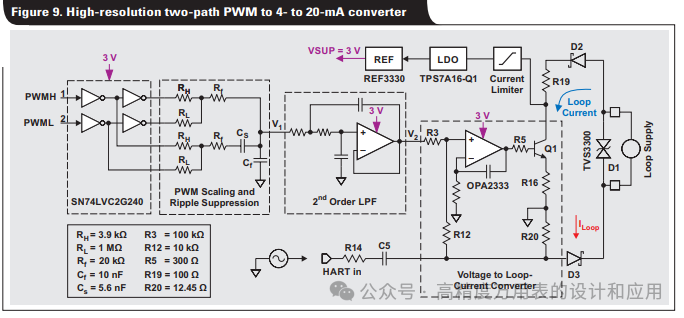
While researching, I found a document on TI’s official website that uses two 8-bit PWM channels to achieve a 16-bit DAC resolution. Interested readers can search for it on the TI official website.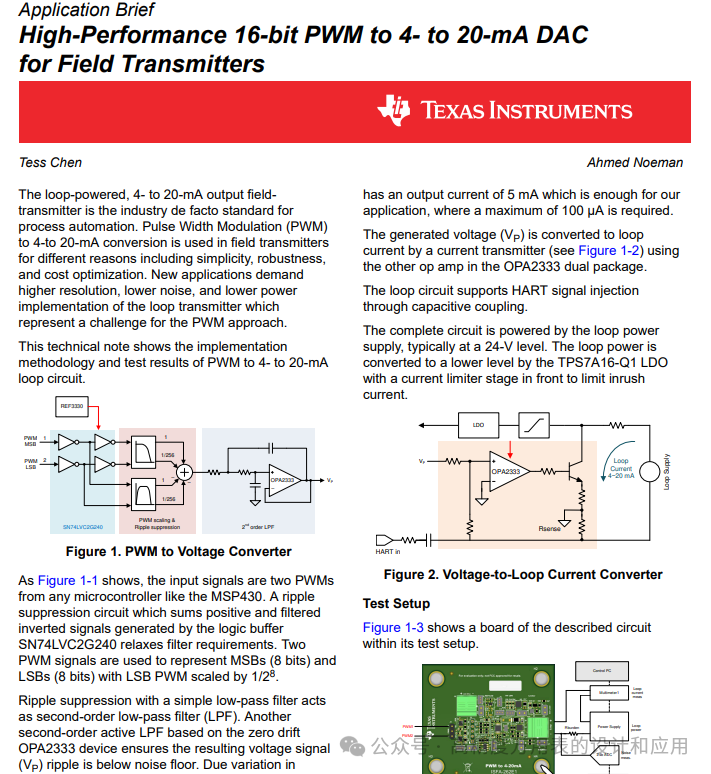
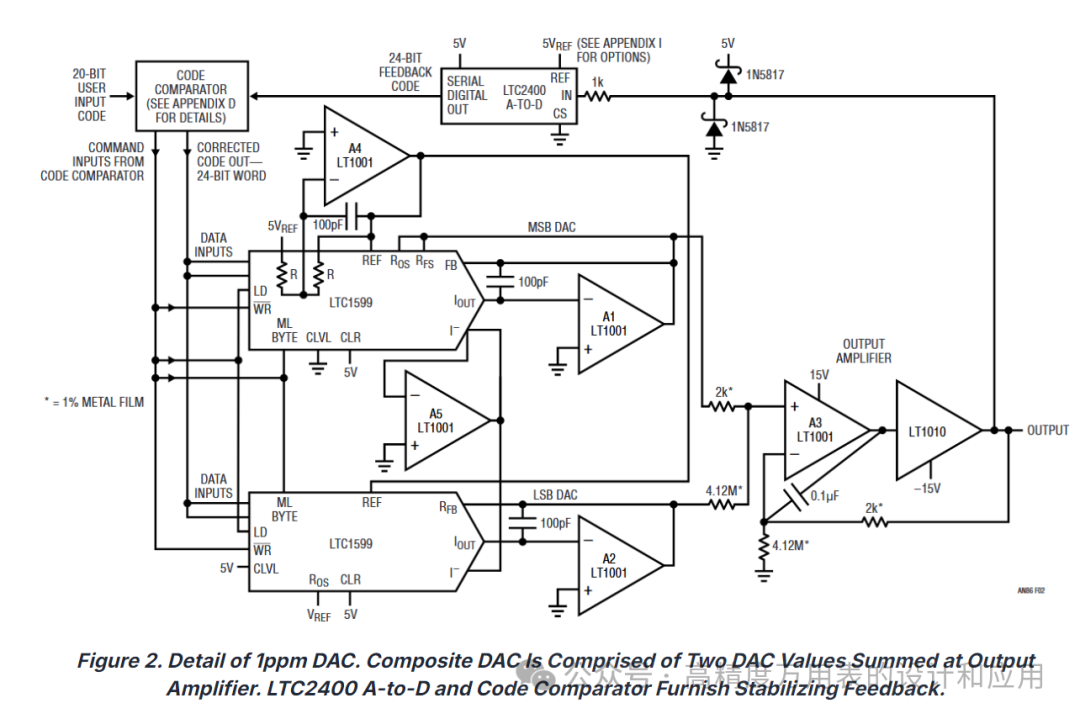
 In Linear’s official documentation, a method is provided for achieving high resolution using two DACs in synthesis, employing the LTC2440 to correct linearity through feedback. A well-known expert in domestic forums has conducted tests and validations on a prototype.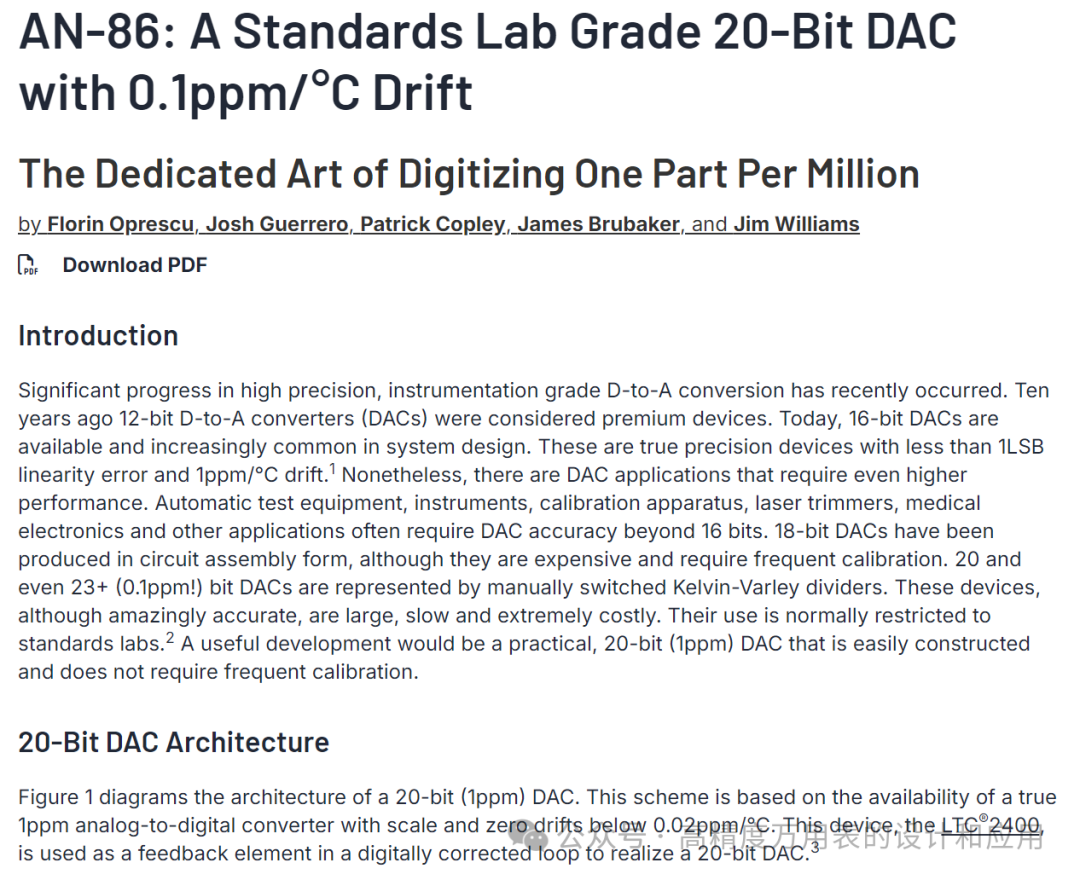
 In foreign forums, a solution was found that uses two 16-bit PWM channels to achieve 32-bit resolution.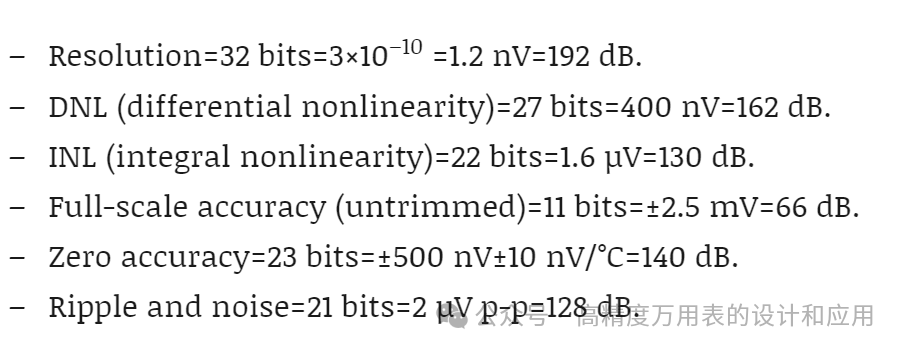
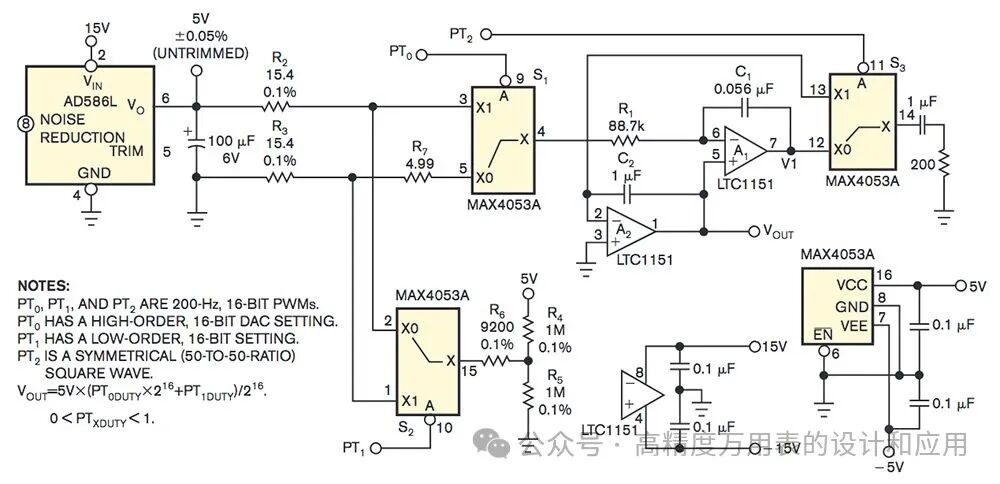
The foundation for the 32-bit DAC resolution is the analog switches S1 and S2, which add two 16-bit PWM signals, along with a precision resistor network R2 to R6. The monotonicity and DNL of the DAC are theoretically infinite; in practice, the only limitation is the PWM range from 1 to 2^16, and whether the ratios of R2: (R6 + R5 + RS2-ON) and R3: (R6 + R4 + RS2-ON) are stable. A typical 0.1% resistor accuracy can produce about 0.1 ppm = 27 bits of DNL.
The output impedance of the AD586 reference is less than 0.1Ω, while the chopper-stabilized “zero-drift” amplifier A1 achieves a common-mode rejection (CMR) of 130 dB, which is the main factor limiting INL. R7 suppresses the asymmetric potential contribution from the S1-ON conduction resistance, with a typical INL of about 0.3 ppm = 22 bits.
Due to the excellent performance of the LTC1151, the zero accuracy and output noise specifications are at low microvolt levels. The charge injection performance of operational amplifiers A1, A2, and MAX4053A S2 affects about 0.4 ppm, or 23 bits.
The accuracy of the AD586L 5V reference is ±500 ppm untrimmed, which limits absolute accuracy. If your design requires higher precision, you can choose devices with better performance. The suggested PWM period of 200Hz is for reference only; you only need to change R1 and C1 to accommodate any convenient frequency. The time constant of R1 and C1 matches the PWM period, determining the stabilization time of A1-S2-A2, synchronizing the “zero-ripple” integrator hold filter, which can stabilize quickly within one cycle if matched precisely.