On November 19, the team of Gan Yong and Zhou Hu from the Shanghai Institute of Materia Medica, Chinese Academy of Sciences, published a paper online in Science Translational Medicine, proposing a novel non-absorbable carrier-drug conjugate (CaDC) design strategy that can continuously activate TGR5 on the intestinal lumen side, providing a new solution to the drug development challenges of small molecule agonists for this receptor. TGR5, as a key intestinal receptor involved in metabolic regulation, has garnered widespread attention due to its activation by bile acids and its promotion of GLP-1 secretion. However, due to the widespread distribution of TGR5 in various tissues, small molecule agonists can easily cause liver and gallbladder-related adverse reactions after extensive exposure in the body, hindering the clinical development of multiple small molecule candidate compounds.The study designed a novel TGR5 activation strategy—targeting intestinal TGR5 with a non-absorbable carrier-drug conjugate (TGR5-CaDC). This carrier is based on rod-shaped mesoporous silica microparticles with controllable geometric morphology, and its surface is modified with an appropriate density of endogenous bile acid ligands, allowing it to efficiently penetrate intestinal mucus and achieve prolonged retention in the intestinal lumen, thereby continuously activating local TGR5 in the intestine without entering the bloodstream or being absorbed by the body (Figure 1).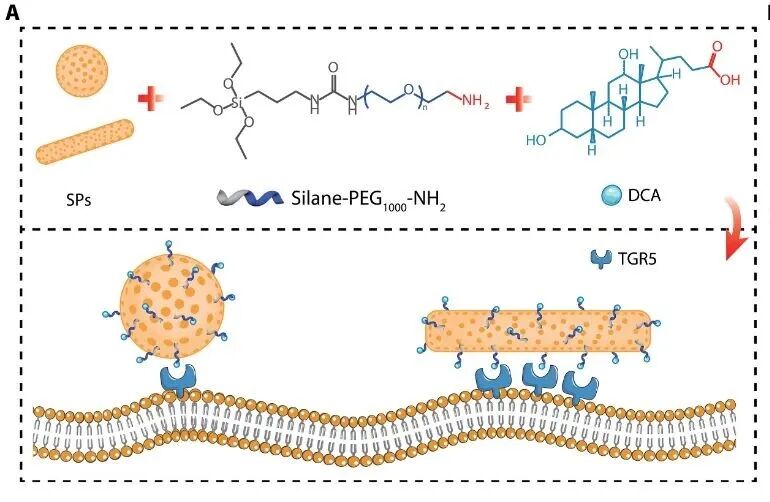
Figure 1 Structure design of TGR5-CaDC
Compared to traditional small molecules or conventional carrier drug delivery methods, TGR5-CaDC significantly enhances affinity with TGR5 by relying on multivalent bile acid ligands and non-absorbable carrier characteristics, promoting receptor aggregation on the membrane surface; phosphoproteomic data indicate that TGR5-CaDC has the ability to amplify downstream signaling, continuously driving GLP-1 secretion, forming a mechanism chain of “multivalent binding-receptor aggregation-continuous signal output” (Figure 2).
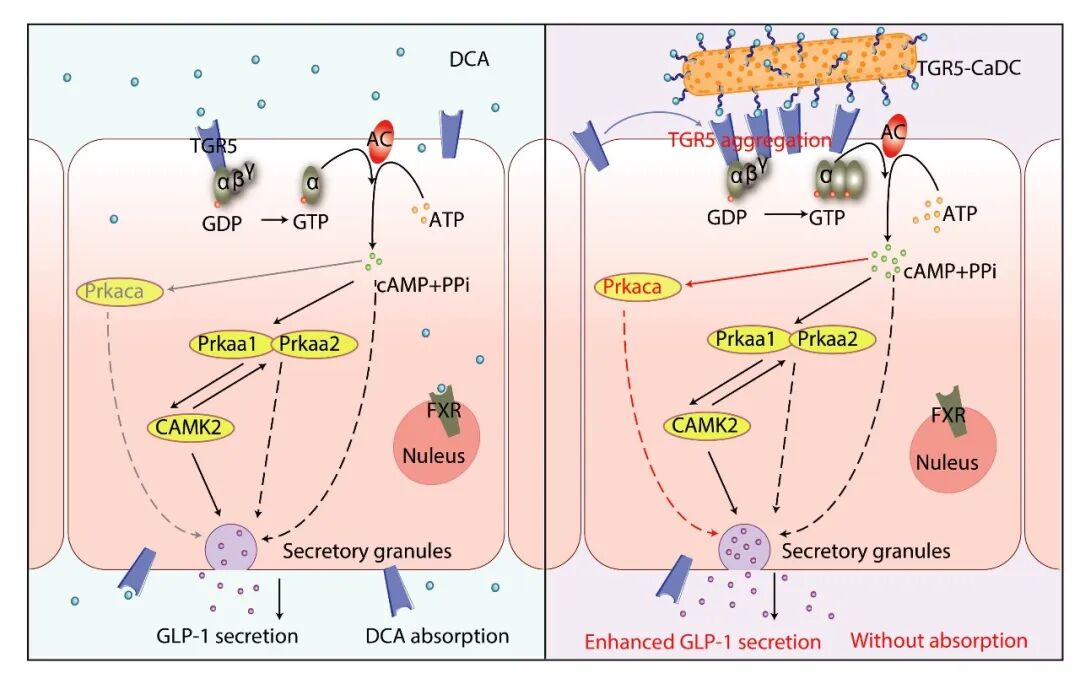
Figure 2 Mechanism of action of TGR5-CaDC
TGR5-CaDC not only enhances GLP-1 secretion but also improves overall metabolic status, demonstrating stable hypoglycemic activity in model animals. In a 30-day long-term administration study in DIO mice and db/db mice, blood glucose levels were stably maintained below 7 mmol/L starting from the 16th day of self-administration; in the Bama pig model, 14 days of administration effectively controlled blood glucose fluctuations, restoring postprandial blood glucose to normal levels within 90 minutes.
Moreover, TGR5-CaDC exhibited good safety. In long-term administration studies of 30 days in mice and 14 days in Bama pigs, no adverse reactions such as bile accumulation, gallbladder enlargement, or liver and gallbladder-related issues were observed in the model animals, and liver and kidney functions as well as related histological examinations showed no abnormalities, effectively addressing the liver and gallbladder safety issues associated with traditional small molecule agonists (Figure 3).
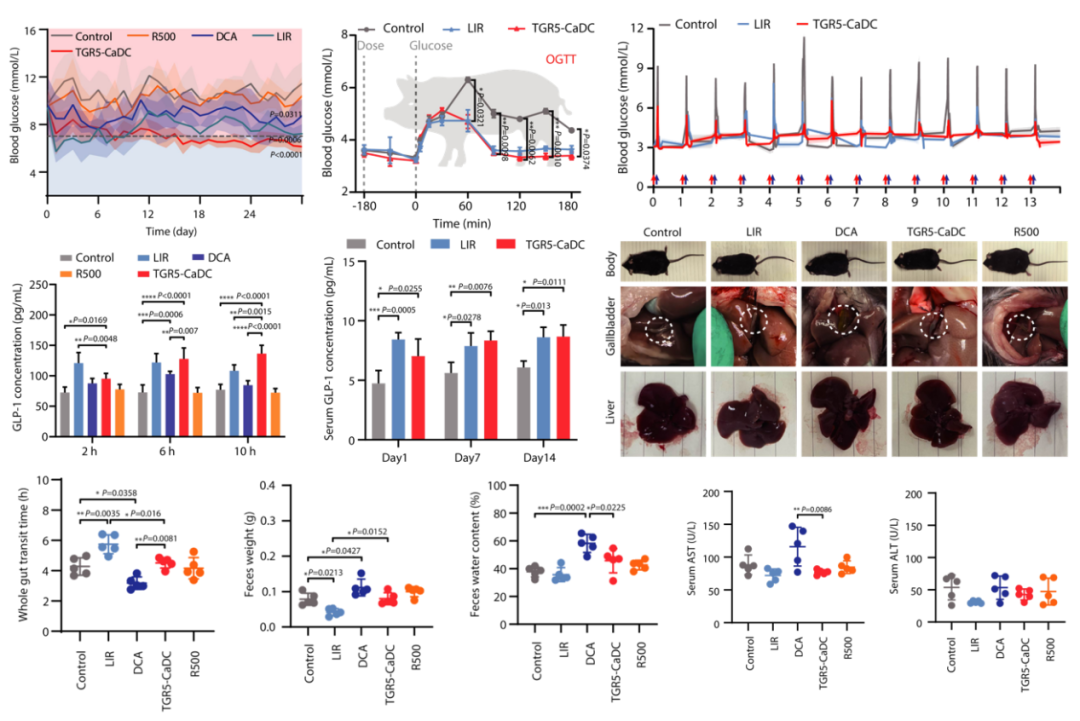
Figure 3 Efficacy and safety assessment of DIO mice, db/db mice, and Bama pigs
Overall, TGR5-CaDC presents a robust hypoglycemic effect that is continuous, safe, and effective across species models; it not only provides a feasible strategy to overcome the drug development challenges of intestinal TGR5 small molecule agonists but also opens up a new direction for oral treatment of diabetes with clinical translation potential.
Note: This article is reproduced from the Shanghai Institute of Materia Medica, Chinese Academy of Sciences, with the original title “Sci Transl Med | A Novel Glycemic Strategy Based on Non-Absorbable Carrier-Drug Conjugates Proposed by Shanghai Institute of Materia Medica,” with slight modifications.
References:Yaqi Zhang et al. Intestinal TGR5-targeted carrier-drug conjugate improves glycemic control in mice and pigs. Science Translational Medicine (2025)https://www.science.org/doi/10.1126/scitranslmed.ado5177
Recommended Reading
-
Interview with Shi Yan from Tsinghua University | Breaking through and ambitions of China’s first-in-class Treg drugs
-
Yang Lin: Reflections on the outbreak of CAR-T in vivo

Pharmaceutical Cube Pro
Insights into Global Biopharmaceutical FrontiersEmpowering the Transformation of China’s Source Innovation AchievementsMedia Cooperation: 15895423126Copyright © 2025 PHARMCUBE. Disclaimer: The information in this WeChat article is for general reference only and should not be directly used as decision-making content. Pharmaceutical Cube is not responsible for any losses incurred by any party due to the use of this content.