Against the backdrop of the global automotive industry accelerating its transition to electrification and intelligence, the automotive semiconductor market is experiencing unprecedented development opportunities. According to the latest report from Markets and Markets, the global automotive semiconductor market is expected to reach $133.05 billion by 2030, with a compound annual growth rate (CAGR) of 11.4% from 2025 to 2030. This growth is primarily driven by the proliferation of electric and hybrid vehicles, the integration of advanced driver assistance systems (ADAS) and autonomous driving technologies, and the increasing demand for connected and software-defined vehicles.
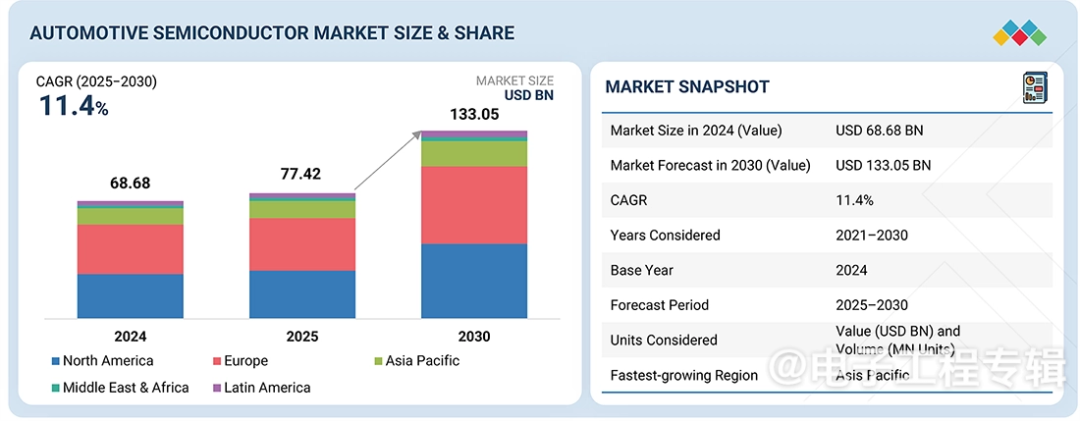
(Image source: Internet)
In this transformation, Infineon Technologies has become a leader in the automotive semiconductor field due to its deep technical accumulation and market insights. Its products are widely used in automotive powertrains, body control, in-vehicle entertainment, autonomous driving, electronic and electrical architectures, and chassis systems. As the world’s largest automotive semiconductor supplier, Infineon not only dominates the traditional automotive semiconductor market but also leads innovation in the wave of decarbonization and digitalization.
Recently, Electronic Engineering Magazine attended a media exchange meeting hosted by Infineon Technologies on “Automotive MCU Technology Trends and Hot Applications.” Infineon Technologies’ Vice President and Head of the Automotive Power and New Energy Systems Business Unit for Greater China, Zhong Xiaolong, along with senior experts from the automotive business team in Greater China, shared in-depth insights on topics such as the low-carbon and digital development trends in the automotive industry, Infineon’s MCU product strategy and future development plans, central radar solutions, and flying car (eVTOL) solutions.
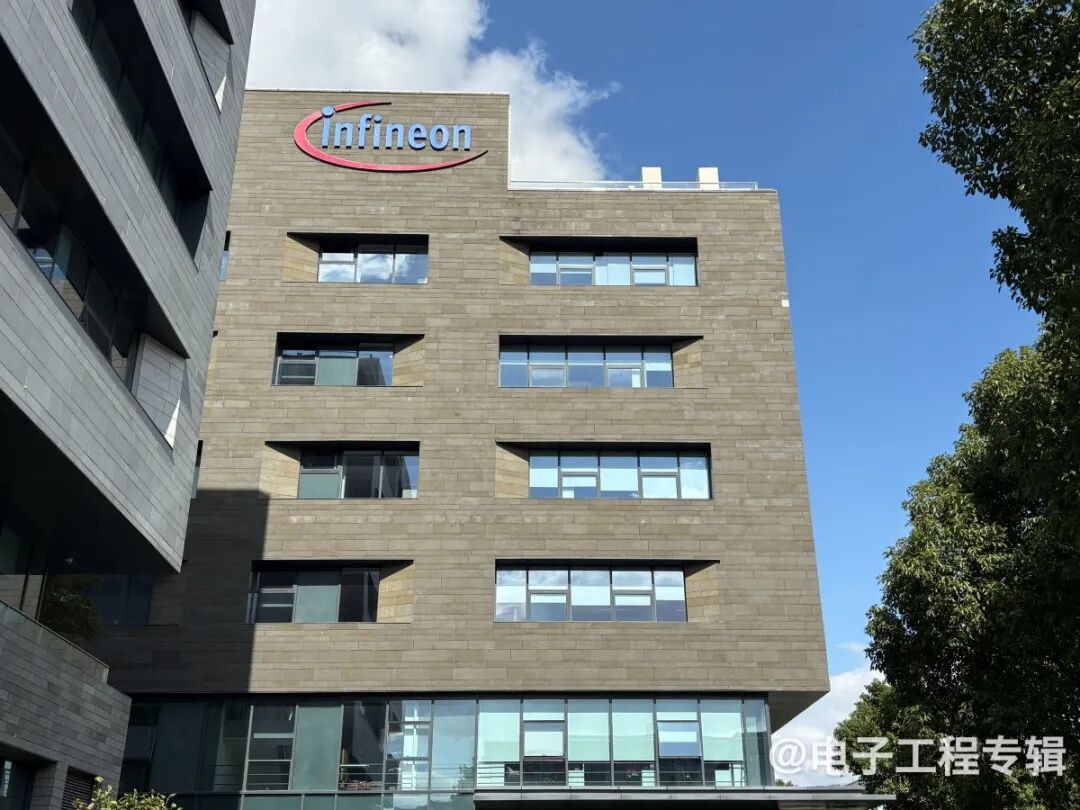
Infineon Technologies’ Greater China headquarters in Shanghai
Automotive semiconductor revenue accounts for more than half, actively laying out localization in China
In the opening presentation, Zhong Xiaolong pointed out that Infineon’s leading position in the global automotive semiconductor market is attributed to its comprehensive product portfolio and continuous technological innovation. In fiscal year 2025, Infineon achieved total revenue of €14.662 billion, with the automotive business (ATV) accounting for as much as 50%, continuing to be the company’s largest business segment. For example, in fiscal year 2024, Infineon’s automotive business delivered over 9.4 billion automotive electronic components globally, serving approximately 30,000 customers. Particularly in the fields of automotive microcontrollers and power semiconductors, Infineon has maintained nearly a 30% market share for a long time, while products such as sensors and NOR Flash also maintain strong market competitiveness.
To further consolidate its leading position in the automotive semiconductor market, Infineon recently completed the acquisition of Marvell’s automotive Ethernet business. Zhong Xiaolong stated that this acquisition combines the advantages of Marvell’s automotive Ethernet product portfolio with Infineon’s existing microcontroller product roadmap and system expertise, helping to create a more advanced and comprehensive automotive network architecture, laying a solid foundation for the future development of software-defined vehicles and automotive intelligence.
Facing the enormous potential of the Chinese market, Infineon will continue to expand its localization production strategy in China, bringing more value to the Chinese automotive market and customers. Zhong Xiaolong introduced that Infineon is leveraging its own back-end production facility in Wuxi while deepening and expanding cooperation with existing local production partners for both front-end and back-end production to achieve more localized production of products; at the same time, Infineon is also meeting the specific needs of the Chinese market through localized product definitions.
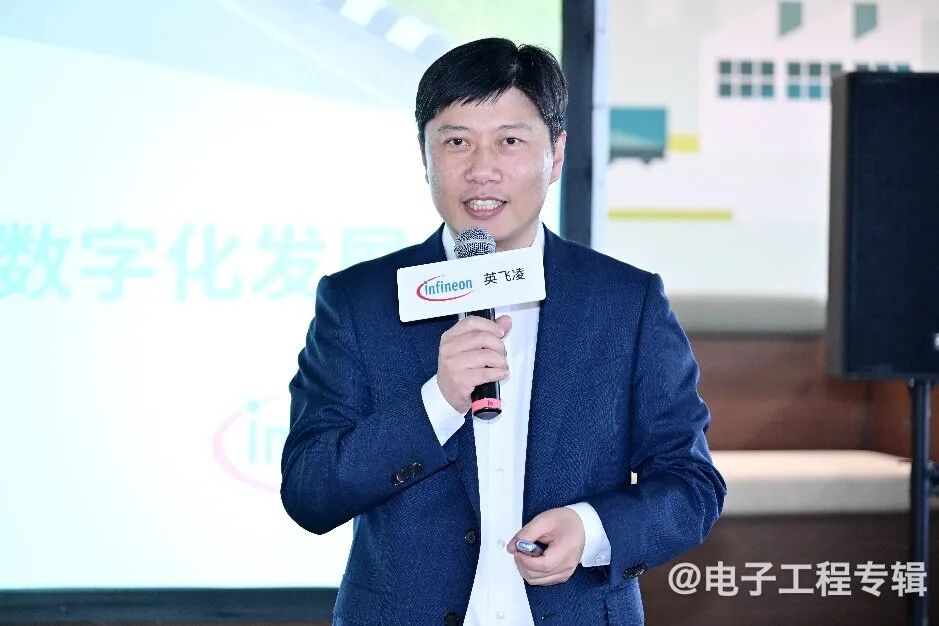
Infineon Technologies Vice President and Head of the Automotive Power and New Energy Systems Business Unit for Greater China, Zhong Xiaolong
“We have included key products such as low-voltage power MOSFETs, microcontrollers, and high-voltage power devices in our localization production plan, including the AURIX™ TC4x series microcontrollers manufactured using 28nm process technology, which will be produced locally.” Zhong Xiaolong revealed that by 2027, a significant portion of Infineon’s sales in Greater China will come from products produced locally in China.
When discussing why RISC-V architecture was chosen, Zhong Xiaolong stated, “RISC-V is our strategically next-generation architecture.” As the market increasingly demands open standards and open-source ecosystems, the RISC-V architecture, with its scalability, flexibility, and avoidance of IP lock-in, has become an important choice for Infineon to promote continuous innovation in automotive hardware and software.
“As a leading industry player, we need to drive higher quality innovation. The RISC-V architecture not only meets the demand for open standards but also provides us with more technical imagination.” Zhong Xiaolong emphasized that Infineon’s layout in the RISC-V field is not a one-time effort but is based on long-term market observation and technical accumulation, not simply viewing RISC-V as a replacement for existing products, but positioning it as a “future-oriented MCU platform.” Currently, Infineon has formed a strong local team to advance the RISC-V ecosystem and is ready with virtual prototypes for partners and customers to conduct pre-development of ecosystems and software.
In building the automotive RISC-V ecosystem, Infineon adopts an “ecosystem-first” strategy, represented by the joint venture Quintauris, collaborating with numerous partners to jointly promote the standardization of RISC-V architecture in the automotive field, and closely engaging with multiple industry organizations domestically to accelerate the implementation of standards. Zhong Xiaolong introduced that Infineon has established close cooperation with toolchain developers, basic software providers, and welcomes more local partners to actively join in building a strong RISC-V ecosystem.
In addition, to continuously deepen partnerships and strengthen ecosystem cooperation, Infineon’s automotive business is also actively creating an automotive ecosystem in Greater China through supporting university student smart car competitions, conducting university programs, and establishing the Dandelion Club.
“We hope to accelerate the application of RISC-V in the automotive field through ecosystem co-construction, promoting innovation and development across the industry.” Zhong Xiaolong stated that Infineon’s current focus in RISC-V work is on “product development and ecosystem building,” aiming to provide customers with “a more diverse and broader choice.”
Will RISC-V serve as the unified core for the next generation of automotive MCUs?
Infineon Technologies’ Senior Market Manager for Automotive Business in Greater China, Liu Lin, pointed out in her presentation that Infineon continues to hold a leading position in the global automotive MCU market. According to TechInsights data, Infineon’s automotive MCU market share is expected to grow to 32% in 2024, once again becoming the world’s number one automotive microcontroller supplier. This achievement is attributed to the high reliability and quality of Infineon’s automotive MCU products, as well as their outstanding performance in hardware-software integration, toolchain matching, and design services.
It was introduced that Infineon’s automotive MCU product series comprehensively covers all automotive application scenarios, including smart sensors, driving information and human-machine interfaces, body and connectivity, regional controllers, powertrains and electrification, ADAS, chassis and safety, with a very broad product portfolio.
“Our AURIX™ series MCUs have gained wide recognition in the automotive industry for their reliability, including excellent real-time performance, robustness, high safety, and scalability,” Liu Lin stated.
In response to the trends of automotive intelligence and electrification, Infineon’s next-generation MCU product AURIX™ TC4x integrates a PPU (Parallel Processing Unit) accelerator to provide lightweight computing support for AI models. Liu Lin introduced that the PPU accelerator can significantly enhance the performance of MCUs in real-time and high-safety application scenarios while reducing system costs.
“The PPU accelerator not only helps customers achieve more efficient AI computing but also reduces system costs through innovative solutions.” Liu Lin cited examples where the PPU accelerator can play a significant role in high real-time applications such as intelligent driving, domain control, and power systems, enhancing overall system performance.
When discussing future MCU architectures, Liu Lin stated that Infineon will choose RISC-V as the unified core architecture for the next generation of automotive MCUs. This choice is based on the openness, reduced instruction set, modular design, and scalability of the RISC-V architecture, which can meet the automotive industry’s demand for diversity and full-scenario coverage, adapting to the future development trend of software-defined vehicles (SDV).
“The modular design and scalability of the RISC-V architecture allow us to develop a series of MCU products covering all platforms from low-end to high-end based on a unified core architecture.” Liu Lin revealed that Infineon is planning the next-generation AURIX™ series microcontroller products based on the RISC-V architecture, aiming to meet the design and development needs of all automotive application scenarios.
In terms of ecosystem building, Infineon adopts an “ecosystem-first” strategy, working with ecosystem partners to promote the implementation of RISC-V architecture in the automotive field. Liu Lin introduced that Infineon has provided ecosystem partners with virtual development kits based on the RISC-V architecture to help toolchain and basic software vendors adapt and develop in advance.
According to SHD Group’s forecast data, the global automotive RISC-V embedded processor market size is expected to grow from $100 million in 2021 to $8.7 billion by 2030, with a CAGR of 52%. This trend confirms Infineon’s strategic foresight in RISC-V.
“We hope to promote the widespread application of RISC-V architecture in the automotive industry through ecosystem co-construction and standardization efforts.” Liu Lin stated that Infineon will conduct standardization work on RISC-V instruction set architecture, profiles, and platforms through the joint venture Quintauris, and closely cooperate with domestic industry organizations to accelerate the standardization of RISC-V in the automotive industry.
In the future, Infineon will continue to launch AURIX™ TC3x and TC4x series MCUs based on the TriCore™ architecture and plans to offer a 400MHz upgrade option for some TC3xx products starting in 2026. This upgrade will further enhance the performance and real-time processing capabilities of MCUs to meet the demands of future advanced autonomous driving and electrification applications. The AURIX™ TC4x features the following core capabilities:
·Higher performance:TriCore™ 1.8 clock frequency up to 500MHz, integrated PPU vector computing unit, computing power up to 26GFLOPS. Integrated DSP A/D converter subsystem.
·Functional safety and information security:Compliant with ISO 26262-2018 ASIL D standards, with hardware isolation and distributed encryption and hashing engines.
·Rich network interfaces:Including up to 2 5GBit Ethernet interfaces and up to 4 10/100MBit Ethernet interfaces.
·Hardware isolation:Hardware isolation at the core and peripheral levels. TriCore™ 1.8, each core supports up to 8 virtual machine computing units.
Central architecture and edge architecture radar, how to choose?
Infineon Technologies’ Senior Market Manager for Automotive Business in Greater China, Wang Nan, pointed out in her presentation that with the continuous development of autonomous driving technology, the millimeter-wave radar market is evolving towards high resolution and high performance. Traditional radars are limited by the number of channels and processing capabilities, making it difficult to meet the new national standards for perception performance. Upgraded millimeter-wave radars and other high-resolution radars can significantly enhance detection distance and target resolution by increasing the number of channels and employing advanced signal processing technologies.
“The new national standards impose higher requirements on perception, including cone detection, tunnel cooperation, and other complex scenarios.” Wang Nan stated that high-resolution radar has become one of the key sensors to meet these demands.
To address different market needs, Infineon offers edge architecture radar and central architecture radar solutions. The edge architecture solution uses the TC45 MCU processor in conjunction with the CTRX8188F RF front-end chip to build a cost-effective eight-transmit and eight-receive radar system; the central architecture solution directly processes the raw data from the RF front-end through SoC computing power, achieving higher performance and lower system costs.
“In the long run, central architecture radar processes raw data through SoC, avoiding the loss of raw data information and performance bottlenecks, enabling longer detection distances, higher target resolution, and richer point cloud quality. This not only enhances system performance but also significantly reduces power consumption and costs.” Wang Nan introduced that central architecture radar introduces AI and neural network technologies at the algorithm level, supporting full-scenario applications from forward-looking radar to corner radar, meeting the needs of different levels of intelligent driving through software definition. Additionally, this architecture greatly enhances AI/ML radar signal processing capabilities, laying a hardware foundation for future higher-level autonomous driving functions.
Wang Nan emphasized that the advantages of central architecture radar lie not only in performance improvement but also in effectively reducing system costs by processing radar signal raw data through SoC, thereby better meeting the demands of software-defined vehicles.
In terms of market layout, Infineon closely follows industry trends, providing diverse automotive radar solutions tailored to different levels of intelligent driving and platform needs. Wang Nan introduced that Infineon has established close cooperation with several Tier-1 manufacturers and OEMs to jointly promote the mass production and application of high-resolution radar.
“We have observed a strong demand from Tier-1 manufacturers and OEMs in the Chinese market for cost-effective radar solutions.” Wang Nan stated, “We have completed layouts on two technical paths for millimeter-wave radar and expect that millimeter-wave radar products based on Infineon’s solutions will soon achieve mass production among OEMs and Tier-1 customers.”
Flying car solutions in the wave of low-altitude economy
With the rise of the low-altitude economy, flying cars have become a new hotspot in the automotive industry. Data shows that the global urban air mobility (UAM) market has enormous potential, with the total addressable market (TAM) expected to reach $1 trillion by 2040 and soar to $9 trillion by 2050. Meanwhile, China’s low-altitude economy scale exceeded $69 billion in 2023 and is expected to reach $274 billion by 2030.
However, as an emerging field, flying cars still face numerous challenges in industry standards, airworthiness certification, and other aspects.
Infineon Technologies’ Senior Market Manager for Automotive Business in Greater China, Zhang Changming, pointed out that flying cars, as an important carrier of the low-altitude economy, have broad market prospects and application potential. Facing this blue ocean market, Infineon is not starting from scratch but adapting and certifying its mature automotive-grade product line.
“Flying cars have extremely high requirements for reliability and quality. From a fundamental research perspective, the low-altitude economy currently focuses on altitudes below 3000 meters, and the actual operating height of existing low-altitude flying vehicles is mostly within a few hundred meters, which aligns very well with Infineon’s product characteristics.” Zhang Changming stated that Infineon hopes to gain a significant market share in the future flying car semiconductor market and jointly promote the sustainable development of the low-altitude economy.
Zhang Changming admitted that the flying car field still faces many challenges, including airworthiness certification, standard formulation, and cost control. He introduced that the airworthiness certification system for flying cars is still incomplete and needs to draw on experiences from the traditional aviation field while innovating based on the characteristics of the automotive industry.
“Infineon also hopes to leverage our ecosystem to work closely with design houses, universities, relevant administrative departments, and industry standard-setting organizations to jointly promote systemic innovation and support the development of flying cars and the low-altitude economy.” Zhang Changming stated that Infineon is also actively participating in the formulation of industry standards to contribute to the standardized development of flying cars.
To address the core demands of flying cars, Infineon provides high safety, low energy consumption, and intelligent, efficient, and lightweight system solutions that can be used in various subsystems of flying cars, including main drive, flight control, energy system BMS, power supply (DCDC converters), autonomous driving, and sensing systems.
“In particular, the excellent quality assurance, large shipment volume, and operational data of Infineon’s AURIX™ product series can support the entire aviation-grade safety certification system, providing strong safety guarantees for flying cars.” Zhang Changming stated that Infineon is also reducing the energy consumption and weight of flying cars through optimized product design and the use of advanced semiconductor materials and technologies, enhancing their endurance and flight efficiency.
It was introduced that Infineon has established partnerships with several flying car manufacturers to jointly promote the industrialization process. “We hope to work closely with industry customers to jointly solve the technical challenges and market challenges in the flying car field.” Zhang Changming stated that Infineon will continue to increase investment in the flying car field, providing customers with more innovative products and solutions.
The “customer-centric” product philosophy
With the continuous popularization of electric vehicles, autonomous driving technology, and the development trend of software-defined vehicles, the automotive semiconductor market is experiencing unprecedented growth opportunities. In the coming years, the automotive semiconductor market will continue to maintain a high growth trend, providing broad development space for all parties in the industry chain. As a global leading automotive semiconductor supplier, Infineon’s automotive business maintains the number one position in global, China, Europe, and South Korea markets in 2024, and will continue to increase investment in technological innovation and market expansion.
In the MCU field, Infineon is actively building an automotive MCU ecosystem based on RISC-V. By providing virtual development kit support and closely collaborating with ecosystem partners, Infineon is striving to accelerate the implementation of RISC-V in the automotive industry and promote its widespread application; in the radar field, Infineon will closely follow industry trends and provide cost-effective solutions; in the flying car field, Infineon will focus on core systems and promote the industrialization process.
It is evident that whether in the MCU field with the coexistence of AURIX™/TRAVEO™/PSOC™ product series and RISC-V architecture, or in the radar field with a complete layout of edge processing and central architecture technical paths, Infineon always emphasizes “not replacement, but expansion, providing customers with more diverse choices.” This strategy respects customers’ investments in existing platforms while reserving space for future innovation, reflecting its “customer-centric” product philosophy.
It is worth mentioning that Infineon is not only continuously expanding its business in China on a commercial level but also actively fulfilling its social responsibilities, committing to achieving carbon neutrality by 2030. As one of the first semiconductor companies to commit to adhering to the United Nations Global Compact’s “Ten Principles,” Infineon responds to global social challenges with innovative products and has set a climate goal to achieve carbon neutrality by 2030.
“Infineon’s goal is to continuously lead the automotive semiconductor market, collaborating with industry customers and partners to innovate together, creating more environmentally friendly, safer, and smarter vehicles, shaping the future of mobility.” Zhong Xiaolong emphasized in conclusion that Infineon will continue to drive deeper cooperation with the Chinese market through dual engines of technological innovation and ecosystem building, providing customized system-level solutions for customers and jointly opening a new chapter in the low-carbon and digital transformation of the automotive industry.

THE END
Follow “Electronic Engineering Magazine” and add the editor’s WeChat
Regional groups are now open, please send messages 【Shenzhen】【Shanghai】【Beijing】【Chengdu】【Xi’an】 to the public account