PCB Layering for GHz Signal Integrity
PCB Layering for GHz Signal Integrity

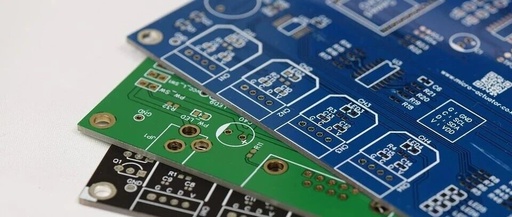
PCBs designed for high-frequency applications, especially those operating at GHz signals, require careful attention to layering design to ensure signal integrity. A well-planned PCB layering for GHz signals minimizes signal loss, controls impedance, and reduces crosstalk. In this comprehensive guide, we will explore the key points of high-frequency PCB layering, advanced materials, and techniques to … Read more

Allegro X PCB Design Tips Series – 27. How to Create and Cancel Xnet in Allegro X?

Allegro X PCB Design Tips Series - 27. How to Create and Cancel Xnet in Allegro X?

Click the blue text / Follow usBackground Introduction Content Summary: In high-speed PCB design, engineers need to apply precise routing rules to specific network groups (such as differential pairs, DDR data lines, etc.) to ensure signal integrity. However, when networks are segmented by series components (such as resistors and capacitors), traditional constraint rules cannot be … Read more

Essential! Summary of 14 PCB Routing Principles and Techniques

Essential! Summary of 14 PCB Routing Principles and Techniques

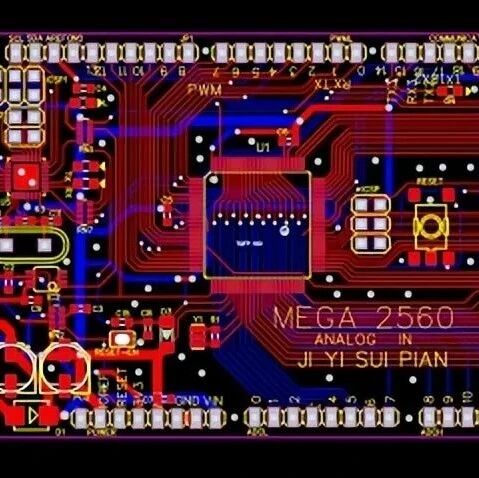
1. Manual Routing Whenever Possible Generally speaking, most PCB design software includes an auto-routing feature, but in reality, no auto-router can completely replace the skills, experience, and flexibility of a PCB Layout Engineer. (Kudos to manual PCB Layout Engineers) In some cases, you can use auto-routing: After placing all components, you can use auto-routing to … Read more

Unit 7: Back Drilling of Printed Circuit Boards

Unit 7: Back Drilling of Printed Circuit Boards

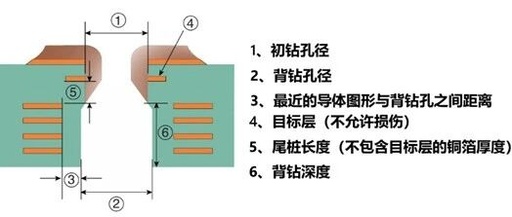
Back drilling is a commonly used process technology in the manufacturing of printed circuit boards. It involves drilling out a portion of the via from either side to a predetermined depth, thereby shortening the total length of the via. The goal is to achieve more blind and buried via structures with the least number of … Read more

6 PCB Design Guidelines Every PCB Engineer Should Know

6 PCB Design Guidelines Every PCB Engineer Should Know

When starting a new design, we often spend most of our time on circuit design and component selection, and during the PCB layout and routing phase, we may overlook important considerations due to lack of experience.If sufficient time and effort are not allocated to the PCB layout and routing phase, it may lead to issues … Read more

An In-Depth Introduction to MIPI DSI

An In-Depth Introduction to MIPI DSI

I am pleased to provide you with a detailed introduction to the MIPI DSI bus. This is a comprehensive yet easy-to-understand introduction to MIPI DSI, covering its definition, working principles, protocol layers, advantages, and applications. 1. What is MIPI DSI? MIPI DSI (Mobile Industry Processor Interface Display Serial Interface) is the full name in Chinese, … Read more

100 PCB Concepts You Must Know

100 PCB Concepts You Must Know

Source: Chongqing Electronic Circuit Manufacturing Industry Association PCB (Printed Circuit Board) is the core foundational component of electronic devices, known as the “mother of electronic products.” It forms circuit connections on a common substrate according to a predetermined design, providing mechanical support, electrical interconnection, and signal transmission functions for electronic components. PCBs are widely used … Read more

Which Multilayer PCB Manufacturer is the Best?

Which Multilayer PCB Manufacturer is the Best?

Which Multilayer PCB Manufacturer is the Best? In the electronics industry, PCBs (Printed Circuit Boards) serve as the “skeleton” and “nervous system” of electronic devices, providing mechanical support and electrical connections for components. With the rise of technologies such as 5G communication and artificial intelligence, the demand for multilayer PCBs has surged, especially in high-frequency … Read more

Why is Impedance Matching Necessary for PCBs? Not Matching is Equivalent to Wasting Efforts!

Why is Impedance Matching Necessary for PCBs? Not Matching is Equivalent to Wasting Efforts!

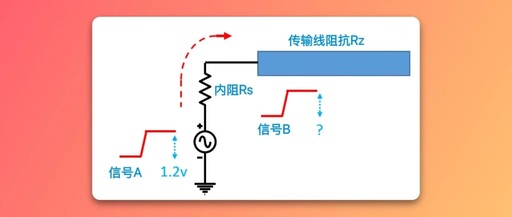
In high-speed circuit design, we often hear a term—impedance matching. Especially in high-layer PCB designs, impedance control is almost an unavoidable topic. So, why is impedance matching necessary for high-layer PCBs? Today, we will discuss this “invisible killer” that engineers are concerned about. 🚀 Why is Impedance Matching Important? In low-speed signal circuits, wires behave … Read more

Why Connect a Resistor and Capacitor Between PCB GND and Chassis GND?

Why Connect a Resistor and Capacitor Between PCB GND and Chassis GND?

The chassis is made of metal, with a screw hole in the middle, which connects to the ground. Here, a 1M resistor is connected in parallel with a 1nF capacitor to the circuit board ground. What are the benefits of this configuration?In metal chassis devices, the PCB GND (signal ground) is connected to the chassis … Read more