Is Your Circuit Board ‘Talking’? Decoding Hidden Crises in High-Speed Signals

Introduction: The PCB expert, known as ‘Water-like Man’ (with over 20 years of industry experience and a former senior technical executive at Huawei’s R&D department), previously introduced the focus on signal integrity (SI) issues in matching circuit design. This issue mainly discusses some misunderstandings in high-speed PCB design regarding high-speed signals. Water-like Man provides suggestions … Read more

China’s 90GHz Oscilloscope Breaks Barriers! A ‘Chinese Standard’ for Global Ultra-High-Speed Signals

In the laboratory, the waveform on the silver device is steadily fluctuating, and Chinese engineers are clenching their fists—this moment rewrites the history of high-end electronic measurement instruments in China. On October 15, 2025, at the Bay Area Semiconductor Expo in Shenzhen, China’s self-developed 90GHz real-time oscilloscope was officially unveiled. This device has a bandwidth … Read more

Why Are High-Speed Signal Traces Curved on PCBA Boards?

Why Are High-Speed Signal Traces Curved on PCBA Boards?

Analysis of the Reasons for Curved High-Speed Signal Traces on PCBA Boards 1. The Special Nature of High-Speed Signals and Routing Requirements In PCBA (Printed Circuit Board Assembly) design, high-speed signals typically refer to signals with frequencies above 100MHz or transmission rates exceeding 1Gbps, such as PCIe, DDR, USB 3.0, etc. The transmission of these … Read more

How to Ensure Signal Integrity in PCB Circuit Design?

How to Ensure Signal Integrity in PCB Circuit Design?

In embedded development, many students encounter signal integrity issues. If the signal is not complete, it can lead to data loss, errors, and even problems with system performance and reliability. So how can we ensure signal integrity in PCB development? 01Reasonable Layout Planning Functional Partitioning Dividing the circuit board into functional zones is the foundation … Read more

Why is Impedance Matching Necessary for PCBs? Not Matching is Equivalent to Wasting Efforts!

Why is Impedance Matching Necessary for PCBs? Not Matching is Equivalent to Wasting Efforts!

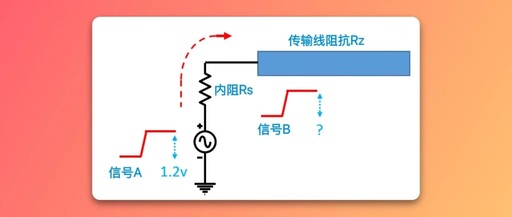
In high-speed circuit design, we often hear a term—impedance matching. Especially in high-layer PCB designs, impedance control is almost an unavoidable topic. So, why is impedance matching necessary for high-layer PCBs? Today, we will discuss this “invisible killer” that engineers are concerned about. 🚀 Why is Impedance Matching Important? In low-speed signal circuits, wires behave … Read more

Requirements and Considerations for PCB Silkscreen Design

Requirements and Considerations for PCB Silkscreen Design

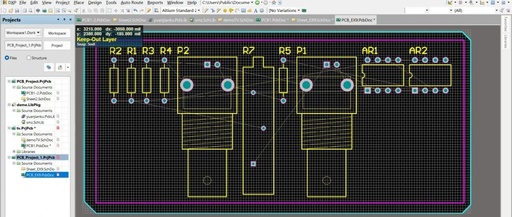
Silkscreen design is an essential factor in PCB design. The silkscreen on a PCB typically includes: component silkscreen and designators, board name, version number, anti-static symbols, barcode silkscreen, company logo, and other identifiers. Next, let’s take a look at the requirements for silkscreen design in PCB design. 1. Silkscreen Design Requirements The height-to-width ratio of … Read more

Measuring High-Speed Signals with an Oscilloscope? A Four-Step Check Method Made Easy!

Measuring High-Speed Signals with an Oscilloscope? A Four-Step Check Method Made Easy!

With the rapid development of electronic technology, communication signal frequencies are increasing, and the quality requirements for signals are becoming more stringent. Is it enough to just choose an expensive oscilloscope to measure these high-speed signals? Not necessarily; if some details are overlooked, even the most expensive oscilloscope may not provide accurate measurements! 1. Bandwidth … Read more