Domestic Application Platform Efforts! FPGA + DSP + ARM High-End Heterogeneous Platform!
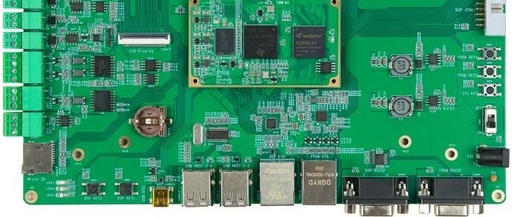
Domestic Application Platform Efforts! FPGA + DSP + ARM High-End Heterogeneous Platform!

SOM-XQ138S core board ▪︎ Based on TI OMAP-L138 (fixed-point/floating-point DSP C674x + ARM9) + FPGA processor development board; ▪︎ OMAP-L138 is TI’s TMS320C6748 + ARM926EJ-S heterogeneous dual-core processor, with a main frequency of 456MHz, capable of up to 3648MIPS and 2746MFLOPS of computing power; ▪︎ The FPGA uses the eHiChip6 family EQ6HL45 series chip from … Read more
ACROVIEW Programmer Supports Hercules H1D03N3W72 Video Bridge

ACROVIEW Programmer Supports Hercules H1D03N3W72 Video Bridge

The leader in the chip programming industry, ACROVIEW, recently released the latest update for its programming software and a list of newly supported chip models, among which the Hercules H1D03N3W72 programmable video bridge has been supported by ACROVIEW’s universal programming platform, AP8000. H1D03N3W72 is a programmable video bridge device that supports various mobile image sensor … Read more

Four Main Categories of Embedded Processors

Four Main Categories of Embedded Processors

Click the blue text to follow us Embedded processors are essential core components in modern electronic devices, widely used in consumer electronics, automation control, medical devices, automotive electronics, and other fields. They are used to execute specific tasks or control systems, typically characterized by low power consumption, small size, and high efficiency. Depending on different … Read more

In-Depth Overview of FPGA Basics in Heterogeneous Computing

In-Depth Overview of FPGA Basics in Heterogeneous Computing

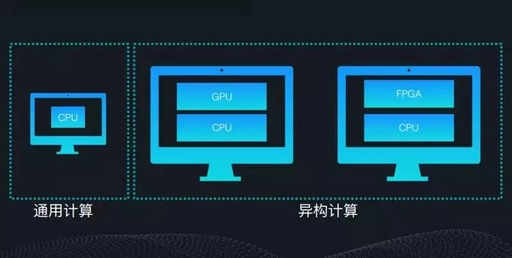
With the application of cloud computing, big data, and artificial intelligence technologies, relying solely on CPUs can no longer meet the computational needs of various industries. Scenarios such as massive data analysis, machine learning, and edge computing require a diversified computing architecture, necessitating the collaboration of different processor architectures and heterogeneous computing technologies like GPUs, … Read more

In-Depth Explanation of Heterogeneous Computing FPGA Basics

In-Depth Explanation of Heterogeneous Computing FPGA Basics

With the applications of cloud computing, big data, and artificial intelligence technologies, relying solely on CPUs can no longer meet the computing power demands across various industries. Scenarios like massive data analysis, machine learning, and edge computing require a diverse computing architecture, necessitating the collaboration of different processor architectures such as GPUs, NPUs, and FPGAs … Read more

Comprehensive Analysis of FPGA Basics

Comprehensive Analysis of FPGA Basics

FPGA (Field Programmable Gate Array) refers to a field-programmable gate array. It is a product developed further based on programmable devices such as PLA, PAL, GAL, and CPLD. It serves as a semi-custom circuit in the domain of Application-Specific Integrated Circuits (ASIC), addressing the shortcomings of custom circuits and overcoming the limitations of the number … Read more

Research on Teaching Embedded Systems Based on Zynq

Research on Teaching Embedded Systems Based on Zynq

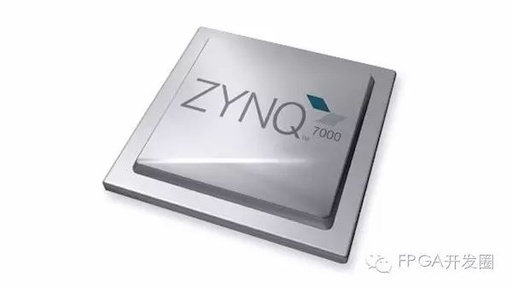
Abstract: In response to the issues in traditional embedded systems teaching, this article proposes using the Zynq platform as a practical platform for teaching reform in embedded systems. A new course structure is adopted, oriented towards engineering practice training, driving students to autonomously complete course learning and practical activities. Teaching practice shows that completing embedded … Read more

Understanding The Complex Relationships Between MCU, ARM, DSP, FPGA, and Embedded Systems

Understanding The Complex Relationships Between MCU, ARM, DSP, FPGA, and Embedded Systems

First, “embedded” is a concept with no precise definition; different books provide their own definitions. However, the main idea is the same: compared to general systems like PCs, embedded systems are specialized systems, streamlined in structure, retaining only the necessary parts in hardware and software while eliminating the unnecessary ones. Therefore, embedded systems generally have … Read more