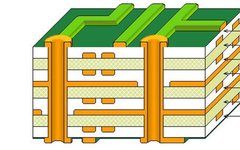
9 Essential PCB Layout Techniques to Tackle Various Design Challenges
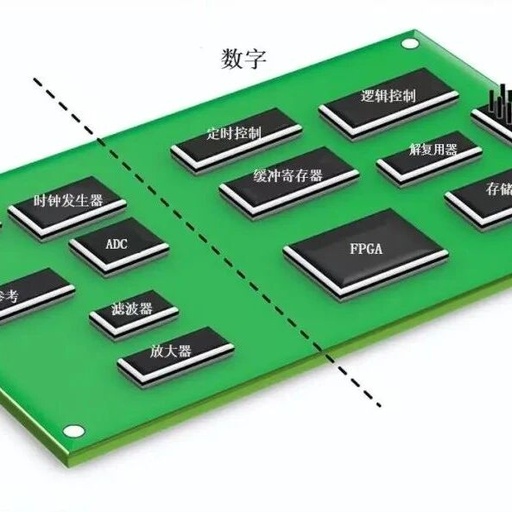
9 Essential PCB Layout Techniques to Tackle Various Design Challenges

1 Component Placement When placing components, it is essential to follow the signal paths of the schematic and provide space for routing. Additionally, adhere to the following placement rules: Power components should be placed compactly together, with appropriate decoupling to ensure power integrity. Decoupling capacitors should be placed as close as possible to each component. … Read more
Practical Guide to Copper Pouring in High-Density PCBs: Design Philosophy for Controlling Residual Copper Rate

Practical Guide to Copper Pouring in High-Density PCBs: Design Philosophy for Controlling Residual Copper Rate

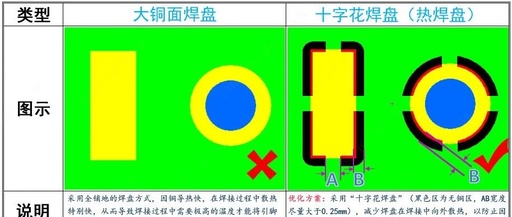
Copper pouring is an important aspect of Jialichuang’s high-density PCB design. The significance of copper pouring lies in reducing ground line impedance, enhancing anti-interference capability; lowering voltage drop, improving power efficiency; and connecting with the ground line to reduce loop area. It is advisable to use cross pads on copper pouring surfaces We know that … Read more

University of Pittsburgh | ACS AELM: Breakthrough in Flexible Embedded Metal Meshes for Ultra-Low Sheet Resistance Transparent Electrodes

University of Pittsburgh | ACS AELM: Breakthrough in Flexible Embedded Metal Meshes for Ultra-Low Sheet Resistance Transparent Electrodes

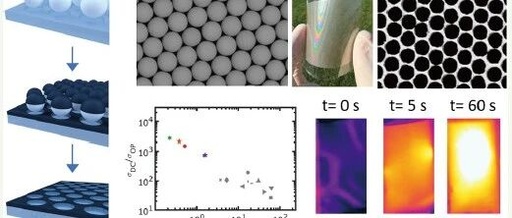
Article Information Title (Chinese): Flexible Embedded Metal Meshes Based on Nanosphere Lithography for Very Low Sheet Resistance Transparent Electrodes and EMI ShieldingPaper Title (English): Flexible Embedded Metal Meshes by Nanosphere Lithography for Very Low Sheet Resistance Transparent Electrodes, Joule Heating, and Electromagnetic Interference ShieldingAuthors: Mehdi Zarei, Khashayar Mohammadi, Abdullah A Mahmood, Mingxuan Li, Paul W. … Read more

Detailed Explanation of Rigid-Flex Layered Design

Detailed Explanation of Rigid-Flex Layered Design

Source: SiP and Advanced Packaging Technology Author: Suny Li The three main characteristics of Rigid-Flex circuits are Multi-bending, Multi-stackup, and Multi-zone. In this article, we will take a detailed look at the multi-layered design of Rigid-Flex. 01 Multi-Stackup Multi-Stackup Multi-stackup refers to different numbers of layers and thicknesses in different areas of the substrate, meaning … Read more

Hierarchical Polyimide Fiber Composites with Ultralow Reflectivity

Hierarchical Polyimide Fiber Composites with Ultralow Reflectivity

👆If you wish to meet regularly, Welcome to star 🌟 and bookmark it~ With the rapid development of the electronic information industry, issues of electromagnetic leakage and high-temperature infrared radiation have become increasingly prominent. Particularly in the field of military protection, they can easily lead to information leakage and infrared exposure. Therefore, the design and … Read more