LoRA Fine-Tuning: Adding New Knowledge Without Harming LLM

LoRA Fine-Tuning: Adding New Knowledge Without Harming LLM

Click ๐Ÿ‘‡๐Ÿป to follow, article from ๐Ÿ™‹โ™‚๏ธ Friends who want to join the community can see the method at the end of the article for group communication. โ€œHello everyone, I am Si Ling Qi. Today I want to talk to you about an interesting study regarding Large Language Models (LLM) โ€” how much new knowledge … Read more
Guide to Fine-Tuning Large Language Models with PyTorch: Complete Tutorial and Code Examples

Guide to Fine-Tuning Large Language Models with PyTorch: Complete Tutorial and Code Examples

About 5300 words, recommended reading time 8 minutes. This article introduces the significant advances made by large language models in the field of natural language processing. In recent years, large language models (Large Language Models, LLMs) have made significant progress in the field of natural language processing (Natural Language Processing, NLP). These models can acquire … Read more

Efficient Fine-Tuning Methods for Quantized Large Models: QLoRA

Efficient Fine-Tuning Methods for Quantized Large Models: QLoRA

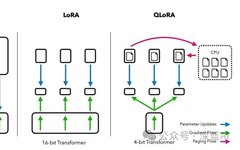
Paper Title: QLoRA: Efficient Finetuning of Quantized LLMs Authors: Tim Dettmers, Artidoro Pagnoni, Ari Holtzman, Luke Zettlemoyer Project Address: https://github.com/artidoro/qlora Author: Jay Chou from Manchester Reviewer: Los Abstract: QLoRA is a model quantization algorithm proposed by Tim Dettmers from the University of Washington, applied in LLM training to reduce memory requirements. It is sufficient to … Read more

MultiDreamer3D: A Novel Multi-Concept 3D Customization Method

MultiDreamer3D: A Novel Multi-Concept 3D Customization Method

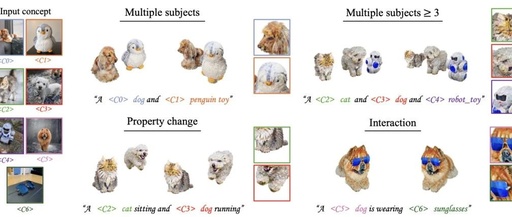
MultiDreamer3D: Multi-concept 3D Customization with Concept-Aware Diffusion Guidance Paper:https://arxiv.org/abs/2501.13449v1 MultiDreamer3D is a novel multi-concept 3D customization method designed to address the issues of object omission and concept confusion faced by existing single-concept 3D generation methods when dealing with multi-concept scenarios. MultiDreamer3D employs a divide-and-conquer strategy, utilizing a large language model (LLM)-based 3D layout generator (LG) … Read more

Technical Sharing | Elliptic Curve Cryptography (ECC)

Technical Sharing | Elliptic Curve Cryptography (ECC)

Click the blue text “ShunYun Multi-Physical Field Simulation” Explore advanced algorithm engines Elliptic Curve Cryptography (ECC) is a highly regarded topic. ECC is a public key encryption algorithm that utilizes points on an elliptic curve for encryption and decryption operations. Compared to traditional RSA algorithms, ECC offers greater efficiency and security by using shorter key … Read more

In-Depth Analysis of the MCP Protocol: Three Steps to Achieve Direct HTTP Client Connection, Disrupting Traditional Development Models

In-Depth Analysis of the MCP Protocol: Three Steps to Achieve Direct HTTP Client Connection, Disrupting Traditional Development Models

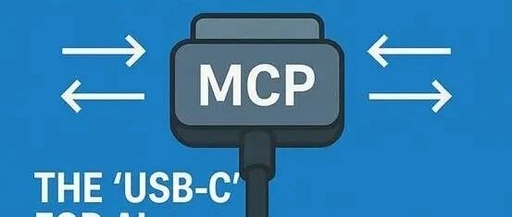
This article introduces how to connect a custom HTTP client to the MCP server without the MCP client. MCP is a protocol that enables large language models (LLM) to connect to any endpoint, simplifying the connection between developers and external tools. The article details the architectural components of MCP and provides an implementation process, including … Read more

Why Do Multi-Agent LLM Systems Fail?

Why Do Multi-Agent LLM Systems Fail?

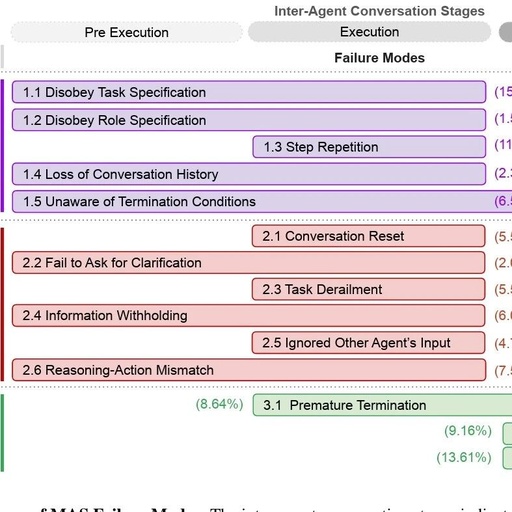
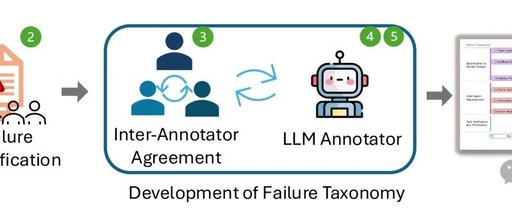
Why do multi-agent LLM systems fail? Abstract Despite the growing enthusiasm for multi-agent systems (MAS), which consist of multiple LLM agents collaborating to complete tasks, their performance improvements in popular benchmark tests remain minimal compared to single-agent frameworks. This gap highlights the necessity of analyzing the challenges that hinder the efficiency of MAS. In this … Read more

Why Multi-Agent Systems Will Ultimately Fail? (Berkeley Paper)

Why Multi-Agent Systems Will Ultimately Fail? (Berkeley Paper)

Research Background image.png|550 Research Question The problem this paper aims to address is the minimal performance improvement of Multi-Agent Large Language Model (LLM) systems (referred to as MAS) compared to single-agent frameworks. Despite the potential of MAS in handling complex multi-step tasks and interacting with dynamic environments, their accuracy or performance improvements remain limited in … Read more

GPU, ASIC, FPGA: Which Accelerates Large Models Better?

GPU, ASIC, FPGA: Which Accelerates Large Models Better?

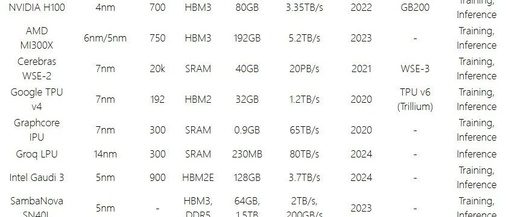
Click the blue textto follow us With thedevelopment ofLLM, the importance of accelerators capable of efficiently processingLLM computations has become increasingly prominent. This article discusses the necessity ofLLM accelerators and provides a comprehensive analysis of the main hardware and software features of currently available commercialLLM accelerators. Based on this, it proposes development ideas and future … Read more

Accessing Locally Deployed Models on RK3588 Using LangChain

Accessing Locally Deployed Models on RK3588 Using LangChain

In the field of artificial intelligence and natural language processing, utilizing powerful tools and frameworks to interact with locally deployed models is a common and important task. Today, I will share how to use the LangChain framework to access models deployed locally on the RK3588. Background Knowledge Introduction to LangChain LangChain is a powerful Python … Read more