ARM V8 Exception Vector Table

ARM V8 Exception Vector Table

Among them, el0_sync is the entry address for system synchronous exceptions; el0_irq is the entry address for interrupt exceptions; first, look at synchronous exceptions, where el0_svc is the exception caused by the system call svc;kernel_entry 0: indicates that this is a kernel jump from el0 to el1, performing register saving for user space, mainly saved … Read more

New Tang M2351 Series: Leading IoT Security with Arm PSA Level 2 Certification

New Tang M2351 Series: Leading IoT Security with Arm PSA Level 2 Certification

New Tang M2351 Series Leading the IoT Security Era with Arm PSA Level 2 Certification The NuMicro® M2351 series from New Tang Technology, as one of the first microcontrollers based on the Arm Cortex®-M23 core, has achieved PSA Certified Level 2 and Functional API certification, meeting the stringent requirements for product/communication security in the IoT … Read more

Basics of Xilinx FPGA Constraints

Basics of Xilinx FPGA Constraints

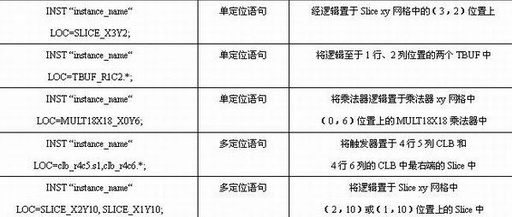
1. Constraint Files There are three types of constraint files in Xilinx ISE FPGA design: User Constraint File (.UCF), Netlist Constraint File (.NCF), and Physical Constraint File (.PCF). These can achieve timing constraints, pin constraints, and area constraints. Users write UCF files during the design input phase, then the UCF file generates the NCF file … Read more

ARM NEON™ General SIMD Engine Has AES Key Leakage Risk

ARM NEON™ General SIMD Engine Has AES Key Leakage Risk

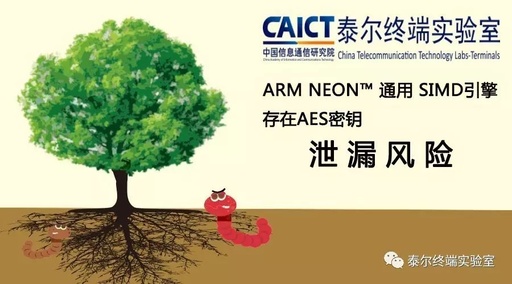
↑ Click the “Thales Terminal Laboratory” above to follow us Recently, security engineers from Thales Terminal Laboratory analyzed the AES encryption implementation using ARM NEON™ technology, and the results showed that this technology does not effectively resist side-channel attacks, resulting in a risk of AES key leakage. The ARM Cortex™-A series processors are currently the … Read more

Differences Between ARM, Intel, and MIPS Processors

Differences Between ARM, Intel, and MIPS Processors

Android supports three types of processors (CPUs): ARM, Intel, and MIPS. ARM is undoubtedly the most widely used. Intel is well known for its prevalence in desktop and server environments, but its influence in the mobile industry is relatively small.MIPS has a long history in the 32-bit and 64-bit embedded fields, achieving considerable success, but … Read more

Detailed Explanation of LoongArch Instruction Set: Compatible with MIPS/ARM/x86

Detailed Explanation of LoongArch Instruction Set: Compatible with MIPS/ARM/x86

A few days ago, Loongson announced the launch of the LoongArch instruction set, abandoning its previous MIPS licensing, featuring over 2,500 self-developed instructions, and capable of translating MIPS, ARM, and x86 instructions. For the development of domestic CPUs, there have always been two unresolved issues over the past 20 years: whether to pursue an independent … Read more

Differences Between ARM, Intel, and MIPS Mobile Processors

Differences Between ARM, Intel, and MIPS Mobile Processors

Android supports three types of processors (CPUs): ARM, Intel, and MIPS. Among them, ARM is undoubtedly the most widely used. Intel is well-known for its prevalence in desktops and servers, but its influence in the mobile industry is relatively small. MIPS has a long history in the 32-bit and 64-bit embedded fields and has achieved … Read more

Differences Between ARM, MIPS, and RISC-V Instruction Sets

Differences Between ARM, MIPS, and RISC-V Instruction Sets

Click the above blue text to follow us ARM, MIPS, and RISC-V are three common Reduced Instruction Set Computing (RISC) architectures, each with its own characteristics and design philosophies. These architectures are widely used in processor design, but they have essential differences in instruction set structure, development background, and ecosystem. ARM (Advanced RISC Machine): The … Read more

How ARMV8-AARCH64 Exceptions Jump to the Vector Table

How ARMV8-AARCH64 Exceptions Jump to the Vector Table

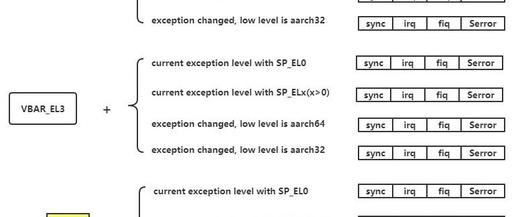
Click the blue "Arm Selected" in the upper left corner and choose "Set as Favorite" First, let’s look at a block diagram. After an interrupt occurs, the PC will jump to VBAR + interrupt offset. For example, the blue part in the diagram There are three base addresses: VBAR_EL1, VBAR_EL3, and VBAR_EL1 (secure). Which one … Read more

Introduction to SIMD/FP Instructions in ARMv8-Aarch64

Introduction to SIMD/FP Instructions in ARMv8-Aarch64

1. Hardware Floating-Point and Software Floating-Point In ARMv8, hardware floating-point is part of the architecture.AArch32 state supports software floating-point, but AArch64 state does not support software floating-point. ARM systems may have: A VFP coprocessor, which supports hardware floating-point. No floating-point hardware, meaning does not support hardware floating-point. If you compile for a system with a … Read more