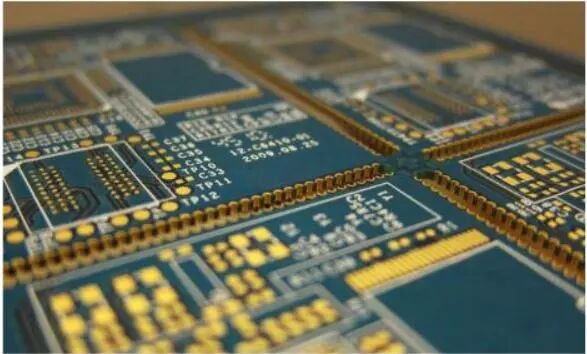
A PCB (Printed Circuit Board) is a board made of insulating material, designed to create conductive patterns for electrical connections between components. The conductive patterns formed on the insulating substrate are referred to as printed circuits. Thus, the finished board is called a printed circuit board, also known as a printed board or PCB. PCBs are essential in almost all electronic devices, from small electronic watches and calculators to computers, communication devices, and military weapon systems. Whenever integrated circuits and other electronic components are present, PCBs are used for electrical interconnections.
The PCB plating process can be categorized as follows:
-
Acid Bright Copper Plating
-
Nickel/Gold Plating
-
Tin Plating
Process Flow:Acid immersion → Full board copper plating → Pattern transfer → Acid degreasing → Secondary countercurrent rinsing → Micro-etching → Secondary → Acid immersion → Tin plating → Secondary countercurrent rinsingCountercurrent rinsing → Acid immersion → Pattern copper plating → Secondary countercurrent rinsing → Nickel plating → Secondary rinsing → Acid immersion → Gold plating → Recovery → 2-3 times pure water rinsing → Drying
1. Acid Immersion
① Purpose: To remove oxides from the board surface and activate it. The concentration is generally around 5%, sometimes maintained at about 10%, mainly to prevent moisture from causing instability in the sulfuric acid content of the bath;
② The acid immersion time should not be too long to prevent oxidation of the board surface. If the acid solution becomes cloudy or the copper content is too high after a period of use, it should be replaced promptly to prevent contamination of the copper plating tank and the board surface;
③ C.P grade sulfuric acid should be used here;
2. Full Board Copper Plating: Also known as primary copper plating, Panel-plating
① Purpose: To protect the thin layer of chemical copper just deposited, preventing it from being corroded by acid after oxidation, and to enhance it to a certain extent through electroplating.
② Related process parameters for full board copper plating: The main components of the bath solution are copper sulfate and sulfuric acid, using a high acid to low copper formula to ensure uniform thickness distribution on the board surface and deep plating capability for small holes; sulfuric acid content is generally around 180 grams/liter, with a maximum of 240 grams/liter; copper sulfate content is typically around 75 grams/liter, and a small amount of chloride ions is added to the bath solution to act as a brightener and copper brightening agent; the addition of the copper brightening agent is generally 3-5ml/L, and it is supplemented according to the actual production board effect; the current calculation for full board plating is generally based on 2A/dm² multiplied by the area of the board that can be plated, for full board plating, it is the board length in dm × board width in dm × 2 × 2A/dm²; the copper tank temperature is maintained at room temperature, generally not exceeding 32 degrees, preferably controlled around 22 degrees, so in summer, due to high temperatures, it is recommended to install a cooling temperature control system for the copper tank;
③ Process maintenance: Daily supplementation of the copper brightening agent based on ampere-hours, adding 100-150ml/KAH; checking if the filtration pump is working properly and if there are any air leaks; every 2-3 hours, use a clean damp cloth to wipe the cathode conductive rod; weekly analysis of copper sulfate (once a week), sulfuric acid (once a week), and chloride ion (twice a week) content in the copper tank, and adjust the brightener content through Hall cell tests, supplementing relevant raw materials in a timely manner; weekly cleaning of the anode conductive rod, electrical connections at both ends of the tank, and timely replenishment of anode copper balls in the titanium basket, electrolyzing at low current 0.2-0.5ASD for 6-8 hours; every six months, depending on the contamination status of the bath solution, determine if a major treatment (activated carbon powder) is needed; every two weeks, replace the filter element of the filtration pump;
④ Major treatment procedure: A. Remove the anode, clean the surface of the anode membrane, then place it in a barrel for packaging copper anodes, using a micro-etching agent to roughen the copper surface to an even pink color, rinse with water, and place it in the titanium basket for use in the acid tank. B. Soak the anode titanium basket and anode bag in 10% alkaline solution for 6-8 hours, rinse with water, then soak in 5% dilute sulfuric acid, rinse with water again for use; C. Transfer the bath solution to a standby tank, add 1-3ml/L of 30% hydrogen peroxide, start heating, and when the temperature reaches around 65 degrees, turn on air stirring, maintaining temperature and air stirring for 2-4 hours; D. Turn off air stirring, slowly dissolve activated carbon powder into the bath solution at 3-5 grams/liter, and after complete dissolution, turn on air stirring, maintaining temperature for 2-4 hours; E. Turn off air stirring, heat, and allow the activated carbon powder to settle to the bottom of the tank; F. When the temperature drops to around 40 degrees, filter the bath solution through a 10um PP filter with filter aid powder into the clean working tank, turn on air stirring, place the anode, hang the electroplating board, and electrolyze at low current density of 0.2-0.5ASD for 6-8 hours; G. After testing and analysis, adjust the sulfuric acid, copper sulfate, and chloride ion content in the tank to the normal operating range; supplement brighteners based on Hall cell test results; H. Once the electroplating board surface color is uniform, stop electrolysis, and then perform electrolysis for film formation treatment at a current density of 1-1.5ASD for 1-2 hours until a uniform, dense, well-adhered black phosphorous film forms on the anode; I. Test plating OK, then proceed;
⑤ The anode copper balls contain 0.3-0.6% phosphorus, primarily to reduce the anode dissolution efficiency and minimize copper powder generation;
⑥ When supplementing chemicals, if the addition is large, such as copper sulfate or sulfuric acid; after adding, a low current electrolysis should be performed; when adding sulfuric acid in large quantities (over 10 liters), it should be added slowly in several batches; otherwise, it may cause the bath solution temperature to rise too high, accelerating the decomposition of the brightener and contaminating the bath solution;
⑦ Special attention should be paid to the addition of chloride ions, as their content is particularly low (30-90ppm); when adding, it must be measured accurately using a graduated cylinder or measuring cup; 1ml of hydrochloric acid contains about 385ppm of chloride ions;
⑧ Chemical addition calculation formulas:
Copper sulfate (unit: kg) = (75-X) × tank volume (liters) / 1000Sulfuric acid (unit: liters) = (10%-X) g/L × tank volume (liters)or (unit: liters) = (180-X) g/L × tank volume (liters) / 1840Hydrochloric acid (unit: ml) = (60-X) ppm × tank volume (liters) / 3853. Acid Degreasing
① Purpose: To remove oxides, ink residues, and residual glue from the copper surface of the circuit, ensuring the bonding strength between primary copper and pattern electroplated copper or nickel.
② Remember to use an acidic degreaser here; why not use an alkaline degreaser, even though alkaline degreasers are more effective? This is mainly because the pattern ink is not resistant to alkali and will damage the pattern circuit, so only acidic degreasers can be used before pattern electroplating.
③ During production, only the concentration and time of the degreaser need to be controlled, with a concentration of around 10% and a time of about 6 minutes; slightly longer times will not have adverse effects; the bath solution replacement is also based on 15 square meters/liter of working solution, with supplementation at 100 square meters 0.5-0.8L;
4. Micro-Etching
① Purpose: To clean and roughen the copper surface of the circuit, ensuring the bonding strength between pattern electroplated copper and primary copper.
② Micro-etching agents often use sodium persulfate, which has a stable and uniform roughening rate and good rinsability; the concentration of sodium persulfate is generally controlled at around 60 grams/liter, with a time control of about 20 seconds, and the chemical addition is 3-4 kg per 100 square meters; copper content should be controlled below 20 grams/liter; other maintenance and tank replacement follow the same procedures as copper micro-etching.
5. Acid Immersion① Purpose:
To remove oxides from the board surface and activate it. The concentration is generally around 5%, sometimes maintained at about 10%, mainly to prevent moisture from causing instability in the sulfuric acid content of the bath;
② The acid immersion time should not be too long to prevent oxidation of the board surface. If the acid solution becomes cloudy or the copper content is too high after a period of use, it should be replaced promptly to prevent contamination of the copper plating tank and the board surface;
③ C.P grade sulfuric acid should be used here;
Common Data in PCB Plating
1. Electrochemical Equivalent of Some Elements
Element Name Atomic Weight Chemical Equivalent Valence Electrochemical Equivalent (g/AH)
Silver Ag 107.868 107.868 1 4.0247
Gold Au 196.9665 196.9665 1 17.357
Copper Cu 63.546 31.773 2 1.185
Nickel Ni 58.702 29.352 2 3.8654
Tin Sn 118.695 a 9.345 2 2.1422
2. Standard Electrode Potentials of Some Metals in Aqueous Solution Relative to SHE
Ag/Ag+ 0.799
Cu/Cu2+ 0.345
Ni/Ni2+ -0.250
Sn/Sn2+ -0.140
Au/Au+ 1.70
3. Current Efficiency of Certain Plating Solutions:
Nickel Plating 95-98%
Sulfate Copper Plating 95-100%
Tin-Lead Alloy Plating 100%
Palladium Plating 90-95%
Cyanide Gold Plating 60-80%
4. pH Values for Metal Hydroxide Precipitation
Hydroxide Begins to Precipitate Completely Precipitate Begins to Dissolve Completely Dissolved Precipitate
Ionic Starting Concentration Residual Ionic Concentration < 10-5 mol/L
Stannic Hydroxide 0 0.5 mol/L 11 3 15
Stannous Hydroxide 0 0.9 2.1 4.7 10 13.5
Ferric Hydroxide 1.5 2.3 4.1 4
Silver Oxide 6.2 8.2 11 12.7
Ferrous Hydroxide 6.5 7.5 9.7 13.5
Cobalt Hydroxide 6.6 7.6 9.2 14.1
Nickel Hydroxide 6.7 7.7 10.4
5. Quality of 1um Coating
Copper 0.089g/dm2
Gold 0.194g/dm2
Silver 0.105g/dm2
Tin 0.073g/dm2
Nickel 0.089g/dm2
Images and text are sourced from the internet. If there is any infringement, please contact us for removal.