Introduction: DLP Headlights,
Not Just “Brighter” Lights
In recent years, with the rapid development of intelligent driving (ADAS) systems, vehicle lighting systems are evolving from traditional functional lighting to an integrated direction of “perception–interaction“. In this context, Digital Light Processing (DLP) technology has gradually become an important component of high-end vehicle ADAS systems due to its advantages of high brightness, strong programmability, and fast dynamic response.
However,DLP headlights are not simply a replacement for halogen or LED lights; their deeper value lies in——serving as a visual extension of the ADAS system, participating in the entire process of environmental perception, target recognition, and human-machine interaction..
This article will analyze the practical application scenarios, engineering implementation paths, and potential challenges of DLP headlights in ADAS, providing technical references for automotive electronics engineers.
1. Basic Principles of DLP Headlights:
How Does Digital Projection “Illuminate” Intelligent Driving?
DLP technology was proposed by Texas Instruments (TI) in 1987, and its core is to use a Micro Mirror Array to modulate laser or LED light sources point by point, projecting images through reflection.
Compared to traditional headlights,DLP has the following key advantages:
|
Features |
Traditional Headlights |
DLP Headlights |
|
Light Source Type |
Halogen/LED |
Laser or High Brightness LED |
|
Image Control |
Fixed Patterns |
Programmable, Dynamic Images (e.g., arrows, text) |
|
Display Accuracy |
Low Resolution |
High Resolution |
|
Response Speed |
Seconds |
Microseconds, Supports Real-Time Changes |
|
Energy Consumption and Heat Dissipation |
Relatively High |
Optimizable, Especially in Dynamic Scenes |
DLP headlights typically include:
-
Light Source Module (e.g., Laser Diode);
-
DLP Chip (Micro Mirror Array);
-
Projection Optical System (Lenses, Mirrors);
-
Signal Control Unit (DMD Controller).
The core advantage lies in:the ability to dynamically generate complex images, providing a programmable visual interaction channel for the cockpit and intelligent driving system, realizing the function extension of“headlights as information screens”..
2. Four Typical Application Scenarios of DLP Headlights in ADAS
Scenario 1: Lane Keeping and Steering Assistance Prompt — Visualization of “Virtual Lane Lines”
In L2 and above driving assistance systems, vehicles need to identify road boundaries in real-time and perform path planning. Traditional solutions rely on cameras+millimeter-wave radar, but are sensitive to ambient light.
Scan the code, send the secret code: 0923, join the TI automotive technology exchange group(Engineers from VCU, ADAS, cockpit, instrument, headlights, chassis, motor control, and other automotive fields have joined)

DLP headlights can project as“virtual lane lines” onto the road, helping drivers intuitively perceive lane positions. For example:
-
When the system detects that the vehicle is deviating from the lane, it can project a dynamic arrow on the ground;
-
The direction of the arrow is consistent with the actual driving trajectory, enhancing the driver’s judgment of the path.
✅ Technical Value:
-
Enhances clarity of human-machine interaction;
-
Reduces cognitive load on the driver;
-
Performs better in low visibility conditions such as at night or in rain and fog.
⚠️ Engineering Challenges:
-
The projected image must be highly aligned with the camera perception results to avoid“phantom prompts” causing misjudgment;
-
Need to solve the interference problem between projection light intensity and real road reflection.
-
Must be deeply coupled with the ADAS sensor data stream.
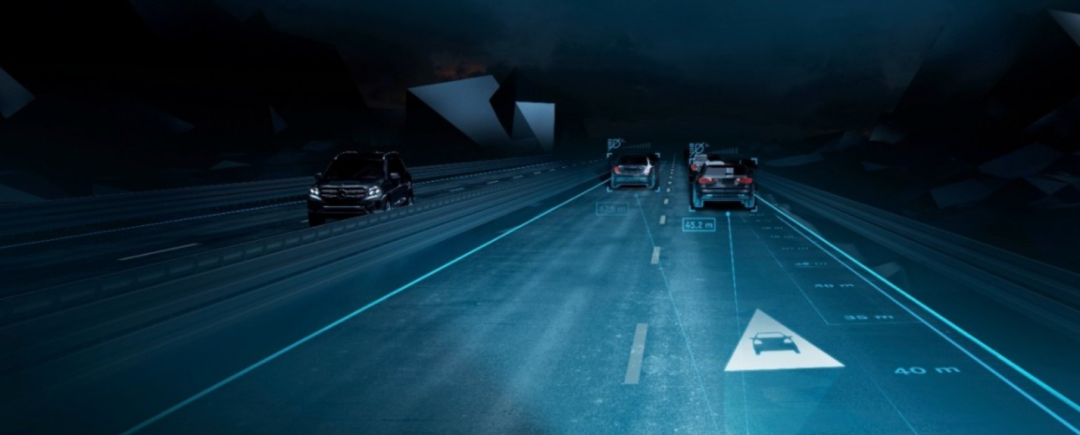
Figure 1: ‘Virtual Lane Lines’
Scenario 2: Blind Spot Warning — “Dynamic Blind Spot Arrows” Enhance Safety Boundaries
In lane change or overtaking scenarios, traditional rearview mirrors have issues such as information lag and limited angles.DLP headlights can project“blind spot warning arrows” to clearly mark potential risk areas beside the vehicle.
For example:
-
When the system detects a pedestrian or obstacle on the right side, it projects red warning arrows on both sides of the rear of the vehicle;
-
The direction of the arrows is consistent with the actual driving path, guiding the driver to react in advance.
✅ Technical Value:
-
Enhances perception capability in unstructured environments;
-
Provides a “visual extension” for the ADAS system, compensating for sensor blind spots.
⚠️ Engineering Challenges:
-
The projection area must match the real road boundaries, otherwise it may mislead the driver;
-
Need to dynamically calibrate with radar/camera data.
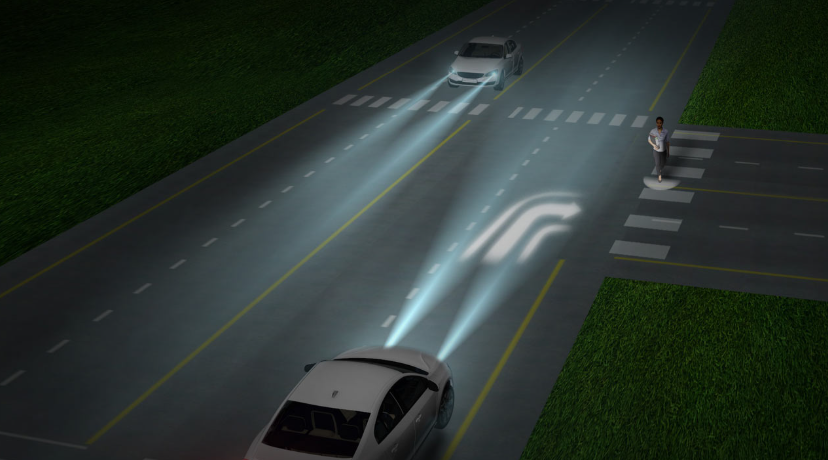
Figure 2: ‘Blind Spot Warning Arrows’
Scenario 3: Traffic Sign Recognition Assistance — “Virtual Traffic Symbols” Prompt
Some urban roads have issues with unclear, aging, or obstructed signage.DLP headlights can project standard traffic signs (e.g.,“Speed Limit 60,“No Left Turn“) in front of the vehicle as temporary alternative information.
For example:
-
When the system identifies a construction area ahead, it projects a“Construction Warning Sign” onto the road;
-
The content can be dynamically updated via the vehicle’s OS, allowing for personalized prompts.
✅ Technical Value:
-
Enhances readability and safety in complex road conditions;
-
Reduces the risk of misjudgment of environmental information by the driver.
⚠️ Engineering Challenges:
-
Must ensure that the projected content complies with traffic regulation standards;
-
Avoid misleading or causing legal disputes (e.g.,“false warnings”).
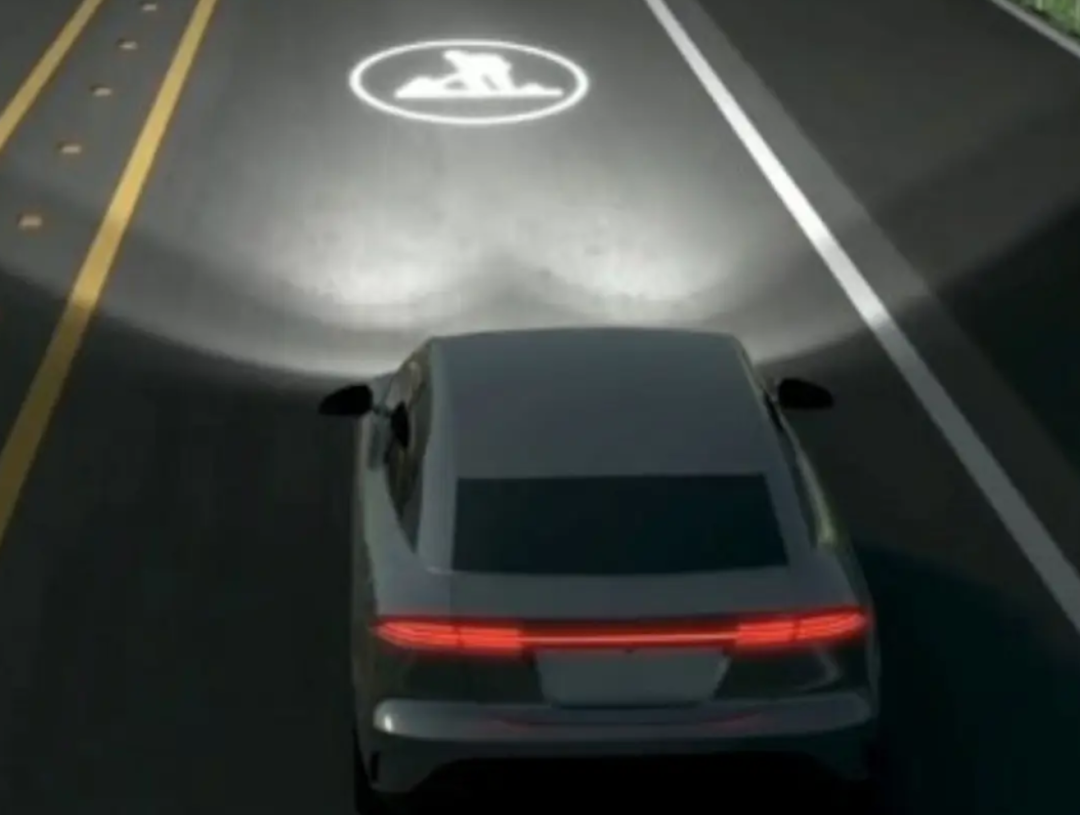
Figure 3: ‘Virtual Construction Warning’
Scenario 4: Enhanced Human-Machine Interaction — “Dynamic Prompts” and “Status Feedback”
DLP headlights can also be used to display the vehicle’s operating status, for example:
-
When the system enters autonomous driving mode, it projects the text“Auto Driving Mode”;
-
During emergency braking, it projects a red warning light strip or wavy pattern.
This type of application essentially transforms the internal logic of the ADAS system into a perceivable visual language,enhancing human-machine collaboration efficiency.
✅ Technical Value:
-
Enhances the driver’s awareness of the system status;
-
Supports the concept of “transparent driving”, establishing trust.
⚠️ Engineering Challenges:
-
Prompt content must be concise, clear, and in line with user habits;
-
Must avoid excessive interference or causing visual fatigue.
3. Link Coordination of DLP Headlights and ADAS Systems
To achieve the above functions,DLP headlights must be deeply embedded in the ADAS system architecture. The workflow can be summarized in the following four steps:
Step 1: Sensor Input
-
Cameras, millimeter-wave radar, laser radar, and other sensors collect environmental data in real-time,converting it into coordinate point clouds;
-
The system identifies road boundaries, lane lines, obstacles, traffic signs, etc.
Example:
-
The camera detects a construction area ahead, triggering the“Construction Warning” logic.
Step 2: Decision Layer Judgment
-
The ADAS system plans paths and makes behavioral decisions based on perception results,generating obstacle trajectory predictions;
-
Decides whether to activate the DLP headlights prompt function.
Example:
-
The system determines that “there is a construction area” and generates the “virtual warning sign” command.
Step 3: Control Execution
-
DLP headlights receive control signals from the ADAS system (such as image content, position coordinates, color intensity);
-
The control unit (MCU/DMD) converts the instructions into actions of the micro mirror array of the DLP chip;
-
The projection system completes image generation and projection.
Key Points:
-
Timing response must be within milliseconds to match the real-time requirements of the ADAS system;
-
Image content must undergo format conversion (e.g., from RGB to grayscale/contrast optimization).
Step 4: Feedback Loop Verification
-
Did the driver correctly understand the prompt information?
-
Does the system need to adjust based on the driver’s response?
Suggestions:
-
Introduce “human factors engineering” assessments to test the impact of different prompting methods on driving behavior;
-
Support configurable modes (e.g., off, low-frequency flashing, etc.).
4. Core Challenges and Response Strategies of DLP Headlights in ADAS
|
Challenge |
Details |
Response Plan |
|
1. Interference of Projected Images with Real Environment |
The virtual images projected by DLP may be misjudged as real road elements, causing misidentification. |
Increase image edge blur processing, set“projection area boundaries”; combine with radar data for spatial correction. |
|
2. Delay Issues |
There is a millisecond-level delay from perception to prompting, affecting real-time performance. |
Use dedicated DSP chips for localized control to reduce communication overhead. |
|
3. Energy Consumption and Heat Dissipation |
High brightness DLP systems consume a lot of power and can heat up during prolonged operation. |
Use low-power laser sources and dynamic dimming algorithms (e.g., PWM adjustment). |
|
4. Regulatory Compliance Risks |
The projected content may violate traffic regulations or lead to legal disputes. |
All prompt content must be filed with traffic management authorities; only enabled in specific scenarios. |
|
5. Cost and Mass Production Difficulty |
DLP headlights are significantly more expensive than traditional headlights, and their yield is low. |
Promote modular design, prioritizing application in high-end models or specific functional scenarios. |
5. Future Evolution Directions of DLP Headlights
As ADAS technology develops towards L3+, DLP headlights will gradually upgrade from “assistance prompts” to “active perception tools”.
Direction 1: Fusion with Laser Radar/Cameras for “Bidirectional Interaction”
-
DLP headlights can serve as“visual sensors”, obtaining environmental information in reverse by projecting specific patterns (e.g., QR codes, Gray codes);
-
For example: When the vehicle is parked, it projects a pattern that can be recognized by cameras for positioning or navigation.
Direction 2: Support for Dynamic Map Updates
-
DLP headlights can act as“temporary road signs”, providing real-time guidance in scenarios such as road construction or temporary controls;
-
Combining high-precision maps with cloud platforms to achieve“plug-and-play” intelligent prompts.
Direction 3: Personalized Human-Machine Interaction (Personalized HMI)
-
Set prompt styles based on driver preferences (e.g., font size, color, animation rhythm);
-
Support multilingual and multi-scenario customization to enhance user experience.
6. Practical Suggestions for Automotive Engineers
1. Clarify Usage Boundaries: DLP headlights should not replace core perception systems (such as radar), but should serve as“enhanced visual tools”, used for auxiliary information transmission.
2. Prioritize Safety and Compliance: All prompt content must undergo rigorous testing to avoid misleading or causing accidents.
3. Establish Standardized Interface Protocols: It is recommended to define communication standards between DLP headlights and ADAS systems (such as CAN FD, FlexRay, Ethernet), introducing edge computing modules to complete real-time response control of DLP and ADAS, avoiding reliance on cloud processing, ensuring efficient collaboration between modules.
4. Conduct Human Factors Engineering Experiments: Validate the impact of different prompting methods on driver behavior through empirical testing to optimize interaction design.
5. Focus on Cost Control and Mass Production Feasibility: In the initial stage, adopt a“modular functionality” strategy, exploring shared platforms with rearview mirrors and taillights to reduceBOM costs, gradually promoting to all models.
Conclusion: DLP Headlights are an Extension of Technology,
and a “Visual Language” of Intelligent Driving
In today’s increasingly complex ADAS systems, vehicle lighting is no longer a simple tool for“illuminating the road”. DLP headlights, through dynamic projection, programmable images, and real-time response capabilities, are becoming a bridge connecting drivers with autonomous driving systems.
They not only enhance the clarity and safety of human-machine interaction but also signify that automotive electronic systems are transitioning from“passive execution” to“active expression”, demonstrating great value in improving environmental recognition accuracy, enhancing driving safety, and optimizing human-machine interaction experience through deep collaboration with ADAS systems.
For engineers, understanding the technical essence and application scenarios of DLP headlights is not only mastering a new technology but also grasping one of the core trends of future intelligent mobility.
TI Automotive Technology Exchange Group is open for business Engineers from VCU, ADAS, cockpit, instrument, headlights, chassis, motor control, and other automotive fields have joined. Scan the code to add EEWorld administrators, note “0932“, and join the group for communication!
· END ·
Follow EEWorld's subscription account: "Automotive Development Circle"
Reply "DS" to receive the complete information of "DeepSeek: From Beginner to Expert"

Scan the code to add the assistant and reply “Join Group”
to exchange experiences face-to-face with electronic engineers