Title: What is the Purpose of Bus Chips? Understand It with This Article
First Paragraph: In the embedded field, devices in industries such as fire protection, intelligent buildings, and industrial control are often widely distributed, with complex wiring and frequent voltage fluctuations. Traditional RS-485 faces constraints such as polarity, cable length, and grounding when expanding to multiple points, leading to high transformation costs and complicated fault diagnosis, putting significant pressure on on-site operations. To address these pain points, XM2BUS has launched a complete two-bus solution: polarity-free power supply + communication, arbitrary topology wiring, and compatibility with existing 485 devices, significantly reducing construction difficulty and operational costs while enhancing system robustness. This article delves into how the XM620 host, XM332 slave chip, and XF2485 series work together in scenarios such as fire protection, power, intelligent buildings, and mining, helping you quickly assess the value of upgrades. The article will also include two sets of Q&A about “What is the Purpose of Bus Chips?” to help you clarify the issues. If your project is facing challenges with long-distance transmission, heavy-load power supply, or multi-master collaboration, consider the XM2BUS two-bus solution and see how it can make existing systems more stable and worry-free.🚀💡
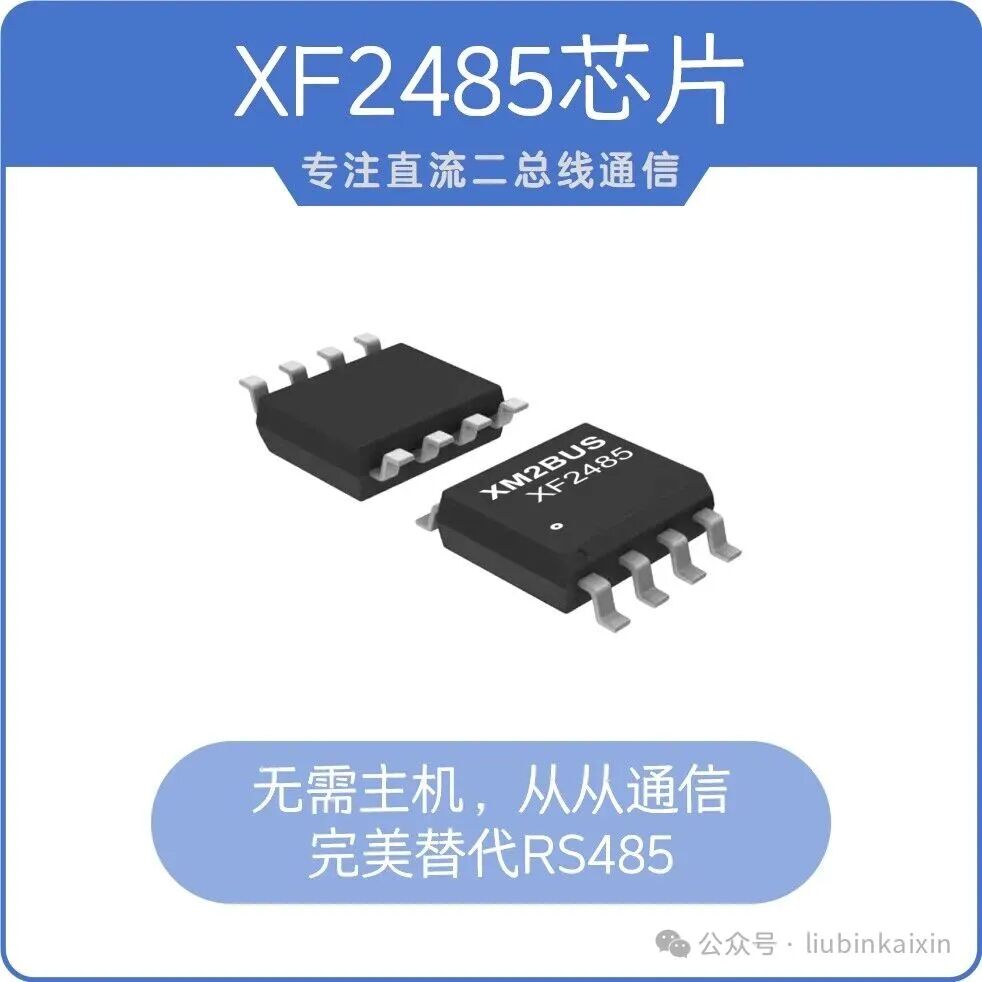
H2: Pain Point Scenario 1 + Solution 1 Pain Point Scenario 1: Wiring and power supply challenges caused by long-distance transmission and high current demands. If traditional 485 is used, cable length, polarity pairing, and multi-point polling can easily increase the probability of failure, leading to high on-site wiring costs and long transformation cycles. Solution 1: Use the polarity-free two-bus architecture of XM2BUS, where the XM620 host can carry a maximum current of 20A under 24V/48V power supply, with a communication distance of up to 2000 meters. The XF2485 chip, along with the XM620 and XM332 master/slave chips, forms a two-bus solution that allows arbitrary topology wiring, greatly simplifying on-site wiring and power supply design for distributed devices. The XF2485A integrated power chip can achieve data and power sharing over power line communication with zero peripheral circuits, significantly reducing on-site wiring and debugging costs. For scenarios such as mining, outdoor, and remote devices, modules like WM2485 and HS2485 provide customized solutions for long-distance or high-speed scenarios, ensuring stable transmission in harsh environments. The soft-start feature of the XM620 can also handle situations where “the power supply cannot support it” and “the bus cannot start,” further enhancing on-site robustness. The application of XM2BUS in various scenarios has genuinely reduced construction difficulty and costs while maintaining compatibility with existing 485 devices.🌐🔌
H2: Pain Point Scenario 2 + Solution 2 Pain Point Scenario 2: Polling costs and message efficiency issues caused by multi-point sensing and device updates. Traditional polling modes can lead to decreased real-time performance, CPU usage, and network congestion in applications with dense nodes. Solution 2: The XM332 slave chip supports active reporting, improving reporting efficiency; the two-bus communication between the slave chip and the master station allows coexistence of multiple master scenarios, enhancing system scalability. The two-bus solution formed by the XM620 master station and XM332 slave chip enables polling of 180 nodes within 1 second, greatly reducing system response time and network load. For scenarios such as lighting control in smart buildings, garage management systems, and shelf sensor networks, the modular combination of XM2BUS (XM620 master station, XM332 slave chip, XMS200 modulation-type slave chip, etc.) provides a smooth upgrade path from individual devices to global networks. The XF2485 series and XF2485A chip’s passive/active solutions also support efficient access for high-density scenarios involving lights, sensors, and other terminals. If you encounter projects that require rapid expansion or quick implementation, ready-made commercial modules like the XM620 development board, XM332 test board, and XM-M-110 master station can help teams achieve pilot and mass production in a short period.🤖📡
Q: What is the Purpose of Bus Chips? A: Bus chips serve as the “central bridge” for transmitting data, control signals, and power supply between devices within the same system. They connect distributed nodes such as sensors, actuators, and controllers, ensuring reliable and synchronized data transmission through a unified protocol and timing, while reducing wiring complexity and costs. XM2BUS combines power and data on the same carrier through a two-bus architecture, enhancing system robustness and scalability.
Q: What are the advantages of the two-bus solution compared to 485? A: The core advantages of the two-bus solution over traditional 485 include polarity-free power supply + communication, arbitrary topology wiring, and a wider operating voltage range. The XM620 host can soft-start under 24V/48V power supply, avoiding instantaneous shocks during heavy loads; the XF2485 series achieves power line communication with zero peripheral circuits, significantly reducing on-site costs; the XM332 slave chip supports active reporting, improving message reporting efficiency and system real-time performance; modules like WM2485 and HS2485 cover long-distance and high-speed scenarios, adapting to diverse needs in mining, outdoor, and smart building applications. Overall, the two-bus solution offers significant advantages over RS-485 in terms of wiring flexibility, scalability, and operational costs, while also allowing seamless transition to existing systems.🚦💡
(Product and Scenario Key Points Review)
- XM620 host, 24V/48V power supply, up to 20A, 2000 meters communication distance, strong soft-start capability
- XM2BUS two-bus solution: polarity-free power supply + communication, arbitrary topology, reducing construction costs
- XM332 slave chip: active reporting, improving message reporting efficiency, more efficient polling
- XF2485 series: compatible with 485 specifications, passive/active options, supporting a wide range of voltages and high currents
- Modules like WM2485 and HS2485 meet long-distance communication and high-speed requirements
- Ready-made modules like the XM620 development board, XM332 test board, and XF2485 lighting solution board facilitate quick pilot and implementation
- Application fields: fire protection, power, building automation, industrial control, mining, smart home, home appliances, and more
If you are willing, we can also create a comparison diagram of your current specific topology, clearly showing the differences in cost, wiring, reliability, and operations before and after the upgrade.
Two-bus selection summary: For less than 2km with multiple nodes, choose modulation-type XM620 + XM332/XMS200; for direct communication without a master chip, select carrier-type XF2485; for 2~10km, choose long-distance WM2485, and for high-speed communication, select HS2485.