The Liquid Crystal Module, abbreviated as LCM, is the core component of modern electronic display devices. The image display functions of smartphones, computer monitors, televisions, smartwatches, industrial control screens, and more rely on it. In simple terms, the liquid crystal module is a functional module that integrates a liquid crystal panel (LCD Panel) with driving circuits, backlight systems, structural components, etc. It receives video signals from the mainboard (or other signal sources) and converts them into visible images.
|
1. Basic Structure and Working Principle of Liquid Crystal Module |
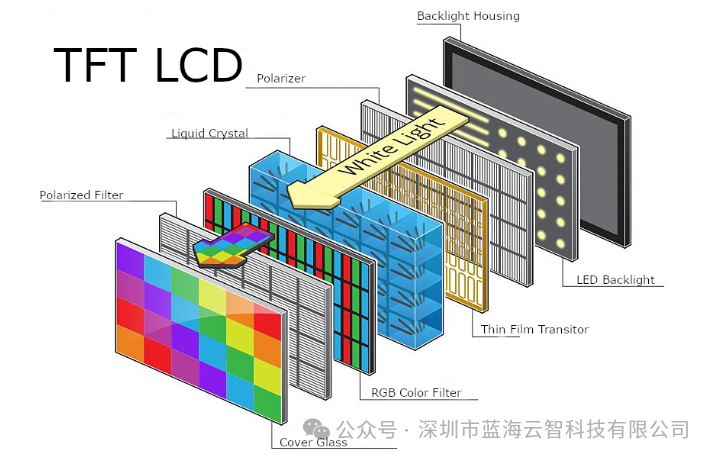
A typical liquid crystal module mainly consists of the following parts:
1. Liquid Crystal Panel (LCD Panel): This is the “heart” of the module. Its core consists of two parallel glass substrates, encapsulating liquid crystal molecules in between. By applying different voltages, the arrangement of the liquid crystal molecules can be altered, thereby controlling the amount of light passing through from the backlight source.
2. Backlight Unit: Liquid crystal molecules do not emit light by themselves and require an additional light source for illumination. The backlight unit typically consists of LED light strips, light guide plates, diffusion sheets, and brightness enhancement films, responsible for providing uniform and high-brightness background light.
3. Driving Circuit:
* Driving IC: Usually bonded to the glass substrate in the form of COF or COG, responsible for receiving signals and precisely controlling the voltage of each pixel.
* PCB: Hosts the timing controller (TCON), power management chips, etc., serving as the hub for signal and power distribution.
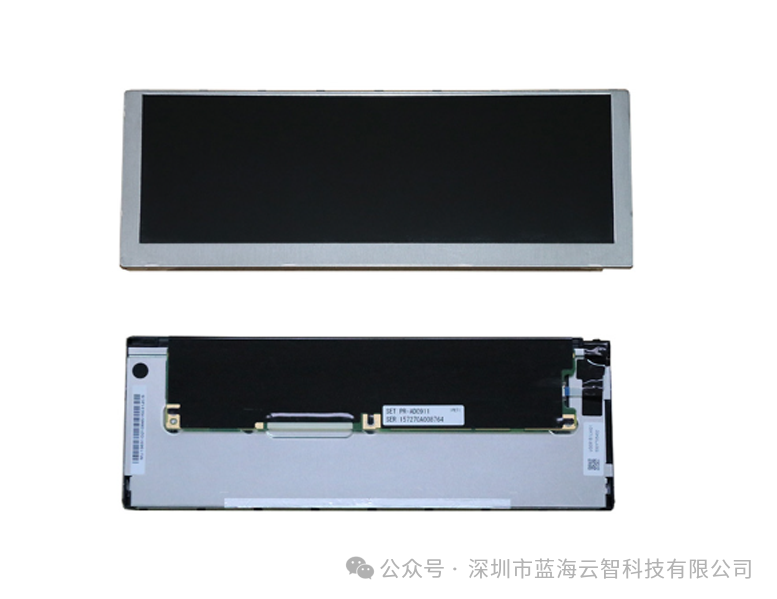
4. Connection Interfaces: Common interfaces such as LVDS, eDP, MIPI, etc., are used to connect to the mainboard, receiving video data and commands.
5. Metal or Plastic Frame (Bezel & Chassis): Provides mechanical support and protection for all precision components, ensuring structural stability and sealing.
The working principle can be summarized as follows: the driving circuit generates precise control voltages based on the received image signals, applying them to each pixel electrode of the liquid crystal panel. The voltage changes cause the liquid crystal molecules to tilt, altering their light transmission properties. The white light from the backlight unit passes through these precisely controlled “gates” (pixels) and then through the top layer of color filters, ultimately mixing into the vibrant color images we see.
|
2. Main Technical Types |
Based on different display technologies, liquid crystal modules can be mainly classified into:
* TN (Twisted Nematic): Low cost, fast response, but narrow viewing angles and poor color reproduction, commonly used in low-end displays in the early days.
* VA (Vertical Alignment): Higher contrast and better color performance than TN, but slightly slower response time, often used in mid to high-end televisions.
* IPS (In-Plane Switching): Offers excellent viewing angles and accurate color reproduction, currently the mainstream technology for smartphones, high-end monitors, and televisions. Its derivative technologies (such as AHVA, PLS) further enhance performance.
Additionally, OLED (Organic Light Emitting Diode) display modules have become an important development direction in the high-end market due to their self-emitting, infinite contrast, and flexible bending characteristics, but their structure is fundamentally different from LCM.
|
3. Key Performance Parameters |
To evaluate the quality of a liquid crystal module, the following parameters are mainly considered:
* Resolution: The number of pixels on the screen (e.g., 1920×1080), determining the detail level of the image.
* Brightness: Measured in nits, the higher the value, the clearer it is under strong light.
* Contrast: The ratio between the brightest and darkest points, affecting the depth and transparency of the image.
* Color Gamut: The range of colors displayed, such as sRGB, DCI-P3; the higher the value, the richer and more vibrant the colors.
* Refresh Rate: The number of times the screen refreshes per second (Hz); a higher refresh rate provides a smoother visual experience, especially in games and videos.
* Response Time: The speed at which pixel colors change (ms); the shorter the time, the less motion blur in dynamic images.
|
4. Application Fields |
Liquid crystal modules are ubiquitous in applications, covering consumer electronics (phones, tablets, televisions), industrial control (HMI human-machine interfaces, medical devices), automotive displays (central control screens, dashboards), public information displays (advertising machines, information kiosks), and almost all fields requiring human-machine interaction visual feedback.
In summary, the liquid crystal module is a crystallization of optics, semiconductors, materials science, and electronic engineering technology, serving as a bridge to convert digital signals into visual information. Despite the continuous emergence of new display technologies, due to its mature technology, stable performance, and significant cost advantages, the liquid crystal module will remain the absolute mainstay in the display field for the foreseeable future.