Be a health communicator,walking together, growing together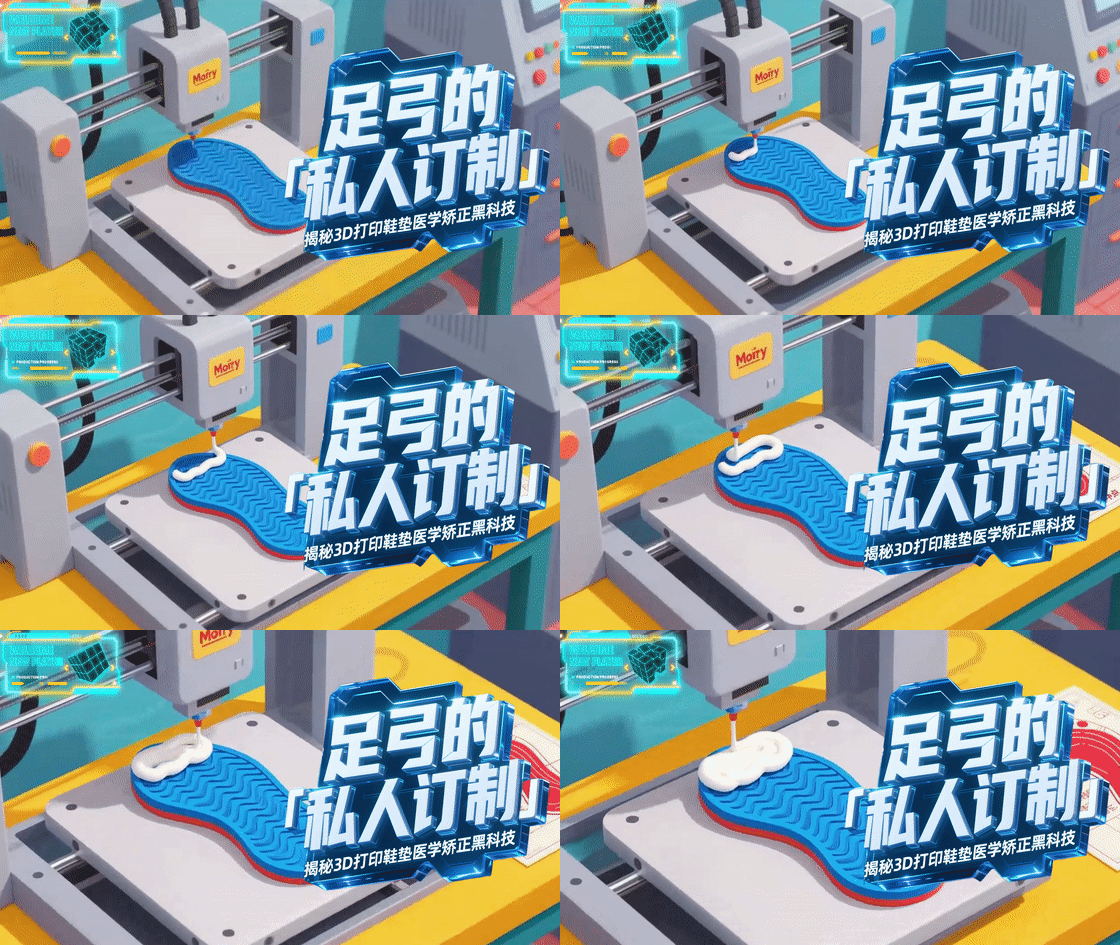
At the Tokyo Olympic Games, German sprinter Aleja Schmidt’s running shoes contained a hidden secret. Inside those seemingly ordinary sneakers were custom orthotic insoles made using 3D printing technology, which helped her set a personal best by a mere 0.01 seconds. This story unveils the silent revolution occurring in the field of foot orthotics—3D printed orthotic insoles are rewriting the battle against foot diseases with disruptive innovation.
01
Foot Health: The Overlooked Foundation of the Human Body
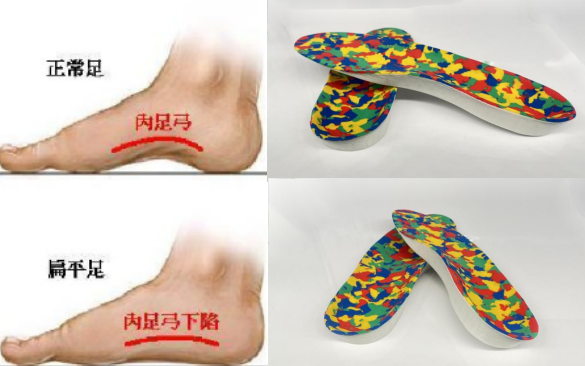
In daily life, have you ever experienced foot soreness or fatigue after long periods of walking or standing? Or noticed that your or your family members’ walking posture seems off, but you don’t know how to improve it? In fact, these issues may be closely related to our foot health.
The human foot is an engineering marvel in the history of evolution, composed of 26 bones, 33 joints, and over 100 ligaments, bearing impacts equivalent to hundreds of tons daily. According to statistics from the American Podiatric Medical Association, approximately 75% of adults worldwide experience varying degrees of foot problems, with 30% developing into pathological conditions requiring medical intervention. In recent years, a rehabilitative orthotic device—3D printed insoles—has gradually come into the public eye, bringing new hope for addressing these foot issues.
Traditional orthotic insoles often adopt a “one-size-fits-all” approach, modifying EVA foam or thermoplastic materials to fit the arch of the foot. This standardized production model has significant limitations: research from Boston University indicates that the success rate of commercially available orthotic insoles is less than 45%, and long-term use may lead to compensatory strain on the plantar fascia. More concerning is that the American Academy of Orthopaedic Surgeons found that improperly used orthotic devices can increase knee joint load by 22% and lumbar spine pressure by 17%, making precise positioning of rehabilitative orthotic devices a major trend in healthcare.
02
3D Reconstruction: A Technological Leap from Scanning to Shaping
The manufacturing of modern 3D printed insoles begins with millimeter-level precision foot scanning. The dynamic pressure distribution scanning system developed by the Fraunhofer Institute in Germany can capture 3000 data points per second during movement, constructing a biomechanical model that includes arch height, pressure distribution, and gait characteristics.The honeycomb shock-absorbing matrix in the forefoot area, the gradient support framework at the arch, and the energy-return dome at the heel are all optimized through finite element analysis. This “digital twin” technology perfectly integrates foot morphological data with kinematic parameters.
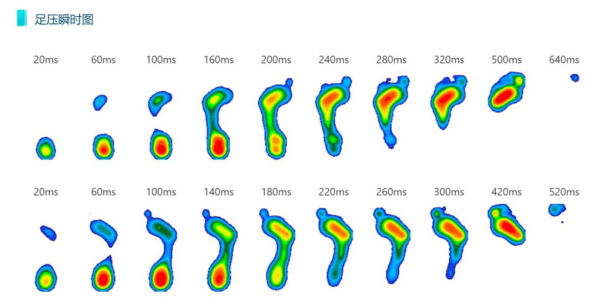
Dynamic foot pressure illustration
The algorithm developed by Delft University of Technology in the Netherlands can simulate 100,000 gait cycles, ensuring the biomechanical rationality of the design scheme.
The production process employsSelective Laser Sintering (SLS) technology, with a layer thickness precision of 0.1 millimeters ensuring accurate reproduction of microstructures. Medical-grade TPU materials are ISO 13485 certified, with an energy return rate of up to 68%, far exceeding the 42% of traditional EVA materials. The gradient hardness printing technology developed by Harvard University’s materials lab allows for a hardness difference of up to 30 Shore A across different areas of a single insole.
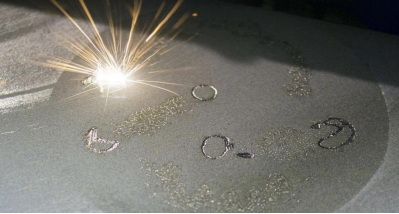
Laser sintering printer
Clinical studies show that 3D printed insoles achieve a pain relief rate of 92% for patients with flat feet, with gait symmetry improved by 47%. Notably, during a 12-month follow-up, the incidence of knee pain decreased by 63%, and the lumbar curvature angle improved by 29%. These data confirm that 3D printed orthotic insoles also provide systemic benefits for biomechanical correction.
03
Precise Positioning: A Therapeutic Revolution Driven by Data
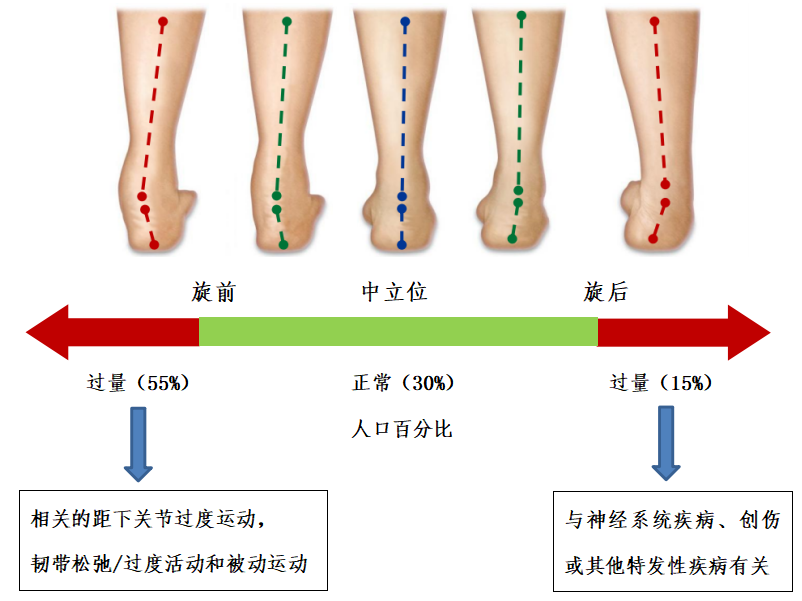
Traditional insoles often follow a “one-size-fits-all” model, using uniform sizes and shapes for mass production. Their design primarily aims to provide basic cushioning and comfort. However, for those with specific foot issues, such as flat feet, high arches, or bunions, traditional insoles are often ineffective for correction and support.
In contrast, 3D printed insoles exemplify personalized customization. Utilizing advanced 3D scanning technology, they can accurately capture the height and width of the user’s foot arch, the pressure distribution across various parts of the foot, and the overall contour of the foot. This detailed data acts like a unique “map” for each person’s foot. Based on this data, professional designers or software apply biomechanical principles to tailor the insoles to best suit the user.Every detail, such as the support height at the arch, the degree of heel encapsulation, and the elasticity design at the forefoot, is carefully considered and calculated to ensure the insoles fit perfectly, providing optimal support and correction.
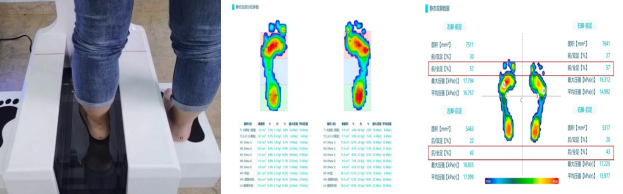
Foot scanning and pressure detection illustration
Additionally, the insoles can correct foot inversion and eversion issues by adjusting the position and angle of the heel, restoring normal lower limb alignment. This allows the muscles, tendons, and bones of the foot to relearn how to work together, forming the correct force patterns, thereby achieving the goal of correcting foot problems and alleviating pain.
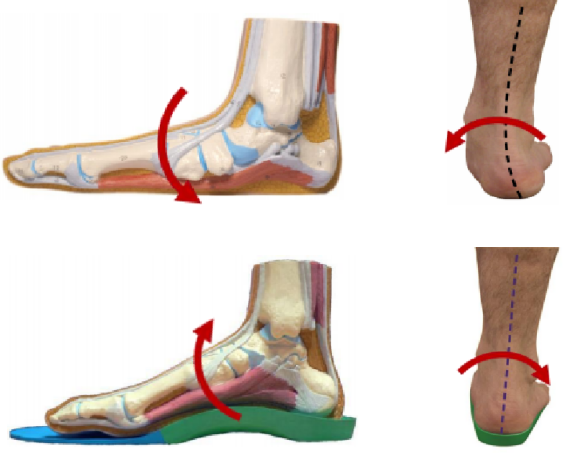
Illustration of the effect of 3D printed orthotic insoles on correcting lower limb alignment
04
Future Blueprint: The New Era of Intelligent Orthotics
Cutting-edge research is breaking through traditional orthotic concepts. The MIT Media Lab has developed4D printed insoles that can adjust support stiffness in real-time based on movement. A team from Yonsei University in South Korea has developed smart insoles containing stem cell culture chambers to promote healing of chronic ulcers. These innovations indicate that orthotic devices are evolving from passive support to active intervention.
With breakthroughs in materials science, the application of biodegradable bio-based polyurethane materials has reduced the carbon footprint of eco-friendly insoles by 60%. Standing at the intersection of biomedical science and digital manufacturing, 3D printed orthotic insole technology is reshaping the paradigm of orthopedics. It is not only a revolution in manufacturing processes but also a vivid practice of personalized medical concepts. As every pair of insoles becomes a dedicated foot health steward, humanity takes a revolutionary step towards the “art of walking.” This silent revolution is redefining the way humans interact with the earth.
(Images sourced from the internet)
Contributed by:Shanghai Medical Association Digital Medicine Specialty Committee
Author: Zhang Hongxi Shanghai University of Sport
Reviewed by: Wang Jinwu Chairman of the Shanghai Medical Association Digital Medicine Specialty Committee
The Shanghai Medical Association, with a history of over a century, is a social organization dedicated to promoting the development of medical science and technology and the dissemination of medical knowledge, adhering to the principle of popularizing science for the benefit of the public, gathering outstanding medical experts from the city, and carrying out various forms of popular science activities to comprehensively advance medical science communication, spreading correct medical health knowledge to the public.