The era of general-purpose processor architectures is giving way to designs optimized for performance, power consumption, and scalability, specifically tailored for targeted workloads. The ongoing expansion of data-driven applications in artificial intelligence (AI), edge computing, automotive, and industrial markets is driving a fundamental shift in processor design.
It can be said that chip manufacturers can no longer rely on general-purpose architectures to meet the demands of these specialized markets. Open ecosystems like RISC-V enable chip developers to create customized solutions that combine innovation with design efficiency, opening new opportunities for diverse applications.
As an open-source instruction set architecture (ISA), RISC-V is rapidly gaining momentum due to its scalability and royalty-free licensing model. Rich Wawrzyniak, chief analyst at SHD Group, stated, “RISC-V SoC shipments are expected to grow at a compound annual growth rate of nearly 47%, capturing nearly 35% of the global market by 2030.” This growth highlights why SoC designers are increasingly embracing architectures that offer greater flexibility and specialization.
Trade-offs in Customizing the RISC-V ISA
The openness of the RISC-V ISA has sparked widespread interest across the semiconductor industry, particularly its promise of customization. Unlike fixed-function ISAs, RISC-V allows designers to tailor processors for specific workloads. For companies building domain-specific chips for AI, automotive, or edge computing, this level of control can provide a significant competitive advantage in optimizing performance, energy efficiency, and chip area.
However, customization does not come without costs.
Adding custom extensions means taking on the responsibility of developing both the hardware design and the corresponding software toolchain. This includes compiler and simulator support, debugging infrastructure, and possibly even operating system integration. While RISC-V’s modular structure makes customization easier than traditional ISAs, it still requires architectural considerations and the establishment of robust development and verification workflows to ensure consistency and correctness.
In many cases, customization also involves additional considerations. When general processing capabilities and compatibility with existing software libraries, security frameworks, and third-party ecosystems are critical, excessive or non-standard extensions may introduce fragmentation risks. Design teams can mitigate this risk by adhering to RISC-V approved extensions and profiles (such as RVA23) and applying targeted customization where appropriate.
If applied correctly, RISC-V customization can become a powerful lever, yielding substantial returns on investment (ROI) through meticulous architectural planning, rigorous engineering practices, and clear product objectives. Some companies invest in complete design and software teams to develop strategic extensions, while others leverage automated toolchains and hardware-software co-design methodologies to reduce risk, accelerate time-to-market, and capture most of the benefits.
For teams that can properly weigh the pros and cons, RISC-V customization opens the door to truly workload-optimized processors and significant product differentiation.
Real-World Application Cases
Customized RISC-V cores have been widely deployed in the industry. For example, Nvidia’s Vice President of Multimedia Architecture/ASIC, Frans Sijstermans, described the practice of replacing its internal Falcon MCU with internally developed customized RISC-V hardware and software, which is now being deployed in various applications.
One notable customization is the support for 2KB pages beyond the standard 4KB pages, which brought a 50% performance boost for legacy code. Changes like this in page size are a clear example of modifications that have system-level impacts, from processor hardware to operating system memory management.
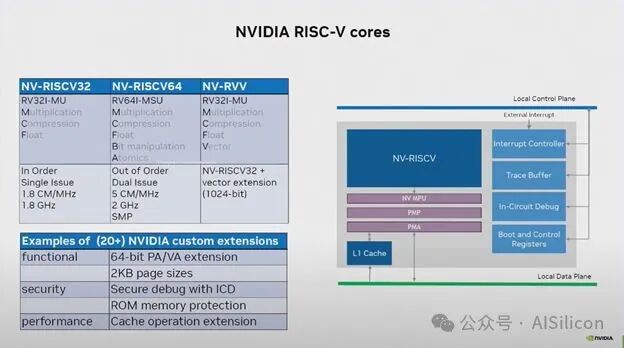
Figure 1: View of Nvidia’s RISC-V core and extensions
Another commercial case is Meta’s MTIA accelerator, which extends the RISC-V core with dedicated instructions, custom interfaces, and dedicated register files. Although Meta has not publicly disclosed the complete toolchain process, the scope of its integration suggests a tightly coupled co-design methodology for hardware and software managed internally.
Given the complexity of the modifications, its design likely utilizes automated processes capable of regenerating RTL (register transfer level), compiler backends, simulators, and intrinsics to maintain toolchain consistency. This reflects a broader trend: engineering teams adopting user-driven, internal customization workflows to support rapid iteration and domain-specific optimization.
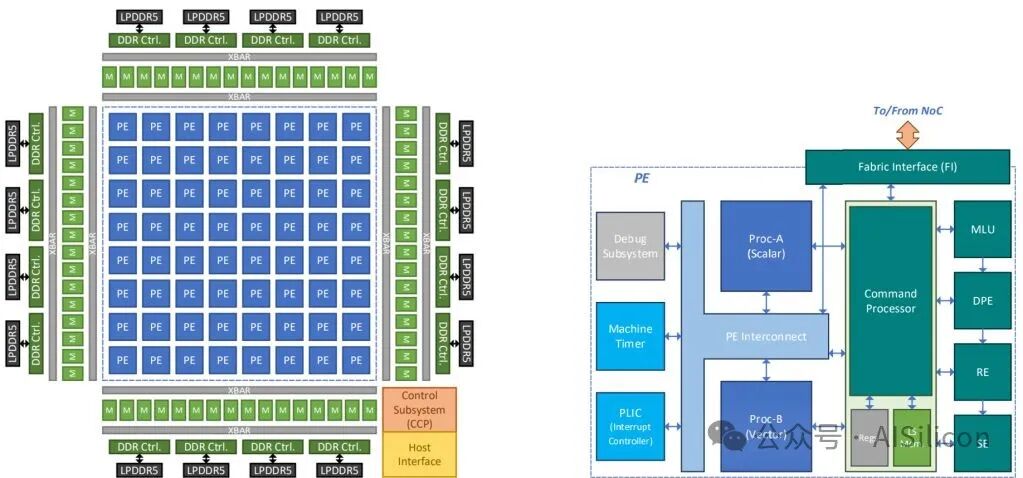
Figure 2: Meta’s MTIA accelerator integrates the Andes RISC-V core to optimize AI performance
The example of the startup Rain.ai shows that even small teams can benefit from RISC-V customization through automated processes. Their process begins with defining operand, vector register input/output, vector unit behavior, and C language semantic description input files. These instructions are pipelined, multi-cycle, and designed to conform to the style and semantic attributes of standard vector extensions.
These input files are supplemented with a simplified hardware implementation description and processed through a flow that generates updated core RTL, simulation models, compiler support, and intrinsics. This allows developers to quickly update the core, compile and run them on simulation models, and collect feedback on performance, utilization, and cycle counts.
By lowering the barrier to developing custom instructions, this process supports a hardware-software co-design methodology, making it easier to explore and optimize different usage models. This approach was used to integrate their matrix multiplication, Sigmoid, and SiLU accelerators into hardware and software processes, achieving an 80% reduction in power consumption and a 7-10x increase in throughput compared to standard vector processing units.
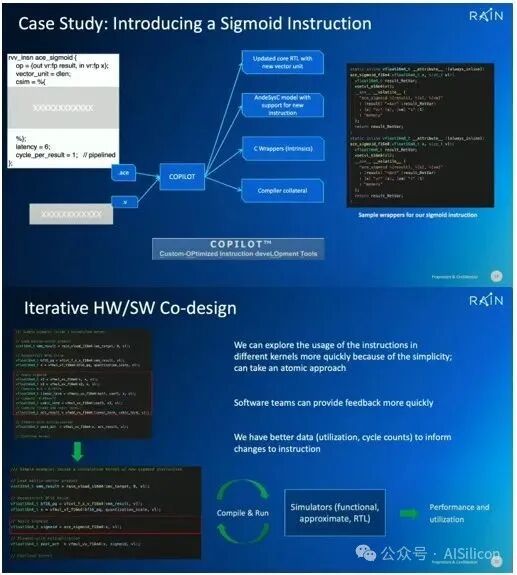
Figure 3: Example of a hardware-software co-design process for developing and optimizing custom instructions
Tools Supporting RISC-V Customization
To support these overall workflows, automated tools are emerging to simplify and accelerate customization and integration. For example, Andes Technology provides silicon-validated IP and a comprehensive suite of design tools to accelerate development.
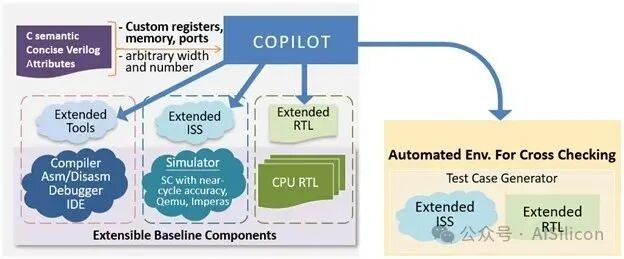
Figure 4: ACE and CoPilot simplify the development and integration of custom instructions
Its Andes Custom Extension (ACE) framework and CoPilot toolchain provide a streamlined path for RISC-V customization. ACE enables developers to define custom instructions optimized for specific workloads, supporting advanced features such as pipelining, out-of-order execution, custom registers, and memory structures.
CoPilot automates the integration process by regenerating the entire hardware-software stack (including RTL, compilers, debuggers, and simulators) based on defined extensions. This reduces manual work, ensures consistency between hardware and software, and accelerates development cycles, making customized RISC-V designs feasible for a wide range of teams and applications.
Conclusion
The open ISA of RISC-V breaks down barriers to processor innovation, enabling developers to go beyond the limitations of proprietary architectures. Today, advanced frameworks and automated tools empower even the leanest teams to leverage RISC-V for hardware-software co-design.
For design teams that approach customization with rigor, RISC-V offers a rare opportunity: to shape processors around application needs rather than the other way around. Companies that successfully master this co-design methodology will not only keep pace but will define the next era of processor innovation.
Recommended Reading
AI Running on VectorsWhat Makes RISC-V Perfect for AI: Semidynamics ExplainsUPMEM Chooses Semidynamics RISC-V AI IP for Large Language ModelsSemidynamics’ Aliado Development Kit Accelerates RISC-V Based AI Development with Seamless ONNX Integration
Follow for More Updates⭐