
Utilizing Sensors: AI Robots Assist
Anhui Youth Science Activity Center
Staging the ‘Liquid Identification Master’

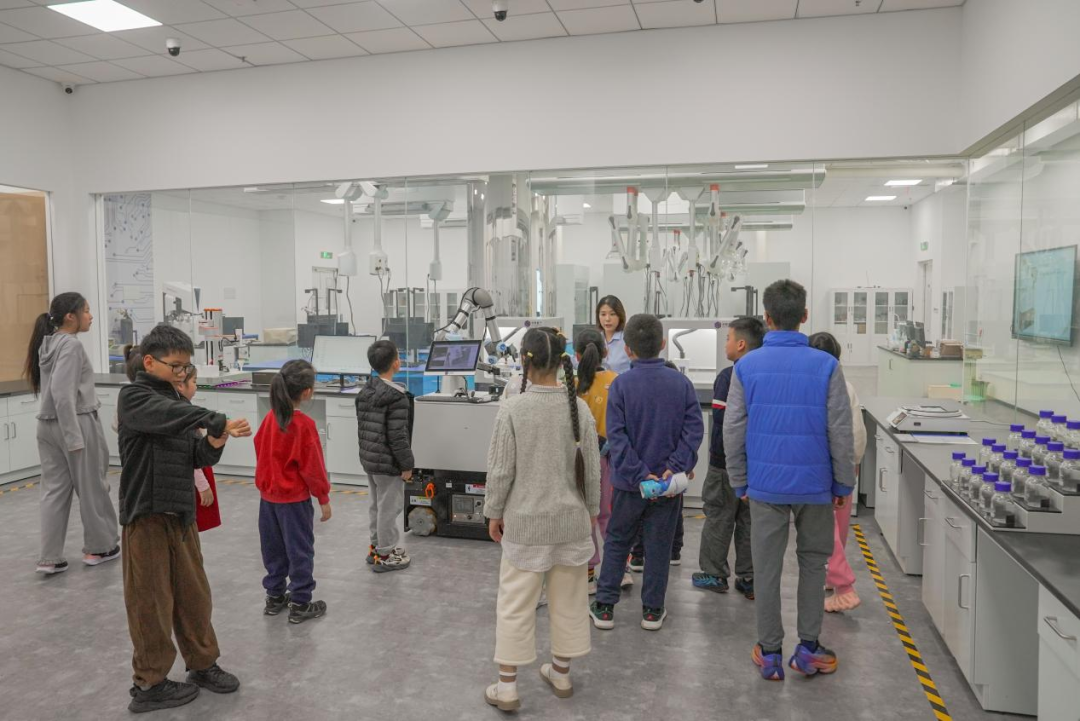
Last weekend, during a science activity at the Anhui Youth Science Activity Center, a special ‘liquid identification’ challenge was staged. The science teacher presented three cups of liquid that looked identical: white vinegar, baking soda solution, and purified water, and posed a core challenge: how to accurately identify them without directly smelling or tasting? This question instantly ignited the curiosity of the attending youth and introduced the theme of the course—’Unlocking Sensors and Robots.’

Unlock
Sensors
and
Robots
“Why can’t we directly smell or taste unknown chemicals?” Through discussion, everyone recognized that direct contact could pose safety risks, and our senses (like smell) are subjective and not precise enough. At this point, the science teacher introduced a key tool—sensors. She explained, “Sensors are like extensions of human senses, capable of perceiving the physical world and converting that information into measurable signals.” They are safer, more precise, and can achieve digital recording, thus overcoming the limitations of human senses.
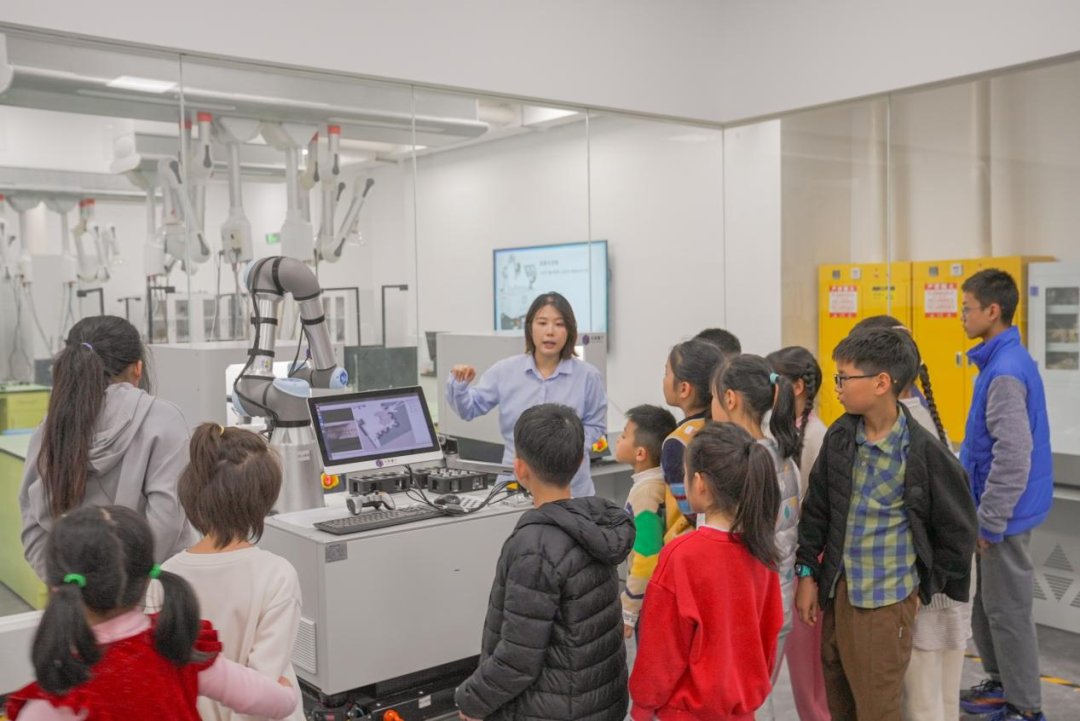
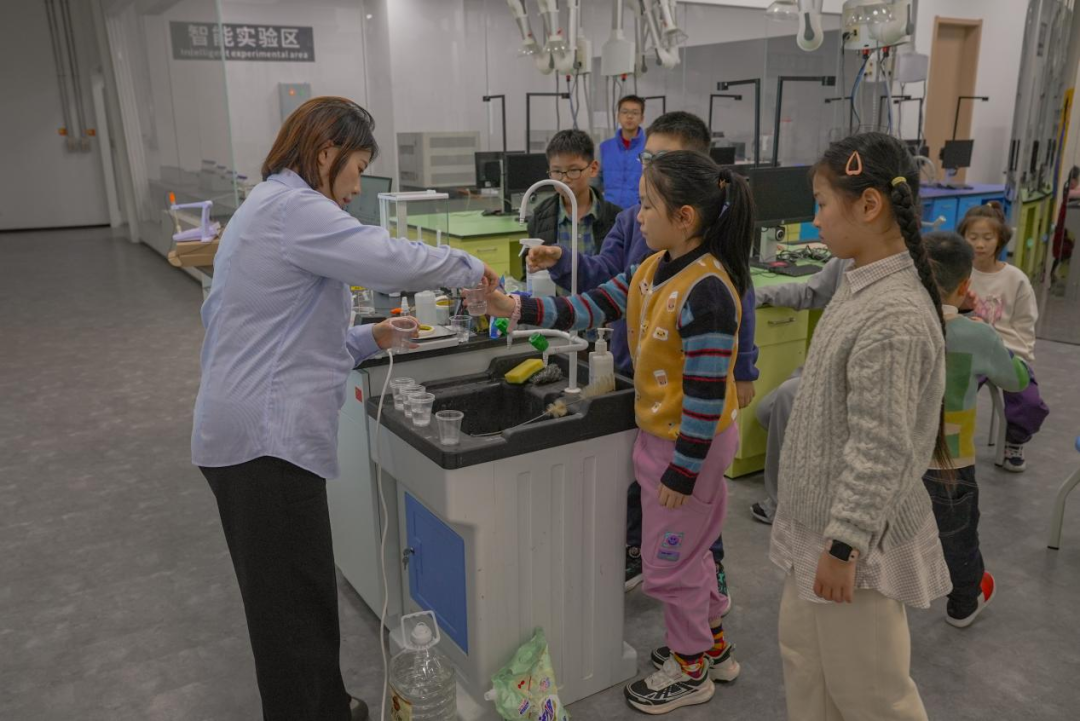
The practical session officially began. The key to this identification was the acidity and alkalinity (pH value) of the three liquids. Students first used traditional pH test strips for manual detection, then the science teacher guided the youth to use the AI robot chemist platform for measurement. Under command control, the robot steadily grasped the pH sensor and sequentially immersed it in the three cups of liquid. Soon, the computer screen displayed the precise pH values in real-time, clearly distinguishing the acidic (white vinegar), alkaline (baking soda solution), and neutral (purified water). Compared to the rough color comparison of pH test strips, the digital, high-precision, and efficient measurements from the sensors amazed the students.

Practical
Session
Details
This activity went far beyond a simple liquid identification game, allowing the youth to experience the complete scientific inquiry process of ‘posing questions → recognizing tools → human-machine collaboration → solving problems.’ They not only learned about sensors but also experienced how to use AI robots as powerful assistants to conduct safer and more rigorous scientific experiments. This vivid science popularization class planted the seeds of digital science in the hearts of the youth, igniting their infinite yearning for scientific research in the intelligent era.



END



Scan to Follow