Source: Sensor Technology
Today, drones are widely used in areas such as meteorological monitoring, land resource enforcement, environmental protection, remote sensing aerial photography, disaster relief, and express delivery. With the development of the Internet of Things, the application of drones in IoT technology is continuously increasing. To better control the flight of drones, the use of various sensors plays a crucial role.
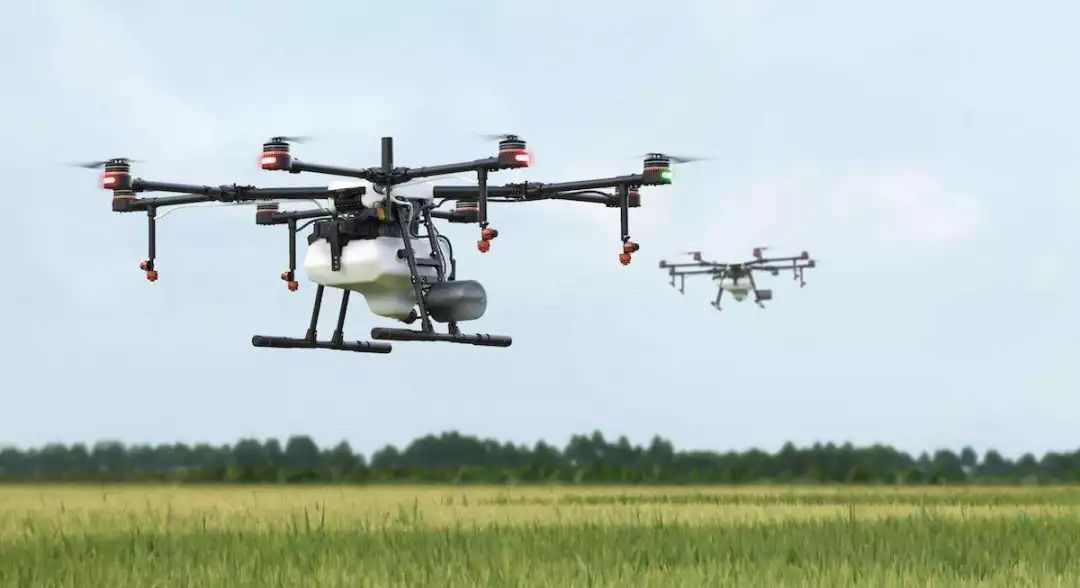
Therefore, some have referred to drones as flying “sensors.” So, what sensors are needed for a drone to achieve stable flight in the sky and perform various actions?
01
Drones’ Characteristics
The actions of a drone must be very precise. In addition to stability, it must also be able to fly to the expected height and communicate effectively. Therefore, a basic drone must possess the following characteristics:
Stability: A drone should be stable and must not suddenly vibrate, shake, or tilt without warning; otherwise, it will lose balance and crash.
Precision: The actions of a drone need to be very precise, referring to distance, speed, acceleration, direction, and altitude.
Resistance to Various Environmental Conditions: A drone must be able to withstand rain, dust, high temperatures, and other environmental conditions. Both the external materials and the electronic components used inside the drone must meet these requirements.
Low Power Consumption: Drones are becoming lighter, so ensuring ultra-low power consumption to minimize battery size becomes very important. The rise of low-power technology has enabled the widespread use of drone technology.
Environmental Perception: Environmental sensing technology has gradually emerged as one of the most critical development areas for drones. Current drones are equipped with multiple sensors to monitor the environment. The collected data can be applied in various applications, such as meteorological monitoring and agriculture.
Networking Functionality: The networking functionality is a significant factor in the rise of drones and their widespread acceptance in the market. Drones can be controlled via simple smartphones, remote controls, or directly through the cloud. Suitable networking solutions should be provided based on different use cases. Some drones may adopt multiple networking solutions to meet the needs of various applications.
02
Flight Controller
The flight controller (FC) is equivalent to the brain of the drone, akin to the operating system on a computer or smartphone. The flight controller obtains data from various sensors mounted on the drone, processes this data to control the flight of the body. Additionally, the flight controller is also responsible for transmitting information.
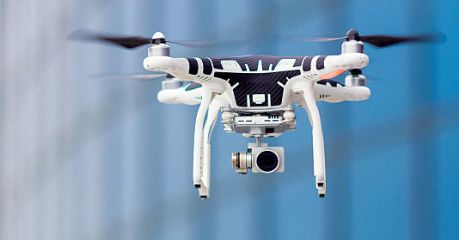
The flight controller mainly consists of two parts—IMU (Inertial Measurement Unit) and CPS module. The high or low performance of a drone’s flight depends on this flight controller. The internal sensors (IMU) in the flight controller are essential for stable flight. IMU refers to the Inertial Measurement Unit, which is mostly used in devices requiring motion control, such as cars and robots, and is also used in situations requiring precise displacement calculations based on posture. Generally, IMU includes an accelerometer and a gyroscope.
03
Sensors on Drones
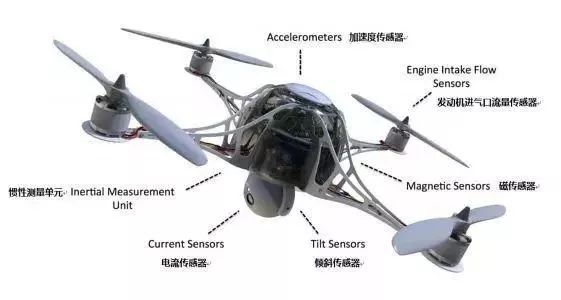
IMU is located at the core of the drone, ensuring that the device functions and navigation operate normally. These sensors include accelerometers, gyroscopes, compasses, and barometric sensors.
Accelerometer
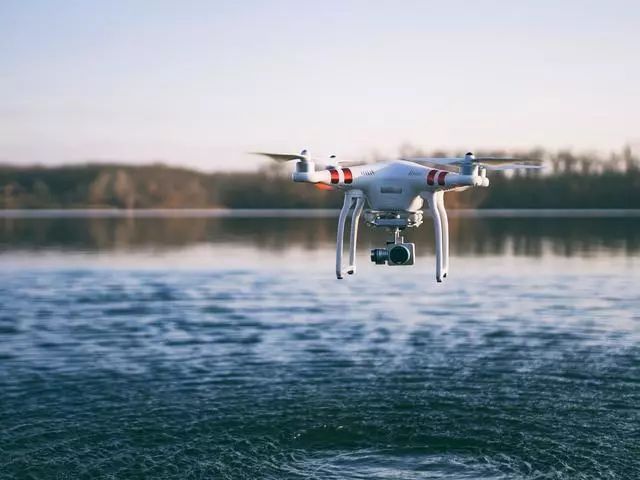
The accelerometer is used to provide the acceleration experienced by the drone in the XYZ three-axis direction. It can also determine the tilt angle of the drone when it is at rest. When the drone is in a level and stationary state, the X and Y axes output 0G, while the Z axis outputs 1G. The gravitational force experienced by all objects on Earth is 1G. If the drone rotates 90 degrees on the X-axis, then 0G will be output on the X and Z axes, while the Y-axis will output 1G. During tilting, the XYZ axes will output between 0 to 1G. The relevant values can be applied to trigonometric formulas to allow the drone to achieve a specific tilt angle.
The accelerometer is also used to provide linear acceleration in both horizontal and vertical directions. The relevant data can be used to calculate speed, direction, and even the rate of change of the drone’s altitude. The accelerometer can also monitor the vibrations experienced by the drone.
For any drone, the accelerometer is a very important sensor, as it provides crucial input even when the drone is stationary.
Gyroscope
The gyroscope sensor can monitor the angular velocity across three axes, thus monitoring the rate of change of angles during pitch, roll, and yaw. Even for general aircraft, the gyroscope is a very important sensor. The changes in angle information can be used to maintain the stability of the drone and prevent shaking. The information provided by the gyroscope will be fed into the motor control driver, dynamically controlling the motor speed and providing motor stability. The gyroscope can also ensure that the drone rotates according to the angles set by the user’s control device.
Compass
As the name suggests, the compass provides the drone with a sense of direction. It can provide data on the magnetic field experienced by the device in the XYZ axes. The relevant data will then be fed into the microcontroller’s algorithm to provide the heading angle related to magnetic north, which can then be used to detect geographical orientation.
To calculate the correct direction, magnetic data also needs to be supplemented with tilt angle data from the accelerometer. With tilt data combined with magnetic data, the correct orientation can be calculated.
The compass is very sensitive to hard iron, soft iron, or operational angles. Hard iron refers to hard, permanent ferromagnetic materials near the sensor, which can cause permanent offset in compass readings. Soft iron refers to weak ferromagnetic materials nearby, such as circuit traces, which can cause variable displacements in sensor readings. Therefore, it also requires magnetic sensor calibration algorithms to filter out these anomalies. The most important thing is to ensure that the user does not have to exert effort; the algorithm can quickly perform the calibration.
In addition to sensing direction, magnetic sensors can also be used to detect surrounding magnetic fields and ferrous metals, such as electrodes, wires, vehicles, and other drones, to avoid accidents.
Barometer
The barometer operates on the principle of using atmospheric pressure to calculate altitude. The pressure sensor can detect the Earth’s atmospheric pressure. The data provided by the barometer can assist the drone in navigation and ascending to the desired altitude. Accurately estimating the rate of ascent and descent is crucial for drone flight control. STMicroelectronics has launched the LPS22HD pressure sensor, with a data rate of 200Hz to meet the needs of predicting altitude.

Ultrasonic Sensor
The use of ultrasonic sensors in drones takes advantage of the property that ultrasonic waves bounce back when they hit other materials, enabling height control. As mentioned earlier, using a barometric sensor near the ground is ineffective. However, using an ultrasonic sensor allows for height control near the ground. Thus, combining the barometric sensor with the ultrasonic sensor enables the drone to fly stably at both high and low altitudes.
GPS
Just as cars have navigation systems, drones also have navigation systems. Through GPS, the location information of the drone can be obtained. GPS is one of the global navigation systems and is the satellite navigation system of the United States. However, recent drones have begun to not only use GPS; some models combine GPS with other satellite navigation systems, simultaneously receiving multiple signals to detect the drone’s location. Whether setting longitude and latitude for automatic flight or maintaining position for hovering, GPS is an extremely important function.
However, due to the movement of satellites and interference from buildings and magnetic fields, there are situations where GPS signals cannot be received. This is worth noting.
Of course, in addition to the sensors mentioned above, drones may also use sensors to detect voltage and current status, as well as infrared sensors for obstacle detection. It is precisely because of these sensors, which function like human senses, that drones can fly stably in the air.
Specific Application Sensors
This type of sensor does not affect the core functionality of the drone but is increasingly used on drones to provide various applications, such as climate monitoring and agricultural uses.
Humidity Sensor: The humidity sensor can monitor humidity parameters, and the relevant data can be applied in meteorological stations, condensation height monitoring, air density monitoring, and correcting gas sensor measurement results.
MEMS Microphone: The MEMS microphone is an audio sensor that converts sound frequencies into electronic signals. MEMS microphones are gradually replacing traditional microphones because they provide a higher signal-to-noise ratio (SNR), smaller form factor, better RF immunity, and greater robustness against vibrations. These sensors can be used in drone filming, monitoring, and espionage applications.
04
Processing and Transmission of Sensor Data
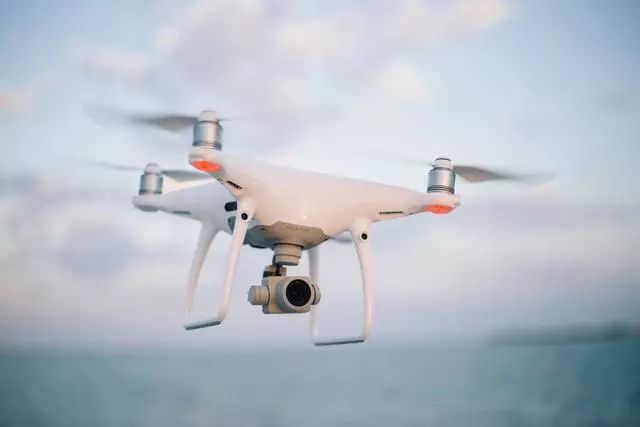
To convert raw sensor data into meaningful use cases, software databases play a significant role. Algorithms can expand sensor functionality, allowing it to exceed its originally known range. Algorithms can also combine inputs from different sensors to produce outputs with situational awareness characteristics.
The three motion sensors—accelerometer, gyroscope, and compass—each have different strengths and weaknesses. The limitations of sensors include imperfect calibration, and they may drift due to time, temperature, and random noise. The magnetometer and accelerometer are prone to distortion, while the gyroscope is inherently subject to drift. We can use a sensor fusion database to mutually calibrate these sensors to create conditions that yield correct results in all situations. It not only provides calibrated sensor outputs but also information on angles and heading angles, as well as quaternion angles.
Users can also access various advanced databases through a simple computer authorization protocol. Once tested on the platform, designers can develop their custom printed circuit boards and load the firmware they developed on the platform. Users only need to sign a production authorization for the database when they want to test the custom circuit boards.
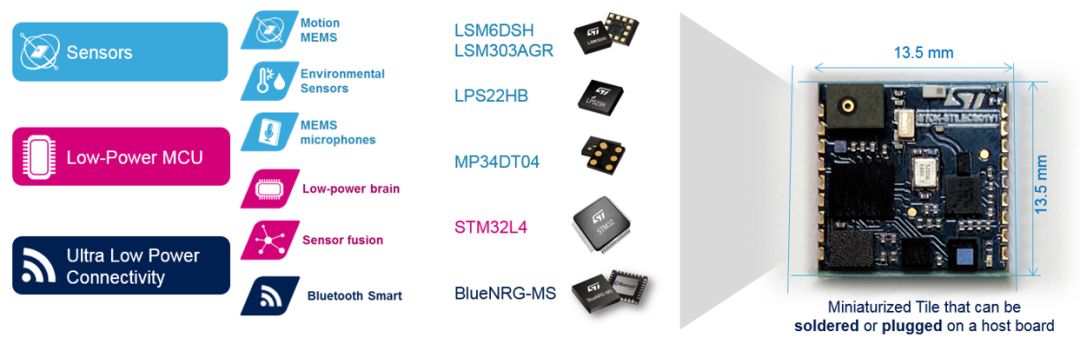
SensorTile: SensorTile is a square miniaturized design platform that includes all the components needed for remote sensing and measuring motion, environmental, and acoustic parameters. Developers can immediately focus on the aerodynamics, motor control, and physical design of the drone without worrying about networking functionality and sensor integration.
05
Networking of Drones
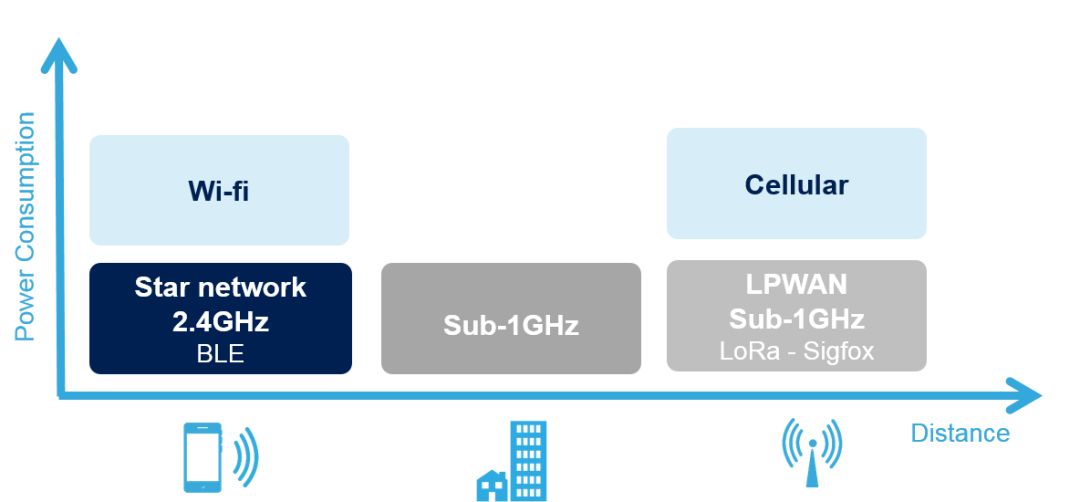
Drones have various networking technology options to consider. Low Energy Bluetooth (BLE) and Wi-Fi are mostly used for smartphone networking, while Sub-1GHz is used in remote controllers, providing longer-distance networking functionality.
The following diagram lists the differences in effective distance and energy consumption among different technologies. Next, we will discuss low-power technologies such as BLE, RF sub-1GHz, and Sigfox.
Bluetooth Smart
Low Energy Bluetooth technology (BLE)
Bluetooth Smart, also known as Low Energy Bluetooth (Bluetooth Low Energy, BLE), provides low-power networking functionality for drones. This technology is suitable for lower-end models, especially toy drones. It allows drones to communicate bidirectionally with smartphones, tablets, laptops, or dedicated remote controllers. Low Energy Bluetooth enables drones to have excellent battery life, which is not achievable with traditional wireless technologies such as Wi-Fi or classical Bluetooth.
Low Energy Bluetooth operates in the 2.4GHz free ISM band. The relevant standards are managed by the Bluetooth Special Interest Group (Bluetooth SIG) and support major smartphone brands.
Low Energy Bluetooth devices have two main approaches:
a. Network Processor
A network processor is a low-power Bluetooth device that executes the low-power Bluetooth communication protocol, including controller, main control components, and stack. However, it requires a separate microcontroller to operate smoothly with the main microcontroller executing the low-power Bluetooth configuration profiles and applications. It is also a standalone platform that provides greater flexibility for users to choose the most suitable microcontroller or operating system. BlueNRG-MS is a network processor launched by STMicroelectronics that supports the BLE 4.1 specification. This IC can serve as both master and slave, allowing the remote controller to act as a slave device to the smartphone while also serving as the main control device for the drone.
b. System on Chip (SoC)
A system on chip is an independent chip set that includes controller, main control components, stack profiles, and applications. STMicroelectronics’ BlueNRG-1 is a system on chip certified by BLE 4.2, which includes 15 GPIO, I2C, SPI, UART, PWM, PDM, and 160kb of RAM. Because it supports the BLE 4.2 specification, this IC can provide advanced security and privacy features.
RF sub-1GHz
As the name suggests, RF sub-1GHz transmits signals using frequencies below 1GHz. Each country defines different frequencies that are free for industrial or scientific research purposes.
The following are the free bands provided by various countries:
• North America: 315, 433, 915Mhz
• Europe: 433, 868Mhz
• India: 433, 865-867Mhz
• North America: 315, 433, 915Mhz
• Europe: 433, 868Mhz
• India: 433, 865-867Mhz
The benefits of sub-1GHz frequencies are that these bands are relatively quiet, have longer ranges, and consume very little power. The downside is that they do not directly provide smartphone connectivity, and they are not available everywhere.
Drones are one of the most important innovative technologies in recent years. With the advent of low-power sensors and networking technologies, today’s drones can be widely applied in various consumer and industrial applications. Drones provide new business opportunities for developers and innovative companies, solving complex problems that were previously considered impractical or too expensive.