 This month, we will gradually categorize and organize previously published content on the same theme. Future materials collected on this topic will be placed in the corresponding folder and shared with loyal members.

Drone

 The value of drones has been recognized by all parties. Currently, military drones are not only used for battlefield reconnaissance and surveillance but also include more electronic jamming drones, decoy drones, and anti-radiation drones, evolving towards multi-purpose electronic warfare drones.
Typical Drone Systems
Predator drones are equipped with electro-optical/infrared reconnaissance equipment, GPS navigation systems, and synthetic aperture radar with all-weather reconnaissance capabilities. The effective payload for surveillance reconnaissance is 204 kg, with a resolution of 0.3 meters at an altitude of 4000 meters, and a target location accuracy of 0.25 meters.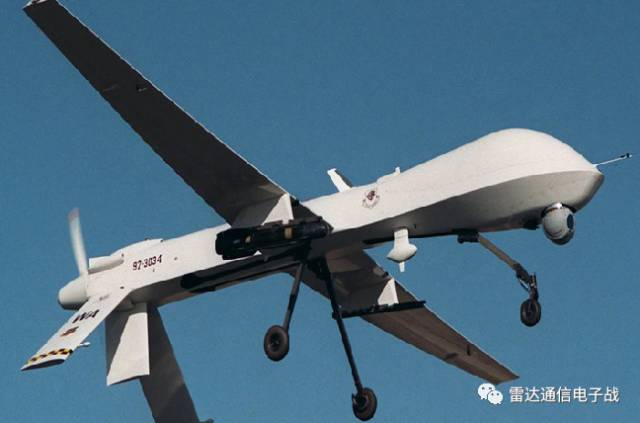 This aircraft is equipped with UHF and VHF radios, as well as a C-band line-of-sight data link with a range of 270 km. It has a length of 8.27 meters, a wingspan of 14.87 meters, a maximum operational radius of 3700 kilometers, a maximum flight speed of 240 kilometers per hour, a loiter time of 24 hours over a target, and a maximum endurance of 60 hours.
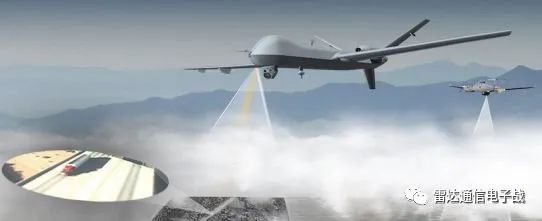
With the development and application of drones, the demand for high-resolution imaging radars suitable for small drones is also increasing. Many countries have invested significant human and material resources into the research and development of micro-SAR systems to leverage their advantages in remote sensing and reconnaissance under harsh conditions.Synthetic aperture radar imaging has characteristics such as high resolution, all-weather, all-time, multi-band, multi-polarization, and the ability to penetrate clouds and fog, making it widely applicable in military reconnaissance, terrain surveying, and agricultural and forestry exploration. With the development of small drones, higher requirements have been set for the weight of synthetic aperture radar payloads.Global Hawk drones are equipped with synthetic aperture radar, television cameras, infrared detectors, as well as defensive electronic countermeasures and digital communication equipment. The control system uses GPS global positioning systems and inertial navigation systems, allowing for the automatic completion of the entire flight process from takeoff to landing. By using a satellite link, the flight status data of the drone is automatically sent to the mission control unit.The Global Hawk has a wingspan of 35.4 meters, a length of 13.5 meters, a height of 4.62 meters, a maximum flight speed of 644 kilometers per hour, and a maximum takeoff weight of 11622 kilograms.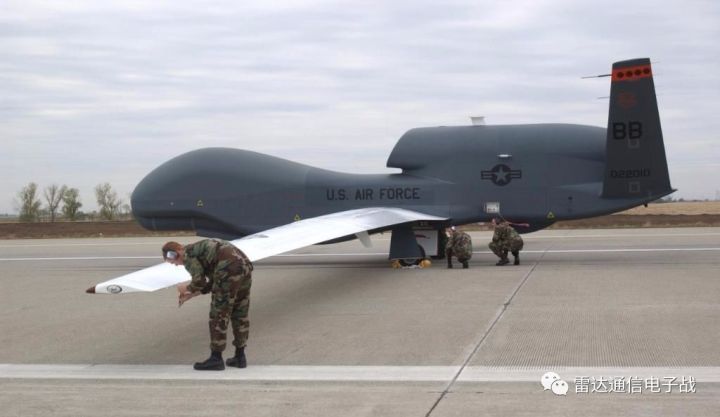 Electro-optical sensors operate in the 0.4 to 0.8 micron wavelength band, while infrared sensors operate in the 3.6 to 5 micron wavelength band. The electro-optical system includes third-generation infrared sensors and a KODAK digital charge-coupled device (CCD).The synthetic aperture radar has an X-band, 600MHz, 3.5 kW peak moving target indicator. The radar can obtain reconnaissance photos with a strip format that are precise to 1 meter, and point reconnaissance photos that are precise to 0.30 meters. For ground moving targets traveling at speeds of 20 to 200 kilometers per hour, it can achieve precision of 7 kilometers.
Primary Uses of Military Drones
Reconnaissance and Surveillance: These drones are equipped with radar communication reconnaissance devices, radar imaging systems, and infrared reconnaissance devices for electronic intelligence gathering on the battlefield environment, target surveillance, and damage assessment in target areas.Electronic Jamming: These drones primarily carry radar communication and optical countermeasure devices to suppress or deceive the enemy’s radar communication and optical devices over the target area, thereby protecting friendly aircraft or missiles.Decoy: These drones can lure enemy radars or missiles by carrying active radar transponders, passive chaff, corner reflectors, etc., thereby interfering with or suppressing the enemy’s air defense systems.Anti-Radiation: These drones consist mainly of a drone platform and guided warheads to attack enemy air defense systems, thereby suppressing the enemy’s defenses.
Development Directions of Drone Systems
The new generation of drone systems should have long endurance, stealth capabilities, airborne early warning functions, and combat capabilities.
-
Develop from low-altitude, short-range to high-altitude, long-range;
-
Apply advanced stealth technologies such as composite materials, radar-absorbing materials, and low-noise engines to drone development;
-
Shift from real-time tactical reconnaissance to airborne early warning;
- Advance towards aerial combat;
Seamlessly integrate drone systems with various reconnaissance, detection, command control, and strike weapon systems distributed across land, sea, air, and space to form a synergy far exceeding that of individual drone systems.This article is sourced from: Radar Communication Electronic Warfare
Follow our official account for more information
For membership applications, please reply “individual member” or “institution member” in the official account
Welcome to follow the media matrix of the China Command and Control Society

CICC Official Website

CICC Official WeChat Account

Journal of Command and Control Official Website

International Unmanned Systems Conference Official Website

China Command and Control Conference Official Website

National Military Simulation Competition

National Aerial Intelligent Game Competition

Sohu Account

Yidian Account