Abstract: Nanjixiong has visited several large factories with dozens to hundreds of metal 3D printers, and the factory managers generally report that post-processing of printed parts, such as cutting, support removal, and polishing, is very labor-intensive and costly. If there are ways to reduce these costs, it would be extremely valuable.
Among these processes—cutting—there are now better solutions.
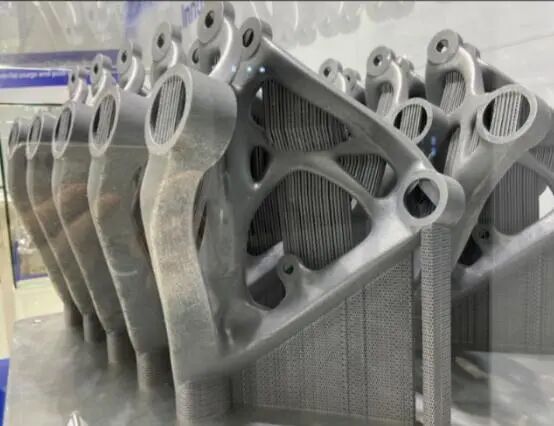
△ Metal 3D printed parts attached to the base plate
When the precision metal parts printed by 3D are firmly attached to the build plate, how can they be efficiently, non-destructively, and economically separated? This seemingly simple “last mile” problem has actually become one of the bottlenecks restricting the efficiency improvement of the entire additive manufacturing industry chain.
Traditional solutions—“Electrical Discharge Machining (EDM) technology”—has been in service for decades, but its limitations have become increasingly apparent in the face of rapidly developing 3D printing.
A medium-sized complex part typically requires several hours of cutting time, while large integrated components may require more than ten hours of continuous operation. This not only leads to high equipment occupancy rates and prominent capacity bottlenecks but also comes with significant electricity consumption, dedicated material costs, and post-processing investments.
When multiple metal printers operate around the clock, the cutting stage often becomes a “bottleneck” in the manufacturing line, severely dragging down the efficiency advantages of front-end 3D printing. Even more concerning is that the heat-affected zone generated during the EDM process may alter the metallographic structure of the workpiece surface, causing irreversible effects on the mechanical properties of precision parts, which is absolutely unacceptable in the manufacturing of high-value components.
Tungsten wire loop cutting technology, achieves over 30 times
Nanjixiong has learned that Wuxi Da Vinci has proposed a groundbreaking technical solution—tungsten wire loop cutting technology. The most notable feature of this innovative technology is its exceptional cutting speed—for the same processing task, efficiency can reach over 30 times that of traditional EDM cutting. Specifically, a task that traditionally takes 26 hours can now be completed in just 45 minutes.

Through detailed testing of different materials and sizes, we can see the exciting data as follows: Cutting time for a 400×300mm titanium alloy base plate is only 40-60 minutes, while the same size high-temperature alloy base plate takes 60-90 minutes; cutting time for titanium alloy base plates is controlled between 45-150 minutes, while the same size high-temperature alloy base plates only require 45-180 minutes.
|
Base Plate Size |
Printed Material |
Cutting Time (minutes) |
|
400×300mm |
Titanium Alloy |
40-60 |
|
400×300mm |
High-Temperature Alloy |
60-90 |
|
850×850mm |
Titanium Alloy |
45-150 |
|
850×850mm |
High-Temperature Alloy |
45-180 |
Note: The base plate is not fully printed, and the data is for reference only.
These data not only reflect a quantitative change but also represent a qualitative leap in manufacturing efficiency.
Multi-Return Tungsten Wire Loop Cutting Equipment
Even more exciting is that the benefits brought by this technology go far beyond efficiency improvement. There are other advantages:
1. Using a pure water cooling system, completely avoiding the heavy metal pollution issues of copper, zinc, and other materials in traditional EDM processing, complying with current strict environmental protection requirements.
2. The physical cutting method ensures that no heat-affected zone is produced during processing, perfectly preserving the microstructure and mechanical properties of the printed parts.
3. Energy consumption is only 1/5 of traditional processes, which has significant energy-saving and emission-reduction advantages under the context of the “dual carbon” goals.
To meet the needs of different scale enterprises, Da Vinci has developed a complete product matrix: 1. The QG4030 model is designed for small to medium-sized printed parts, equipped with an intelligent detection system that can automatically identify the base plate position and complete precise cutting.
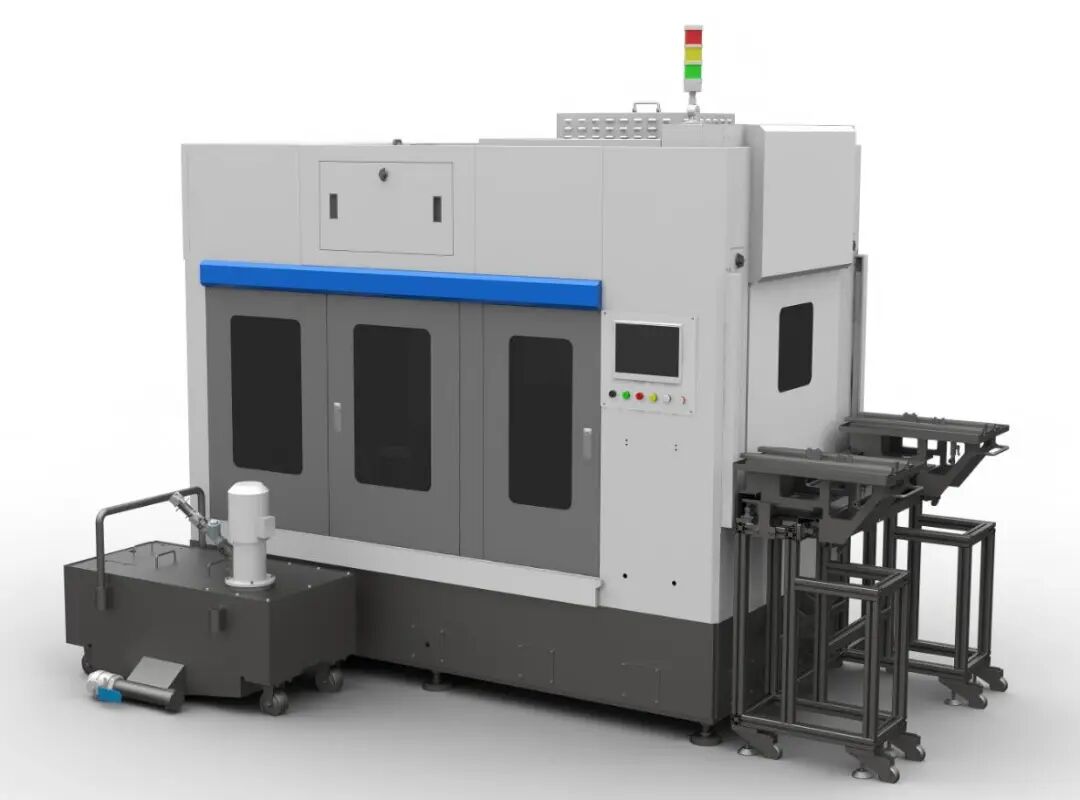
2. The QG8080 heavy-duty equipment can easily handle 850mm large-size base plates, and its modular design facilitates maintenance and upgrades.
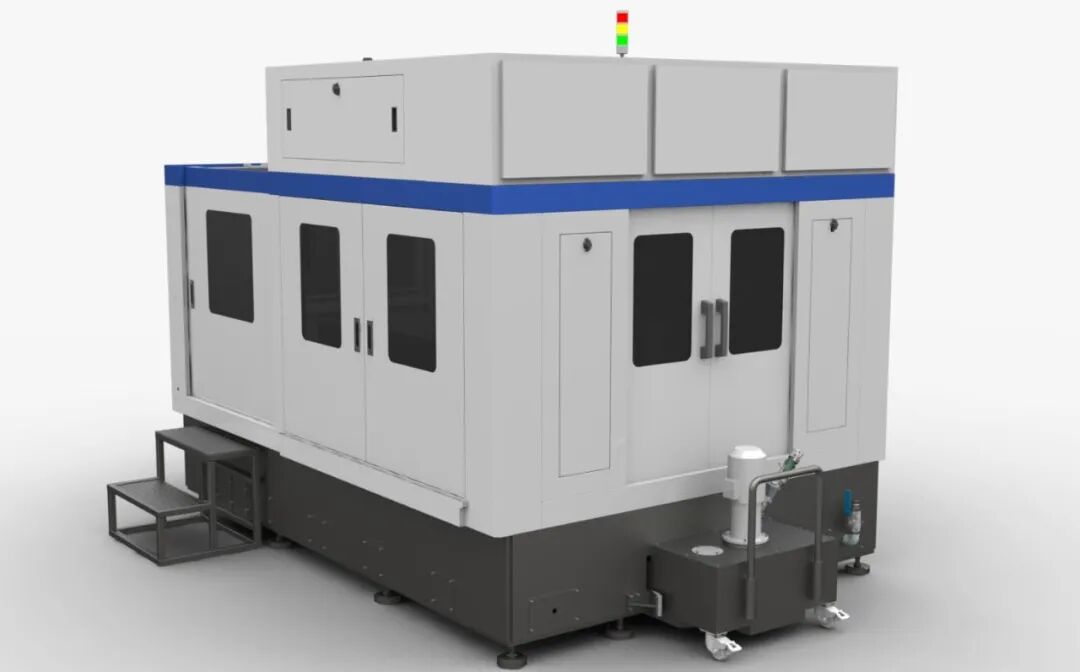
All equipment is equipped with a remote monitoring system that enables predictive maintenance, minimizing downtime.
Nanjixiong Comments
Tungsten wire loop cutting technology efficiently, non-destructively, and economically solves the bottleneck of separating metal 3D printed parts, and its significance goes far beyond simply being “fast cutting.” It truly achieves capacity matching between the front and back processes of the 3D printing manufacturing flow, allowing enterprises to fully leverage the potential of digital manufacturing; it enhances the competitiveness, reliability, and economic feasibility of 3D printing technology in the entire manufacturing industry, especially in large-scale production, helping 3D printing transition from being primarily used for prototyping and small-batch customization to directly manufacturing large-scale end parts.
Of course, this new technical solution also has some practical issues that need to be addressed. For example,
Initial investment costs: Any new technology requires an assessment of its cost-benefit ratio. Although tungsten wire loop cutting technology can reduce operating costs, the initial equipment investment needs to be considered.
Process parameter exploration: For different materials and shapes of parts, it may be necessary to optimize and accumulate cutting parameters (such as wire speed, tension, cooling fluid, etc.) to achieve the best cutting effect and efficiency.
Operator skills: Equipment operation and maintenance may require personnel with certain new knowledge and skills, or rely on good technical support from equipment suppliers.
Note: Wuxi Da Vinci has been included in the【China 3D Printing Industry Navigation】https://www.nanjixiong.com/123.html under 【3D Printing Post-Processing】】