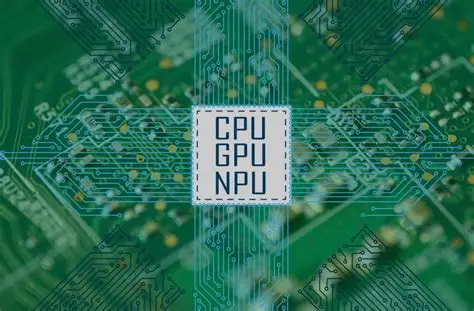
In the realm of digital computing, three distinct “core generals” are active. Each has its own role while working in synergy to support all computing needs, from everyday office tasks to AI innovations. These three are the generalist conductor CPU, the parallel powerhouse GPU, and the AI newcomer NPU. Their emergence is not coincidental; rather, it has gradually formed a precise division of labor along the trajectory of evolving computing demands. To understand their “strength boundaries,” it is worthwhile to start with their respective “genetic codes” and “battlefield positioning.”
1. CPU: The “All-Powerful Commander” of Computing
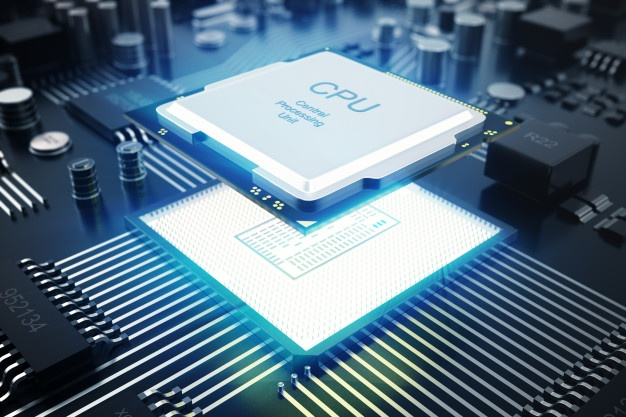
The CPU (Central Processing Unit) is the absolute core of a computer, regarded as the “central nervous system” and “chief commander” of the entire system. It is responsible not only for executing specific calculations but also for scheduling resources and coordinating the collaboration of all hardware, including memory, hard drives, and graphics cards, serving as the “soul” that maintains the normal operation of the device.
Core Architecture Features
- Maximal Versatility: Supports almost all types of computing instructions, from text input to program compilation, there are no “general tasks” it cannot handle.
- Quality Over Quantity: Desktop CPUs typically have 4 to 16 cores, while server-grade CPUs may have only a few dozen cores, far fewer than GPUs, but each core is “elite”.
- High Frequency + Low Latency: Mainstream CPUs generally have a frequency above 3GHz, with extremely fast single-core computation speeds and very low instruction response latency, capable of quickly processing “real-time demands”.
- Smart Optimization: Equipped with complex technologies such as branch prediction, out-of-order execution, and pipelining, it can anticipate program logic and optimize instruction execution order, enhancing overall efficiency.
Typical “Battlefield” Applications
- Core System Scheduling: Basic command tasks such as process management, memory allocation, and hardware driver coordination in operating systems.
- High-Demand Single-Thread Tasks: Scenarios that rely on single-core performance, such as logic calculations in certain games, transaction processing in databases, and code compilation in programming software.
- Everyday General Computing: Common high-frequency tasks such as office software (Word, Excel), web browsing, file compression and decompression, and video chatting.
Clear Advantages and Disadvantages
| Advantages | Disadvantages |
|---|---|
| Extremely flexible, adaptable to all general computing scenarios | Limited parallel computing capability, inefficient in the face of “massive repetitive tasks” |
| Top-notch single-core performance, low instruction response latency | Fewer cores, unable to support large-scale parallel computations |
| Responsible for global system scheduling, irreplaceable | Under the same power consumption, parallel computing throughput is far inferior to that of GPU/NPU |
2. GPU: The “Multi-Core Legion” of Parallel Computing
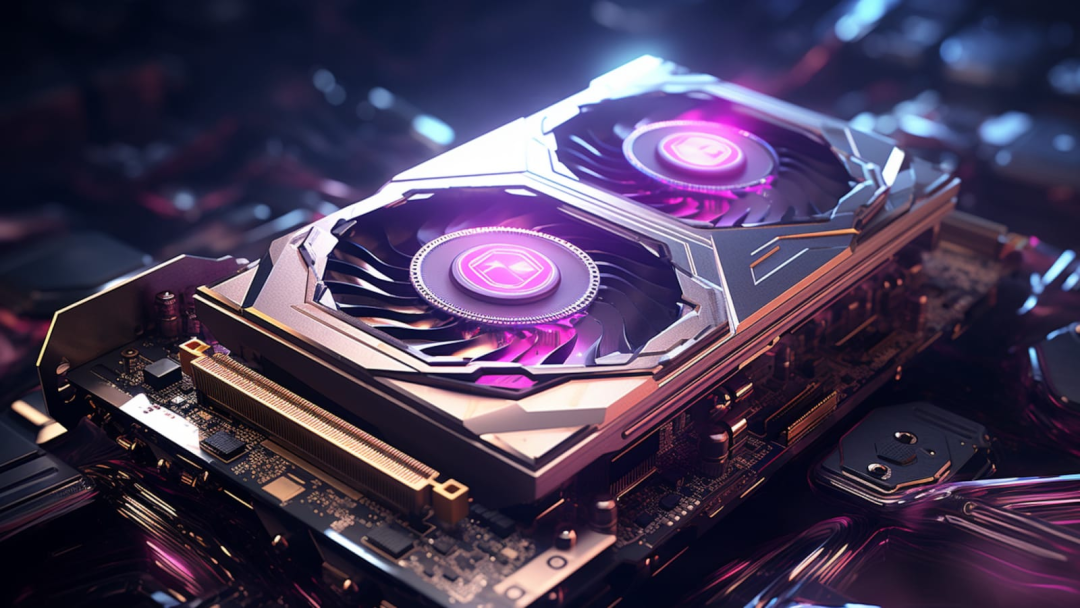
The GPU (Graphics Processing Unit) was originally designed for “graphics rendering”—for example, processing 3D models and lighting effects in games. However, with the popularization of parallel computing frameworks like CUDA (NVIDIA) and OpenCL, its “multi-core parallel” talent has been fully activated, becoming the “absolute main force” in large-scale parallel computing.
Core Architecture Features
- Overwhelming Core Count: Adopts a “many-core architecture,” with core counts often in the thousands or even tens of thousands (e.g., the NVIDIA RTX 4090 has 16,384 CUDA cores), making it a “computing legion”.
- Ceiling of Parallel Capability: Designed for “same instruction, massive data” (SIMD), it excels at processing thousands of repetitive calculations simultaneously, achieving extremely high throughput.
- Astonishing Computing Power: Single card computing power can reach hundreds of TFLOPS (trillions of floating-point operations per second), far exceeding that of comparable CPUs.
- Compromise on Latency and Versatility: Higher storage access latency, poor adaptability to tasks with complex branches and variable logic, and less flexibility in general computing compared to CPUs.
Typical “Battlefield” Applications
- Core for Graphics Rendering: Game scene generation, film special effects production (e.g., 3D modeling for “Avatar”), architectural CAD design, etc.
- Deep Learning Training: Neural network training relies on massive matrix multiplications and convolution operations, with the GPU’s parallel capability compressing training time from “months” to “days”.
- Scientific and Engineering Computation: Weather simulation, molecular dynamics modeling, astronomical data analysis, cryptography cracking, etc., which require massive repetitive calculations.
- Audio and Video Processing: 4K/8K video encoding and decoding, live streaming, video editing acceleration, etc.
Clear Advantages and Disadvantages
| Advantages | Disadvantages |
|---|---|
| Extremely strong large-scale parallel computing capability, throughput surpassing that of CPUs | Poor flexibility in general computing, unsuitable for complex logical single-thread tasks |
| “Exclusive tool” for graphics rendering and AI training | High instruction latency, unable to undertake system scheduling tasks |
| Great potential for computing power expansion, supports multi-card collaboration | Higher power consumption, strict cooling requirements |
3. NPU: The “Customized Killer” of the AI Era
The NPU (Neural Processing Unit) is a “new general” specifically designed for deep learning and neural network inference. Unlike CPUs that pursue generality or GPUs that emphasize broad parallelism, it is hardware-customized for the “core computations” of AI tasks (such as convolutions, matrix multiplications, and activation functions), making it a “dedicated accelerator for AI computing”.
Core Architecture Features
- Tensor Computation Optimization: Natively supports tensor (multi-dimensional matrix) operations at the hardware level, which is the core computation form of neural networks, far exceeding the general computing capabilities of CPUs/GPUs.
- King of Energy Efficiency: Under the same AI computing power, power consumption is far lower than that of GPUs, especially suitable for “low-power scenarios” such as smartphones, tablets, and autonomous driving chips.
- On-Chip Storage Enhancement: Built-in high-speed cache and dedicated storage units reduce access to external memory, significantly lowering the latency of AI tasks.
- Highly Specialized Instruction Set: Custom instructions tailored specifically for AI algorithms, with extremely weak processing capabilities for non-AI tasks.
Typical “Battlefield” Applications
- AI Inference Deployment: Image recognition (e.g., “scene optimization” in smartphone photography), voice recognition (e.g., command response in smart speakers), natural language processing (e.g., dialogue in chatbots).
- Edge AI Computing: Face recognition in smartphones, real-time obstacle detection in autonomous driving, AI quality inspection in industrial equipment, etc., in “low-latency, low-power” scenarios.
- Lightweight AI Training: Fine-tuning small models on certain terminal devices (e.g., local optimization of personalized recommendation models).
Clear Advantages and Disadvantages
| Advantages | Disadvantages |
|---|---|
| Extreme AI inference performance, computing power/power consumption ratio far exceeding that of CPUs/GPUs | Overly specialized, almost incapable of handling general computing tasks |
| Optimized for neural networks, extremely low latency | Does not support complex logical operations, cannot replace CPU scheduling |
| Small size, low power consumption, suitable for mobile and edge devices | Only supports specific AI frameworks, with weaker compatibility |
4. Comparison of Core Capabilities of CPU, GPU, and NPU
To clearly see the differences among the three “generals,” we conduct a comprehensive comparison from core parameters and performance characteristics to typical tasks:
| Feature Dimension | CPU (Central Processing Unit) | GPU (Graphics Processing Unit) | NPU (Neural Processing Unit) |
|---|---|---|---|
| Core Count | Low (4-64 cores) | Very High (thousands to tens of thousands of cores) | Medium (hundreds to thousands of cores) |
| Frequency Range | High (2.5-5GHz) | Medium (1-2.5GHz) | Medium (1-2GHz) |
| Task Latency | Extremely Low | Relatively High | Extremely Low (only for AI tasks) |
| Generality | Extremely High (adapts to all tasks) | Medium (focuses on parallel/graphics) | Extremely Low (only adapts to AI tasks) |
| Parallel Computing Capability | Medium (limited parallelism) | Extremely High (broad large-scale parallelism) | Extremely High (AI-specific parallelism) |
| Energy Efficiency Ratio | Medium | Lower (high computing power accompanied by high power consumption) | Extremely High (low power consumption with high AI computing power) |
| Core Positioning | System commander, general computing core | Parallel computing legion, graphics core | Dedicated accelerator for AI tasks |
| Typical Tasks | System scheduling, office tasks, single-thread computations | Game rendering, AI training, scientific computing | Image recognition, voice interaction, edge AI inference |
Conclusion: The “Computing Triangle” in Collaborative Combat
The CPU, GPU, and NPU are not in a “competitive relationship” but rather form a complementary “computing triangle”:
- CPU is the “chief commander,” responsible for global scheduling and general tasks, maintaining system operation;
- GPU is the “parallel legion,” handling graphics rendering and large-scale parallel computing, breaking through computing power bottlenecks;
- NPU is the “AI special forces,” specializing in neural network tasks, supporting AI deployment with extreme energy efficiency.
From PCs to smartphones, from data centers to autonomous vehicles, the collaboration of these three “generals” is the core driving force propelling the digital age forward.
Friendly Reminder:Dear reader, if our article has been helpful to you, please “star us“★! This way, you won’t miss our daily updates!Thank you for always “tuning in”

☞ Life is like climbing a mountain; the process is the answer.
☞ Construction requires approval; illegal additions are prohibited, even when building on old homesteads, caution is advised.
☞ Charlie Munger’s 66 Wise Sayings
☞ Good news: Retirees with these three certificates will see a significant increase in their pensions; check if you have them!
☞ A comprehensive analysis of tea classification and tasting knowledge.
☞ This is true genius! Mark Zuckerberg’s speech in Chinese at Tsinghua University (recommended for collection).