
Can you guess what will ensure food security for the global population of 10 billion by 2050? The answer lies in the applications of IoT in agriculture. Achieving this goal relies not only on better seeds or more tractors. Here’s a hint: it connects to the cloud, collects data, and can autonomously control devices. That’s right, it’s agricultural IoT.
Whether you are a farmer, an agricultural technology entrepreneur, or a policymaker, you are likely aware of the pain points in agricultural production: water resource waste, low yields, rising costs, and unpredictable weather. But the good news is that change is happening.
By 2024, the agricultural IoT market is expected to reach $23 billion; this figure is projected to grow to $78.8 billion by 2034, more than doubling. Next, we will explore the reasons behind the rise of this field and why it is important for your farm or agricultural business.
The Role of IoT in Modern Agriculture
IoT can assist in data collection, equipment monitoring, and automation of operations. From crop growth conditions to soil moisture, metrics that previously required hours of manual monitoring can now be automatically measured by devices. This is not a fantasy of the future, but a reality today.
The applications of agricultural IoT are extensive, covering precision agriculture, livestock monitoring, and more. Common cases include greenhouse automation control, soil condition monitoring, and livestock tracking.
Despite the increasing adoption of IoT, weighing its pros and cons is crucial—while it can enhance production efficiency, there are also issues such as high initial investment costs and data privacy concerns.
With the help of IoT, farmers can now:
1️⃣ Plan crop growth cycles based on data;
2️⃣ Reduce waste of water resources and fertilizers;
3️⃣ Monitor livestock health remotely;
4️⃣ Prevent crop diseases early;
5️⃣ Track agricultural machinery and storage environments remotely.
By monitoring crops, livestock, and equipment in real-time, IoT is bringing revolutionary changes to the agricultural sector. Understanding these smart agricultural applications reveals how digital tools can enhance yield and efficiency in the fields.
The Eight Core Applications of Agricultural IoT
Agricultural IoT is innovatively addressing traditional agricultural challenges. Its value lies not only in data collection but also in utilizing data for faster and more accurate decision-making and actions. So, how is IoT specifically applied in agriculture? It is used in scenarios such as irrigation control, disease detection, and livestock monitoring to improve production efficiency. Here are eight significant IoT applications that have shown remarkable results in the agricultural sector.
01
Smart Irrigation Systems
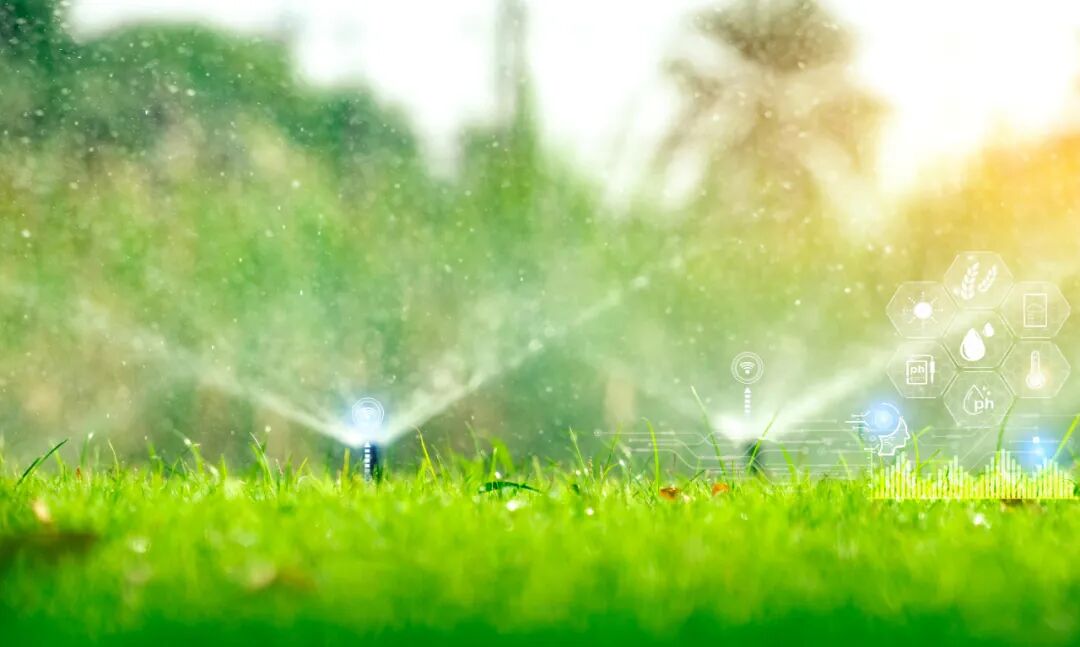
Water resource waste is a significant cost loss in agricultural production. But how can we know the actual water needs of the farmland? Agricultural IoT sensors provide a solution to this problem. These sensors can monitor soil moisture and weather conditions in real-time, and the system will automatically turn irrigation devices on or off based on actual needs. This reduces over-irrigation, lowers electricity consumption, and ensures healthy crop growth.
Farmers can also remotely set irrigation plans: when it rains, the system will automatically adjust the irrigation strategy; during drought periods, only the areas that need water will be irrigated. This application of agricultural IoT is particularly effective in arid or water-scarce regions.
02
Precision Agriculture
Precision agriculture relies on more than just GPS technology. It deploys a network of IoT-based agricultural sensors to track light, temperature, and crop growth conditions in real-time.
For example, citrus orchards that implemented IoT solutions for precision irrigation reduced water consumption by 25% without compromising yield—this is a significant figure, as every drop of water saved translates to reduced costs.
03
Crop Monitoring and Disease Detection
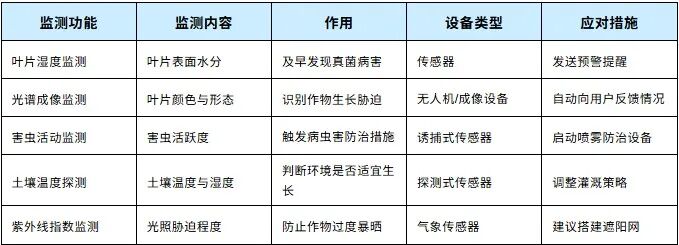
Every year, farmers lose a significant amount of crops due to pests and diseases, often discovering problems too late to take effective action. Nowadays, agricultural IoT projects deploy pest and disease sensors in the fields to monitor signals such as leaf color, humidity, and pest activity.
04
Soil Condition Monitoring
Soil conditions can change rapidly: excessive moisture or insufficient nutrients can lead to decreased yields. Now, sensors can monitor soil pH, nitrogen content, salinity, and moisture in real-time. These agricultural IoT devices can intervene before soil issues arise, ensuring soil health.
Farmers no longer need to rely on experience; they can test and compare different areas of the field and take corrective measures only in problem areas. This not only reduces the cost of chemical agents but also enhances agricultural sustainability. For small farms, this is one of the most urgently needed agricultural IoT applications.
05
Livestock Monitoring
With the help of smart agricultural IoT, even dairy cows can wear sensors. Ear tags or collars on livestock can track their health status, activity patterns, and feeding habits in real-time. If an animal stops eating or shows reduced activity, the system will immediately alert the farmer.
This technology not only reduces veterinary costs but also prevents the spread of diseases. With GPS, farmers can quickly locate livestock across vast pastures; the behavioral data of livestock can also inform nutritional plans and breeding cycle schedules. Additionally, these agricultural IoT solutions reduce the need for manual labor.
06
Greenhouse Automation
The greenhouse environment needs to be maintained within specific ranges. Through IoT sensors, farmers can monitor light, humidity, and carbon dioxide levels in real-time.
These sensors are connected to control systems that can automatically open vents, start fans, or adjust lighting. Even in the event of sudden weather changes or rising temperatures, the system can automatically take countermeasures without the need for 24-hour manual monitoring. Greenhouses utilizing agricultural IoT not only achieve higher yields but also lower costs.
07
Supply Chain and Warehouse Management
Crop spoilage is a loss in agricultural production that is often overlooked. Nowadays, agricultural IoT cases include warehouse monitoring systems that can track the following metrics in real-time:
1️⃣ Temperature of storage units;
2️⃣ Carbon dioxide levels (to detect crop spoilage);
3️⃣ Humidity changes;
4️⃣ Transportation routes of crops from the field to the warehouse;
5️⃣ Environmental conditions during transportation.
These features help reduce waste, lower return rates, and enable real-time tracking of inventory.
08
Weather Forecasting and Climate Monitoring
In agricultural production, weather poses a greater threat to crops than pests and diseases. However, traditional weather applications are not designed specifically for agriculture, which is why IoT-based sensor networks have emerged to collect microclimate data from the fields in real-time.
With IoT sensors, farmers can monitor rainfall, wind speed, UV intensity, and atmospheric pressure. This allows for more precise planning of agricultural activities such as planting, harvesting, and spraying pesticides, and enables quicker responses to weather changes. In flood-prone or drought-prone areas, the adoption of this agricultural IoT application is rapidly increasing.
When IoT systems are combined with artificial intelligence, their capabilities become even more powerful—not only can they provide predictive analytics, but they can also achieve smarter automated control.
Source: LitsLink
Original Title: Top 8 Uses of IoT in Agriculture for Smarter Farming 2025
 Company Profile | Chengxin Network
Chengxin Network was established in May 2004, located in the High-tech Zone of Xi’an, Shaanxi Province, and is a high-tech enterprise with over 50 employees.The company is dedicated to providing information technology products and services in the fields of smart agriculture, energy, and mining in the digital economy era, offering efficient and high-quality digital services to government and enterprise clients.
Based on the development needs of agriculture, applying modern information technology, and combining international advanced facility agriculture and production management standards, the company creates big data and various application services and solutions for agricultural information for government and enterprise clients in the agricultural industry chain. It continuously explores and expands into the energy and mining sectors. In the energy industry, it actively conducts in-depth research on comprehensive information services for production safety monitoring, personnel quality, and enterprise information management improvement, creating detailed case studies. The company has over 30 self-developed agricultural software products with independent intellectual property rights, widely applied in agriculture, energy services, and other fields. The company implements the ISO9001 system to ensure standardized services and products for clients. In the AI era, it perceives trends, embraces change, and keeps pace with the times, upgrading industry information application transformation services based on its product, technology, and industry expert advantages. It serves government agencies, enterprises, and all sectors of society, creating new models of industry information services across multiple fields in the country. It builds a win-win ecosystem to achieve new leaps in technological innovation and practical application of the digital economy in the AI era.
Previous Recommendations:
The 2025 Central Document No. 1 is here (Full Text + Interpretation)
How to Fully Promote the Construction of Beautiful Shaanxi? Look here→
4 Key Tasks, 18 Important Measures! “Implementation Plan for Beautiful Countryside Construction” Issued→
The Ministry of Agriculture and Rural Affairs Releases Important Document! Focuses on Agricultural Science and Technology Innovation
The Central Committee of the Communist Party of China and the State Council Issued the “Comprehensive Rural Revitalization Plan (2024-2027)”
In 2025, 159.3 billion yuan of central financial assistance for rural revitalization will be allocated in advance, distribution table→
The Ministry of Agriculture and Rural Affairs’ No. 1 Document is here
Full Text | The 2024 Central Document No. 1 Released
Two Departments: Resolutely Curb New Rural Land Occupation Issues
In 2025, the subsidy scope will be broader, and the subsidy intensity will be greater!
Chengxin Network Supplier Recruitment Announcement 【Disclaimer】: The articles and images reproduced by this account are for industry communication only. If there is any infringement, please contact the editor for deletion!